Venomous king cobra snakes are expanding their range by taking trains
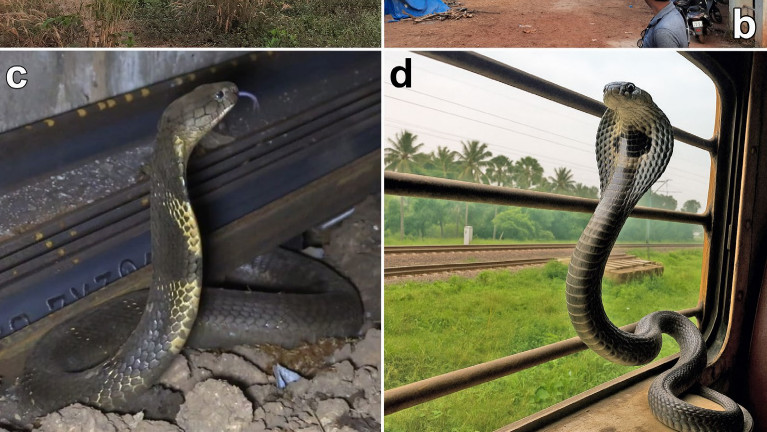
A study suggests that a rare species of king cobra found in India's Western Ghats may be using railways to expand its range beyond its native habitat. The study, published in the journal Biotropica, analyzed rescue records and sightings over the past 22 years and found that certain individuals have been spotted near railway infrastructure.
Snakes on Trains: Railways May Sway Goa's King Cobra Distribution - Parmar - 2026 - Biotropica - Wiley Online Library
Snakes on trains: King cobras are 'hopping railways' to unsuitable habitats in India
https://phys.org/news/2026-01-snakes-king-cobras-railways-unsuitable.html
A research team from the German König Museum of Zoology identified 47 habitats of the king cobra, Ophiophagus kaalinga, in Goa, India, based on records from 2002 to 2024.
The model analysis revealed that the variable that most strongly contributed to habitat suitability was precipitation during the warmest period (41.5%), followed by maximum temperature (29.8%). Ophiophagus kaalinga primarily inhabits the riparian zone, a high-altitude, lush forest area and riverine wetlands located inland of the eastern part of the state.
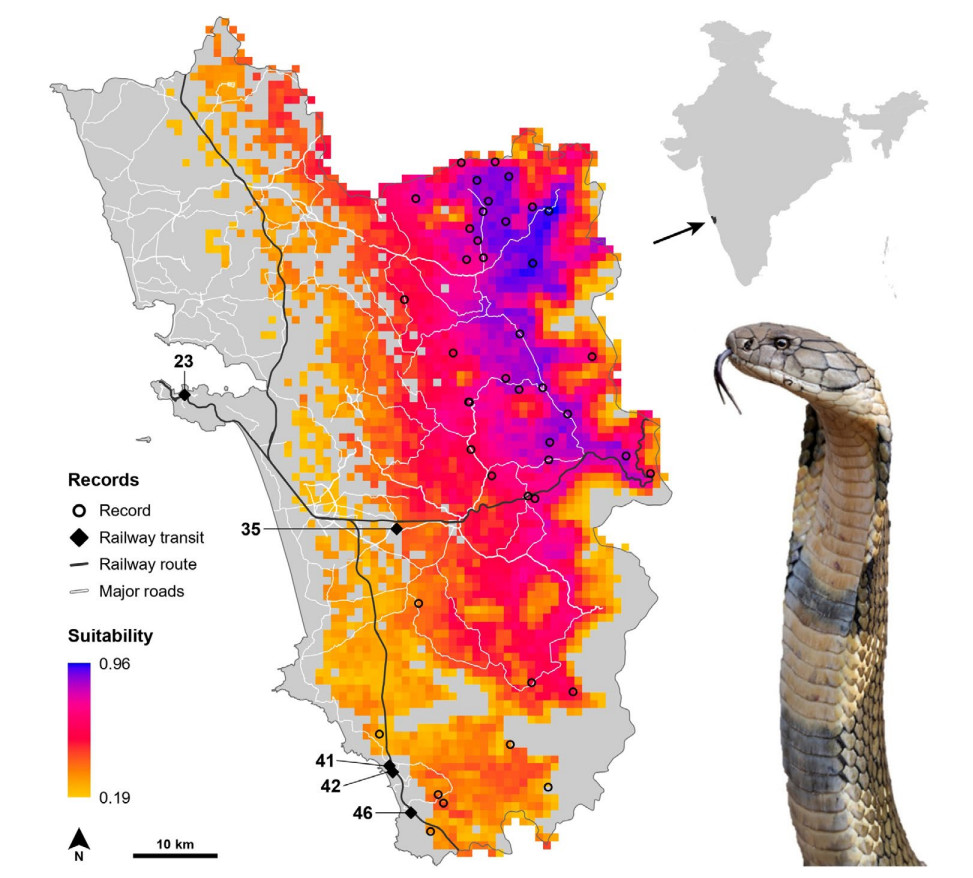
However, five discoveries were made in areas predicted to be unsuitable for habitation, such as low-lying coastal areas, all of which were located within 330 meters of major railway infrastructure. Statistical analysis revealed that the habitat suitability score for sites found near railways was an average of 0.48, significantly lower than the average of 0.84 for the species' natural habitat, such as forests.
As a specific example, a king cobra was rescued from under railway maintenance materials at Chandor Station in southern Goa, and an individual was also discovered near
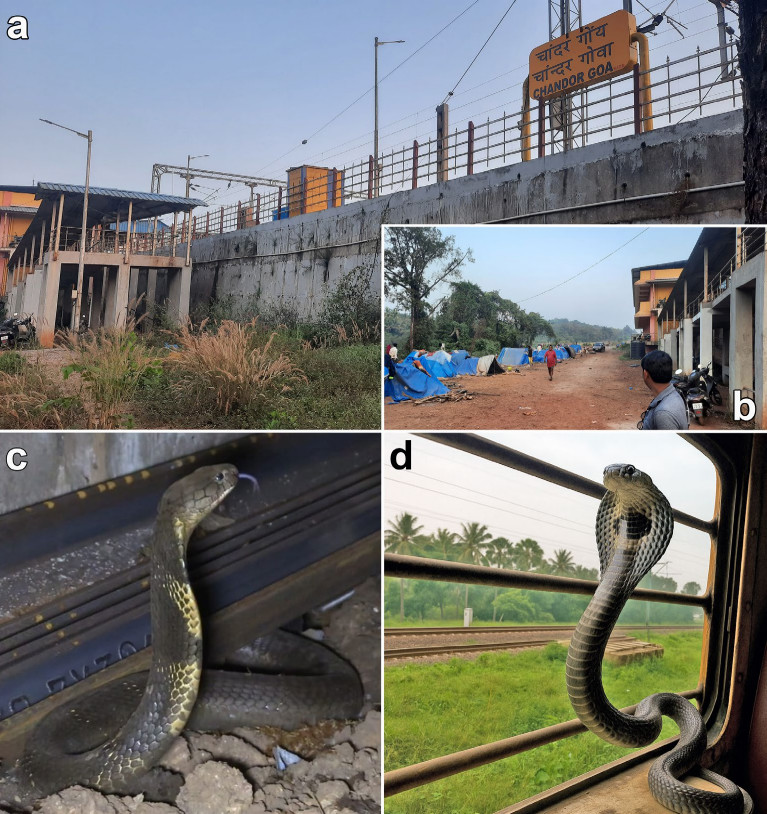
In India, there has been an increase in snake intrusions into railway carriages, including the sighting of an Indian cobra on a moving train. The research team hypothesizes that these snakes may be spreading passively, either chasing prey such as rats or other snakes, or seeking hiding places on freight trains and then being transported to distant locations.
This rail travel may act as a rapid migration route connecting populations, as opposed to roads, which pose barriers and lethal risks separating populations. However, the presence of highly venomous snakes in human settlements where they would not normally be found poses a serious threat to public health. As there is no specific king cobra antivenom in India and a bite can be fatal within 15 minutes, continued awareness-raising and research is needed to mitigate the risks to both humans and snakes.
Related Posts: