Why does 'putting your finger in' improve the bubbles when you pour carbonated water?
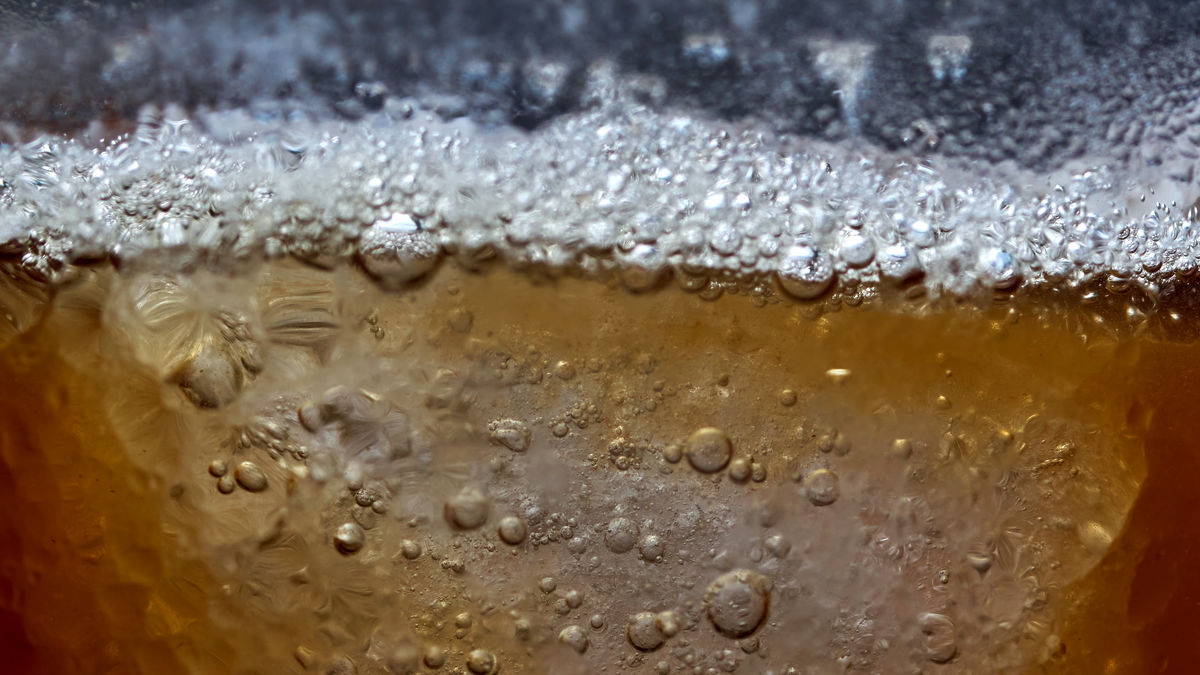
When you pour a carbonated drink into a glass, it can sometimes become foamy. YouTube channel
Why you should stick your finger in soda - YouTube
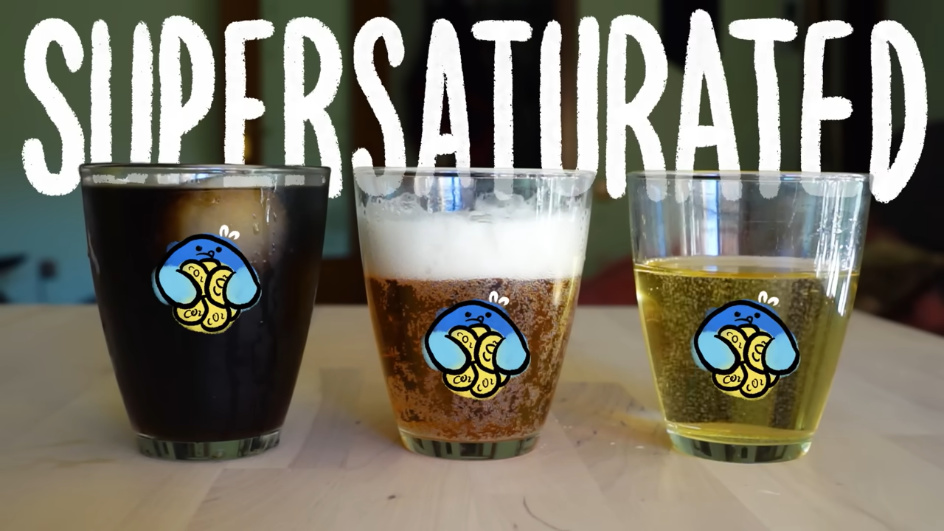
The reason bubbles form when you pour a carbonated drink into a glass is because the drink is in a 'supersaturated' state. Carbonation is created by dissolving carbon dioxide in water, but this is done under higher pressure than would normally be possible for carbon dioxide to dissolve in water, forcing a large amount of carbon dioxide into the water. When you open the lid of a carbonated drink, you hear a 'psh' sound as the air escapes, which is the sound of the increased pressure being released. At this moment, the pressure conditions change and the drink can no longer maintain its supersaturated state.
There are two main reasons why bubbles form and grow when gas cannot be retained and is released. One is that glasses have scratches and tiny irregularities, which create air pockets and cause bubbles to grow. The other is that when the liquid is poured into the glass, it shakes around, causing the liquid to collide with other liquids and mix with the air, causing bubbles to grow.
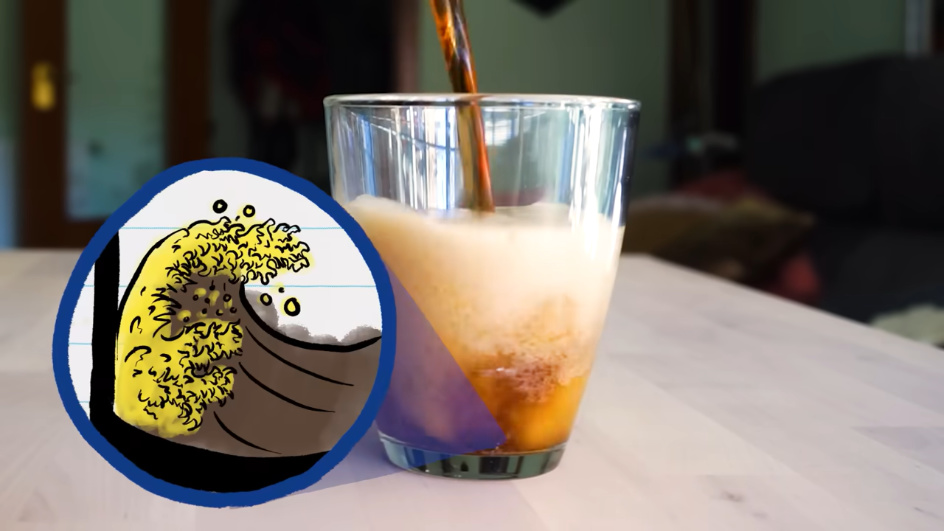
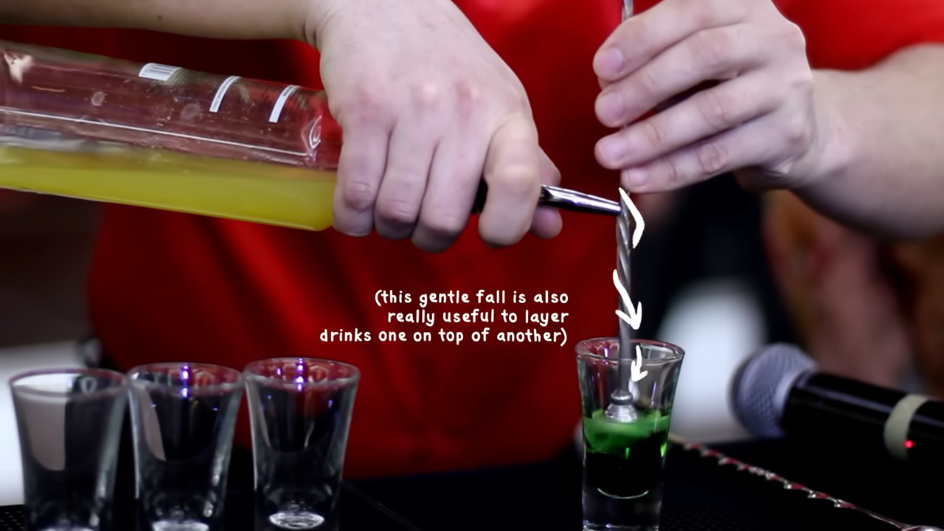
Therefore, if you tilt the glass and pour beer along the rim, the liquids will not collide with each other, reducing the amount of foam. Also, the 'twisted bar spoon' used as a bartender's tool can be used to adjust the amount of foam by pouring along the twisted handle.
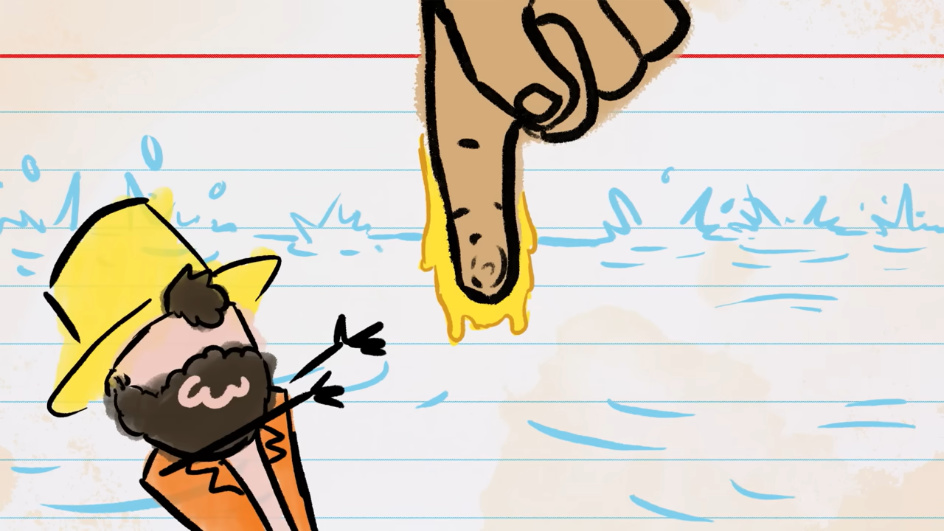
Even if you pour the drink gently to avoid creating too much foam, you may not be able to control it properly and end up with a lot of bubbles. In such cases, you can reduce the amount of foam by 'putting your finger in the carbonated drink.' According to MinuteFood, the oil in your fingers has the property of locally weakening the surface tension of the water, so by putting your finger in the carbonated drink, the foam film structure becomes unstable. When the bubbles pop, the oil disperses, causing the bubbles to pop one after another, and the overall foam settles down.
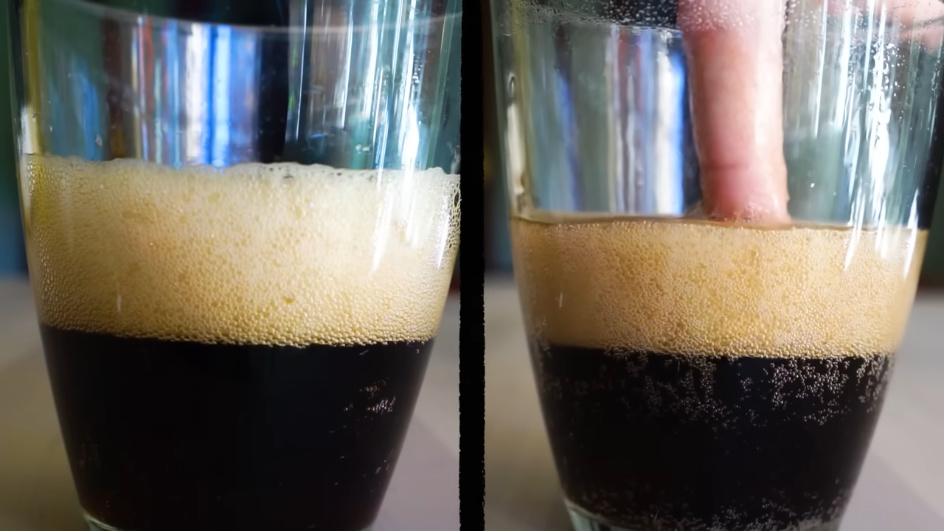
While using oil to reduce foam makes sense scientifically, sticking your greasy fingers in your drink is unhygienic, MinuteFood adds, 'It's not recommended for serving drinks to others, but it's fine for drinking yourself.'
Additionally, while the finger insertion method is effective when there is a lot of foam when pouring into a glass, it cannot be used to prevent carbonated drink cans from spraying when opened after being shaken. There's a popular myth that tapping the side of a shaken carbonated drink can lightly with your finger will prevent the foam from spraying. Shaking a can shakes the drink, just like pouring it into a glass, creating a lot of foam, but because of the high pressure inside the can, nothing happens at this point. Most of the bubbles settle when you stop shaking, but some remain attached to the side of the can. It was thought that tapping the side of the can lightly would remove the foam and prevent it from spraying when opened.
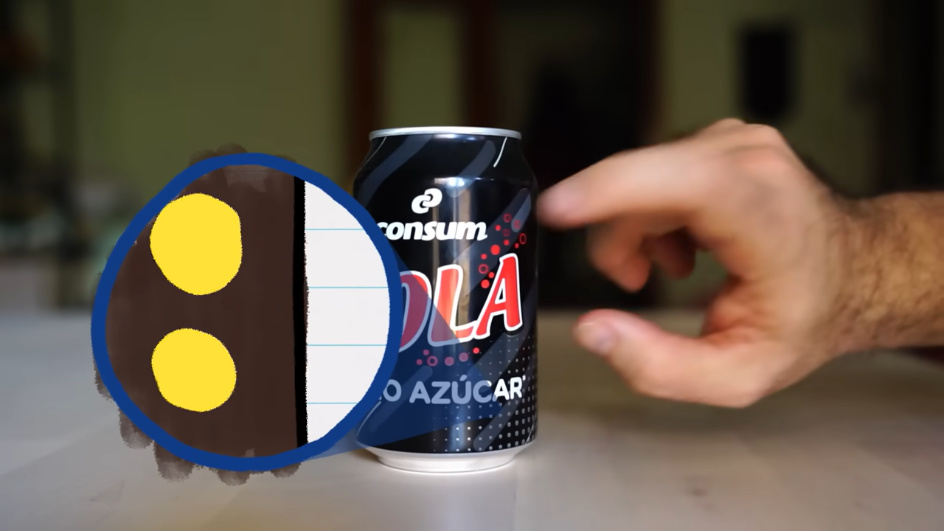
However, a previous study in which 1,000 beer cans were actually shook has scientifically disproven the trick of tapping the side of the can to prevent it from spraying. The researchers concluded, 'There was no statistically significant difference between the group that tapped the can and the group that did not. The only solution to prevent a shaken can of beer from spraying is to wait until the foam settles.' However, it is thought that further verification is needed, such as the possibility that it may not be effective with beer but may be effective with soda.
'The trick to prevent canned carbonated drinks from spraying by popping them with your finger' is scientifically denied - GIGAZINE
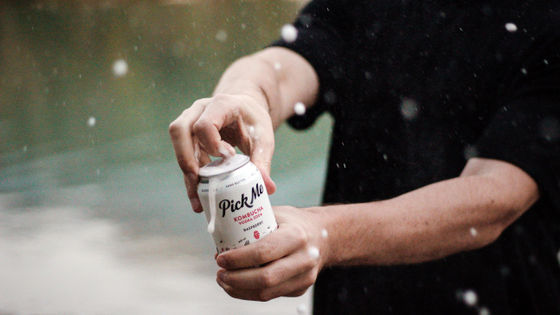
The mechanism by which bubbles form in carbonated drinks is influenced by various factors, such as the shape of the glass, temperature, and pressure, so by understanding these factors, it is possible to prevent bubbles from forming or to reduce the amount of bubbles that do form. However, there are still some scientifically unsolved problems.
Related Posts: