Reports that Google and YouTube refuse to remove copyright infringing content

Google accepts requests for removal under
Google Broke My Heart | Perishable Press
https://perishablepress.com/google-broke-my-heart/
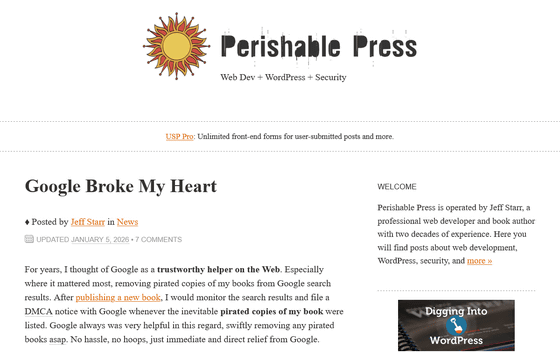
Jeff Starr, a web developer and book author, would monitor search results after publishing a new book and file DMCA notices with Google whenever a pirated copy appeared. Google is proactive in combating piracy and responded quickly to Starr's DMCA notices.
However, when Starr requested that pirated content be removed from the search index through a traditional DMCA violation report in late 2025, he received a response from Google stating, 'We are unsure whether you have the authority to submit a copyright removal request for the content in question. Only copyright owners or their agents may submit copyright removal requests. Please be aware that if you falsely claim that content infringes your copyright, you may be subject to damages (including costs and attorneys' fees).'

Star suspected that the DMCA request verification process might have been updated, so he asked Google how to verify his identity, saying, 'I'm the author of the book. Please let me know if you need any more information.' However, Google responded, 'We don't believe you are the creator of the content in question, so we're not sure how you came to own the copyright to the content in question. Please explain in detail how you claim copyright ownership.' Without waiting for proof of identity, Google decided that Star wasn't the copyright owner.
He then sent a lengthy message explaining his identity as the author, but Google ultimately replied, 'At this time, Google has decided not to take action against the URL in question.' Starr, who had previously been satisfied with Google's prompt response, expressed his disappointment, saying, 'Where has the kind Google of yesteryear gone?'
Similar cases of DMCA violation reports being ignored have also been reported on YouTube. The following video, posted by
So I Got Into a Fight with YouTube... - YouTube
According to LegalEagle, several YouTube channels have been created that appear to be re-uploads of LegalEagle videos, with only the backgrounds changed. In addition to LegalEagle content, the channels also feature the photo and name of LegalEagle's owner, lawyer Devin James Stone, in their headers.
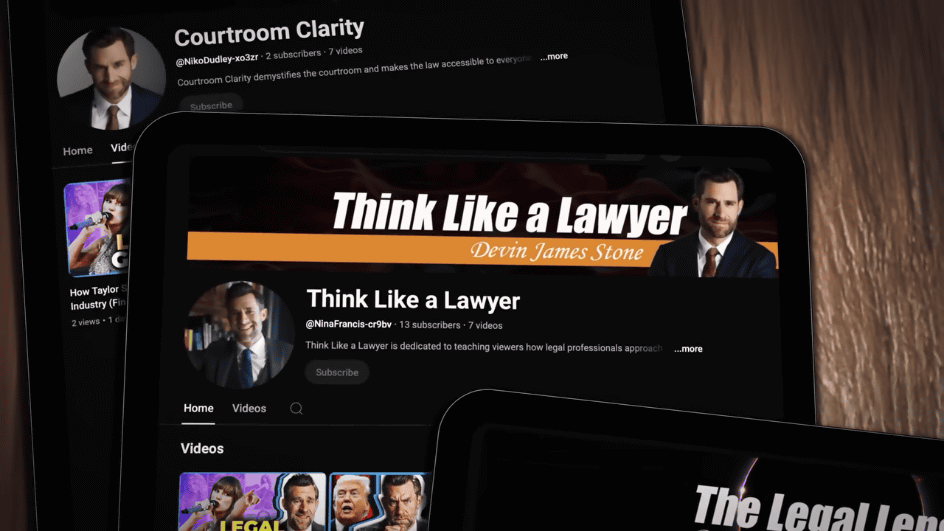
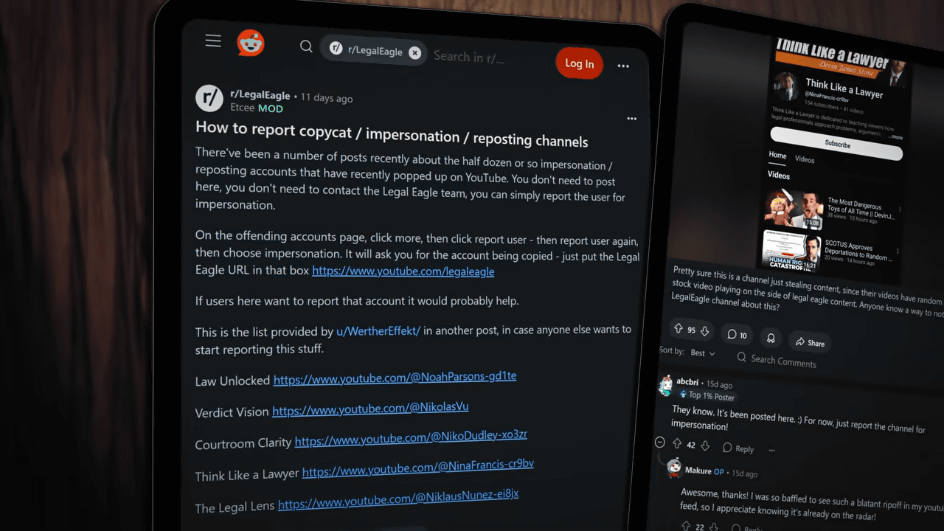
The existence of the fake channel was reported to LegalEagle via Reddit and Bluesky, and viewers also reported that they had reported it to YouTube. However, YouTube did not respond to the multiple reports from viewers, and the fake channel remained up for a while.
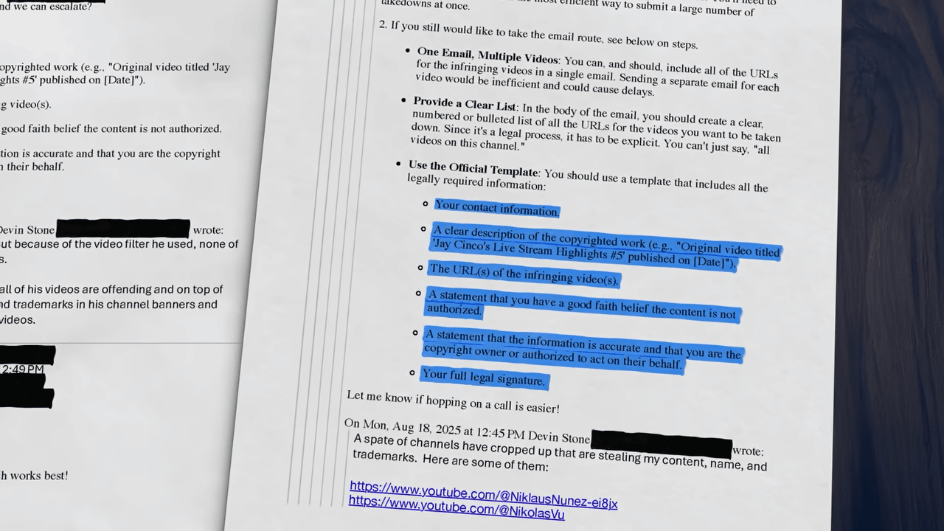
LegalEagle then used their legal experience to create supporting documentation and reported the issue to YouTube as a rights holder. YouTube responded by requesting that they either use YouTube Studio's copyright matching tool or send an email listing all URLs that infringe copyright, without immediately removing the videos. LegalEagle noted that the videos on the fake channel were created in a way that evaded the tool's detection, and that listing all of the videos was difficult because hundreds of videos were copied. LegalEagle reported to YouTube again that the tool was not working and that the copyright was infringing on all videos and channel trademarks, but YouTube again demanded that they prove they were the rights holders, a complex process that included proving their rights ownership.
Despite repeated back-and-forth communications, YouTube refused to acknowledge LegalEagle's claims that the fake channel was fraudulent and continued to demand more detailed information. LegalEagle stated, 'One look at the fake channel should reveal that it contains ridiculous videos and my photos, but YouTube hasn't even done that.'
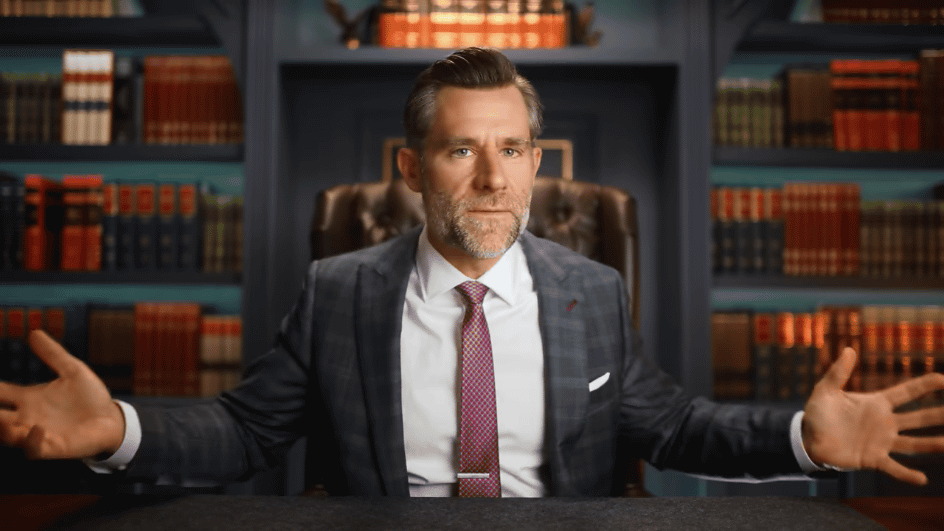
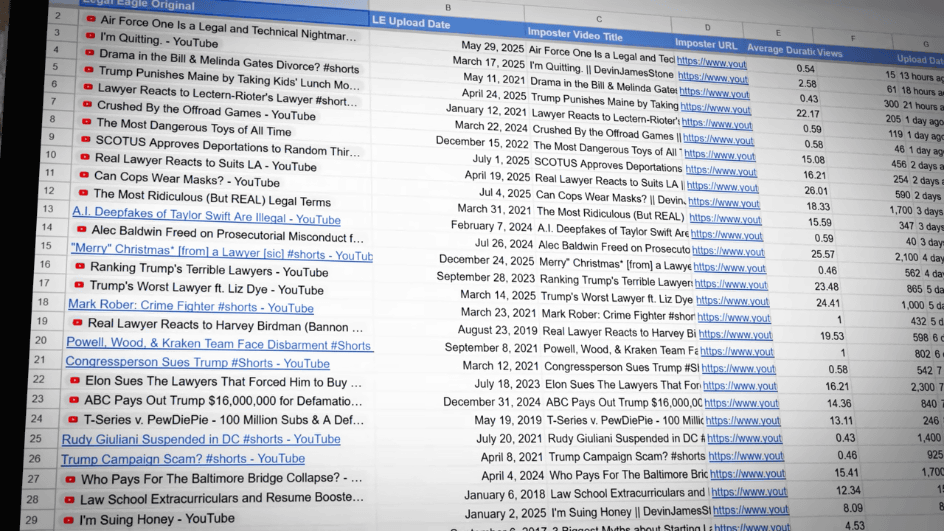
Finally, LegalEagle spent a considerable amount of time compiling a list of the fake channel's videos and sending it to YouTube. YouTube's Partner Support then responded, 'After reviewing the channel, we determined that it violated our Community Guidelines.' The violations listed in the response were exactly the same ones LegalEagle had been complaining about for a long time but had been ignored. LegalEagle then asked YouTube why their complaints had been ignored. YouTube simply replied, 'We are conducting a thorough investigation to ensure compliance with our Community Guidelines.' LegalEagle expressed strong dissatisfaction with this response.
It's unclear why the DMCA violation reporting process is so complicated, but Starr blames Google for 'seemingly wanting to get their hands on any pirated books they can to train their data-hungry AI models.'
Related Posts:




in Video, Web Service, Posted by log1e_dh