Meta uses a Linux scheduler designed for Valve's Steam Deck on its servers.

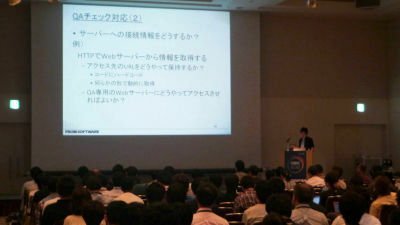
At a Linux conference in Tokyo, a story was shared that 'Meta is using a Linux scheduler for Steam Deck.'
Meta Is Using The Linux Scheduler Designed For Valve's Steam Deck On Its Servers - Phoronix
Facebook deploys the Steam Deck's Linux scheduler across its data centers — Valve's low-latency scheduler perfect for managing Meta's workloads at massive data centers | Tom's Hardware
https://www.tomshardware.com/software/linux/facebook-deploys-the-steam-decks-linux-scheduler-across-its-data-centers-valves-low-latency-scheduler-perfect-for-managing-metas-workloads-at-massive-data-centers
Meta runs huge machines in its data centers with hundreds of CPU cores, highly diverse workloads, and strict latency targets. In this environment, Meta wanted a universal scheduler that could adapt automatically without manual configuration adjustments, rather than a custom-built scheduler for each service.
The solution was a scheduler called 'SCX-LAVD.' SCX-LAVD, developed by the Linux consulting firm Igalia under contract with Valve, was perfectly suited to the requirements of the Steam Deck handheld gaming device. It's also used in various forms in other gaming devices, including the Linux distribution CachyOS Handheld Edition and Bazzite.

SCX-LAVD is built on sched_ext, a relatively new Linux framework that allows alternative schedulers to be plugged into the kernel without requiring major kernel changes. Simply put, sched_ext allows companies to safely and incrementally try out different scheduling strategies without having to fork Linux or maintain large patch sets.
LAVD stands for 'Latency-Aware Virtual Deadline' and is a technology that continuously observes task behavior, sleep, wake, and blocking frequencies, and estimates which tasks are sensitive to latency. These tasks are then given an earlier 'virtual deadline,' increasing the chances that they will be executed quickly even when the system is congested.
This approach was originally inspired by game development. With Steam Deck, missing schedule deadlines results in dropped frames, stutter, and slow input response times. Data centers suffer from the same failure modes: slow web requests, delayed messages, and missed service level objectives. Gaming PCs and data centers are completely different environments, but fundamentally they suffer from the same problems.

With this in mind, Meta adopted SCX-LAVD for large-scale servers. Initially, they encountered issues with machines where dozens of cores shared a single scheduling queue, such as pinned tasks, which are threads that can only run on specific cores, causing unnecessary interference. Meta addressed these issues by improving cache locality and adding logic to compensate for cores overwhelmed by network interrupts by treating them as 'slow' CPUs. Importantly, these fixes were implemented without requiring per-service configuration or manual priority tagging; the scheduler adapted based on observed behavior.
Despite the increasing CPU and memory configurations on servers, SCX-LAVD is performing well overall, and Meta is calling it the 'new default scheduler.'
Related Posts:





in Software, Posted by log1p_kr