OpenAI CEO Sam Altman backs company developing 'ultrasound-based brain interface'
As the conflict over AI between OpenAI CEO Sam Altman and xAI founder Elon Musk intensifies, OpenAI is reportedly preparing to back
Sam Altman challenges Elon Musk with plans for Neuralink rival
https://www.ft.com/content/04484164-724e-4fc2-92a2-e2c13ea639b d
Sam Altman's next startup eyes using sound waves to read your brain | The Verge
https://www.theverge.com/column/806666/sam-altman-merge-labs-brain-computer-interface-startup-hire
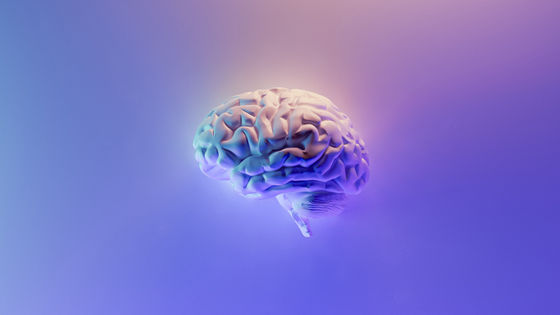
Merge Labs is one of several startups leveraging recent advances in AI to build more practical BCIs. The technological approach Merge Labs is taking is significantly different from Musk's Neuralink. CEO Altman dislikes Neuralink's invasive approach, stating, 'I definitely don't want to sew something into my brain,' and Merge Labs is pursuing a non-invasive approach.
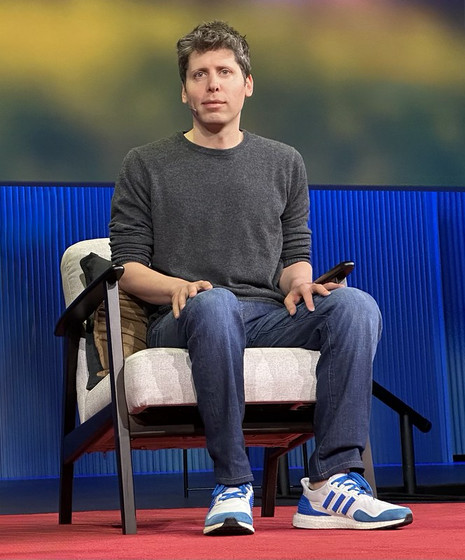
by Steve Jurvetson
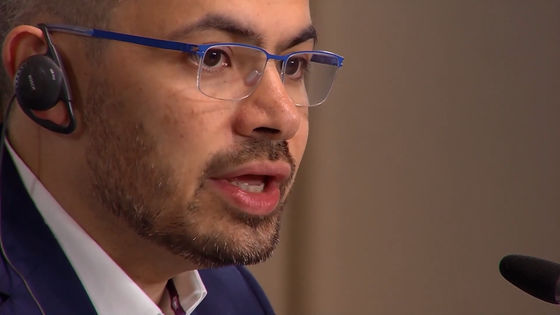
Merge Labs has welcomed Mikhail Shapiro, a biomolecular engineer at the California Institute of Technology, as a key leader on its founding team. Shapiro's research theme is 'the realization of BCI using non-invasive methods that do not require surgery, which carries the risk of physical damage to the brain.' This is consistent with CEO Altman's thinking and distinguishes it from the 'method of directly implanting electrodes into brain tissue' used by Musk's Neuralink.
Shapiro is also working on modifying certain cells to be ultrasound-responsive, a technique that involves injecting specific genes into cells so that they become visible or emit a signal when exposed to ultrasound.
'It's easier to introduce genes into cells and modify them to respond to ultrasound than to insert electrodes into brain tissue,' Shapiro said. 'By combining ultrasound, a physical stimulus that can be controlled from outside the body, with biological technology that can target only specific cells, it's possible to create a highly accurate and safe BCI.'
In terms of funding, Merge Labs has already raised new funding at a valuation of $850 million (approximately 124 billion yen), with the majority of the new funds expected to come from OpenAI's venture team. Merge Labs is seeking $250 million (approximately 36.4 billion yen) from OpenAI and others, but negotiations are in the early stages. CEO Altman helped launch the project with other entrepreneurs and is a co-founder of Merge Labs, but he says he is not involved in the day-to-day operations of Merge Labs.
In a 2017 blog post , Altman predicted that the timeline for the merging of humans and machines 'appears to be somewhere between 2025 and 2075,' noting that 'this merging has already been a gradual process for several years, with algorithms on our smartphones and social media determining how we act, feel, and think.'
Altman believes the convergence of humans and machines is unstoppable, stating, 'Unless we destroy ourselves, we're going to see superhuman AI, genetic enhancements, and BCIs.' He suggests that convergence is 'probably the best-case scenario' for humans, allowing us to build a better future instead of becoming biological bootloaders for digital intelligence.
He further predicted that this transformation will happen sooner than many think, saying, 'Hardware is improving at an exponential rate. And exponential functions get out of hand very quickly.' The Financial Times, a business newspaper, predicted that technological advances will lead to the emergence of high-bandwidth BCIs in the near future, as Altman said, 'I want to think of something and have ChatGPT respond to it.'
Related Posts:




in Hardware, Posted by log1i_yk