The dodo may not have been as foolish as historians thought.

by
The dodo , a bird that once inhabited the island of Mauritius off the southeastern coast of Africa, is an extinct species that disappeared in the 1600s. While there are records of dodos being foolish and slow, research examining dodo skulls has suggested that they may not have been particularly less intelligent than other closely related species.
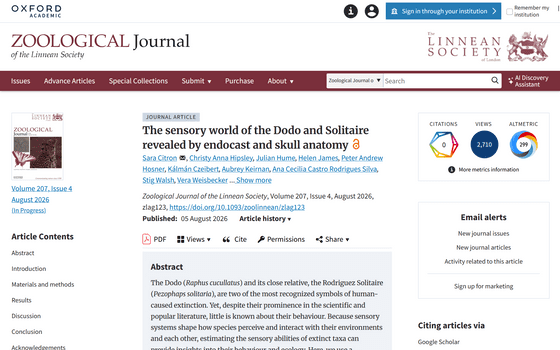
sensory world of the Dodo and Solitaire revealed by endocast and skull anatomy | Zoological Journal of the Linnean Society | Oxford Academic
https://academic.oup.com/zoolinnean/article/207/4/zlag123/8751003
Dodos probably weren't as stupid as historians made them out to be: new research
The dodo was a large bird, and records show that it was a docile species that lived on islands without natural predators. It was overhunted by humans who invaded Mauritius and became extinct. The dodo's name means 'foolish' in Portuguese, and its image as a foolish bird has been firmly established since ancient times, as evidenced by its scientific name 'Dodus ineptus' (ineptus meaning foolish) given to it in the 18th century.
However, new research has shown that this image can be misleading.
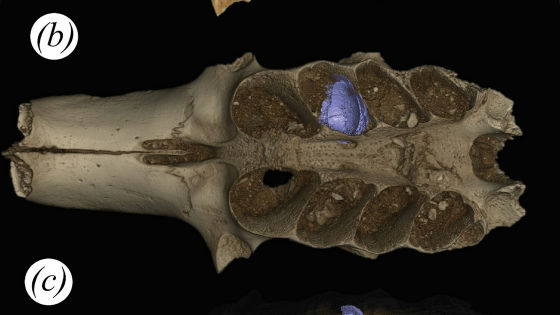
Sarah Citron of the University of Lethbridge in Canada examined all three of the only surviving dodo skulls, reconstructing their shapes using high-resolution CT scans and recreating the size and shape of the brain. This made it possible to measure structures related to vision, smell, and cognitive abilities.

by Emőke Dénes
Since the dodo is a member of the pigeon family, Citron and his colleagues compared the dodo's brain to that of a pigeon. As a result, they found that the proportion of the dodo's 'forebrain,' which is involved in cognition and memory, in the dodo's brain is about the same as that of other pigeon species.
Citron and his colleagues point out that, 'In other words, there is no evidence to suggest that the dodo's intelligence was lower than that of other pigeons.' Previous studies have also shown that the dodo's brain size relative to its body weight was similar to that of other pigeon species, suggesting that the dodo may not have been particularly unintelligent.
What sets the dodo apart from other pigeons is its sensory system, particularly its vision. When comparing the optic lobe, the area of the brain that first processes visual information, the dodo is found to be abnormally small compared to other pigeons. This was true not only when compared to pigeons, but also when compared to its extinct relative, the Rodrigues dodo.
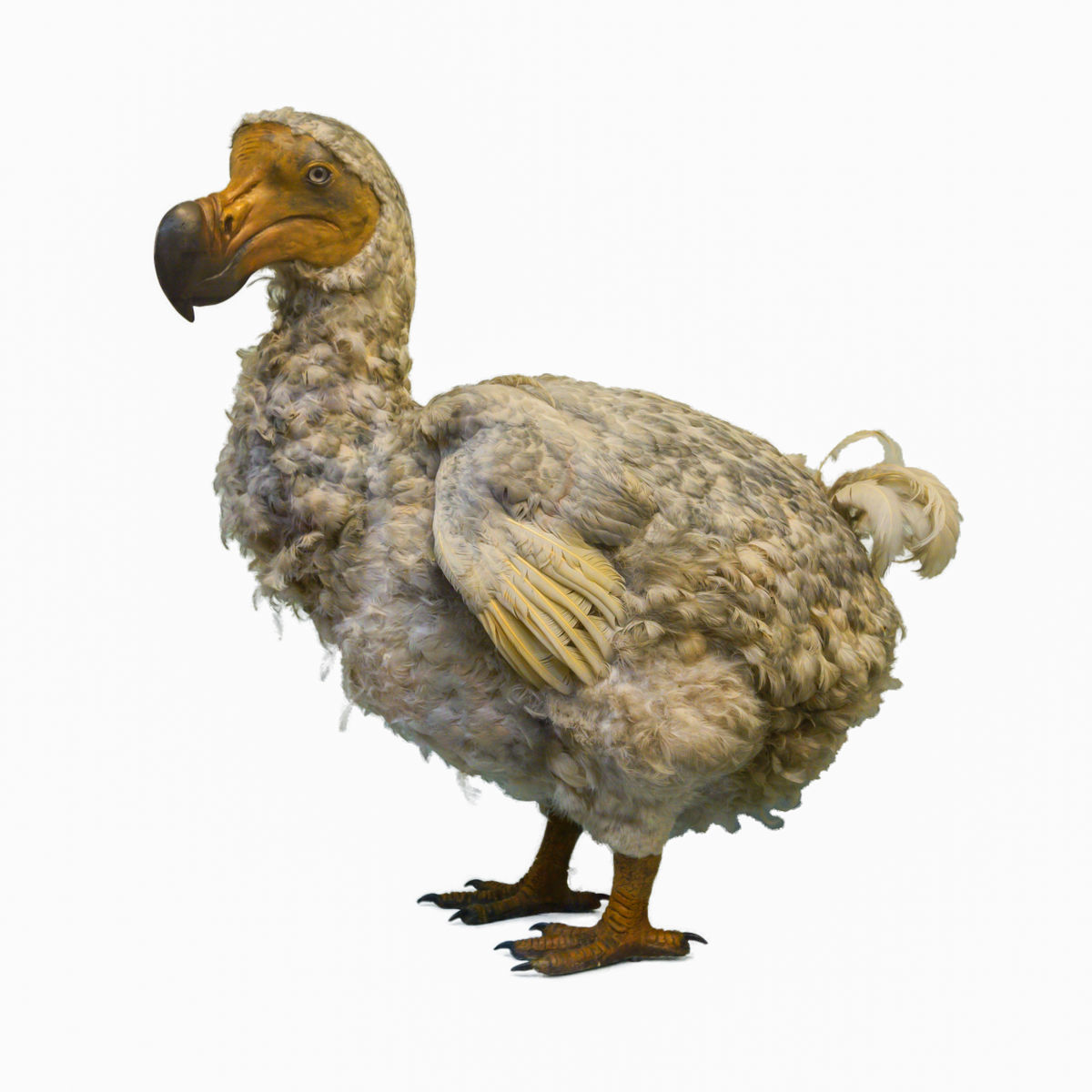
These small optic lobes are found in birds adapted to nocturnal life, such as owls and kiwis, suggesting that the dodo may have also adapted to living in dark places. Citron and his colleagues speculated, 'One possibility is competition. Mauritius once had a large population of giant tortoises that ate many of the same fruits and plants as the dodo. The dodo may have reduced competition and been able to obtain food by shifting its activity time to the cool, dark hours when the reptiles were inactive.'
Some modern records depict people holding captured dodos in their hands, letting them cry out to attract other birds. Citron and his colleagues suggest that the dodos were not wary of humans simply because they had no natural predators and nothing to fear, adding that this is common for species living on islands where there are no predators.
Citron and his colleagues stated, 'These findings challenge the long-established stereotype of the dodo as a clumsy, foolish diurnal bird. We may need to imagine a dodo that moves through dimly lit forests at sunrise and sunset, behaving with intelligence comparable to that of modern pigeons.'
Related Posts: