Ancient wasps found to build nests in hollows in the bones of dead mammals
A paper to be published in the journal Royal Society Open Science reports that wasps living on the Caribbean
How owl leftovers became the perfect home for baby ancient bees
https://phys.org/news/2025-12-owl-leftovers-home-ancient-baby.html
Ancient burrowing bees made their nests in the tooth cavities and vertebrae of dead rodents, scientists discover | Live Science
https://www.livescience.com/planet-earth/fossils/ancient-burrowing-bees-made-their-nests-in-the-tooth-cavities-and-vertebrae-of-dead-rodents-scientists-discover
Juan Almonte Millán, curator of paleontology at the Dominican Republic's National Museum of Natural History , discovered a cave in the southern part of the island of Hispaniola that is home to a plethora of fossils.
Lázaro Vignola-López, a postdoctoral researcher at the Field Museum of Natural History in Chicago, and his team explored the cave in search of specimens to study. 'The initial descent into the cave isn't very deep,' Vignola-López said. 'You tie a rope to the side of the cave and hang from it. If you go in at night, you can see the eyes of the tarantulas that live inside. But once you walk through the 10-meter underground tunnel, you start to find fossils.'
The cave explored by Vignola-Lopez and his team was filled with layers of fossils, most likely prey hunted by an owl that lived in the cave about 20,000 years ago. Most of the bones were from the jutia , a rodent native to Cuba and Hispaniola, but there were also bones of reptiles, birds, and even sloths, which are now extinct.
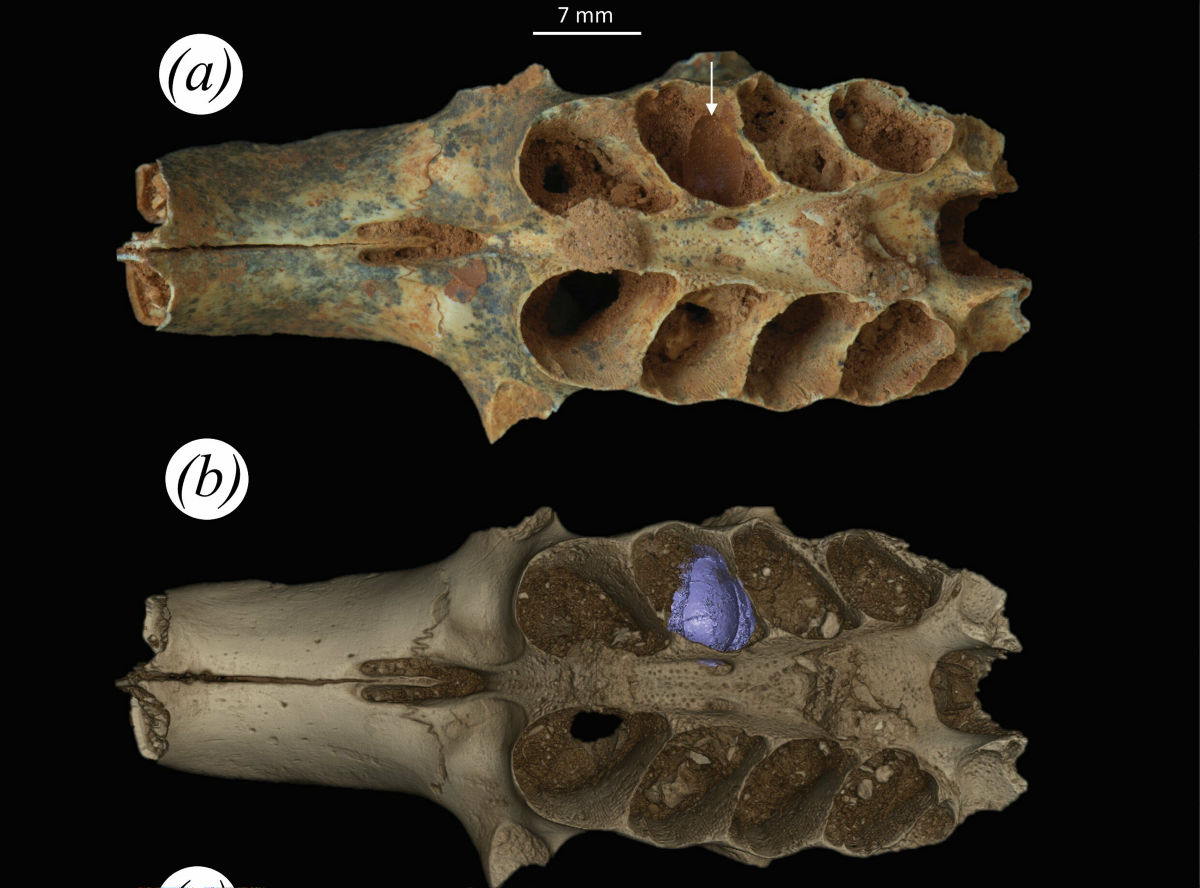
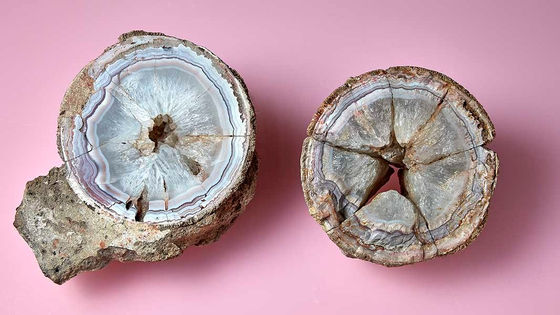
Intrigued by the mammalian bones the owls ate, Vignola-Lopez began cleaning the fossils he had retrieved from the cave and noticed that the alveoli, or sockets in the jawbone where the tooth roots fit, were filled with smooth sediment that didn't seem to have been deposited by chance.
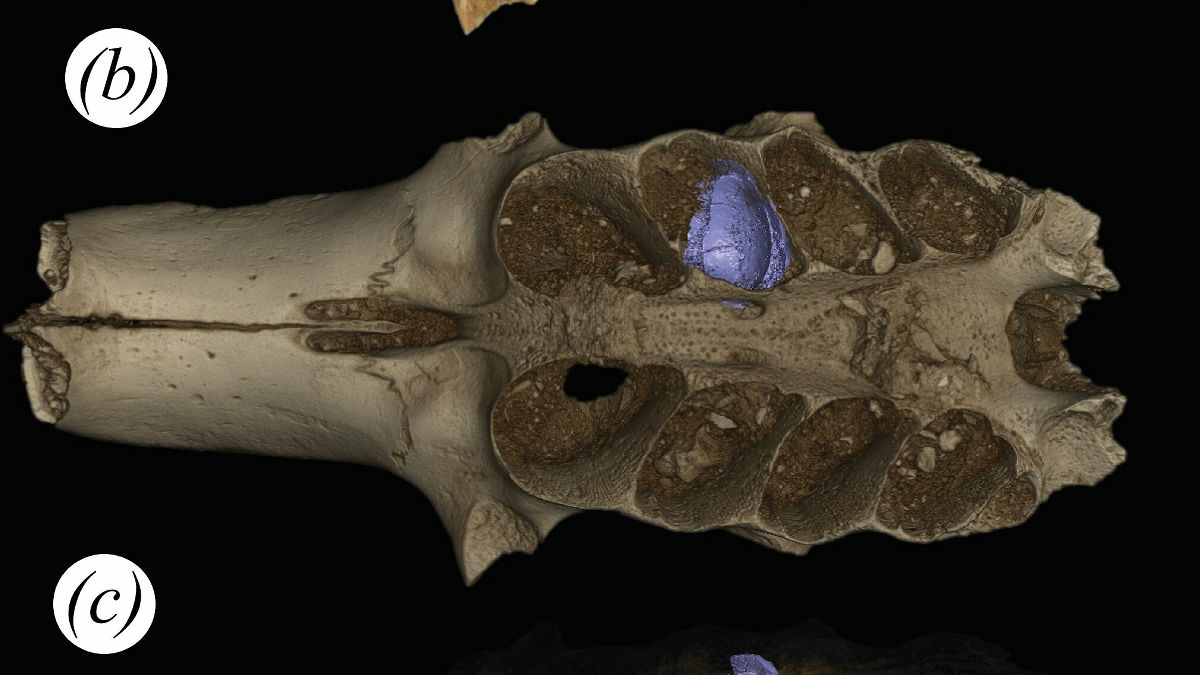
'The surface was smooth and almost concave. Sediments don't usually fill up like this, but I saw it in multiple specimens. I thought, 'Oh, something's strange.' It reminded me of a hornet's nest,' said Vignola-Lopez. When Vignola-Lopez was an undergraduate student and excavated a fossil in Montana, paleontologists showed him the remains of an ancient hornet cocoon. The sediments found in the mammal's dental alveolus were very similar to those he had seen. In the photo below, 'a' represents the mammal's jawbone, and 'b' represents the colored sediments.
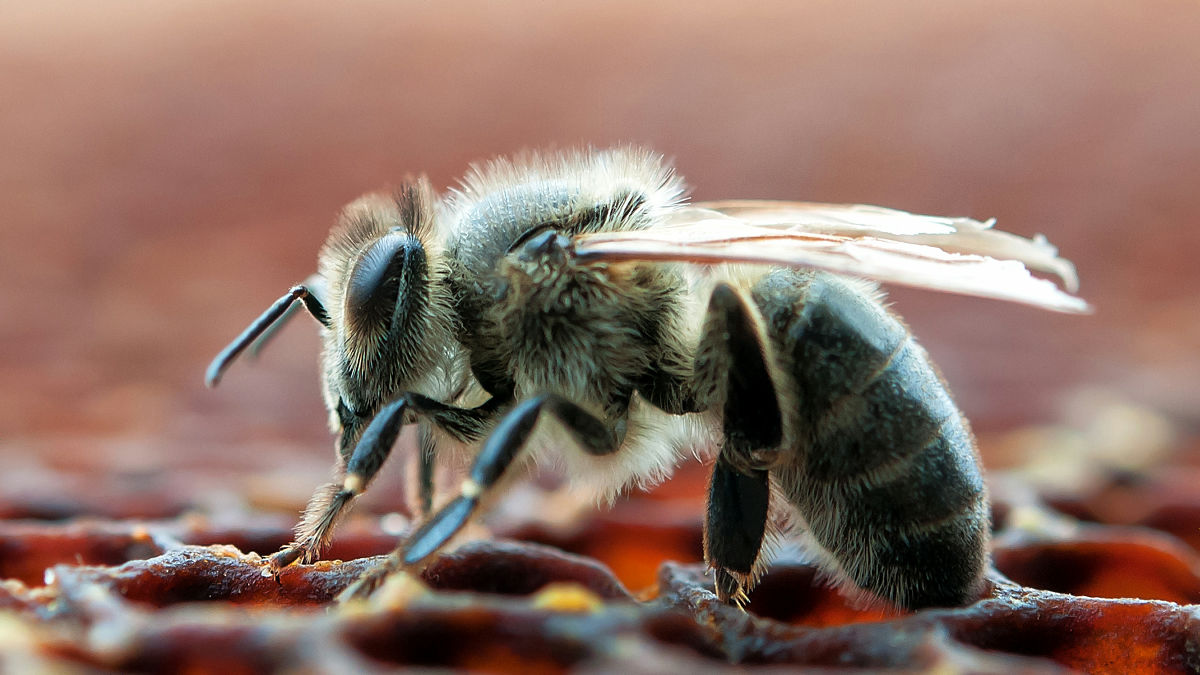
When you hear the word 'beehive,' you might generally think of the large nests built by colonies of honeybees or hornets. However, in reality, most bees live alone, laying their eggs in small cavities and leaving pollen there to feed their larvae. Some species of bees dig holes in trees or the ground, or use cavities in natural objects as nests, and in Europe and Africa, there are even bees that build nests in snail shells.
To study the alveolar deposits more closely, Vignola-Lopez and his colleagues performed CT scans to create 3D images without destroying the fossil or the deposits. They found that the deposits' shape and structure closely resembled the mud nests built by some modern-day wasps. Furthermore, some of these nests contained grains of pollen, likely packed by the parents to feed their larvae.
The researchers believe the bees stumbled upon the bones while digging through the cave's soil and then built nests in the hollows using a mixture of saliva and soil. In some cases, as many as six nests were found in a single cavity, suggesting that descendants of previous nests re-established themselves in the same location after the previous one had been abandoned.
'Each burrow is smaller than the eraser on a pencil, and by building it inside the bones of larger animals, the animals may have protected their eggs from hungry predators. No bee fossils were found in the nests, likely because the hot, humid cave environment was not suitable for preserving the remains of small, delicate insects,' said the study's lead author, Professor of Archaeology and Archaeology at the University of California, San Diego.
'Because we didn't find any dead bees, it's possible that they were species that are still living today,' Vignola-Lopez said. 'However, we also know that many of the animals whose bones are preserved in the cave are extinct, so it's possible that the bees that built these nests were species that are no longer extinct.'
The results of this study mark the first time that bees have been seen building nests in hollow animal bones. The terrain surrounding the cave is covered with limestone, and there is little soil suitable for digging burrows, so the bees may have used the caves as nesting sites.
'This discovery shows how strange bees are. They can amaze us, but it also shows that we need to be very careful when looking at fossils,' Vignola-Lopez said. He pointed out that if researchers had never seen a bee cocoon fossil before, they might have washed away the sediment when cleaning the fossil.
Related Posts:


in Free Member, Science, Creature, Posted by log1h_ik