Following Chrome, Edge has also begun gradually disabling Manifest V2 extensions, affecting traditional ad blockers such as uBlock Origin.

Microsoft has announced that it will gradually disable extensions using 'Manifest V2 (MV2)' in Microsoft Edge starting in August 2026 and will proceed with the migration to '
Moving the Microsoft Edge extensions ecosystem forward with Manifest Version 3 - Microsoft Edge Blog
https://blogs.windows.com/msedgedev/2026/08/07/moving-the-microsoft-edge-extensions-ecosystem-forward-with-manifest-version-3/
Migrating extensions from Manifest V2 to V3 - Microsoft Edge Developer documentation | Microsoft Learn
https://learn.microsoft.com/ja-jp/microsoft-edge/extensions/developer-guide/migrate-your-extension-from-manifest-v2-to-v3
Web browser extensions have a configuration file called a 'manifest' that defines the extension's name, required permissions, and the APIs it uses. Google's MV3, introduced for Chromium, features various changes from the previous MV2 to improve security, privacy, and performance.
Google began gradually phasing out Manifest V2 around 2024, and disabled the Manifest V2 extension for all users on July 24, 2025.
Google begins phase-out of its extension specification 'Manifest V2' - GIGAZINE

Furthermore, Microsoft Edge, which is based on Chromium, had also indicated its intention to migrate to MV3 in 2020.
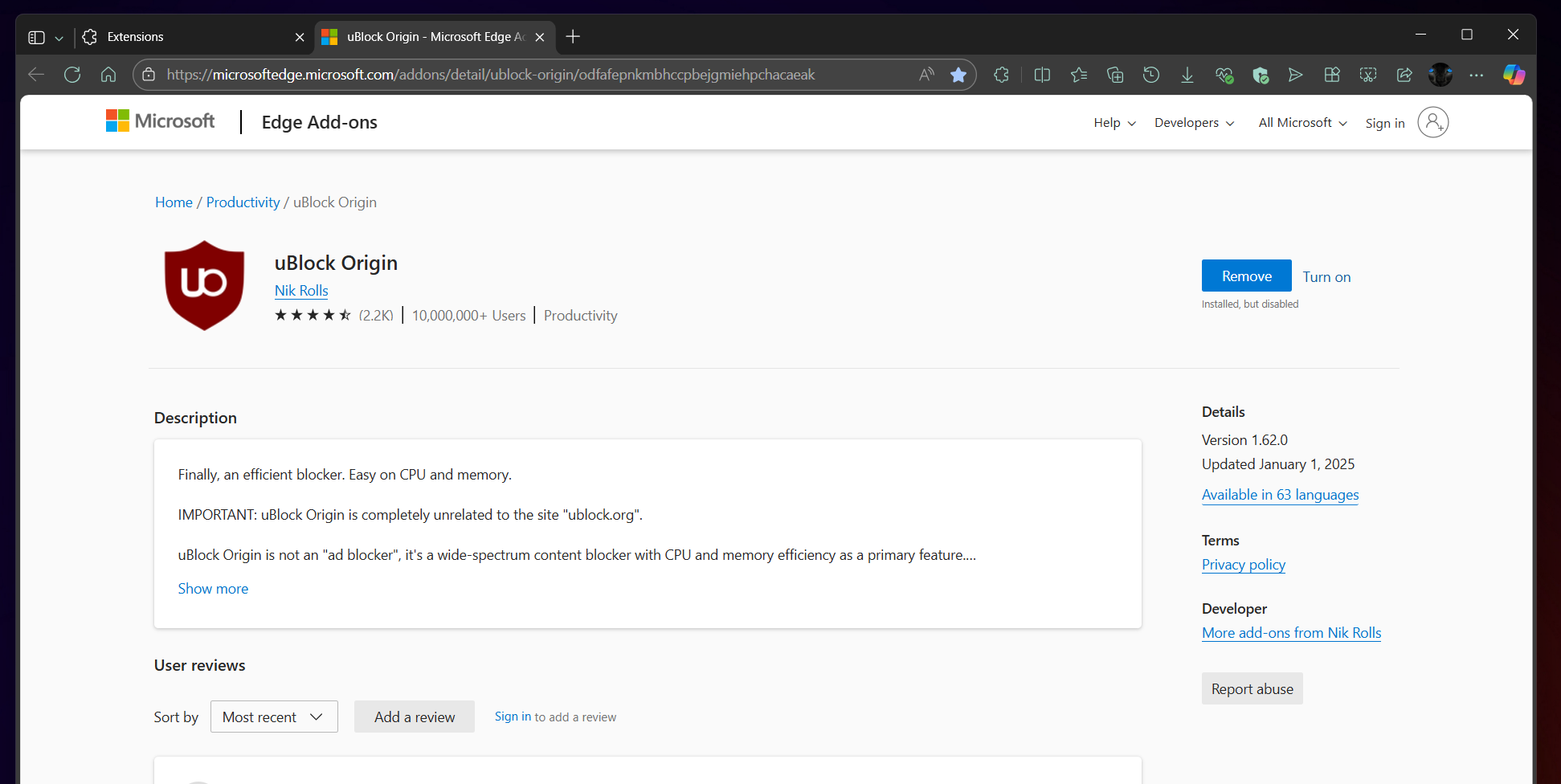
Microsoft Edge finally begins disabling the ad blocker 'uBlock Origin' - GIGAZINE

According to Microsoft, as of August 2026, 95% of major MV2 extensions in the Microsoft Edge add-on store will have already migrated to MV3. As of the time of writing, only 58 MV2 extensions with a significant user base remain, and of those, only three have not yet received a publicly released MV3 version.
Therefore, starting in August 2026, Microsoft will display migration notifications to some users who have installed MV2 extensions on the extension management screen at 'edge://extensions' and on the Microsoft Edge add-ons page. Over the next few months, MV2 extensions will be disabled by default, and users will be directed to alternative extensions if an MV3 version exists.
The changes will first roll out to the Canary, Dev, and Beta channels, and then be expanded to the Stable version. Microsoft plans to complete the migration to MV3 for general users by the end of 2026, with enterprise-managed devices being excluded at this stage. The MV2 phase-out in enterprise environments is scheduled for early 2027.
One of the most significant changes in MV3 is the mechanism by which extensions control communication to web pages. In MV2, it was possible to examine the content of communication using the 'Web Request API' and block requests on the spot, but in MV3, the policy is to replace this blocking process with the 'Declarative Net Request (DNR) API,' and Microsoft also recommends that extensions use the DNR API as a general rule.
This change will also affect ad blockers. The previous version of uBlock Origin, an ad blocker with advanced filtering capabilities, uses MV2, so it will become unusable if MV2 is disabled in Edge. On the other hand, ad blockers such as uBlock Origin Lite, which are compatible with MV3, will continue to be usable, and Microsoft has stated that most of its extensions, including password managers, VPNs, and ad blockers, have already migrated to MV3.
In addition, MV3 generally prohibits 'remote host code' obtained from outside the extension package, and all code used in the extension must be submitted together during the review process. Changes have also been made to the background processing mechanism and website access permissions, which Microsoft says will improve the security and privacy of extensions.
Microsoft is not 'discontinuing ad blockers' with the transition to MV3; ad blockers compatible with MV3 will continue to be usable. However, ad blockers developed based on MV2 will no longer be usable with Edge, so users will need to switch to an MV3-compatible version or switch to a different browser.
Related Posts:






in Software, Posted by log1i_yk