What makes the difference between someone who can mow their lawn efficiently and someone who can't?

The Pudding, a web media outlet that publishes interactive articles using data, developed a route selection game that simulates lawn mowing and analyzed how more than 30,000 participants found the most efficient route. By recording participants' movement paths and stopping times, they found differences in the behavior of those who reached the optimal solution and those who did not.
Why some people mow a lawn better than others
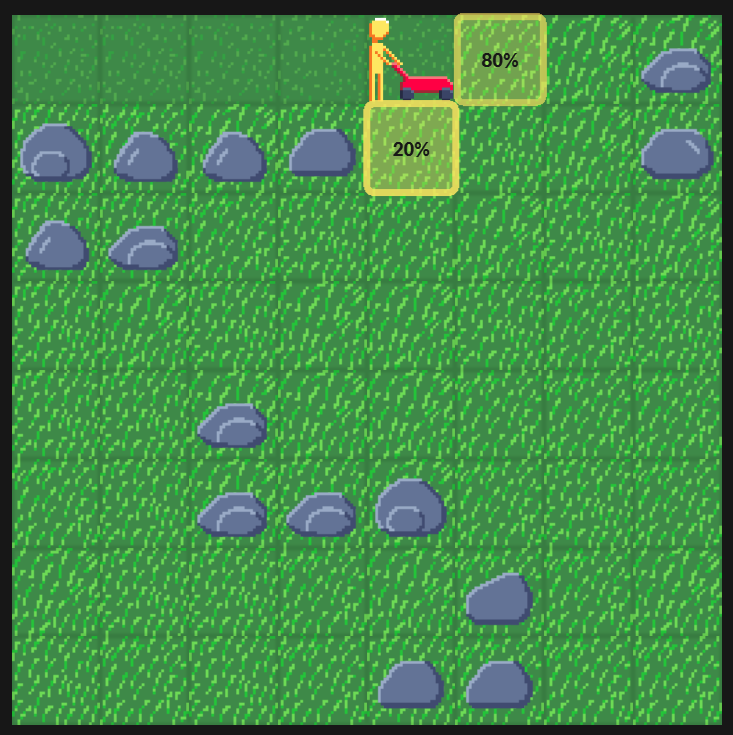
By accessing the page above, you can try a simulation game of the lawn mowing used in the actual analysis experiment. Click 'START'.
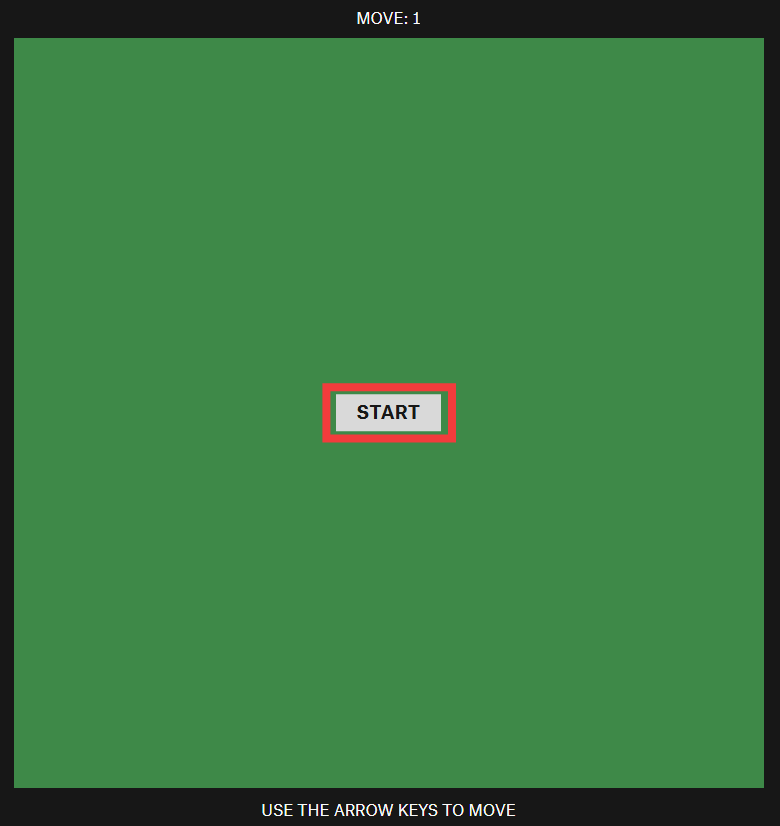
The game involves mowing a lawn that spans an 8x8 grid of 64 squares. The person holding the lawnmower can be moved using the arrow keys on the keyboard, and the grass is cut in the squares the lawnmower passes over. However, squares with stones cannot be passed over. The objective of the game is to mow the lawn as efficiently as possible, so the key is to pass through all the squares in a single continuous line without passing over any squares that have already been passed over.
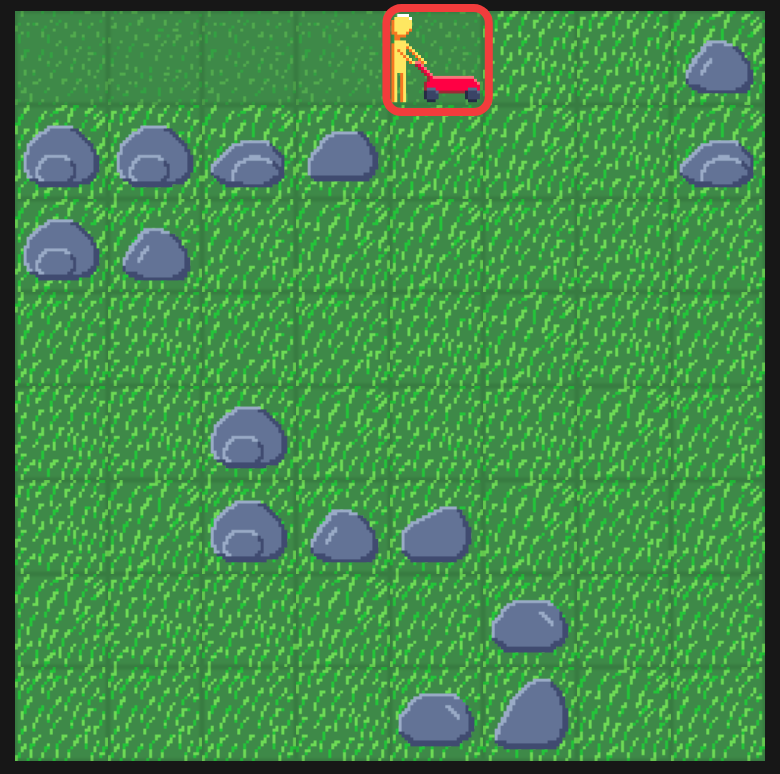
The game ends when all the grass is cut.
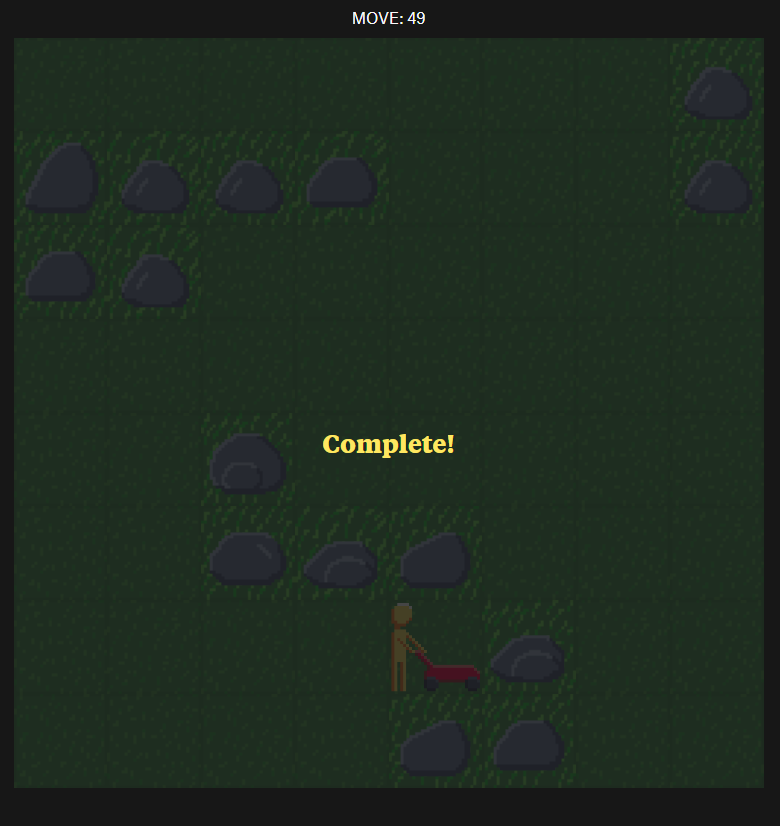
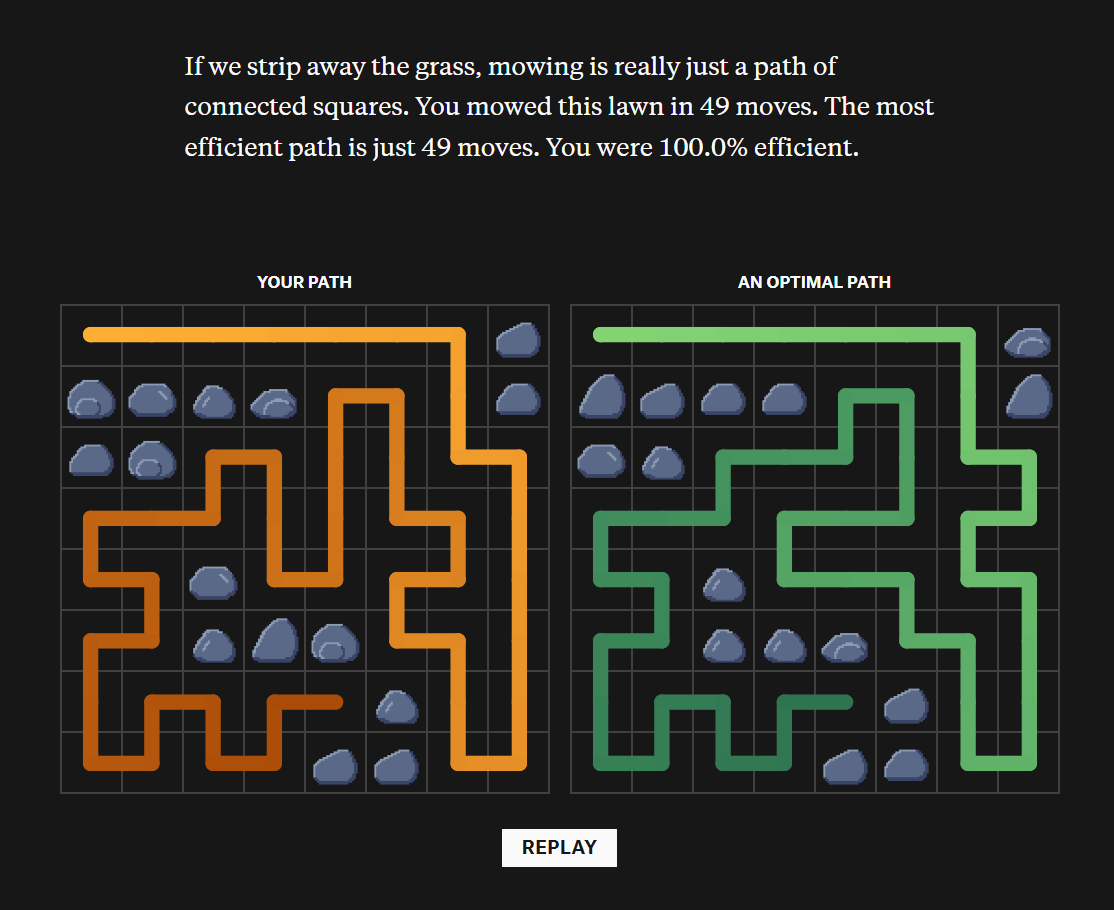
The results are displayed. This time, I successfully completed the puzzle in one go with a single continuous line, taking 49 moves. The left is the grass-cutting route I played, and the right is the optimal solution route. Both take 49 moves, but the answer and the presented optimal solution have slightly different routes.
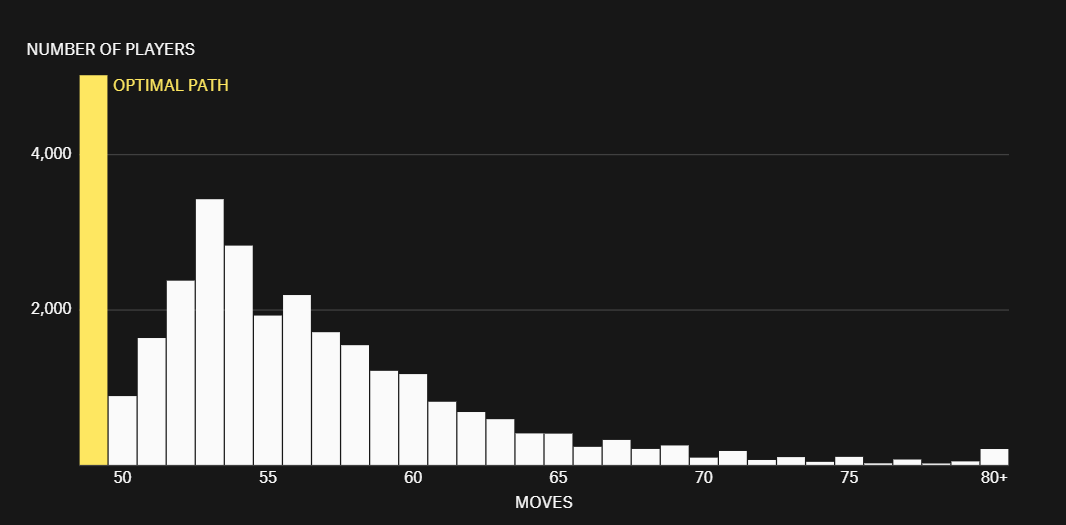
At least 30,954 people participated in this grass-mowing game study at the time of writing. 52% of participants found the shortest path within 5 moves, and 16% reached the perfect optimal solution in 49 moves. The median efficiency was 91%, indicating that even average participants were finding fairly good paths.
The participants used a total of 14,589 different paths, and all 12 possible optimal paths were discovered.
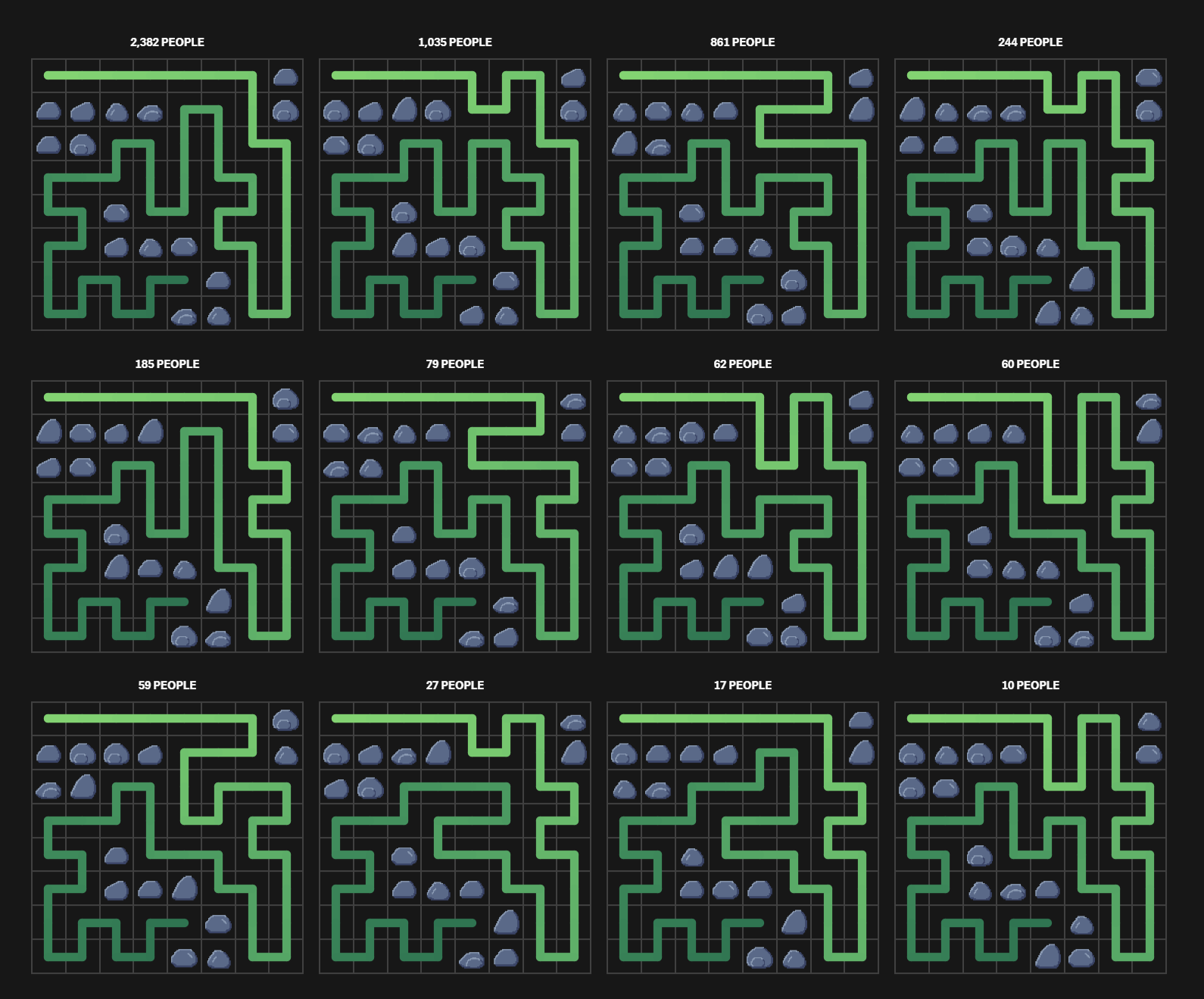
The biggest factor that separated good and bad players was a single branching point early on. The lower part of the lawn is divided into left and right areas by a row of stones, but the entrance is only one square wide, and the left section is a dead end at the back, so if you mow the left side first, you have to go back the same square.
Those who took many moves tended to move to the left, while those who found the optimal solution or were within two moves of it tended to process the right side first and then choose a path that led to the dead end on the left and ended there. In other words, skilled participants didn't just process the squares in front of them in order, but thought about 'where they should end up' early on and reserved a dead end as their finish point, thus avoiding unnecessary back and forth.
For example, a participant named 'Bones,' who completed the game in 54 moves, looked at the board for about 2.9 seconds before starting, but hesitated for only 0.7 seconds at the first important branching point, moving to the left where there was a dead end. However, only realized he couldn't proceed after reaching the left edge, and stopped for 2.4 seconds in front of the stone. In order to get out of the section, he had to traverse squares he had already visited multiple times, resulting in a move 5 more than the optimal solution.
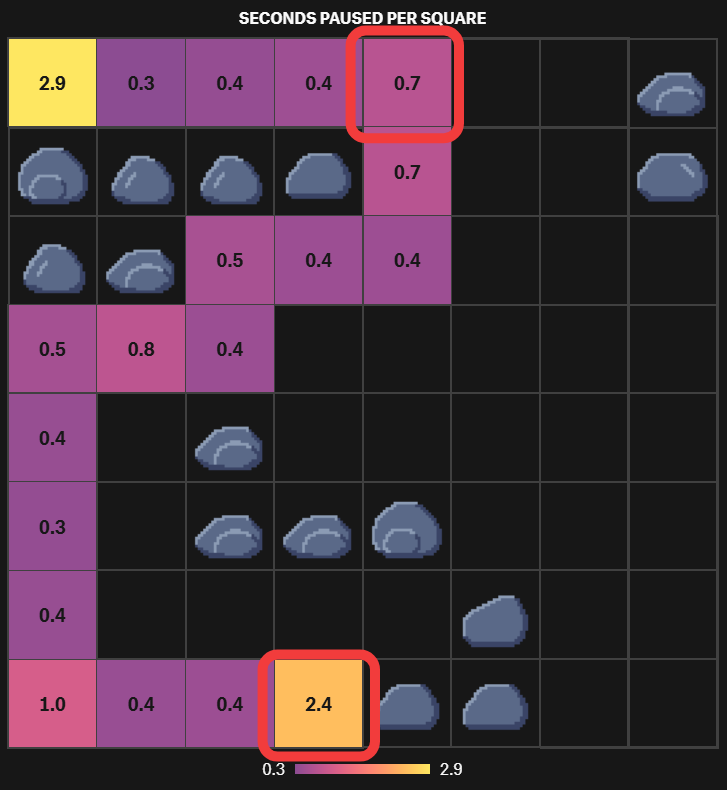
The Pudding states, 'The problem with Bones wasn't that it was slow to move. It was that it didn't adequately consider the structure ahead at branching points, and only reacted after reaching a dead end. In other words, it reacted to problems after they occurred, rather than planning ahead.'
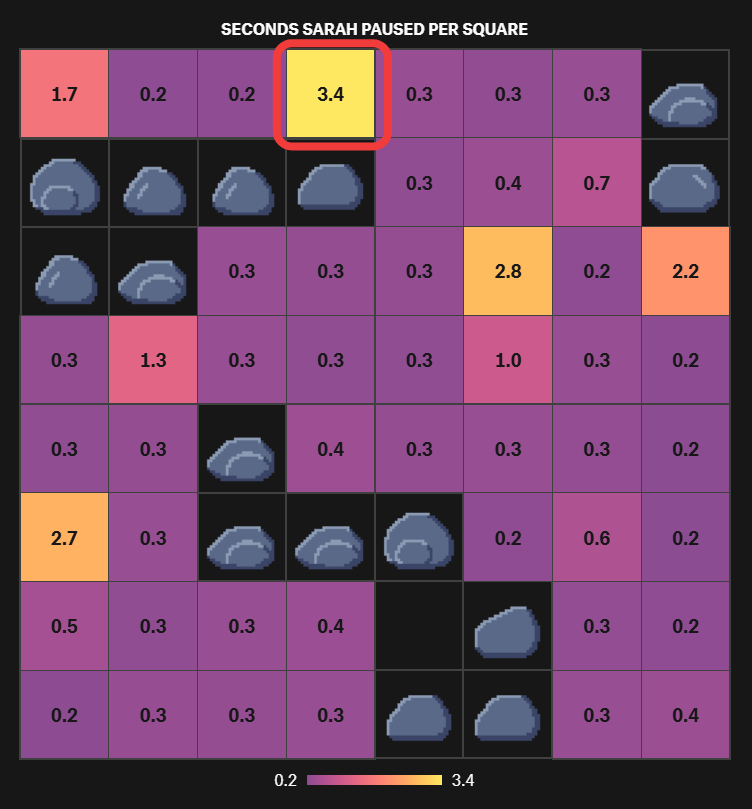
On the other hand, Sarah, one of the participants who found the optimal solution, noticed that the left side was a dead end and decided that 'that needs to be finished last,' so she avoided going left and tackled the right side first. The travel time data also confirmed that Sarah spent a long time thinking just before the top branch. After deciding on a course of action, she proceeded relatively without hesitation.
Furthermore, The Pudding had predicted that performance would decline as the grass became larger and more complex. This was because previous studies had shown a tendency for human solutions to deviate from the optimal solution as the number of visited locations increased. However, in this experiment, the median efficiency remained around 90% whether the optimal path was 26 moves or 177 moves.
The Pudding cites two methods—decomposition and compression—as reasons why humans have been able to maintain high efficiency.
'Decomposition' is a method of dealing with a large lawn in sections, rather than trying to solve it all at once, by dividing it into several smaller sections and processing them sequentially. Sarah also explains that she tackled the lawn section by section, leaving the completed sections for later. By solving the small problems in front of her rather than memorizing the entire path, she reduced her cognitive burden.
'Compression' means memorizing what you learned in the previous stage as a general pattern rather than individual paths. For example, you can translate it into simple rules such as 'leave dead ends for last,' 'fill in open areas by meandering,' and 'complete a section before moving on to the next,' and then apply them to larger lawns.
Furthermore, The Pudding states that when comparing the time taken per square and the efficiency of the route for the 7,235 people who completed all stages, the relationship between the two was very weak. In other words, those who finished quickly were not necessarily careless, nor were those who took a long time necessarily superior, and simply 'thinking for a long time' did not guarantee a good answer. The Pudding argues that what mattered was not the total amount of time spent thinking, but 'where you stopped to think.'
The top 10% of participants tended to stop for extended periods at the beginning, at forks in the path, and when deciding their route after passing through obstacles. They had anticipated the structure ahead and constructed their paths to reach dead ends, allowing them to proceed with little hesitation towards the end. On the other hand, the bottom 10% of participants tended to move forward almost without stopping at the beginning, only thinking after encountering corners or dead ends. Instead of anticipating problems beforehand, they only corrected their paths when they became stuck, resulting in more backtracking.
There wasn't a significant difference in the basic movement speed between the top and bottom performers. The difference lay in the fact that the top performers focused their attention on important junctions and didn't hesitate on straight sections where no decision-making was required. In other words, The Pudding concludes that superior path selection is supported not by the ability to perfectly calculate everything, but by an effective heuristic that allocates thought only to important decisions.
Related Posts:
in Education, Web Application, Posted by log1i_yk