What is an efficient elevator algorithm?
The transport efficiency of an elevator depends on the algorithm that determines how the elevator moves.
Elevators
https://john.fun/elevators
The simulator is available at the bottom of the page linked above.
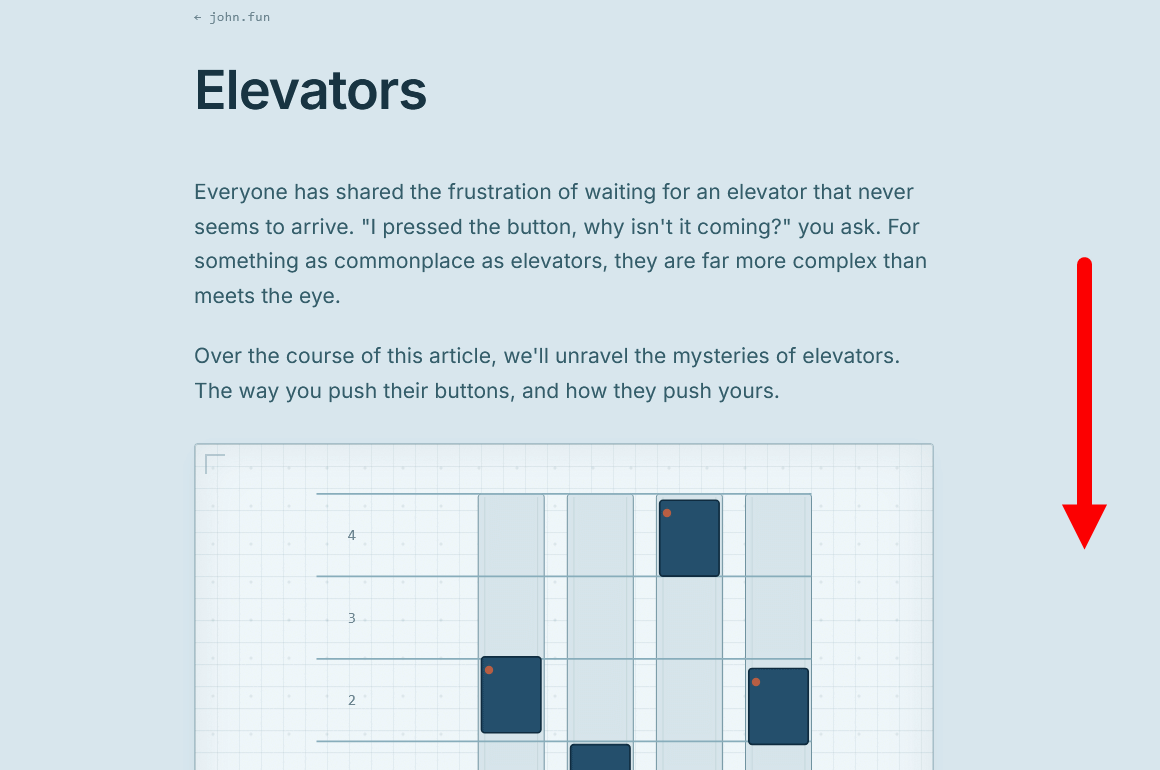
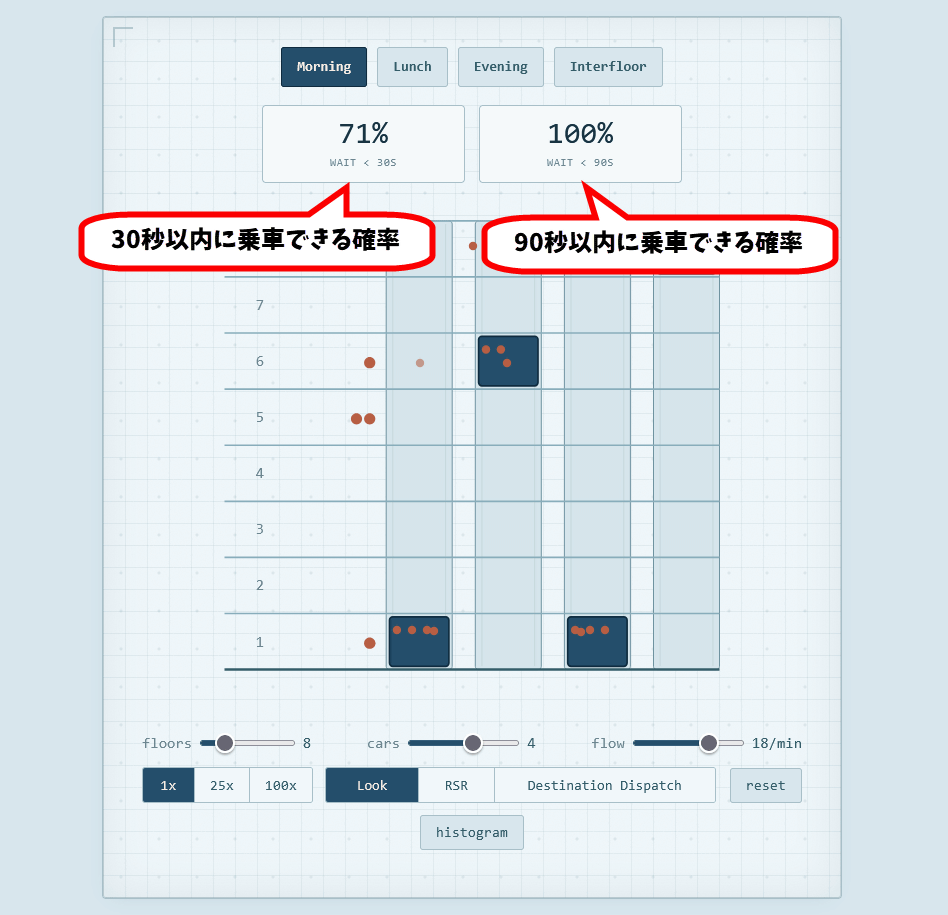
This is an elevator simulator. The probability of being able to board within 30 seconds and the probability of being able to board within 90 seconds are displayed at the top.
There are five controllable items: 'Passenger Pattern,' 'Floor Number,' 'Number of Cars,' 'Number of Passengers per Minute,' 'Speed,' and 'Algorithm.'
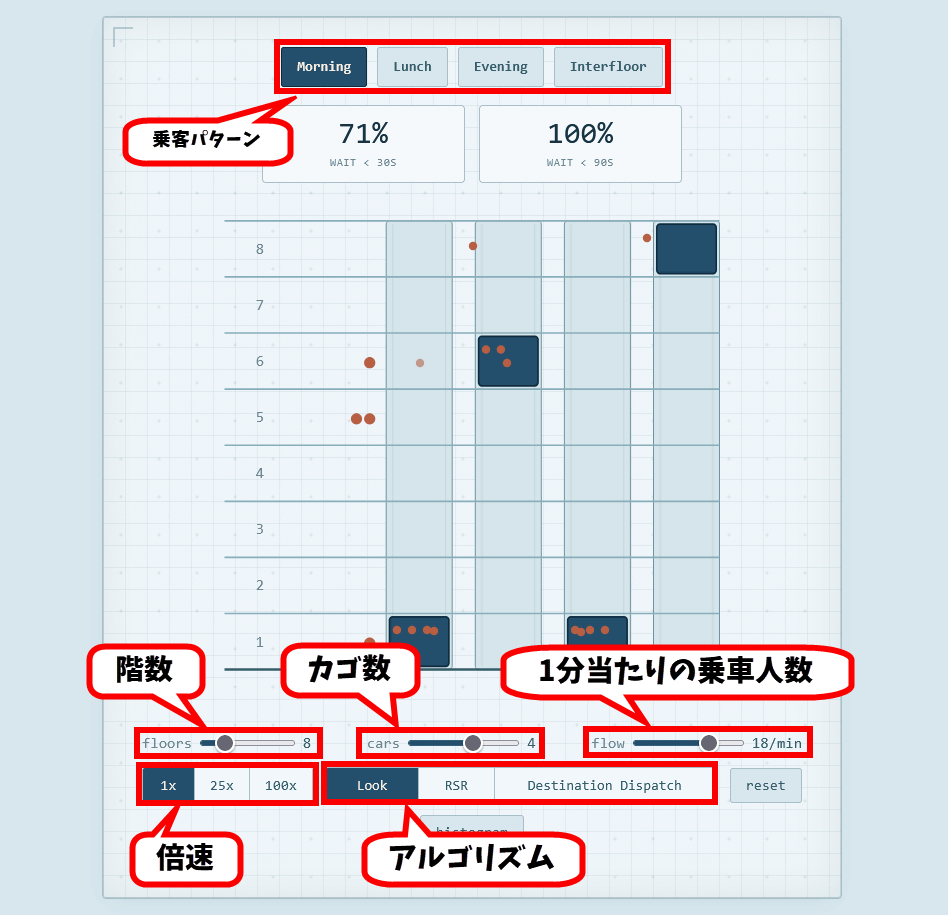
There are four types of passenger patterns: 'morning (commuting time),' 'lunchtime,' 'afternoon (returning home),' and 'moving between floors.' In the morning, most people move from the first floor to the upper floors; during lunchtime, entry and exit are roughly equal; and in the afternoon, most people move from the upper floors to the first floor.
There are three types of algorithms: 'LOOK,' 'RSR,' and 'Destination Dispatch (destination reservation method).' 'LOOK' is a common elevator algorithm that goes to the highest or lowest floor where it was called and then turns back. 'Destination reservation method' is an algorithm used in some elevators where the destination floor is specified at a terminal in the elevator hall on each floor to call the elevator.
RSR uses a special algorithm to calculate the 'score' of each elevator and select which elevator to operate. The score is calculated as follows: 'Time to arrival + Passenger penalty + Penalty for overlapping destination with another elevator - Bonus for matching direction of travel - Bonus for nearby waiting elevators - Bonus for low passenger count'.
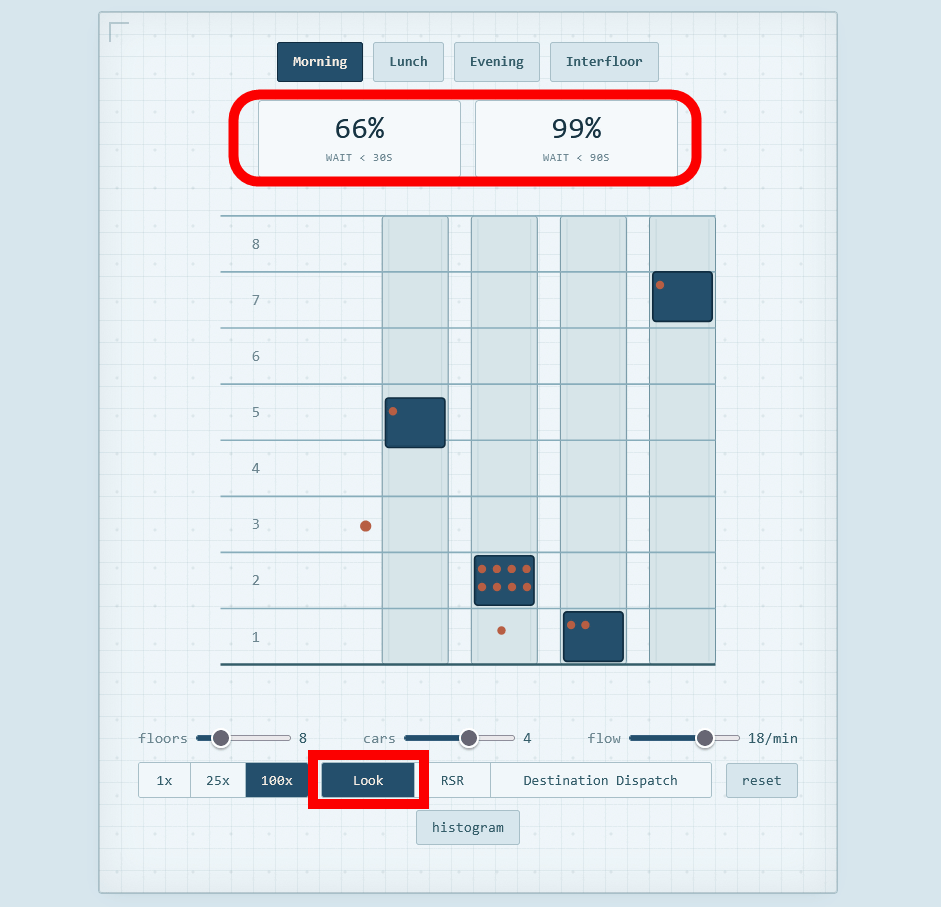
The following is a simulation example under the conditions of '8-story building,' '4 elevators,' '18 passengers per minute,' and 'morning (most people going from the first floor to the upper floors).' Using the LOOK algorithm, the probability of being able to board within 30 seconds was 66%, and the probability of being able to board within 90 seconds was 99%.
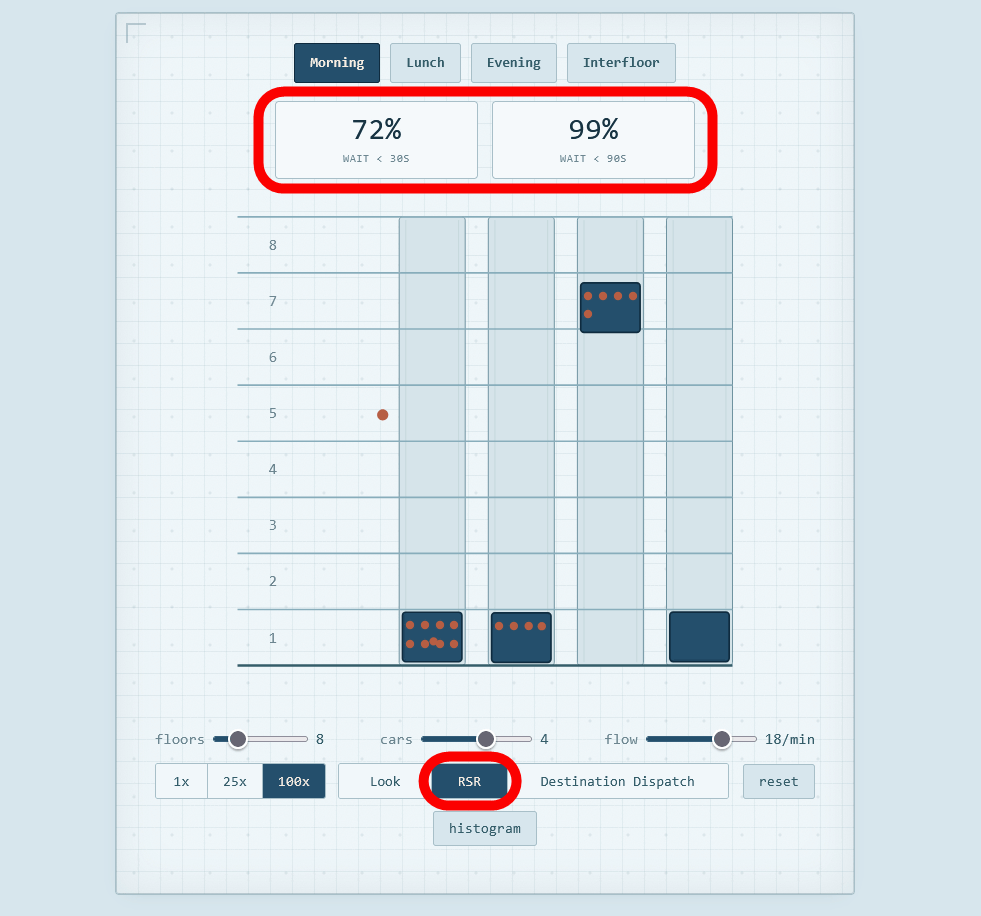
At RSR, the occupancy rate within 30 seconds dropped to 72%.
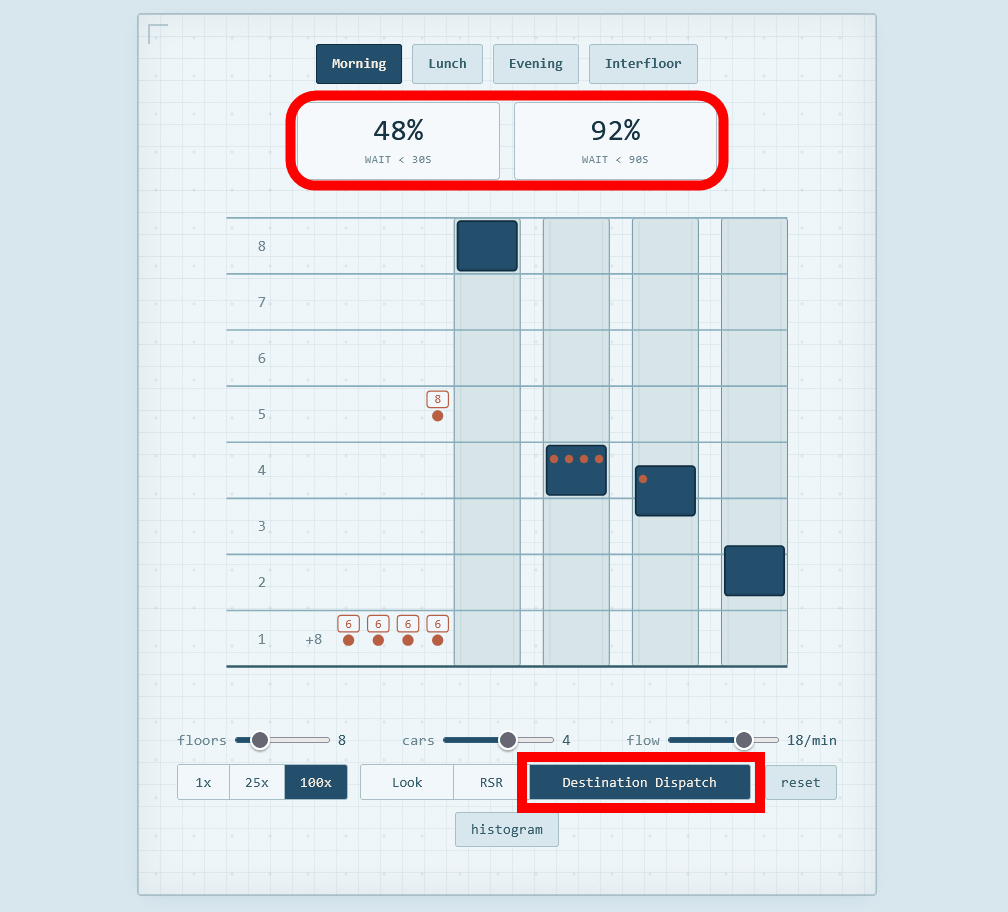
With the destination reservation system, the occupancy rate within 30 seconds dropped to 48%, and the occupancy rate within 90 seconds dropped to 92%. Under these conditions, the destination reservation system does not appear to be suitable.
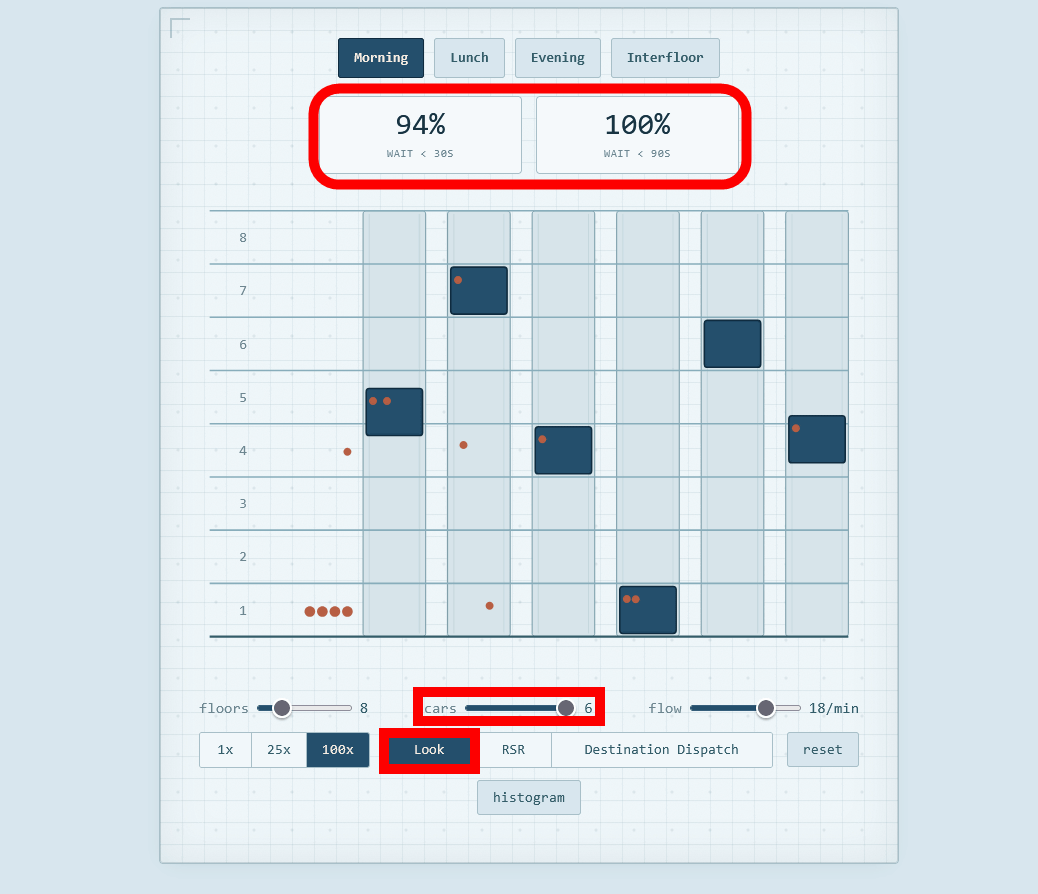
We increased the number of elevators to six. With LOOK, the occupancy rate within 30 seconds is 94%, and the occupancy rate within 90 seconds is 100%.
At RSR, the occupancy rate within 30 seconds increased to 96%.
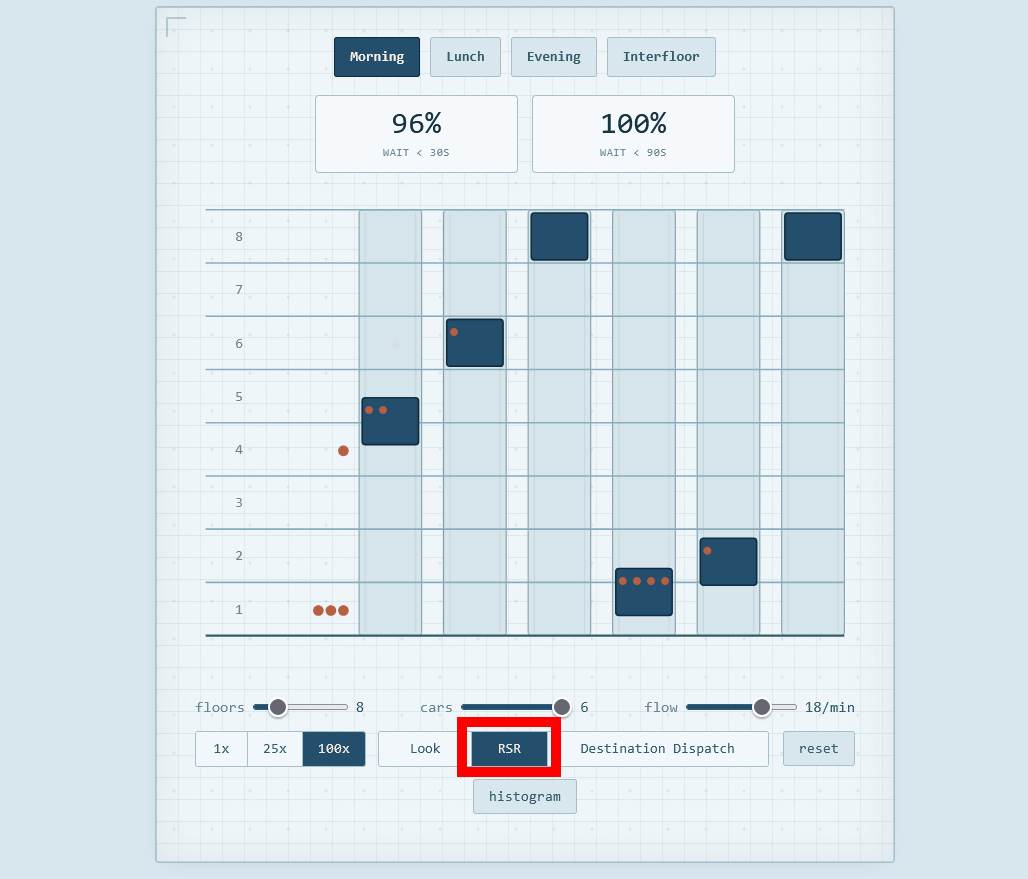
With the destination reservation system, the occupancy rate within 30 seconds reached 77%.
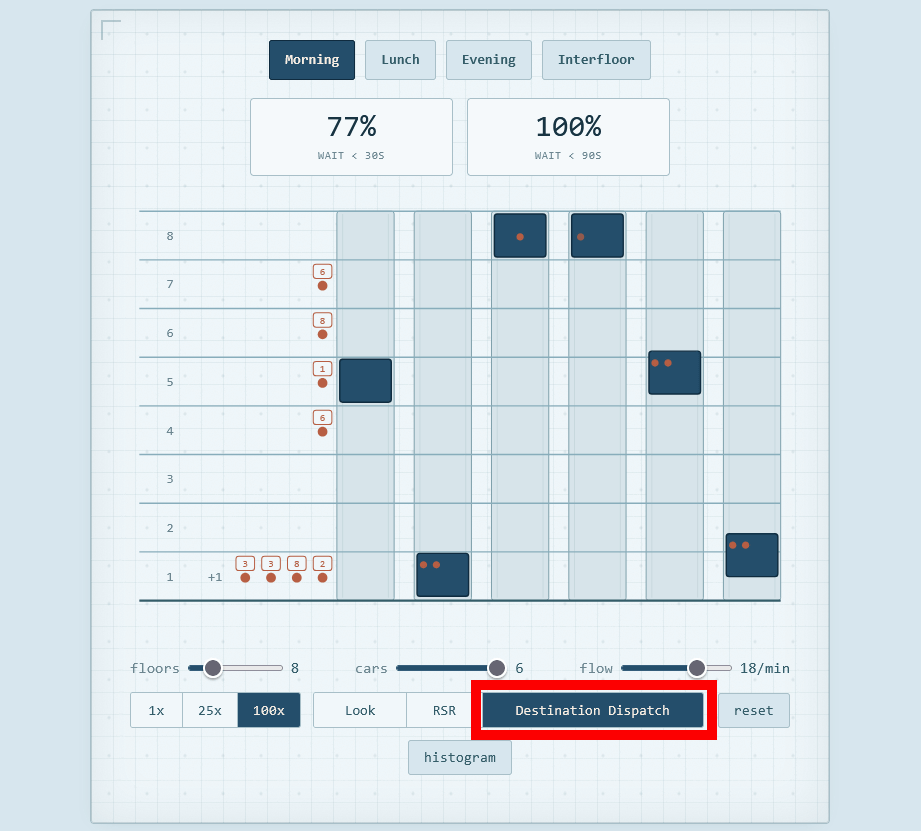
Try using the actual simulator, which includes animations to help you understand the characteristics of each algorithm.
Related Posts:

in Web Application, Posted by log1o_hf