Concerns have been raised that Anthropic will lose rare books by cutting up millions of physical books and digitizing them for AI training, but Elon Musk has reassured that 'SpaceX AI would not do that.'
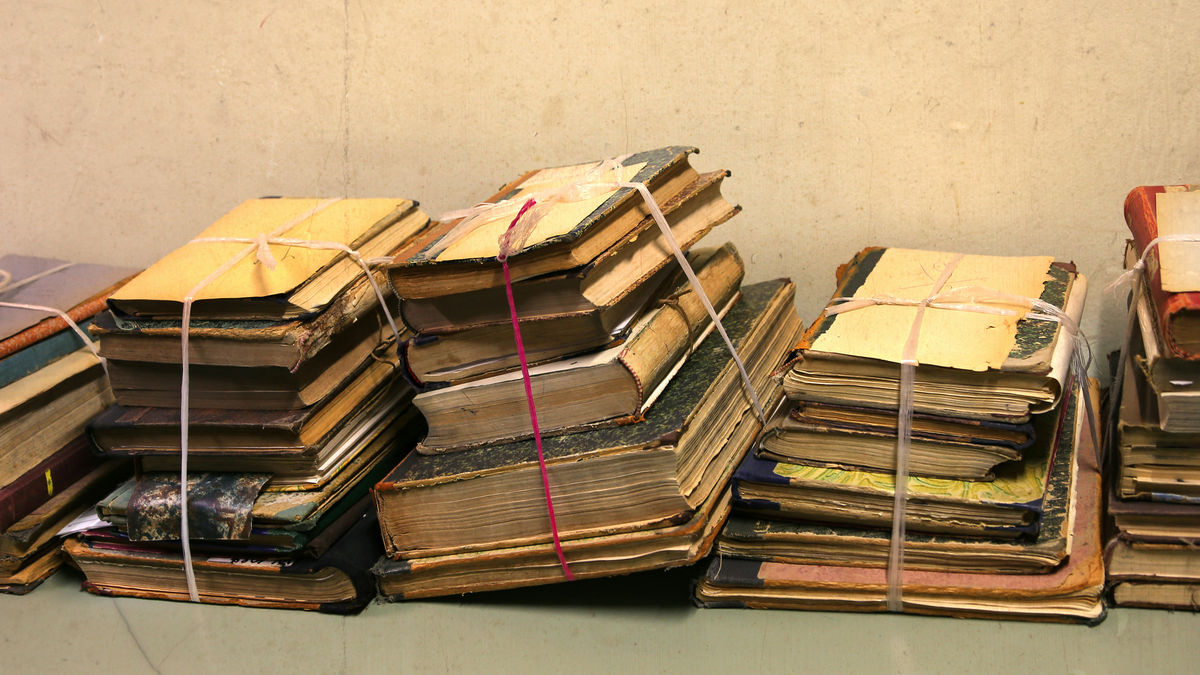
Anthropic was sued by a group of authors for using pirated books to develop its AI, Claude, but a settlement between Anthropic and the plaintiffs was
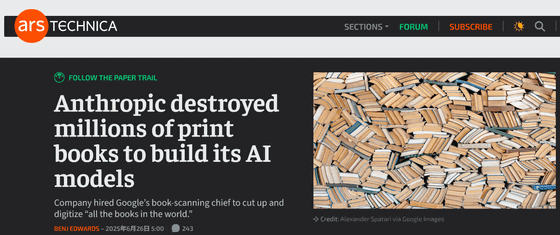
Anthropic destroyed millions of print books to build its AI models - Ars Technica
https://arstechnica.com/ai/2025/06/anthropic-destroyed-millions-of-print-books-to-build-its-ai-models/
AI Companies Are Buying Tons of Old Books Because They're Free of AI Slop
https://www.404media.co/ai-companies-are-buying-tons-of-old-books-because-theyre-free-of-ai-slop/
According to the documents, Anthropic hired Tom Turvey, the former head of partnerships for Google Books' book scanning project, in February 2024 and instructed him to 'obtain every book in the world.' Google won a favorable ruling in 2015 regarding fair use of book scanning, and it is believed that Anthropic aimed to replicate that success.
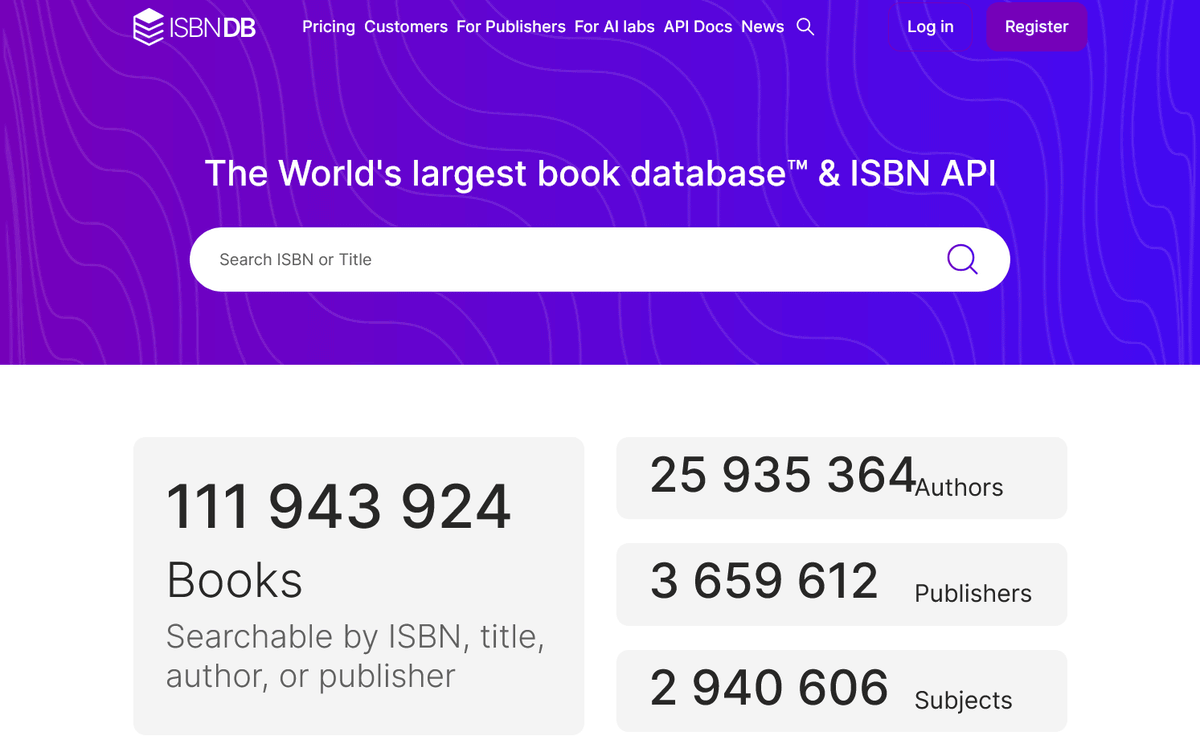
ISBNdb , which provides large amounts of bibliographic data and book information to AI companies, explains why book data is considered important: 'Printed books published before 2022 do not contain AI-generated text, thus avoiding the vicious cycle of ' AI slop ' where AI learns from low-quality AI-generated text, making them ideal for AI training data.'
Anthropic initially collected digital versions of pirated books in search of high-quality training data. However, in 2024, three American authors sued Anthropic, and in 2025, a ruling was made that 'author permission is not required for AI companies to train AI with legally acquired books,' although Anthropic's use of data from pirated sites was still criticized. As a result, Anthropic shifted its strategy from pirated ebooks to paper books, which are considered a safer source of information.
Google adopted a policy of scanning books borrowed from libraries before returning them, primarily using patented non-destructive cameras. Anthropic, on the other hand, adopted a policy of purchasing large quantities of used books and destroying them to digitize them in-house. Court documents state that this method was chosen to digitize a large number of books cheaply and quickly.
In many cases, Anthropic cut the spines off the purchased books to separate the pages, scanned each page individually with a high-speed scanner to create digital data, and then converted it into text data using OCR (Optical Character Recognition). All used paper originals were discarded.
This demand is also impacting the used book market. According to Dutch media outlet NL Times, used bookstores have recently seen cases of buyers, believed to be IT companies, purchasing large quantities of obscure, specialized, and out-of-print books. While some in the used book industry believe that purchases by AI companies will lead to increased sales, others point out that the loss of large numbers of rare and specialized books could affect their future availability and price. A used book dealer who spoke to 404 Media believes that rare books are being used to train these AIs, and that books that have survived wars, fires, and centuries of handling are being discarded through destructive scanning.
Anthropic purchases books in bulk from major retailers, and there is no mention in court documents of valuable books being destroyed in this process. However, some rare book dealers are concerned that Anthropic may be destroying rare editions, such as first editions, to train its AI models.
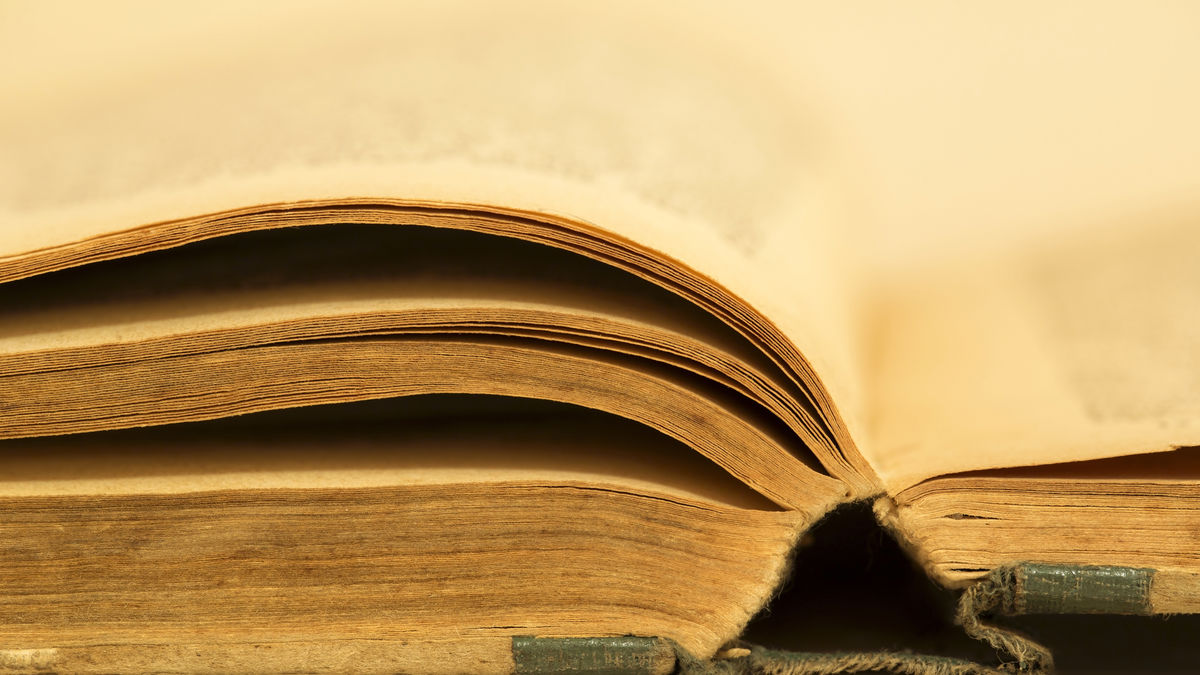
Anthropic is considered to be legally fair use because it scans the original books for AI training and then disposes of them without reselling them. However, despite Google and the Internet Archive employing non-destructive scanning, Anthropic has been criticized for using a method that could potentially lose valuable books for the sake of cost and speed. In response, Elon Musk of AI company SpaceXAI said, 'I asked the SpaceXAI team to preserve rare books in libraries and to take the time to scan them properly, rather than simply cutting off the spines and scanning them.'
I've asked the SpaceXAI team to preserve any rare books in a library and scan them the hard way vs just cutting off the spine and scanning
— Elon Musk (@elonmusk) July 27, 2026
Related Posts:





in AI, Posted by log1e_dh