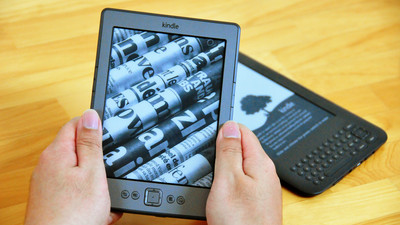
Free Ink is an open ecosystem for e-readers, comprised of open-source projects developing software, firmware, and hardware.
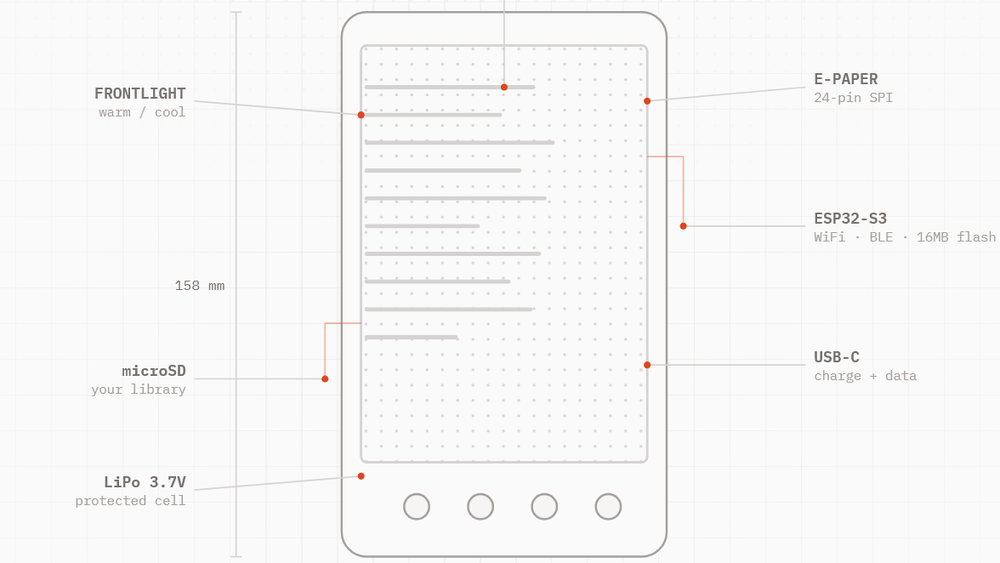
' Free Ink ' is a collection of open-source projects designed to allow users to freely develop and modify e-readers without being tied to a specific manufacturer. Because the software, firmware, and hardware development projects are all openly available, anyone can freely use, extend, and customize them.
Free Ink · An open ecosystem for e-readers
On the software side of Free Ink, a reader application called ' CrossPoint Reader ' has been developed and can run on the Free Ink firmware. It can read ebook files by parsing EPUB 2 and 3 ebook formats, applying embedded CSS, and laying out chapters with specified fonts, sizes, and margins. Pages are cached on the SD card upon first launch, so they load almost instantly on subsequent launches.
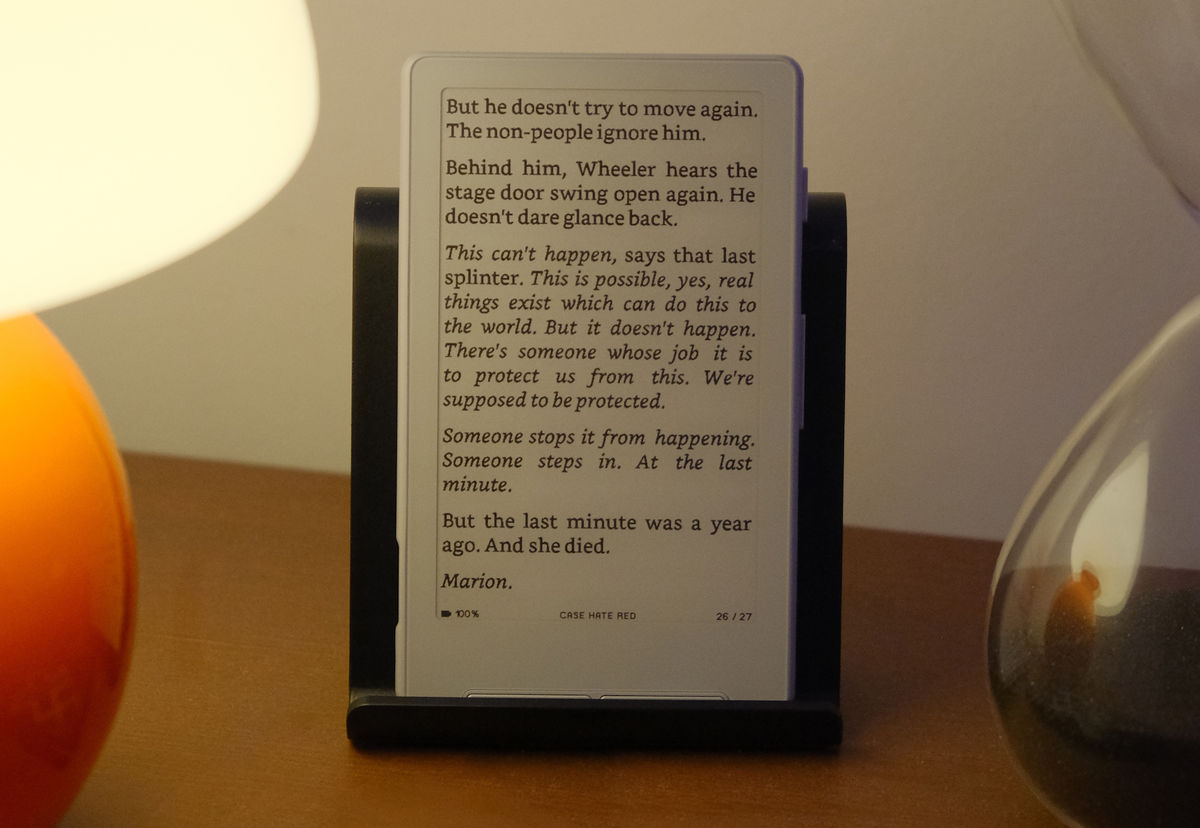
The device includes built-in fonts from Google Fonts, Noto Serif and Noto Sans, and also allows the use of any font loaded from an SD card. Font size, spacing, margins, hyphenation, alignment, and anti-aliasing are all adjustable. Furthermore, it offers right-to-left layouts for Hebrew and Arabic, menus translated into multiple languages, and a 'Focus Reading' feature that bolds the first letter of each word.
On the hardware side, Free Ink provides a hardware-independent software development kit (SDK) for building firmware for e-readers. By abstracting controllers, display waveforms, GPIO pins, and peripherals into a common interface, many devices can be controlled from the codebase, and new boards can be supported simply by updating profiles and configuration files, rather than rewriting the firmware. The firmware obtains device-specific behavior by calling a general-purpose API, making it hardware-independent by design.
In addition to capacitive touch, it features a PWM front light with warm and cool color control, and screen rotation can be controlled from the application side. Touch, front light, color, and audio are controlled by flags and are enabled by default only when the device requires them, so each binary is kept as compact as possible.
Furthermore, the project's core open hardware, '
The following is one example of a homemade e-reader, which allows users to read books on a palm-sized device.
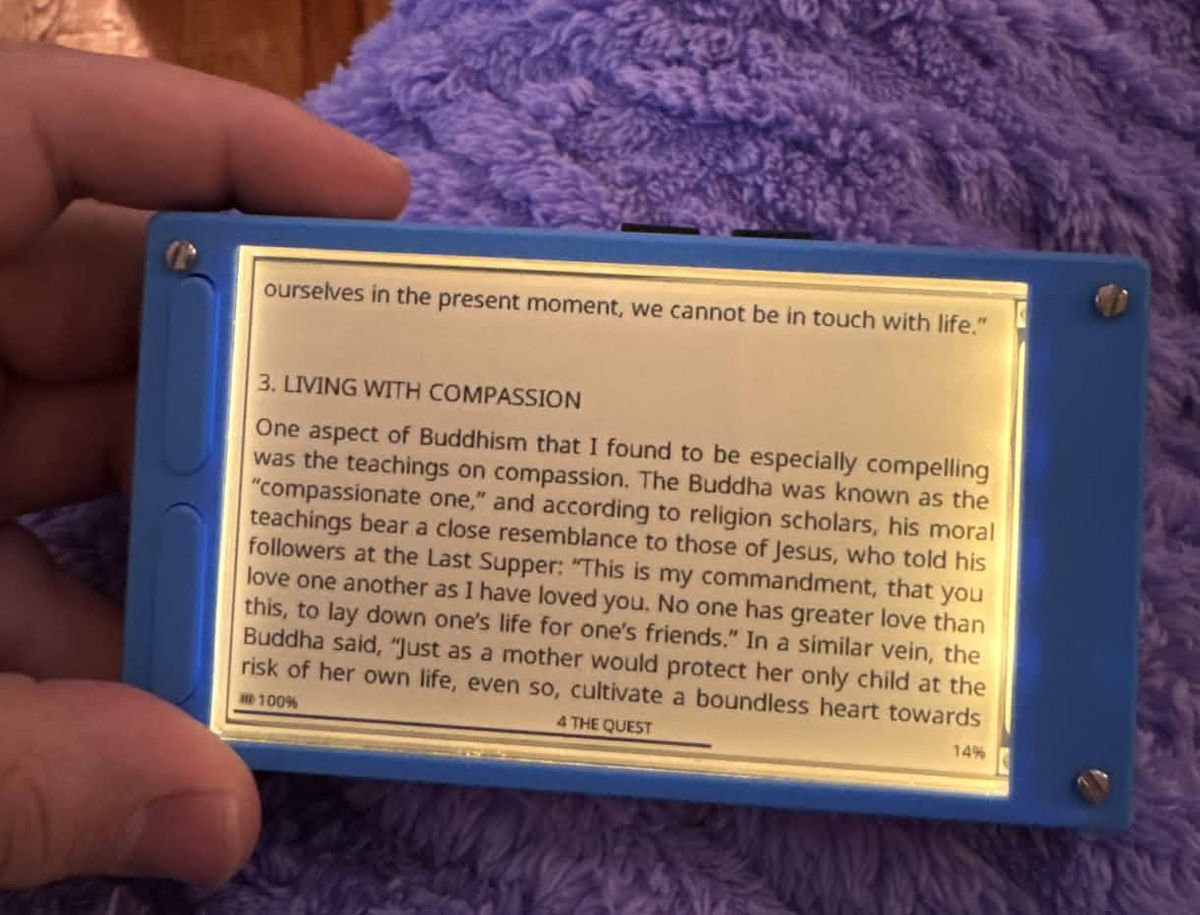
Free Ink's philosophy is based on 'open format, open files,' aiming to enable users to view, copy, and save books on any device. Furthermore, parts and batteries are made publicly available and replaceable, with repair being encouraged. Free Ink documents and publishes all layers, from software to hardware, aiming to create a common foundation that the entire community can build, modify, and extend.
Related Posts: