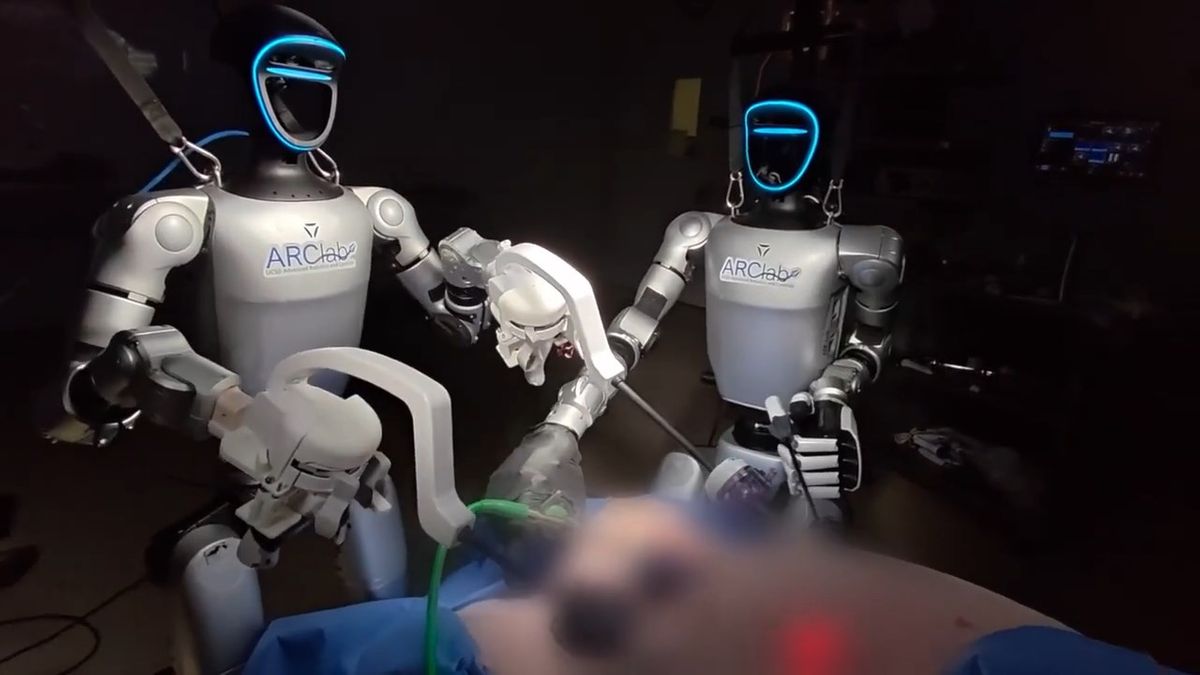
A humanoid robot, remotely controlled by a surgeon, successfully performs the first-ever laparoscopic surgery on a live pig.
In recent years, humanoid robots capable of performing a variety of tasks have become increasingly common, and plans are underway to deploy them in
In vivo feasibility study of humanoid robots in surgery | Nature
https://www.nature.com/articles/s41586-026-10796-x
For The First Time Ever, Humanoid Robots Perform Surgery on Live Animals : ScienceAlert
https://www.sciencealert.com/world-first-humanoid-robots-perform-surgery-on-live-animals-this-could-prove-useful-in-space
In laparoscopic surgery , which involves making small incisions in the abdomen to insert endoscopes and surgical instruments, the surgical robot ' da Vinci, ' controlled by surgeons using a console, is already widely used. However, surgery using humanoid robots has not been performed until now.
In this study, the research team conducted tests to determine whether a bipedal humanoid robot could be useful in surgery. First, under the guidance of a skilled surgeon, the team verified the robot's ability to handle inanimate objects and common surgical instruments. Once they were confident that the robot was ready for surgery, the team performed a laparoscopic cholecystectomy on a live, anesthetized pig.
The following video shows how a humanoid robot performed laparoscopic surgery. Please be aware that the video contains graphic scenes of pig organs, so exercise caution when watching the video or reading the rest of the article.
humanoid robots used to perform a world's first teleoperated robotic surgery - YouTube
The research team used the ' Unitree G1, ' a bipedal robot sold by the Chinese robotics manufacturer Unitree, for their tests. The team modified the Unitree G1 to be usable in surgery and then conducted verification tests.
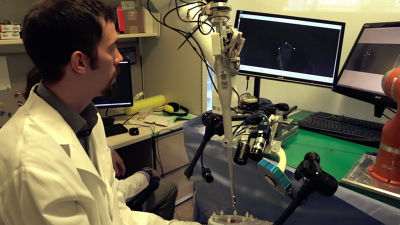
This image shows surgeons testing the capabilities of a humanoid robot on a tabletop during the preparation phase before actually performing surgery. The surgeon in the foreground on the right operates the console, and the humanoid robot in the background on the left moves accordingly.
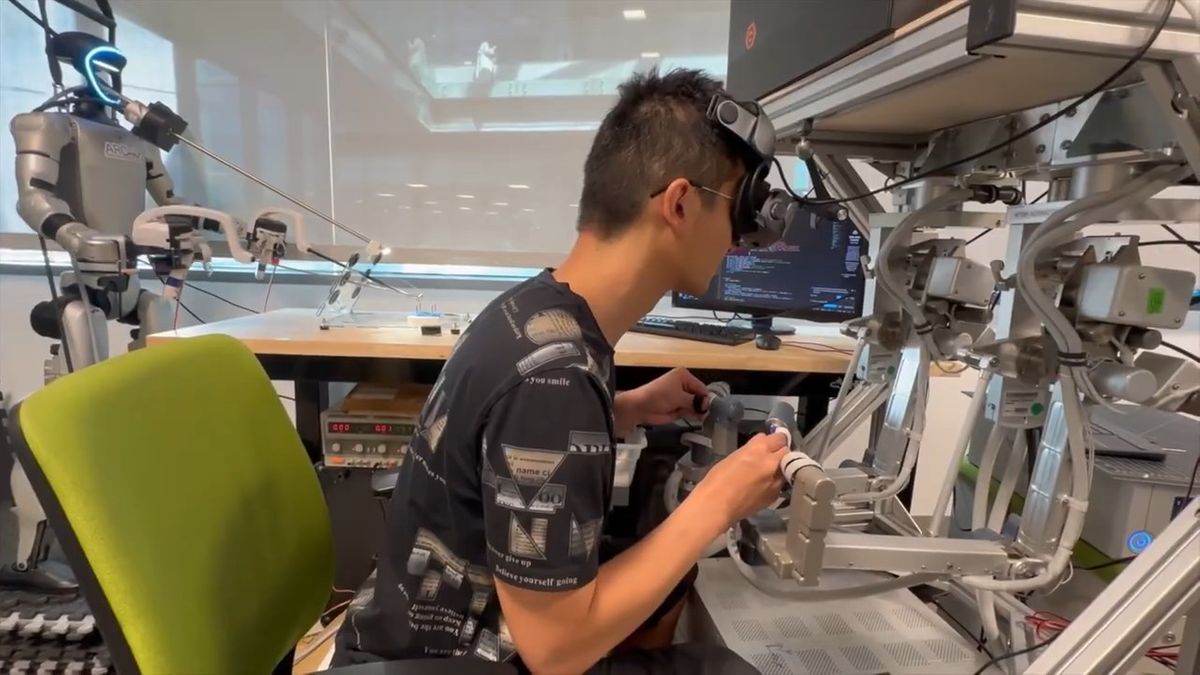
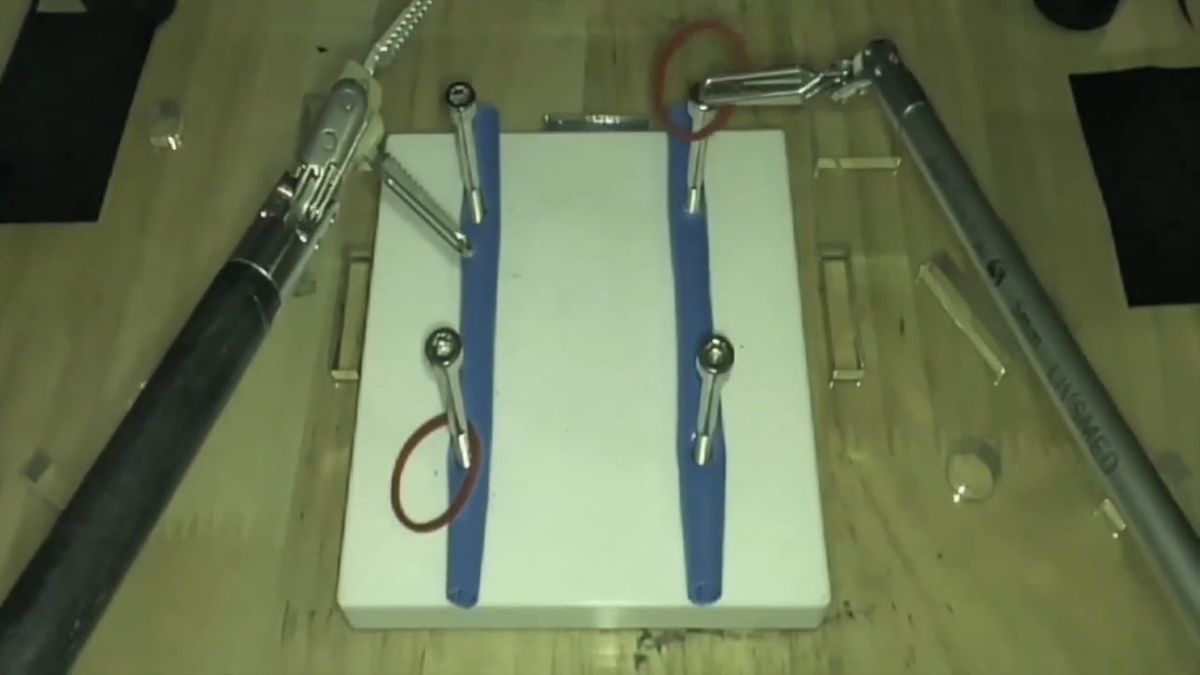
Through tests involving inanimate objects and common surgical instruments, the feasibility of using humanoid robots in surgery was verified.
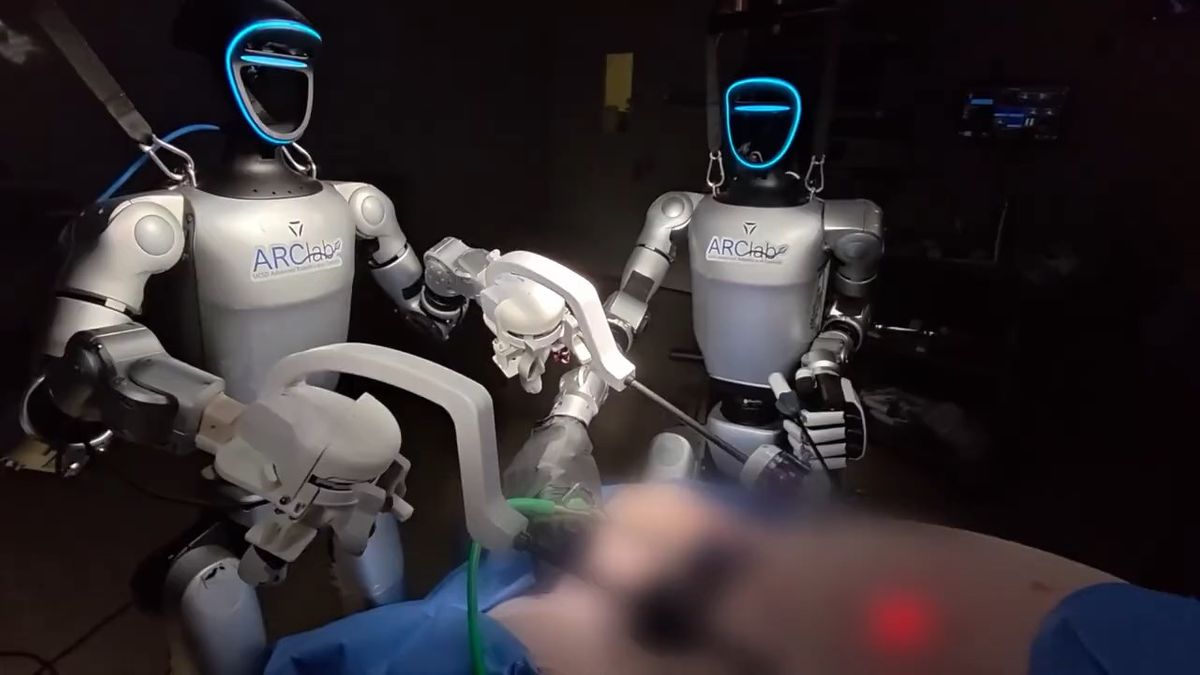
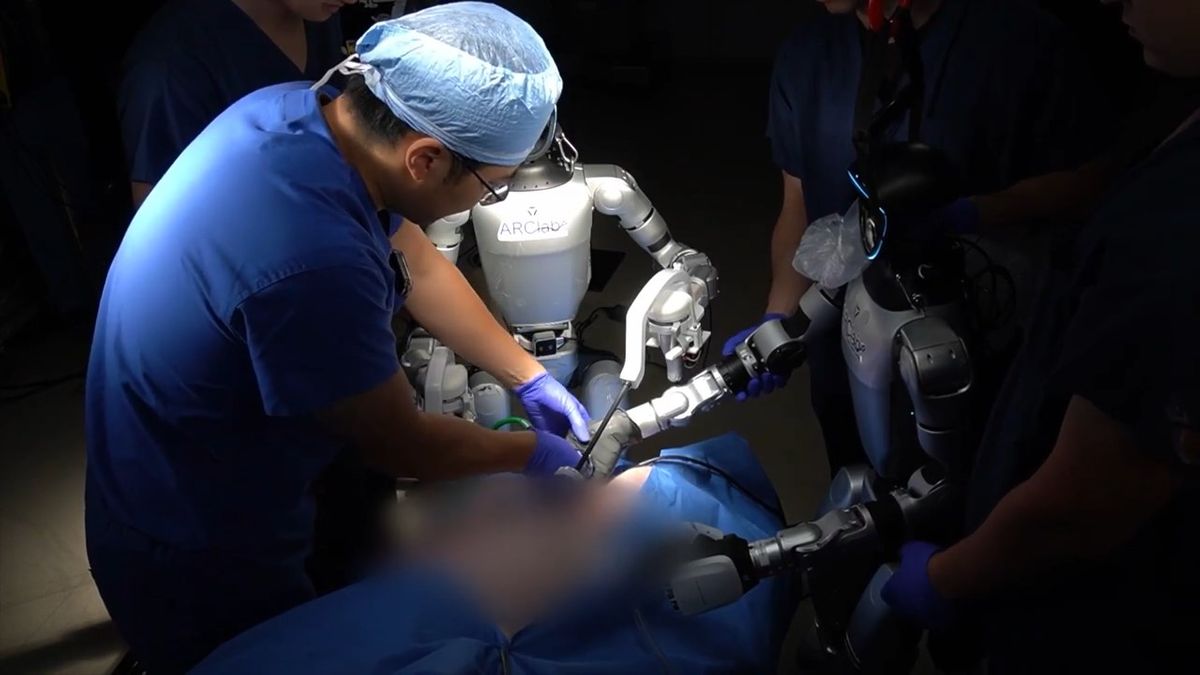
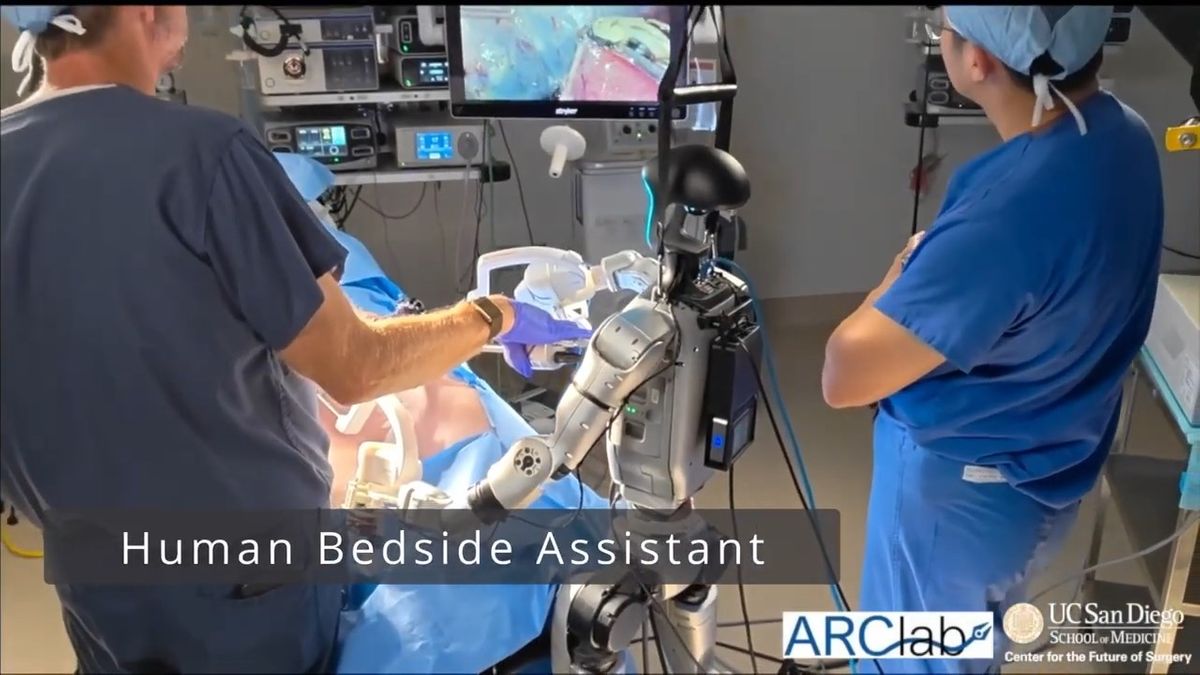
The research team then performed laparoscopic surgery on a live, anesthetized pig. The following shows the setup of the humanoid robot in the operating room, with a human assistant seemingly inserting instruments into what appears to be the affected area.
Subsequently, the surgery was performed remotely by a surgeon.
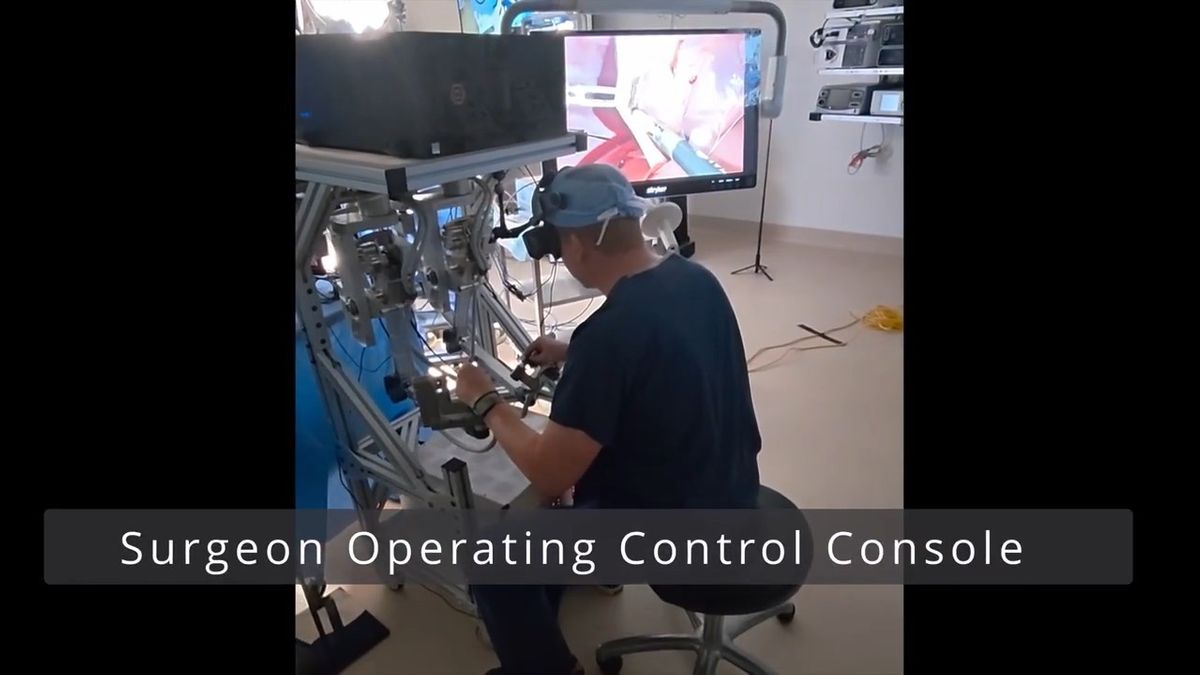
In this test, another doctor was reportedly waiting by the pig's side during the surgery.
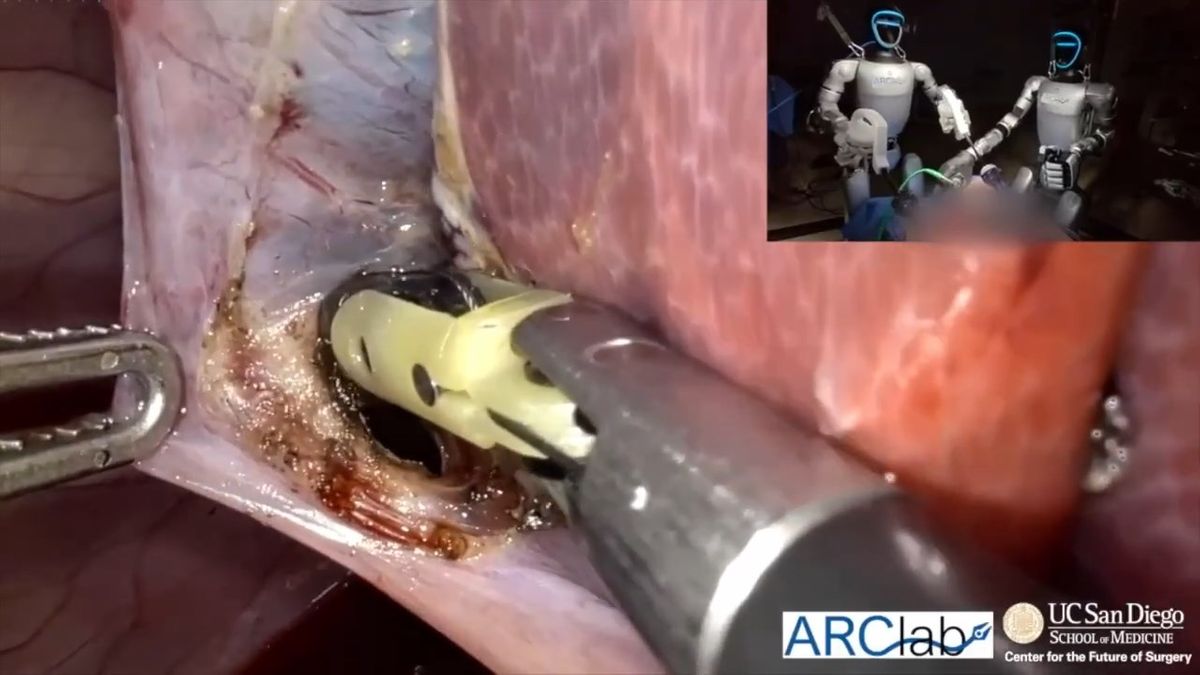
Clicking on the image below will remove the mosaic and allow you to see the surgical site as captured by a laparoscope camera.
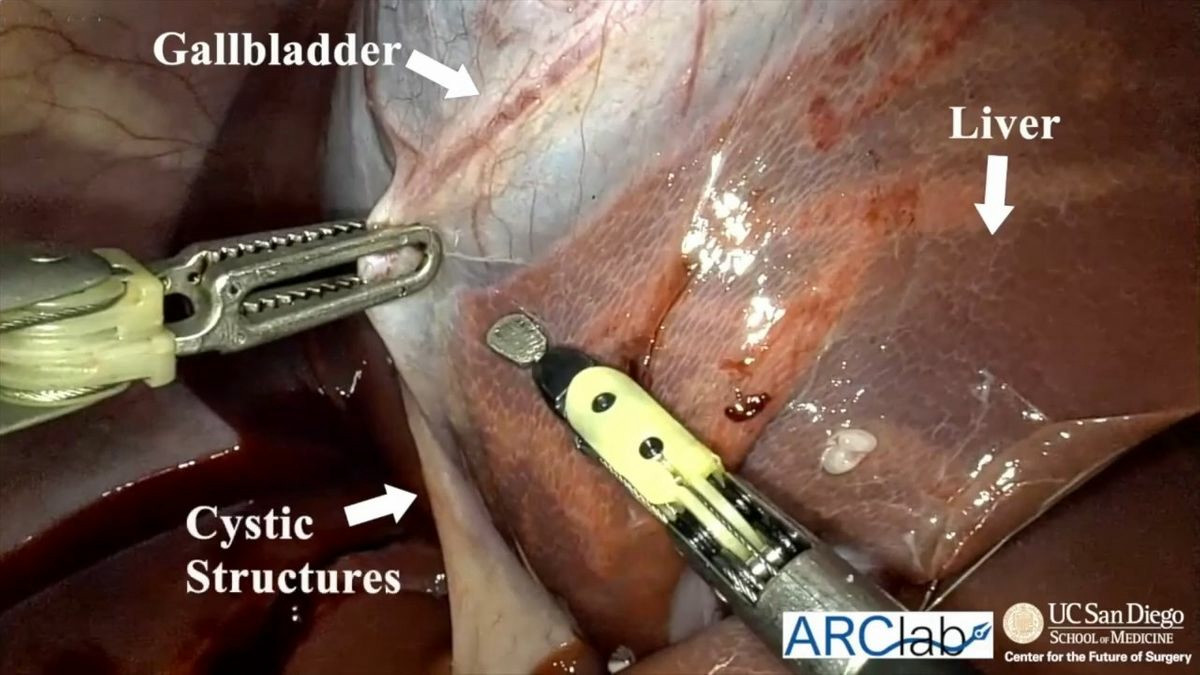
In an environment where vital organs such as the gallbladder and liver are located close together, a robot performed a gallbladder resection.
Dr. Shanley Liu, a surgeon and member of the research team, commented, 'Our experience with surgery using a humanoid robot felt similar to the early days of modern robotic surgery, with some limitations such as instrument collisions, signal delays, and the need for constant positioning. However, it is very significant that this project went from conception to surgery in just nine months, compared to the decades it took the first robotic surgical platform to successfully perform vocal cord surgery on a pig.'
Ryan Broderick, the surgeon who actually operated the remote surgery, said, 'There is always some anxiety and excitement when trying out new technology, but I was very pleased with the technology that was developed. Operating this humanoid robot felt very similar to operating a commercially available robot. There were some noticeable delays and times when readjustments were needed during operation, but this is to be expected for a proof-of-concept model.'
Humanoid robots offer several advantages: they not only improve accuracy and reduce surgeon fatigue, but they are also more space-saving, easier to transport, and can be used in a variety of environments compared to conventional surgical robots. The research team argued that humanoid robots could also be useful for surgeries in hard-to-reach areas and even in outer space.
Related Posts: