An engineer has created 'Weathergotchi,' an e-paper data logger that allows users to check temperature and humidity changes on the spot without needing a smartphone app.
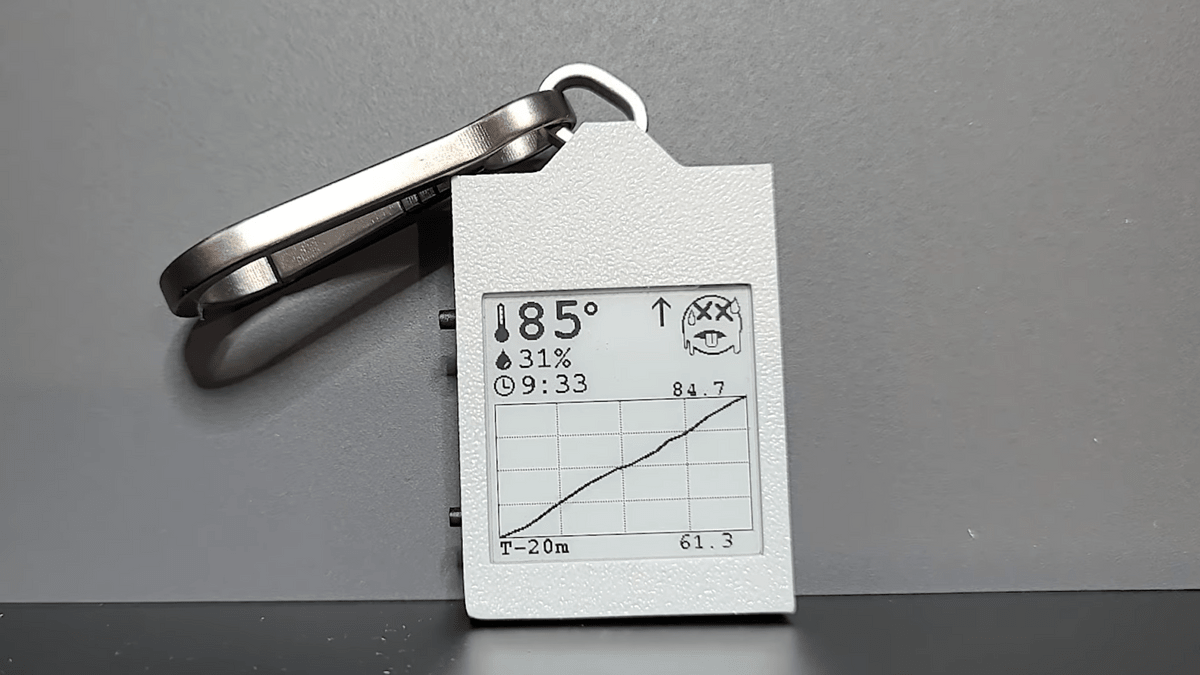
Software engineer Michael Manning has created a portable data logger called 'Weathergotchi' that continuously records temperature and humidity and displays it on e-paper. The circuit diagram, board layout, firmware, and CAD data for the 3D printable case are open source and publicly available.
GitHub - Michael-Manning/E-Paper-Climate-Logger · GitHub
https://github.com/Michael-Manning/E-Paper-Climate-Logger
Mr. Manning said that during camping trips in cold weather, he was curious about 'how low the actual temperature dropped at night' and 'whether he was able to sleep warm enough in the sleeping bag he brought.' He thought that if he could check the temperature changes the next morning, he would be able to see how effective his sleeping bag and other equipment were in relation to the temperature.
Commercially available data loggers designed to check for refrigerator and freezer malfunctions can record temperatures at regular intervals. However, the product Manning found required installing a dedicated app on a smartphone to view the recorded results. It's inconvenient to have to create an account or install a new app just to find out last night's temperature.
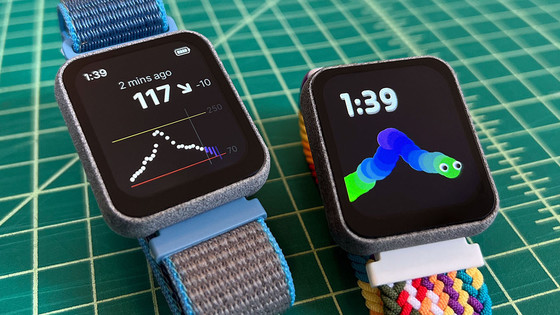
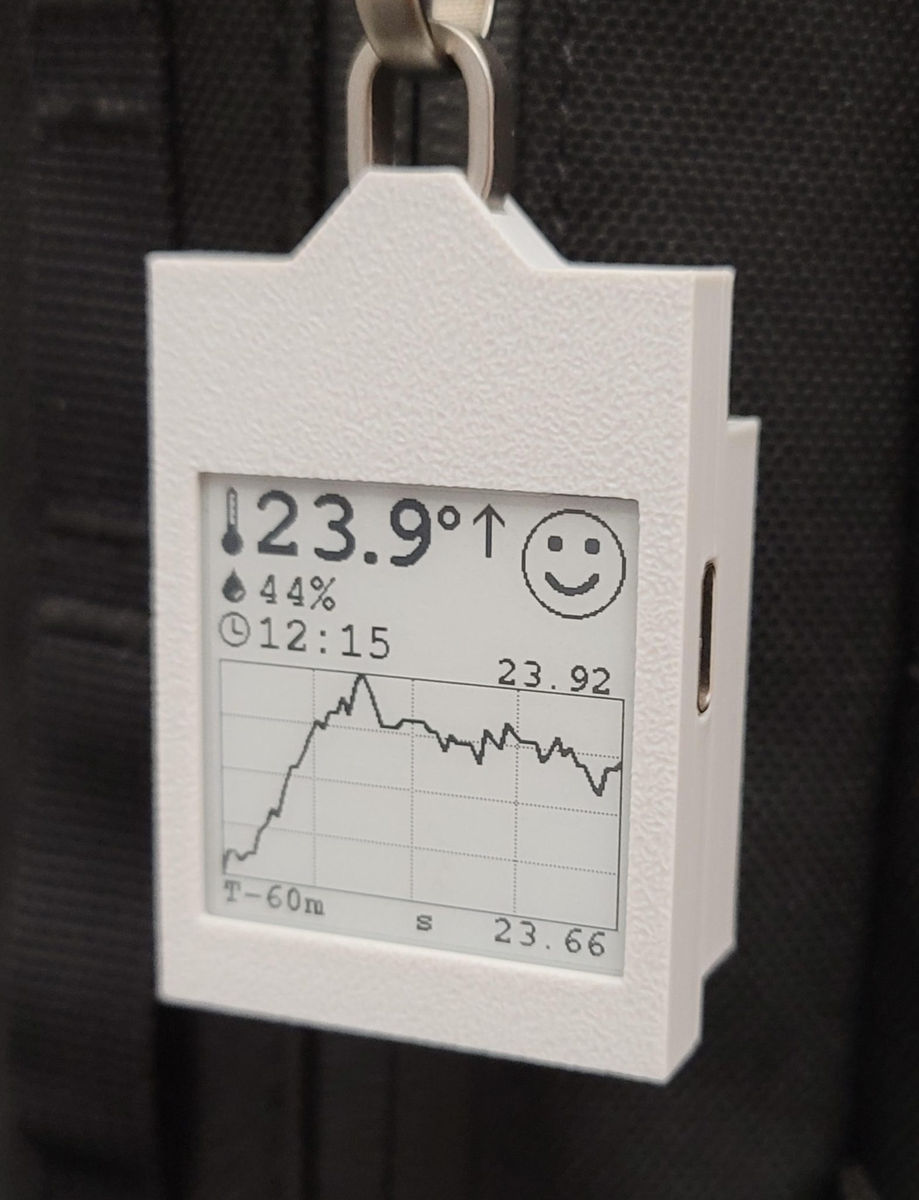
Therefore, Weathergotchi employs a 1.54-inch e-paper display that allows users to check recorded results directly on the device. The screen displays temperature, humidity, time, and a graph showing past temperature changes. E-paper consumes almost no power except when the screen is being refreshed, and is easy to read even in direct sunlight, making it suitable for devices that will be used outdoors for extended periods.
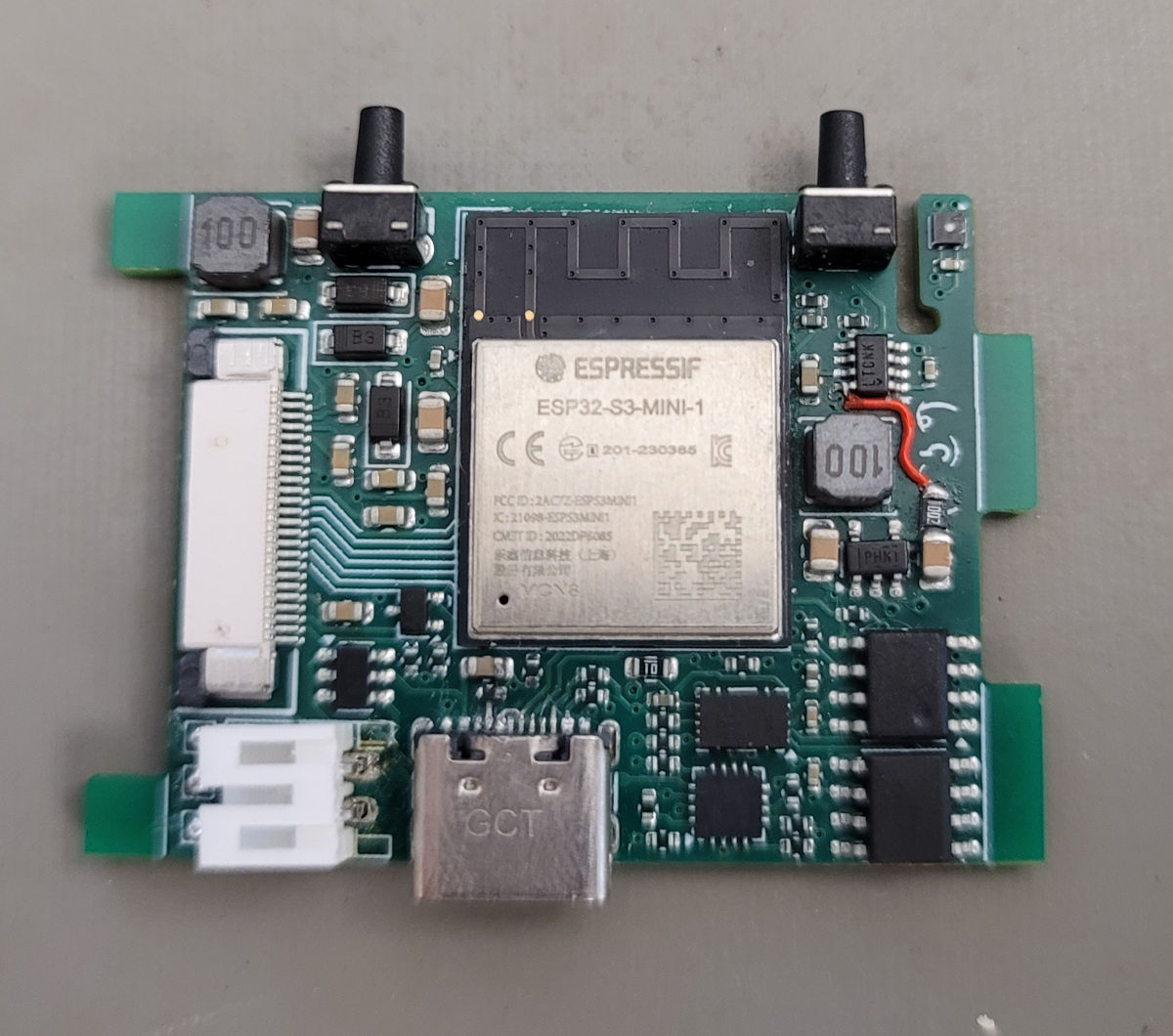
The device features an Espressif ESP32-S3 Mini microcontroller for control, a Sensirion SHT45 for measuring temperature and humidity, a DS3231 real-time clock for timekeeping, and a 24LC512 EEPROM for storing measurement results. The components are housed on a dedicated 3cm x 4cm circuit board, and charging and programming can be done via a USB Type-C port.
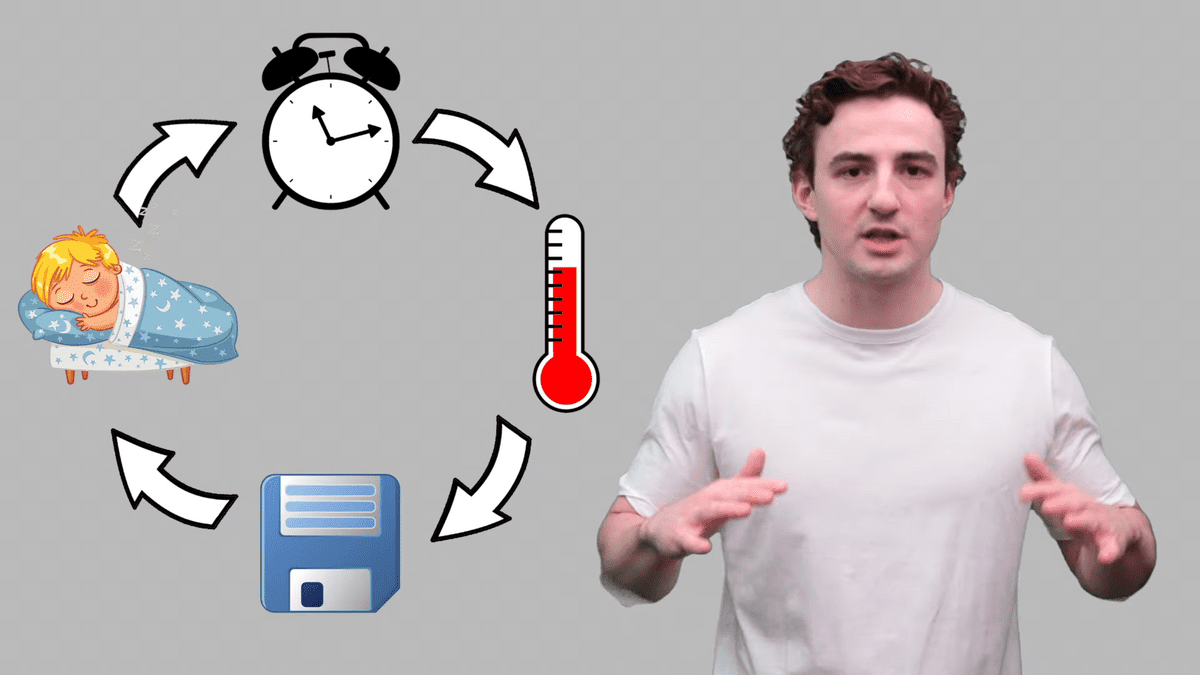
To extend battery life, the ESP32-S3 spends most of its time in deep sleep mode when not measuring. The DS3231 wakes the ESP32-S3 every minute, retrieves measurements from the SHT45, and saves them to the EEPROM. After updating the screen, it returns to sleep mode again. It is expected to operate for more than a week even with a small lithium polymer battery.
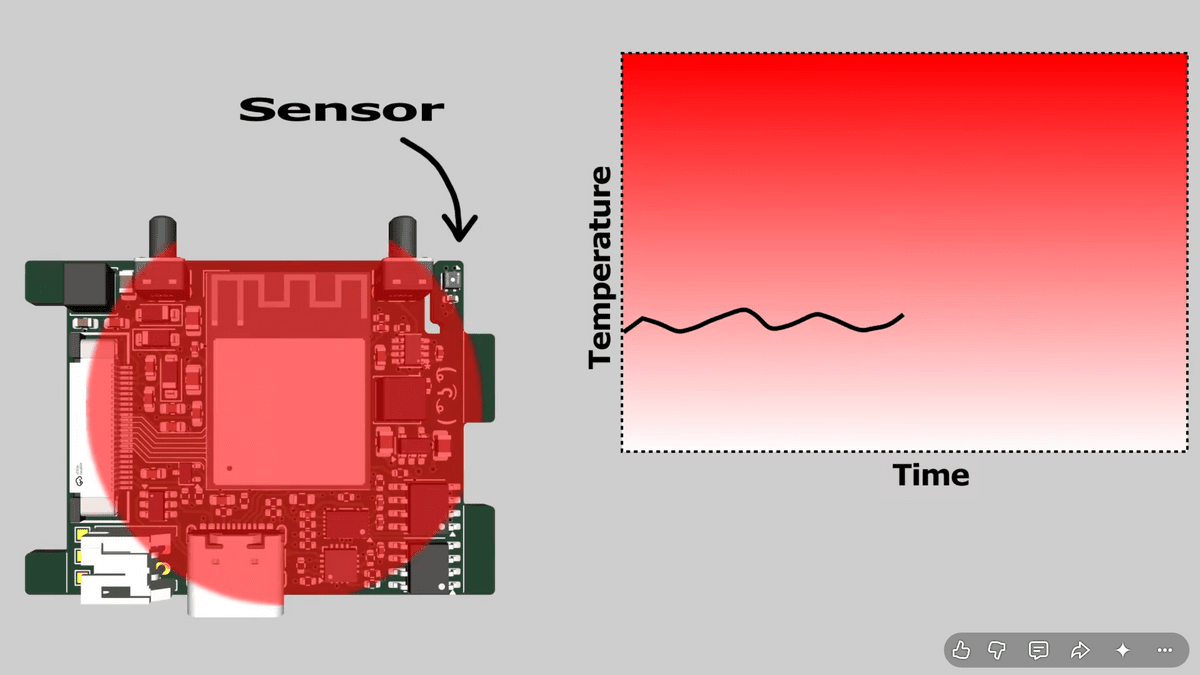
During measurement, the heat generated by the ESP32-S3 may cause the temperature sensor reading to be higher than the actual value. To minimize this effect, Weathergotchi is designed to measure the temperature immediately after the microcontroller starts up. You can access menus and check past records by operating the buttons, but the device will return to power-saving mode when you stop operating them.
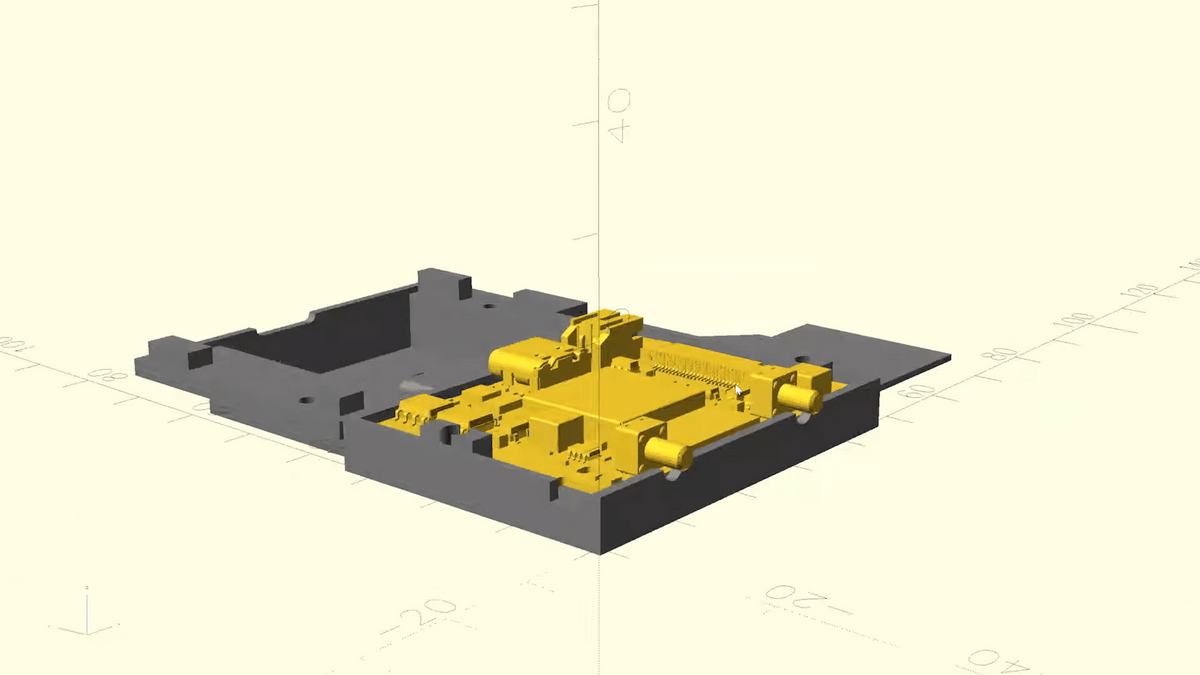
The case was created using OpenSCAD, a 3D modeling software that allows you to design shapes using code. It employs a parametric design approach, managing part dimensions and gaps with 40 variables, allowing the entire case to be adjusted simply by changing the values. The finished case is designed to be attached to bags or clothing for easy transport.
As of the time of writing, Weathergotchi does not support data export via Wi-Fi or Bluetooth, and measurement results must be viewed on the device's screen. Additionally, while the e-paper display may not update properly at sub-zero temperatures, temperature and humidity data continues to be recorded in the background, and the display resumes when the temperature rises.
KiCad files for PCB design, firmware for ESP32-S3, and case data in OpenSCAD format are available on GitHub. Manning says that while Weathergotchi still has some shortcomings and limitations, it has been more stable than expected when taken hiking.
Related Posts: