Anthropic has released the results of Claude's personality test, noting that he tends to seek evidence in English and Russian, his Japanese is less biased, and his Sonnet 4.6 score indicates warmth.
Anthropic published the results of its analysis of AI model output trends on July 13, 2026. The analysis covered three models: 'Claude Sonnet 4.6,' 'Claude Opus 4.6,' and 'Claude Opus 4.7,' revealing that differences in output trends, such as warmth and conciseness, occur depending on the model and language.
How Claude's values vary by model and language \ Anthropic
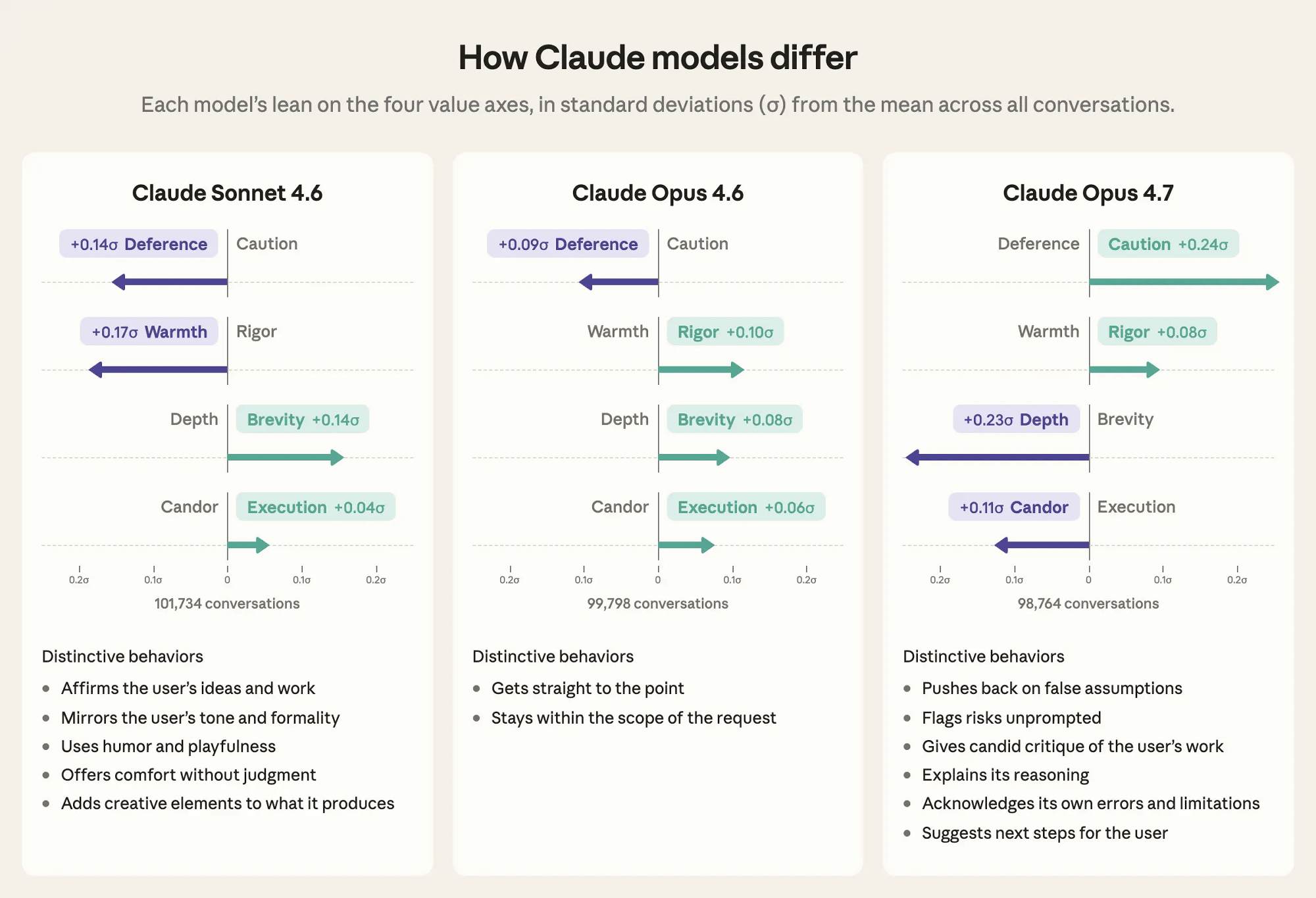
Anthropic analyzed 309,815 conversation samples to examine the differences in output trends between 'Claude Sonnet 4.6,' 'Claude Opus 4.6,' and 'Claude Opus 4.7.' Anthropic represents these differences in output trends using the following four opposing axes.
'Deference' vs. 'Caution': A contrast between values that prioritize consideration and respect for user preferences and values that emphasize responsible guidance and harm mitigation.
'Warmth' versus 'Rigor': A contrast between values that prioritize positive responses and values that prioritize accuracy and transparency.
'Depth' vs. 'Brevity': A contrast between values such as nuance and critical thinking, and values such as brevity and adherence.
'Candor' vs. 'Execution': A contrast between values such as honesty and transparency and values such as results-orientedness and optimization.
The following diagram illustrates the differences in output tendencies between 'Claude Sonnet 4.6,' 'Claude Opus 4.6,' and 'Claude Opus 4.7.' Claude Sonnet 4.6 is characterized by its warm and responsive approach that respects user preferences, while Claude Opus 4.7 tends to produce responsible and rigorous text.
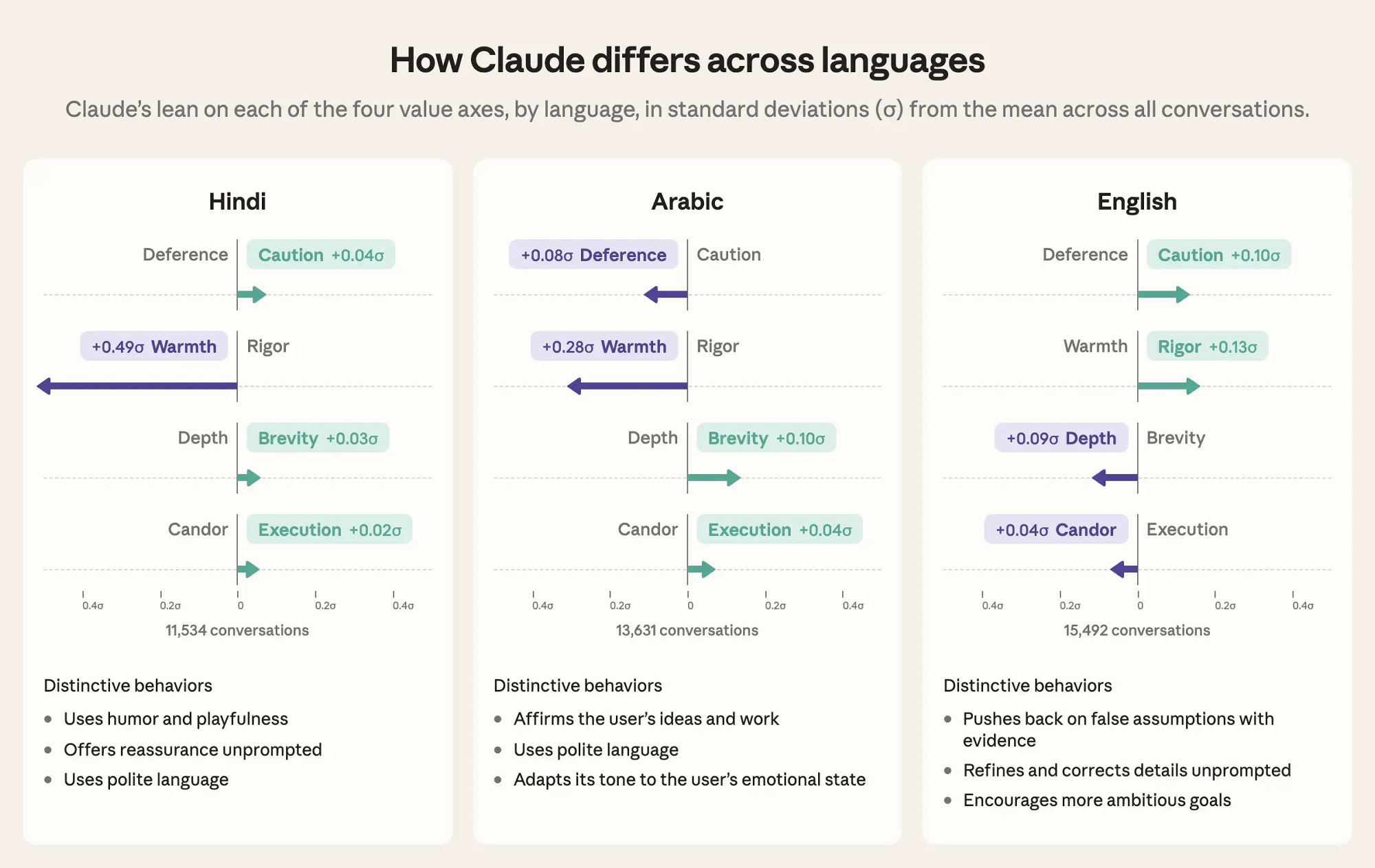
Language-specific differences were also observed. For example, responses tended to be warmer in Hindi and Arabic, while English responses tended to be more strict.
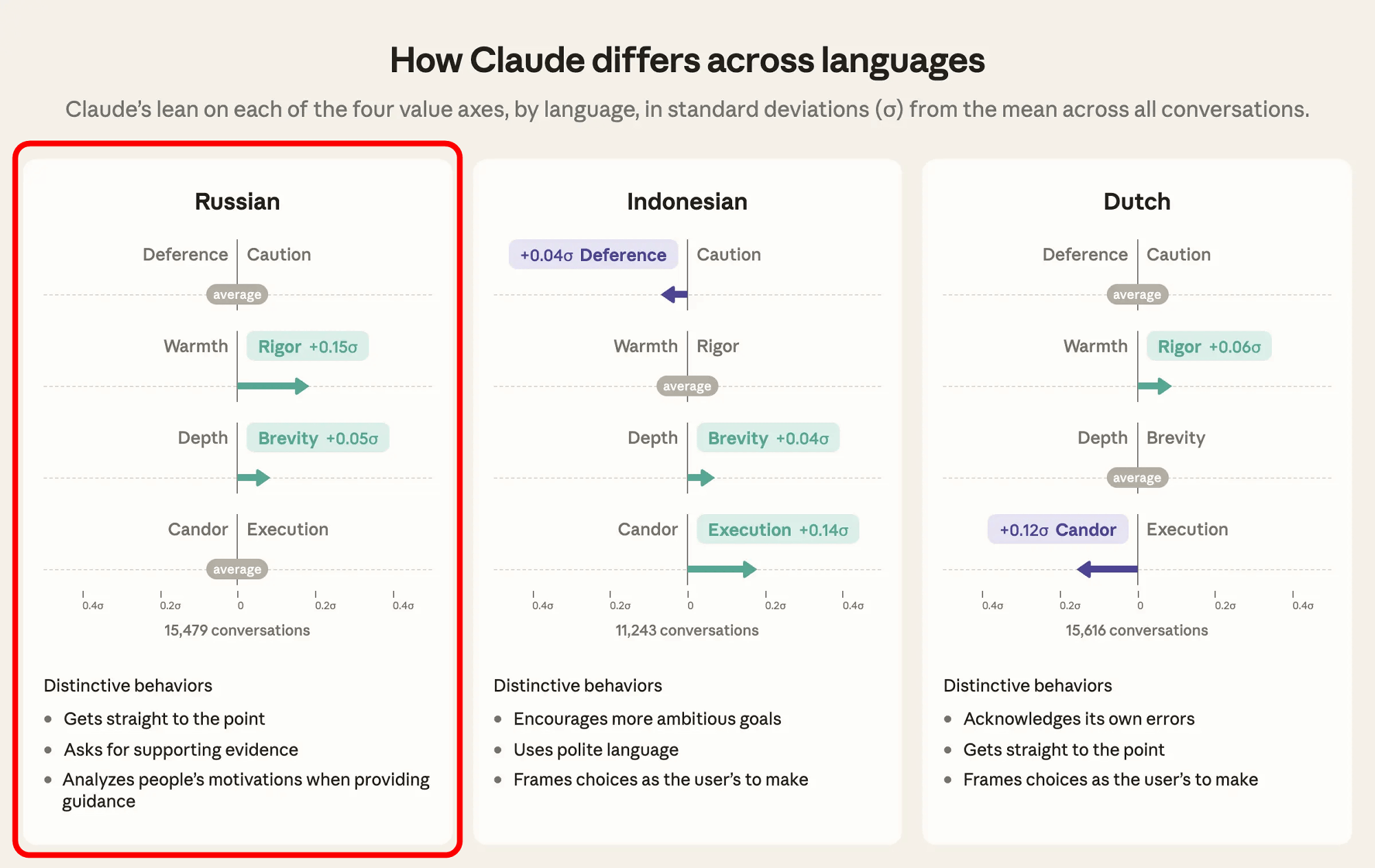
Russian responses tend to be strict and concise. According to Anthropic, English and Russian responses tended to demand more evidence from users.
The bias in Japanese was relatively small.
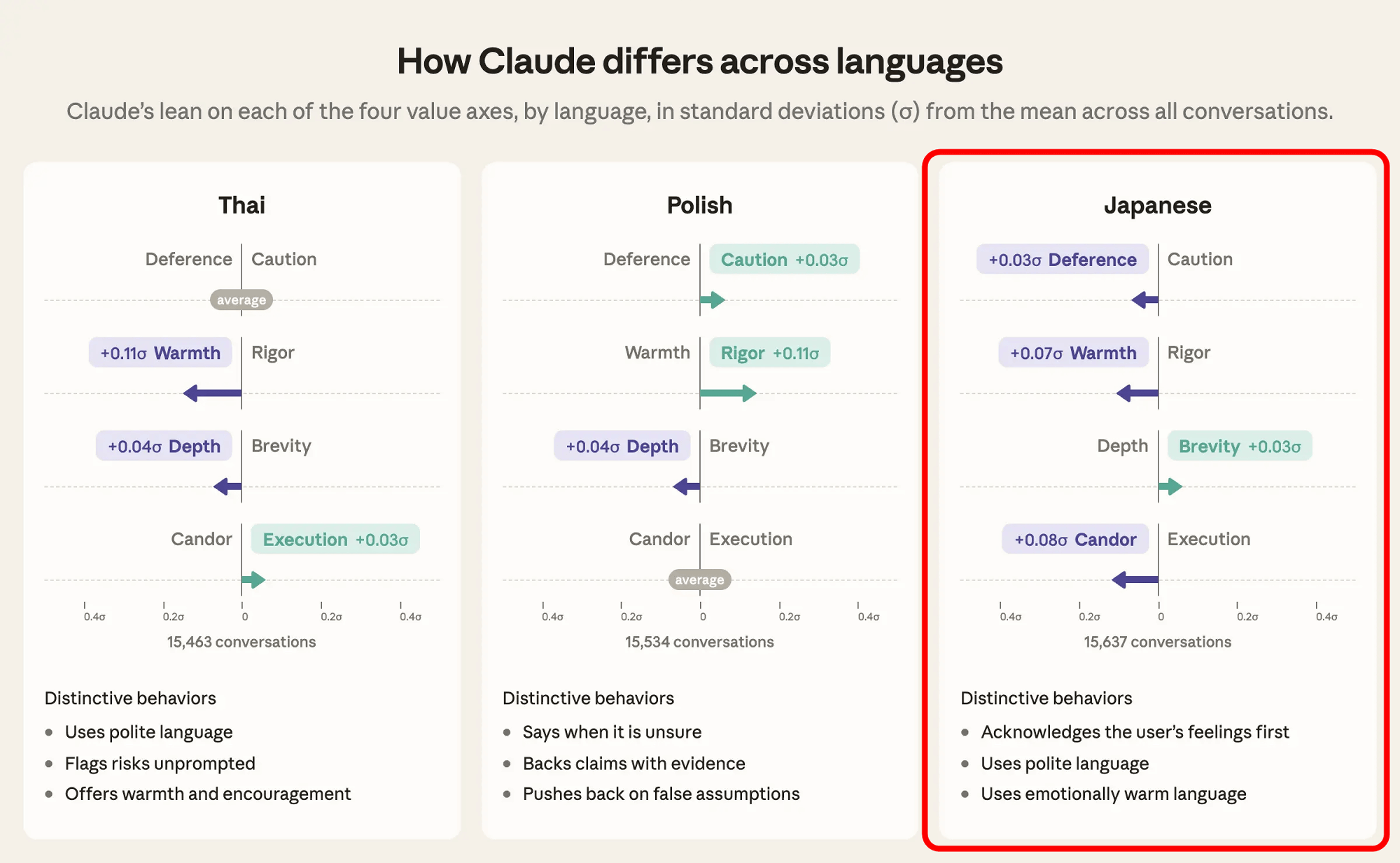
According to Anthropic, it is unclear which training data is influencing the bias in the AI model's output tendencies. Anthropic has indicated that it will use the 'opposition axis showing differences in output tendencies' obtained from this analysis to further analyze 'the impact of training data on the AI model's output tendencies' and 'whether or not differences in output tendencies are desirable.'
Related Posts:







in AI, Posted by log1o_hf