A major in the U.S. Army General Staff argues that the army's logistics system is at risk of collapsing in the next war and that an urgent change in policy is necessary.
Major Jonathan Buckland, who works for the U.S.
The Glass Backbone: Why the Army's Logistics Will Break in the Next War - Modern War Institute
https://mwi.westpoint.edu/the-glass-backbone-why-the-armys-logistics-will-break-in-the-next-war/
Buckland pointed out that the U.S. Army has focused over the past 20 years on optimizing supply lines under favorable conditions, such as the support of contractors and the presence of fixed forward operating bases. While logistics have not been a major topic of discussion, the development and operation of state-of-the-art weapons have been actively debated and budgeted for, but he suggested that large-scale changes in combat operations may render traditional logistics insufficient.
Looking back at the history of warfare, the dangers of prioritizing combat units while neglecting logistics are clear. A classic example of this is the German invasion of the Soviet Union in 1941 ( Operation Barbarossa ). In this operation, German mechanized units succeeded in breaking through Soviet defenses and advancing hundreds of kilometers in a few weeks, but this exceeded the capacity of the supply lines.
The German High Command initially anticipated a quick resolution. However, as the German army advanced deep into Soviet territory, the distance required for supplies increased. Furthermore, a lack of suitable paved roads and incompatible railway standards between Germany and the Soviet Union combined to cut off supply lines. As a result, the advancing German armored units suffered from shortages of fuel, ammunition, winter clothing, and spare parts, and were eventually forced to halt their advance.
Backland points out that the reason the German advance stalled in the winter of 1941 was not a tactical defeat against the Red Army, but a systematic failure of their supply system. 'The lesson here is clear: the scope of an operation is strictly determined by logistics and supply capabilities,' he says, adding that modern armies could fall into a similar mistake if they focus too much on mechanized and air units and neglect logistics.
The general image of the U.S. military might be that it leverages its world-class industrial capabilities and abundant financial resources to supply the front lines with a wealth of materials. Indeed, during
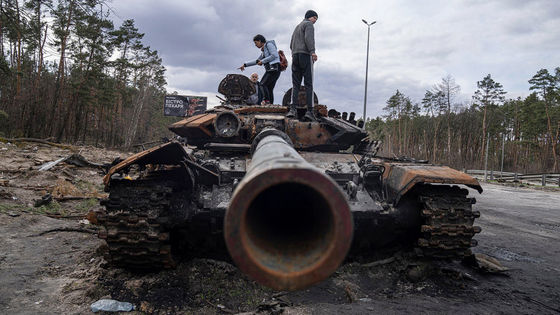
Backland's concerns are supported by the war between Russia and Ukraine that broke out in 2022. In February 2022, shortly after the start of the Russian invasion, a 64km-long Russian convoy became stranded north of Kyiv. In this incident, the Ukrainian army reportedly attacked vulnerable fuel and support convoys, rather than the armored units at the front of the enemy, thereby immobilizing the mechanized armored units.
In recent battlefields, wide-area sensing, precision artillery fire, and long-range drone systems have virtually eliminated traditional rear support areas. The Ukrainian military can use its High Mobility Artillery Rocket System (HIMARS) to systematically attack Russian ammunition depots and railway bases deep within the front lines. As a result, the Russian military has moved its supply bases further away from the battlefield, which has reduced both the speed and volume of artillery resupply, leading to decreased combat efficiency.
Buckland points out that a major challenge is the transport of fuel and ammunition, which are crucial in large-scale combat operations. Armored units, in particular, consume tens of thousands of liters of fuel per day, requiring a vast number of heavy tactical vehicles to transport this amount to the front lines. These transport vehicles are large, still lack adequate protection, and are easily detected by heat and electromagnetic trails. As a result, they become prime targets for long-range attacks by the enemy.
Buckland points out that wars between industrial powers are fundamentally a competition of industrial power, consuming vast quantities of interceptor missiles and precision-guided weapons. For the U.S. military, the ability to transport these weapons is a critical vulnerability to combat endurance, and he argues that without the ability to continuously and safely resupply the front lines, even the most advanced combat units would quickly reach their limits.
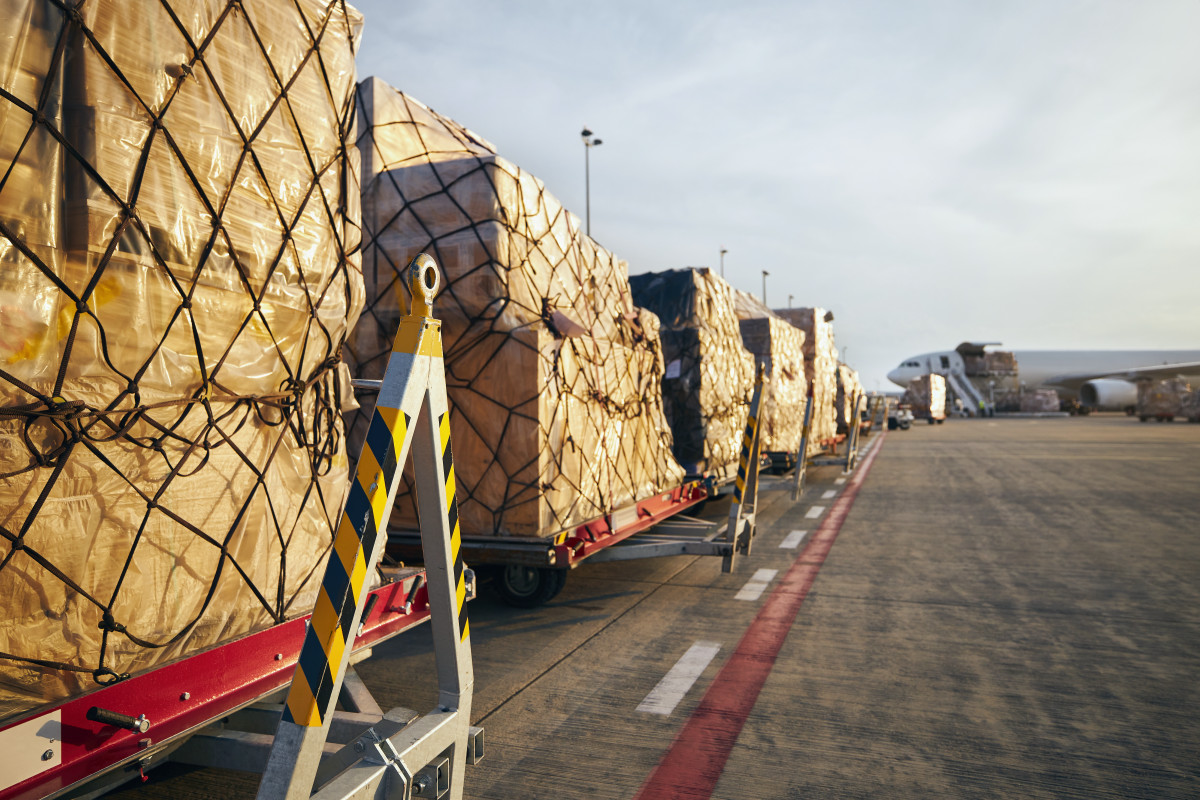
In modern warfare, traditional, efficiency-focused large-scale supply units and logistics bases can be a weakness. This is because areas where personnel, vehicles, and supplies are concentrated become prime targets for enemies equipped with constant surveillance systems and long-range precision strike systems.
Buckland therefore proposes that the U.S. Army shift from its traditional centralized supply model to a smaller, more decentralized network. 'Supply units should be able to move with the same frequency as a mobile battalion's tactical operations center, and should replace the large centralized supply bases on which they currently rely by storing fuel, water, and ammunition in dispersed, concealed locations,' he says, arguing that electromagnetic radiation mitigation and management, as well as the ability to operate in environments where GPS is unavailable, are now essential capabilities.
Buckland also believes that support units should no longer rely on mobile units for defense and should develop their own defensive capabilities. He suggests that equipping support units with systems to repel enemy drones and long-range artillery fire, strengthening the armor of logistics vehicles to improve survivability, and introducing unmanned ground vehicles and large cargo drones to transport goods in dangerous areas would be beneficial.
Backland argued that while advanced firepower and next-generation combat capabilities tend to take precedence in the Army's budget requests and modernization efforts, logistics are often given lower priority. He stated that this neglect of logistics must be reconsidered. 'The success of the Army in future conflicts will not depend on which tank has the thickest armor or which missile has the longest range. It will depend on which supply system can survive, adapt, and function under relentless and brutal multi-area attacks.' He added, 'In the next war, logistics will not only enable victory, but will determine it.'
Related Posts:





in Note, Posted by log1h_ik