Research suggests that highly intelligent people are able to abandon old ways of doing things in order to come up with better ideas.

When repeatedly working on a particular task, some people can easily switch to a new approach, thinking, 'Maybe I should try a different method?', while others find it difficult to break away from their old ways. New research on social learning has found that highly intelligent people are more likely to abandon old methods and switch to new ones when new solutions become available.
Individual differences in intelligence and personality guide human social learning - ScienceDirect
Highly intelligent people are more likely to ditch old habits for better ideas, study finds
https://www.psypost.org/highly-intelligent-people-are-more-likely-to-ditch-old-habits-for-better-ideas-study-finds/
The ability to learn from others is called 'social learning,' and thanks to this ability, humans can acquire knowledge, behaviors, attitudes, and skills by observing and interacting with others. For example, a child learning how to behave correctly in the classroom by observing the behavior of classmates and teachers is one form of social learning.
Social learning also includes not only the ability to imitate what is perceived as beneficial, but also the ability to avoid what is perceived as leading to negative consequences. This process is not automatic; people need to interpret what they see and judge whether their actions are appropriate. A research team led by Nicholas Fay, associate professor of psychological science at the University of Western Australia, conducted an experiment to investigate the extent to which individual differences in intelligence and personality influence social learning.
The first experiment involved 201 undergraduate students from the University of Western Australia and 369 participants recruited online. The average age of the university students was 20-21 years old, while the average age of the online participants was 44-45 years old. Both groups took intelligence and personality tests, and also worked on two problems: a 'padlock task' and a 'maze task.'
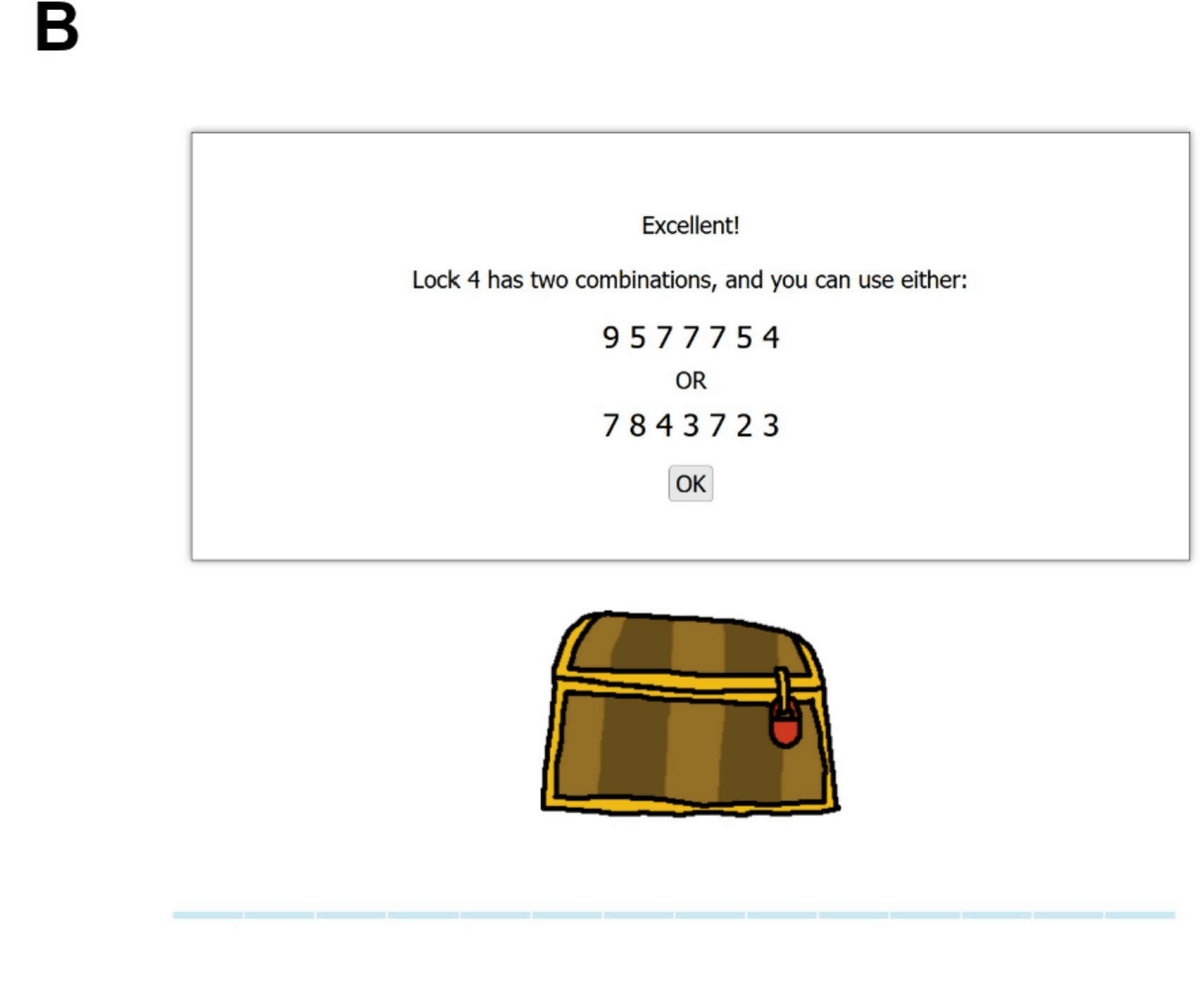
In the padlock task, participants learned how to open a padlocked treasure chest and obtain a 'prize' by memorizing a given seven-digit number and pressing numbered buttons in the correct order. Three padlocks were opened during training, but when it came to opening the fourth padlock, participants were given the option to either stick to the same unlocking method as before or switch to a new method.
The unlocking methods presented to the subjects were evaluated at different levels based on the number of digits in the seven-digit number that were different from the previous digit. Lower levels were easier, with the easiest being 'Level 1,' where all seven digits are the same, such as '2222222' or '7777777,' and the most difficult being 'Level 7,' where all seven digits are different, such as '7569231' or '4109723.' For example, the following number '9577754' is 'Level 3' because two of its seven digits are the same as the previous digit.

In one trial, when opening the fourth padlock, participants could choose between numbers at the same level as during training (e.g., '9577754') or numbers at an easier level (e.g., '2222222'). If a participant chose an easier level than the training level, it meant they had abandoned the old method and adopted a more efficient new one.
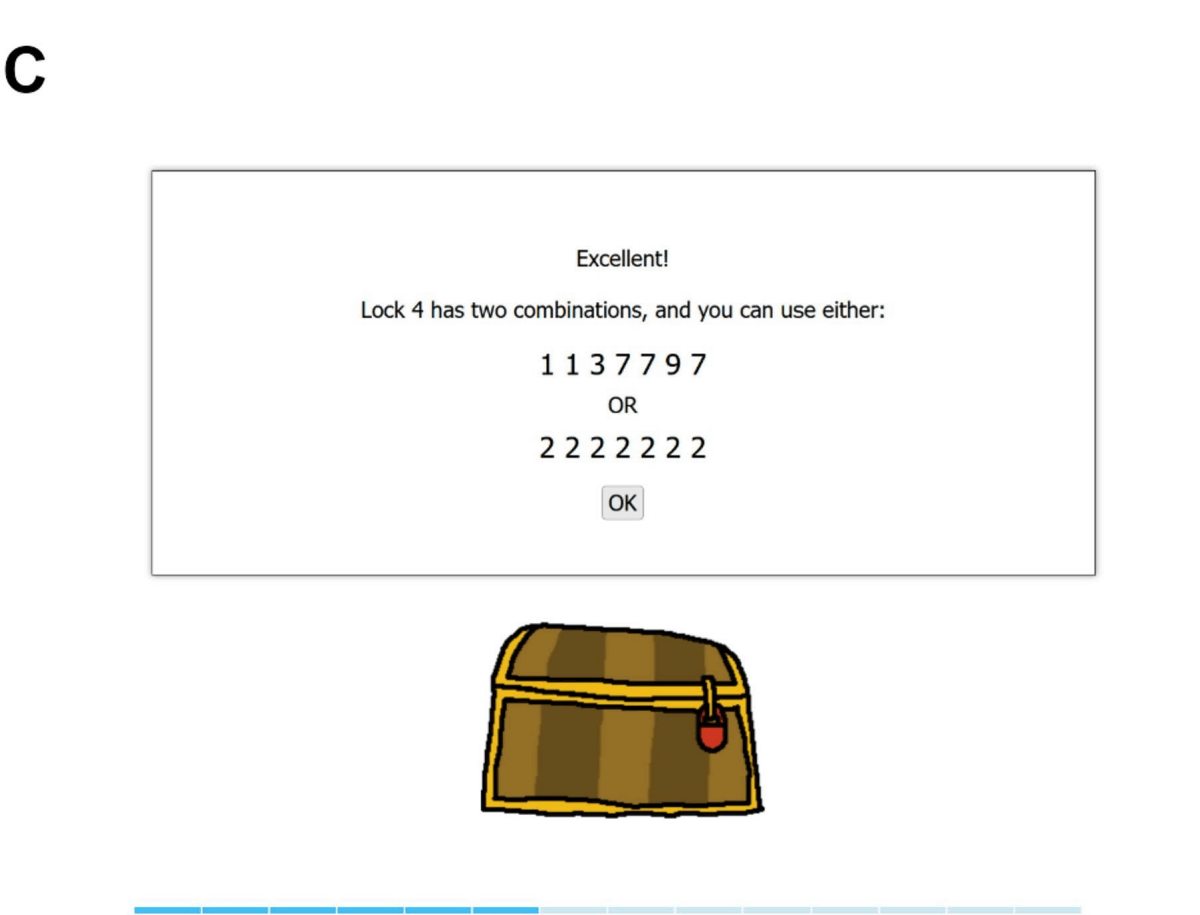
In another trial, participants could choose numbers at the same level as during training (e.g., '9577754') or at a more difficult level (e.g., '7843723'). Participants were able to choose a more difficult level than during training, but this indicates a higher cognitive load and a less efficient approach than before. Participants also made choices under various conditions, such as the new choice being at the same level as during training.
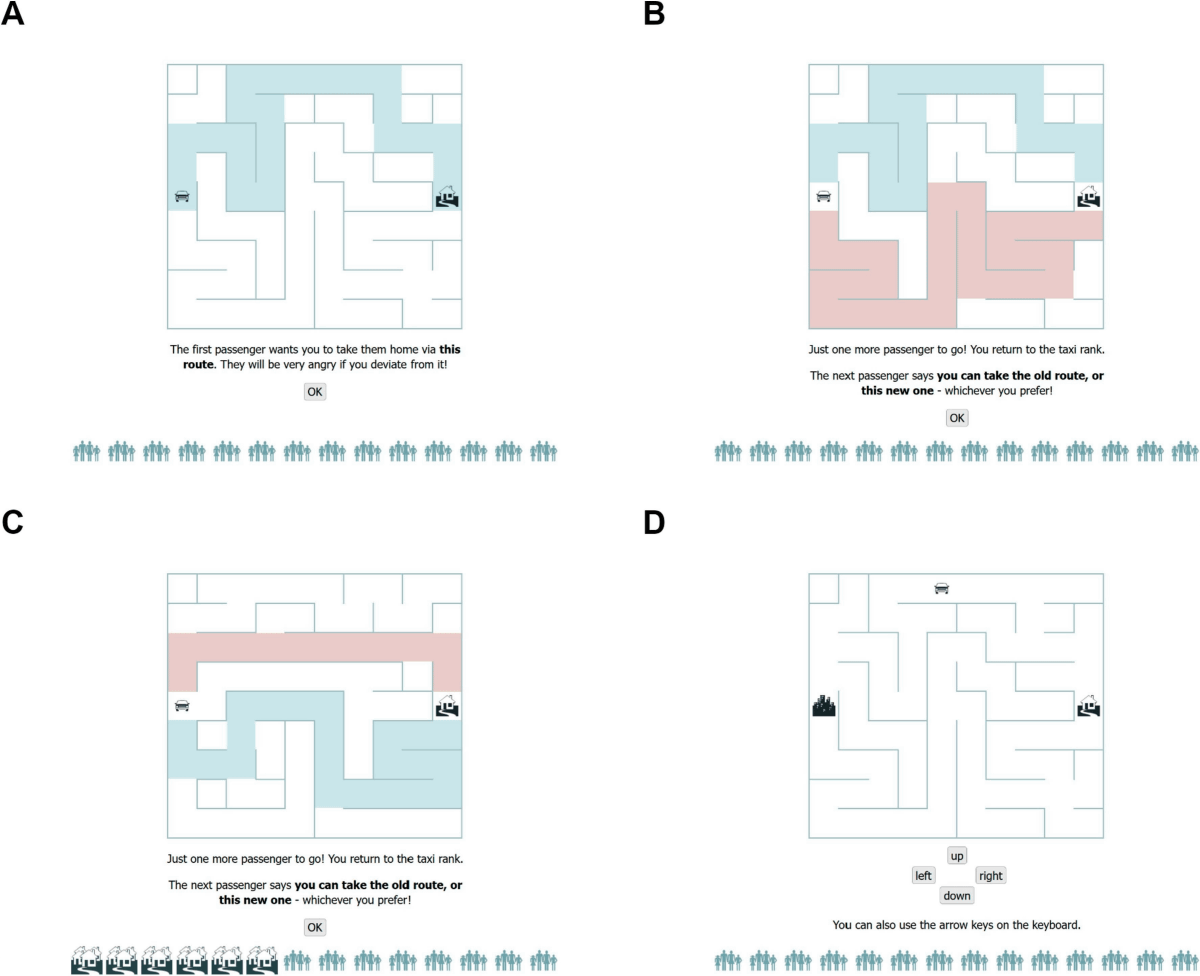
In the maze task, participants were tasked with 'driving a taxi from the entrance to the exit of a maze,' and after three training sessions, they could choose to stick with the traditional method or the new method. Below, 'A' shows the training route, 'B' shows the route when a more difficult route was available, and 'C' shows the route when an easier route was available. 'D' shows the screen that the participant operated.
The experiment revealed that subjects were more likely to switch to a new method if it was superior to the method they had learned through training. On the other hand, if the level of the traditional method and the new method were the same, they were more likely to stick with the traditional method.
Furthermore, it was found that highly intelligent people are more likely to switch to new methods, especially when the new methods are superior. Individuals with a high degree of 'openness to experience,' who tend to be interested in new ideas and experiences, also showed a strong tendency to switch to new methods, but were also reported to be more likely to switch to methods that were of the same or lower level than the previous methods.
When the research team conducted similar experiments with increased training sessions, they found that the longer the training period, the less likely subjects were to switch to the new method. The research team believes that the more familiar participants become with the trained solution, the stronger the 'maintenance bias' becomes, suppressing social learning.
It's important to note that this study involved only short-term tasks, and there were no concrete benefits for the participants in switching to the new method. Nevertheless, the research team stated, 'These findings demonstrate that individual differences in intelligence and personality, as well as experiential factors, are important in human social learning.'
Related Posts:







in Science, Posted by log1h_ik