PeerTube is a decentralized video streaming platform that manages videos across multiple independent servers. It supports ActivityPub and also allows P2P video streaming without the need for a server.

Developed as open-source software under
GitHub - Chocobozzz/PeerTube: ActivityPub-federated video streaming platform using P2P directly in your web browser · GitHub
https://github.com/Chocobozzz/PeerTube
What is PeerTube? - Framatube
https://framatube.org/w/kkGMgK9ZtnKfYAgnEtQxbv
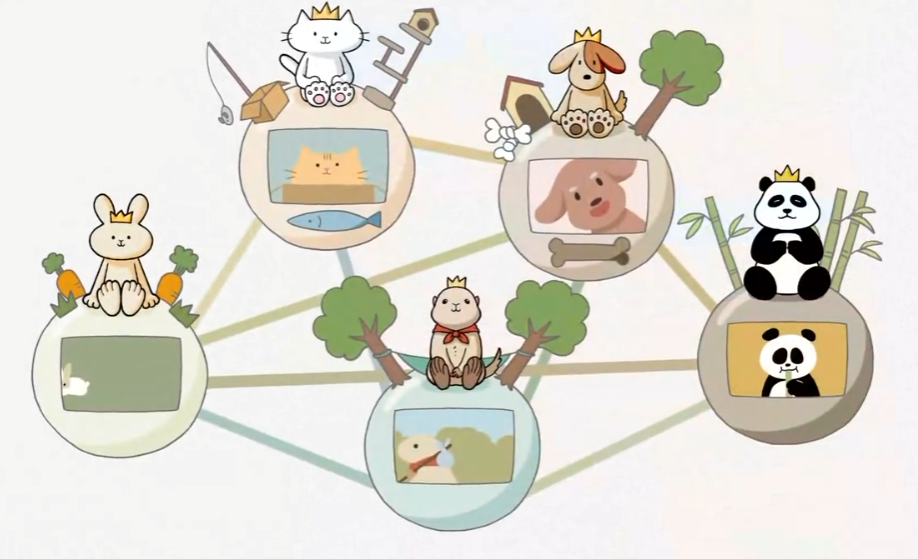
In typical video streaming services, users upload videos to servers provided by the operating company and view them within that company's website or app. Posting rules, recommendation displays, and account suspension policies are generally determined by a single operating company. In contrast, PeerTube is comprised of individual servers called 'instances.' Each PeerTube instance has an administrator, responsible for content management, user support, and server costs. The user environment and rules vary by instance, with each operator determining the types of videos that can be uploaded, the terms of service, and whether registration is permitted.
Furthermore, PeerTube's distributed system does not have a single central server managing the entire service, so if one instance experiences a failure or goes out of service, other instances will not stop simultaneously, allowing for the separation of video streaming platforms and operational entities.
Furthermore, PeerTube is a federated platform that uses the ActivityPub communication standard to connect instances. Users of one instance can follow posters on another instance to receive information on new videos, allowing them to use different servers as if they were part of a single network.

In a federated system, video creators can choose where to publish their videos without being dependent on a single large service. Therefore, with PeerTube, viewers can join instances that align with their interests and operational policies, while also connecting with creators and videos from other instances.
To reduce the load on video streaming, PeerTube also supports

On the social news site Hacker News, a user claiming to be a professional YouTuber pointed out that 'producing high-quality videos requires a great deal of effort and cost, yet PeerTube has no monetization mechanism.' They stated that creating high-quality content requires significant personnel costs, and that donations and Patreon alone are insufficient to make a living, so without support from a large corporation like YouTube, no competitor will emerge. In response, some argued that 'not all video creators aim for monetization in the first place, and PeerTube's true purpose is to distribute non-commercial videos that do not rely on advertising, such as content created out of hobbies and passion, lecture videos from universities and organizations, and meeting records.'
There were also concerns about who is responsible if pirated content is uploaded, as well as concerns about NSFW content and the moderation system, and opinions that the user experience at the time of writing the article was unfriendly.
Related Posts:







in Web Service, Posted by log1i_yk