Who exactly is 'LineShine,' the Chinese-made supercomputer that suddenly jumped to the top spot in the world's supercomputer rankings?
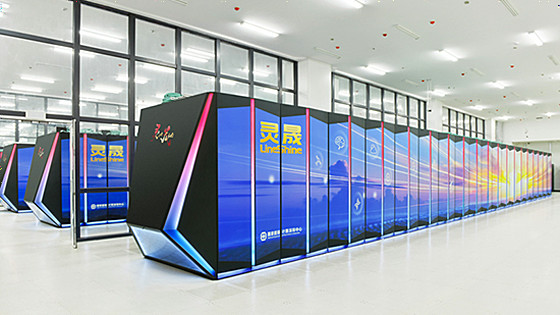
In the 'TOP500' supercomputer performance ranking released on June 23, 2026, China's supercomputer 'LineShine (霊晟)' secured the top spot in the world. For the past few years, the top positions in the TOP500 had been dominated by supercomputers from the United States, Japan, and Europe, but a Chinese-made supercomputer suddenly jumped to the top spot. This article summarizes official information and the contents of the announcement slides regarding LineShine.
Heavy ascent! “灵晟” 问漟global supercomputation TOP500, China's new world supercomputing new advanced | National supercomputing Shenzhen center
LineShine - LingKun, LX2 304C 1.55GHz, LingQi, Kylin OS | TOP500
https://top500.org/system/180490/
A Deep Dive On China's “LineShine” All-CPU, Exaflops-Class Supercomputer
https://www.nextplatform.com/hpc/2026/06/25/a-deep-dive-on-chinas-lineshine-all-cpu-exaflops-class-supercomputer/5262439
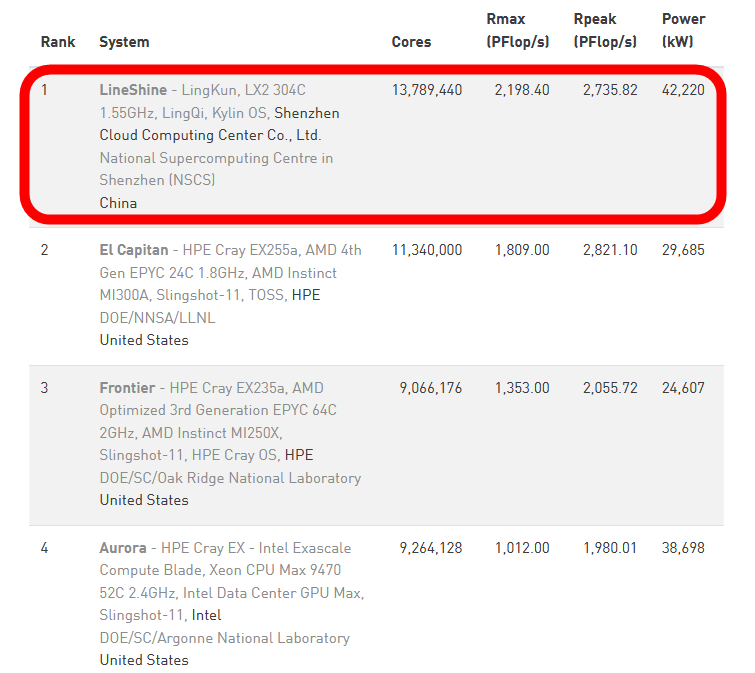
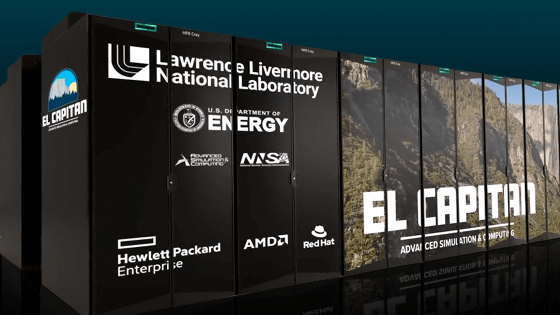
The TOP500 is a ranking of supercomputer performance published every June and November. In the June 2026 edition of the TOP500, China's LineShine took first place. The US's El Capitan, which had been in first place until then, dropped to second place. Japan's Fugaku is ranked ninth.
China's 'LineShine' achieves first place in the world supercomputer rankings for the first time - GIGAZINE
Checking the TOP500 information, we can see that LineShine has a whopping 13,789,440 cores and a processing performance of 2,198.40 petaflops (2.19840 exaflops). We can also see that it is equipped with an 'LX2' processor and uses 'Kylin OS,' a Chinese-made OS based on FreeBSD.
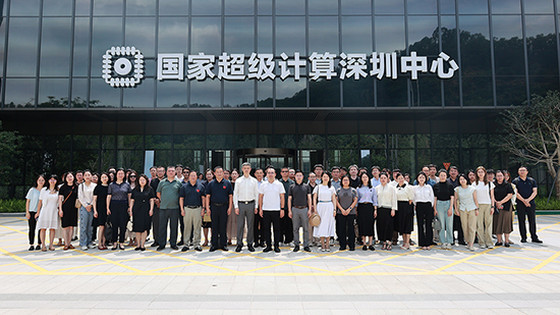
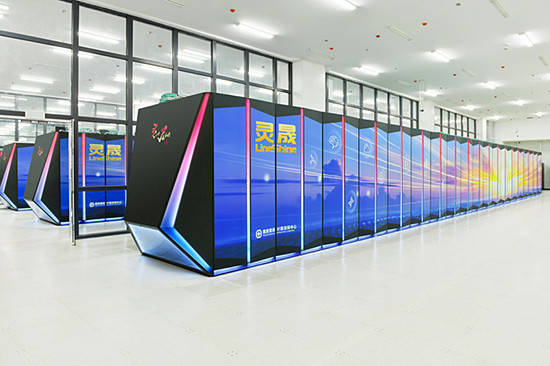
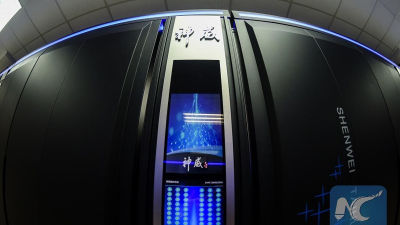
LineShine is installed at the National Supercomputing Shenzhen Center in Shenzhen, China. The image of LineShine posted on the center's official website is shown below.
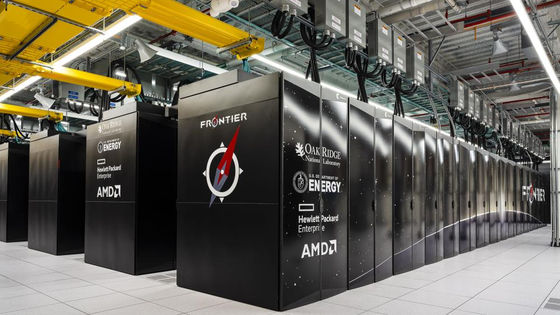
With the exception of LineShine and Fugaku, the top 10 supercomputers in the TOP500 list are all composed of chips from NVIDIA, AMD, and Intel. Furthermore, most supercomputers that have emerged in recent years employ a hybrid CPU and GPU configuration. LineShine, on the other hand, uses a CPU-only configuration with the Chinese-made LX2 CPU.
Generally, CPUs are not good at parallel processing large amounts of calculations, and systems that leave parallel processing to GPUs are the mainstream. The LX2 CPU is equipped with a proprietary matrix calculation accelerator, enabling parallel processing that surpasses GPU-equipped machines even with just the CPU. According to the center, LineShine is already being used in a wide range of fields, including 'atmospheric and oceanic research,' 'engineering simulation,' 'materials science,' 'drug discovery,' 'neuroscience,' 'AI,' and 'large-scale model inference.'
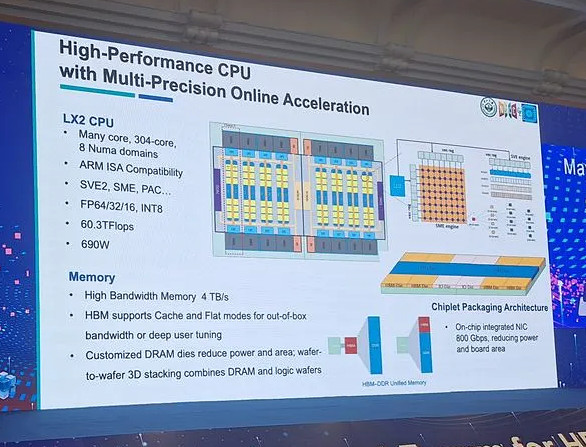
Slides from presentations about LineShine have also been posted online. For example, Professor
According to the slides, the LX2 CPU employs an Arm-compatible architecture, with 304 cores per unit and a processing performance of 60.3 teraflops per unit. It also uses 4TB/s HBM memory. Some media outlets have also reported that it uses Arm v9.2.
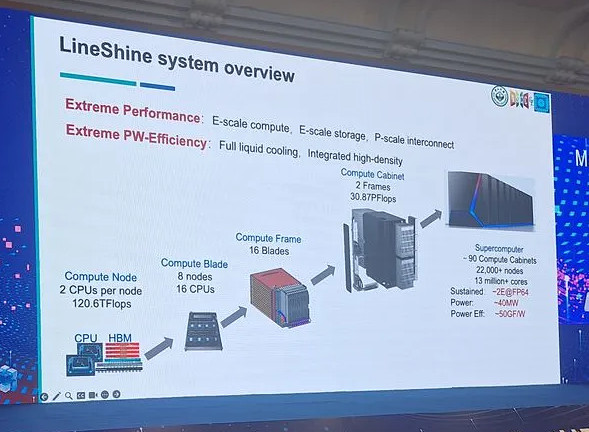
They built a compute node using two LX2 CPUs, and then built compute blades with eight nodes. They then created a massive system with 16 blades per frame, 2 frames per cabinet, and a total of 90 cabinets, resulting in 13,789,440 cores.
When the Shenzhen National Supercomputing Center announced that LineShine had achieved the number one ranking in the TOP500 list, it commented that 'LineShine represents a historic leap forward in our country's supercomputing field, breaking down foreign technological barriers and bringing about an independent software and hardware system,' highlighting the high level of China's own technological capabilities.
Related Posts:

in Hardware, Posted by log1o_hf