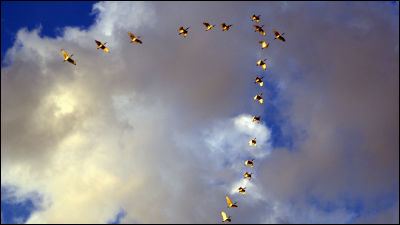
Research suggests that flocks of birds and fish move like 'soft crystals.'

Flocks of birds flying in the sky and schools of fish swimming in the water maintain a neat, orderly shape when viewed as a whole, despite the complex movements of individual animals. A research team at New York University in the United States has reported findings suggesting that the movement of such flocks is like a 'soft crystalline substance.'
Modeling flying formations as flow-mediated matter | Physical Review Fluids
How Do Flocking Birds and Schools of Fish Move? New Research Offers Crystal-Clear Answer | NYU
https://www.nyu.edu/about/news-publications/news/2026/june/how-do-flocking-birds-and-schools-of-fish-move--new-research-off.html
According to a research team led by Christiana Mavroiakoumou of New York University, previous studies have revealed the mechanisms that generate the overall movement of flocks of birds and fish, but it was not well understood how individual interactions maintain coordinated movement.
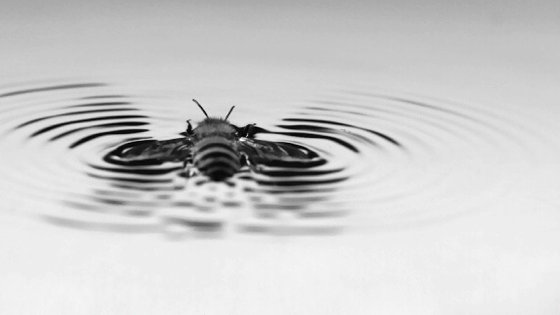
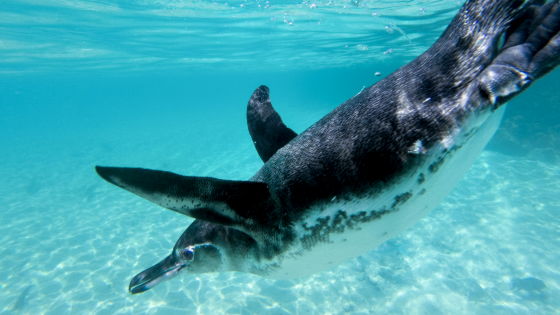
The research team focused on the fact that groups of birds and fish move while maintaining a constant distance from each other. Flapping birds and swimming fish create air and water currents around them, leaving behind vortices. Individuals behind them are affected by these currents, so they influence each other even without direct contact. The research team constructed a mathematical model based on this idea, treating groups of birds and fish as 'substances whose properties are determined by interactions mediated by air and water currents.'
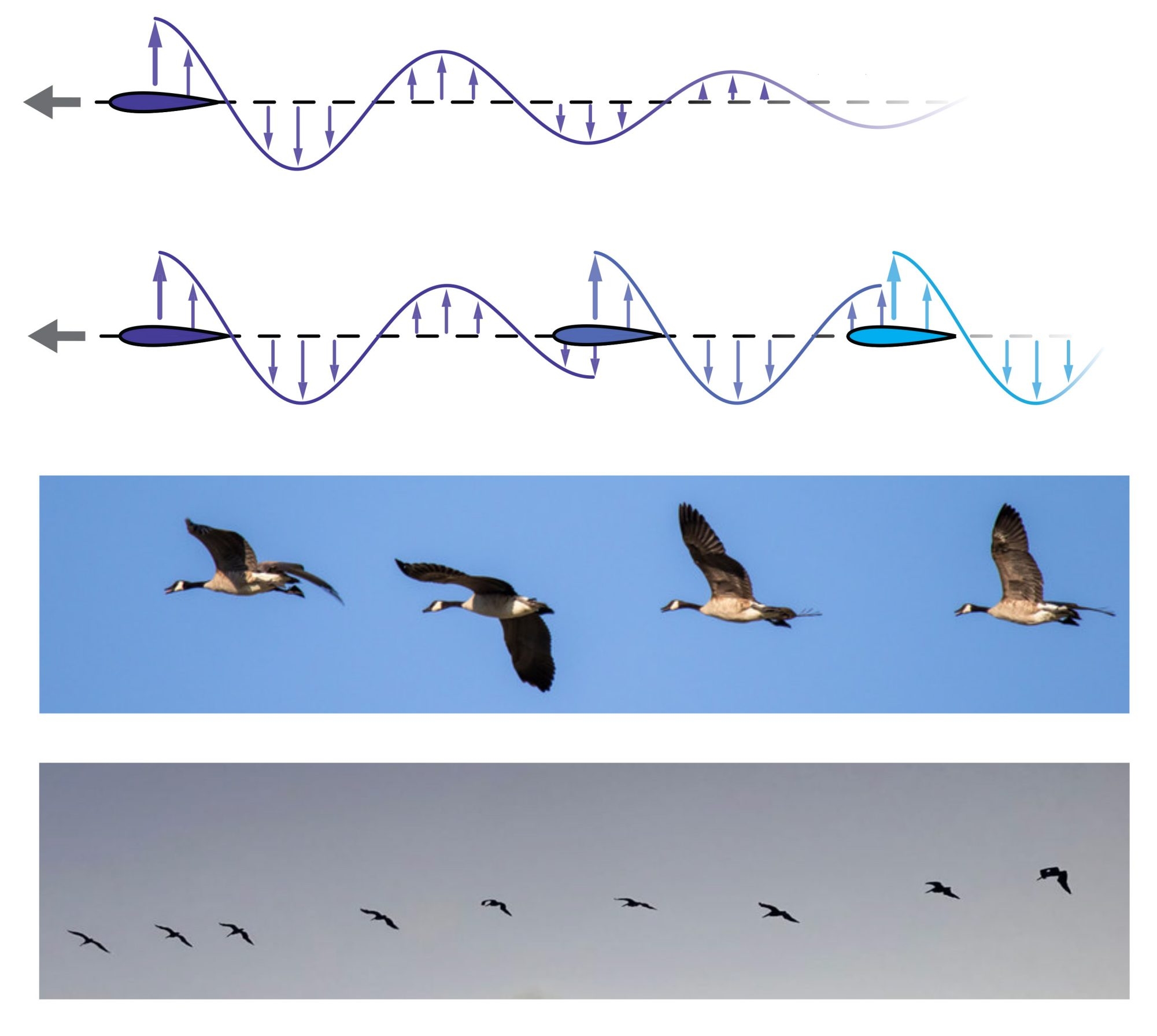
The research team created a model that mathematically represents 'how the flow created by the individual in front exerts a force on the individual behind.' This model explains that even if birds or fish are not touching each other, the flow created by the individual in front affects the position and spacing of the following individuals, creating a certain spacing and a spring-like connection within the flock. Furthermore, analysis of the model showed that if a part of the flock is pushed or shaken, the effect propagates backward as a wave along the line and grows larger.
The following diagram illustrates the flow created by a flapping object and its effect on objects behind it. The gray arrows indicate the direction of travel, while the blue lines and arrows represent the direction of the flapping and the velocity of the wake.
To determine if this model could explain real-world phenomena, the research team compared it with the results of physical experiments conducted over the past decade. One such experiment involved using motors to move 3D-printed plastic wings in a tank of water. The following video shows how the five wings move up and down in the tank, influencing the water currents they create.
This experimental apparatus is designed to mimic the tandem formation in which birds line up one at a time directly behind the individual in front. By flapping its wings in the tank, it is possible to investigate phenomena equivalent to the airflow that occurs around a bird's wings when it is flying, and the effect of that airflow on the hind wing.
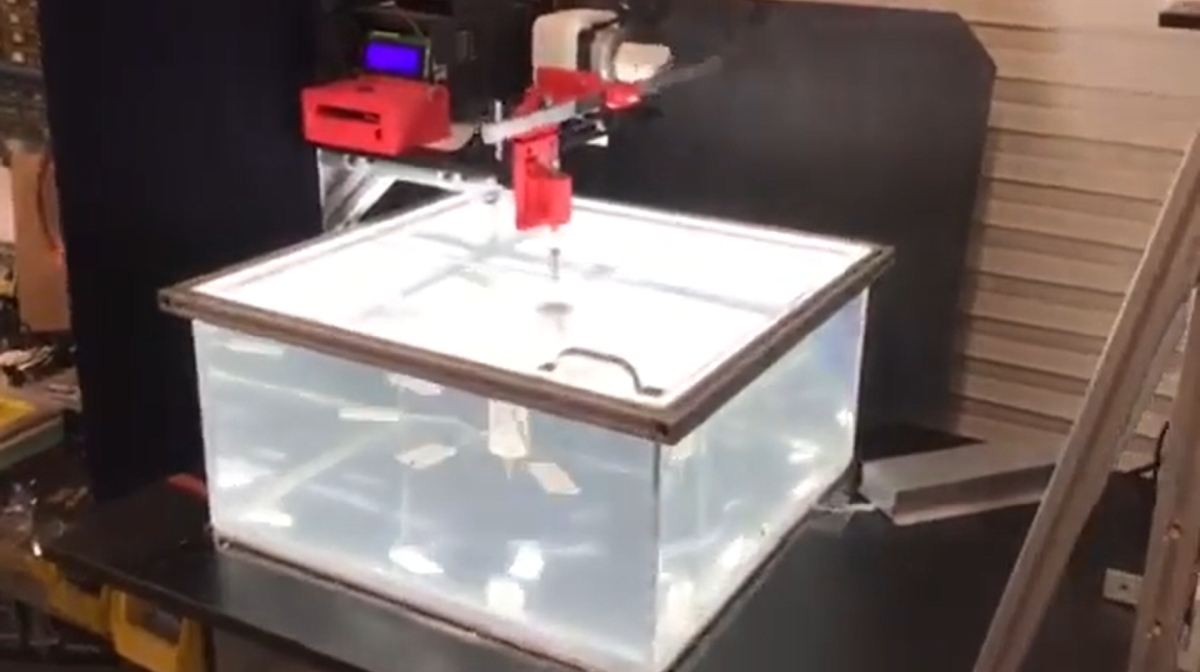
The research team reports that these past experimental results supported the model's concept. In other words, the lines of birds and fish are not simply a collection of individuals, but rather behave like a substance with a certain spacing and spring-like bonds, exerting forces on each other through the flow. This is explained as being similar to a 'soft crystalline substance' in which atoms are arranged in a regular, repeating pattern.
However, real birds and fish adjust their movements not only based on the currents created by the individuals in front and behind them, but also by sensing changes in their surroundings such as predators, obstacles, wind, and water currents. The research team explains that the fragile structure of flocks of birds and fish may make them more responsive to their surroundings, and this could provide clues to analyzing and manipulating interactions mediated by currents.
Related Posts: