Apple's 'motion sickness prevention dots' help prevent motion sickness.
Apple's ' Vehicle Motion Queue ' accessibility feature, available on iPhones and iPads, is designed to reduce motion sickness when using smartphones in a car. Thomas Ricker, a reporter for the IT news site The Verge, reported that this feature significantly reduced motion sickness when he used his iPhone and MacBook while traveling in a car.
Apple's weird anti-nausea dots cured my car sickness | The Verge
https://www.theverge.com/tech/942854/apple-vehicle-motion-cues-review-really-work
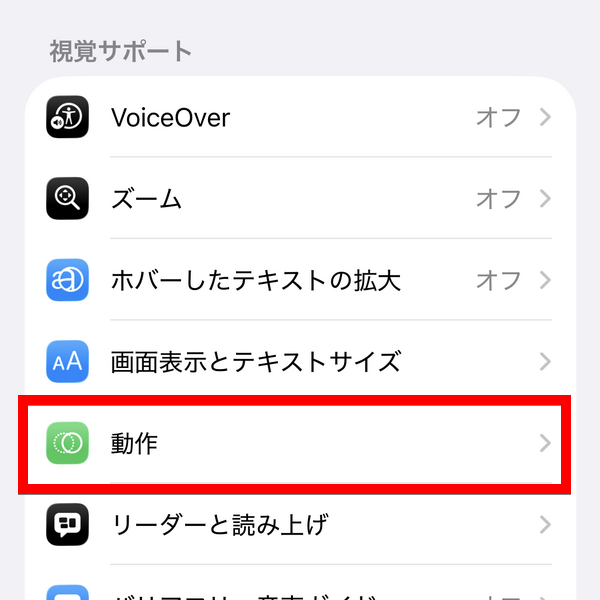
Vehicle motion cues are a feature that displays small animated dots at the edge of the screen. To turn on vehicle motion cues, tap 'Accessibility' in the 'Settings' app.
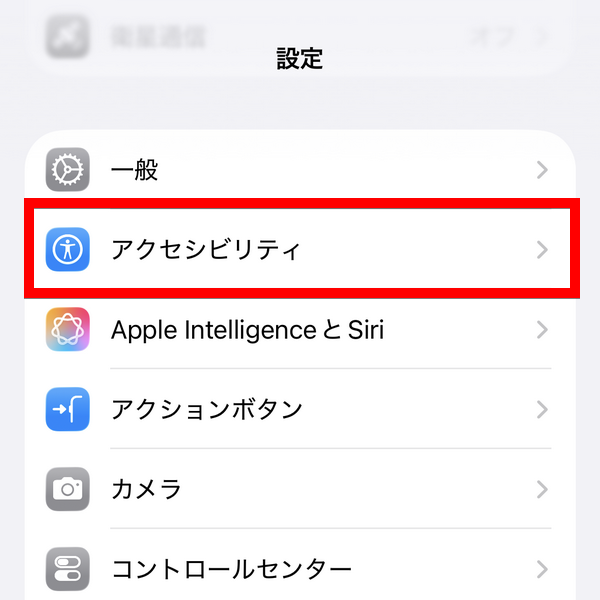
Tap 'Actions'.
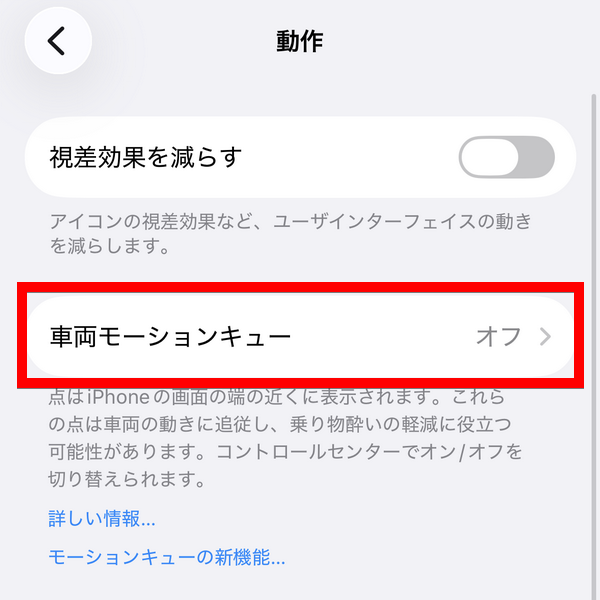
Tap 'Vehicle Motion Queue'.
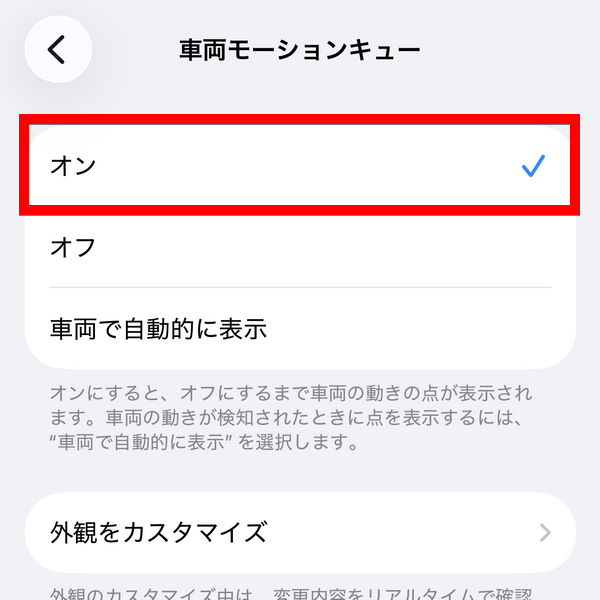
Tapping 'On' will activate the vehicle motion cue. Alternatively, selecting 'Automatically display in vehicle' will automatically detect when you are in the car and display the dot only when you are inside.
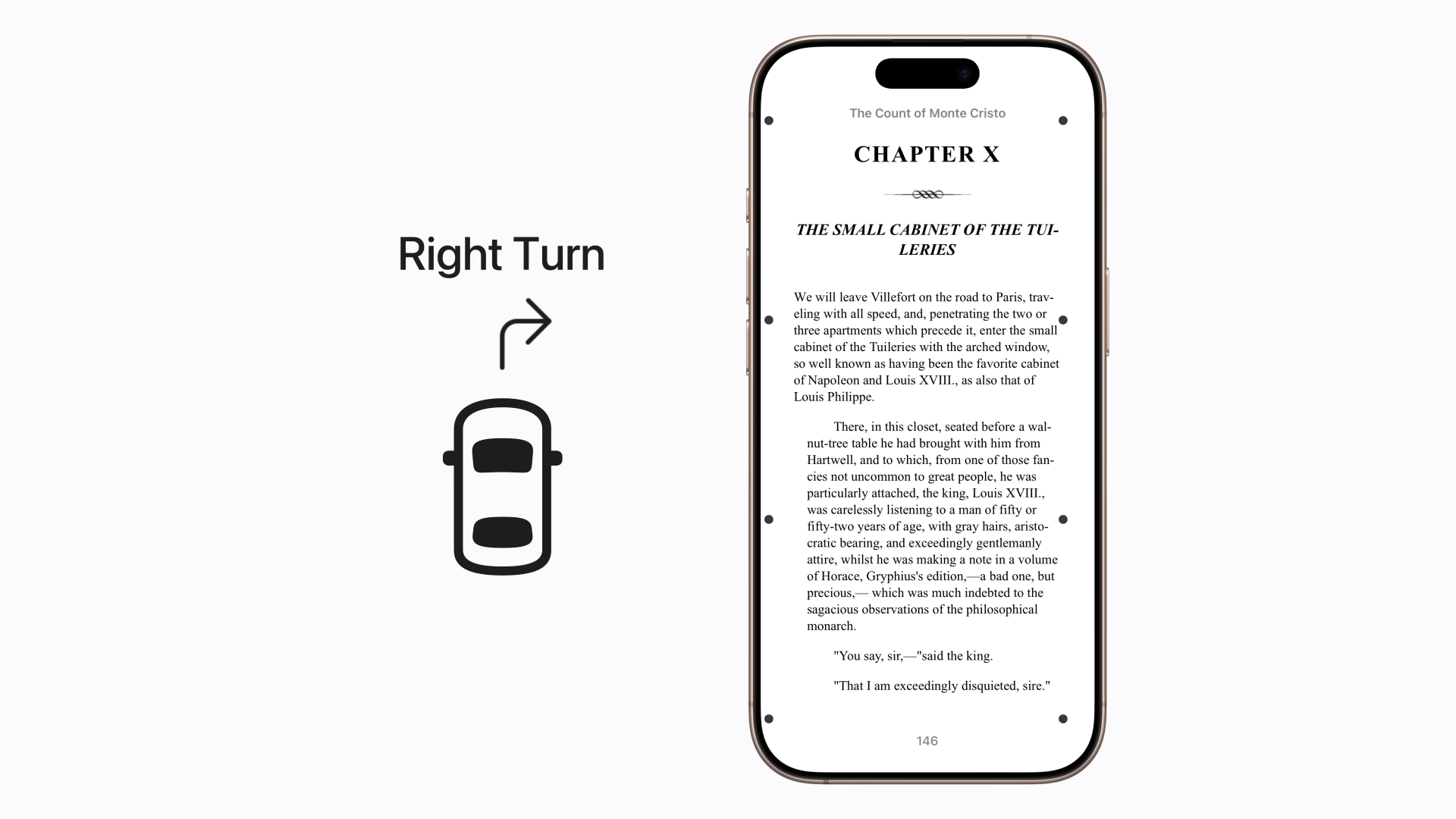
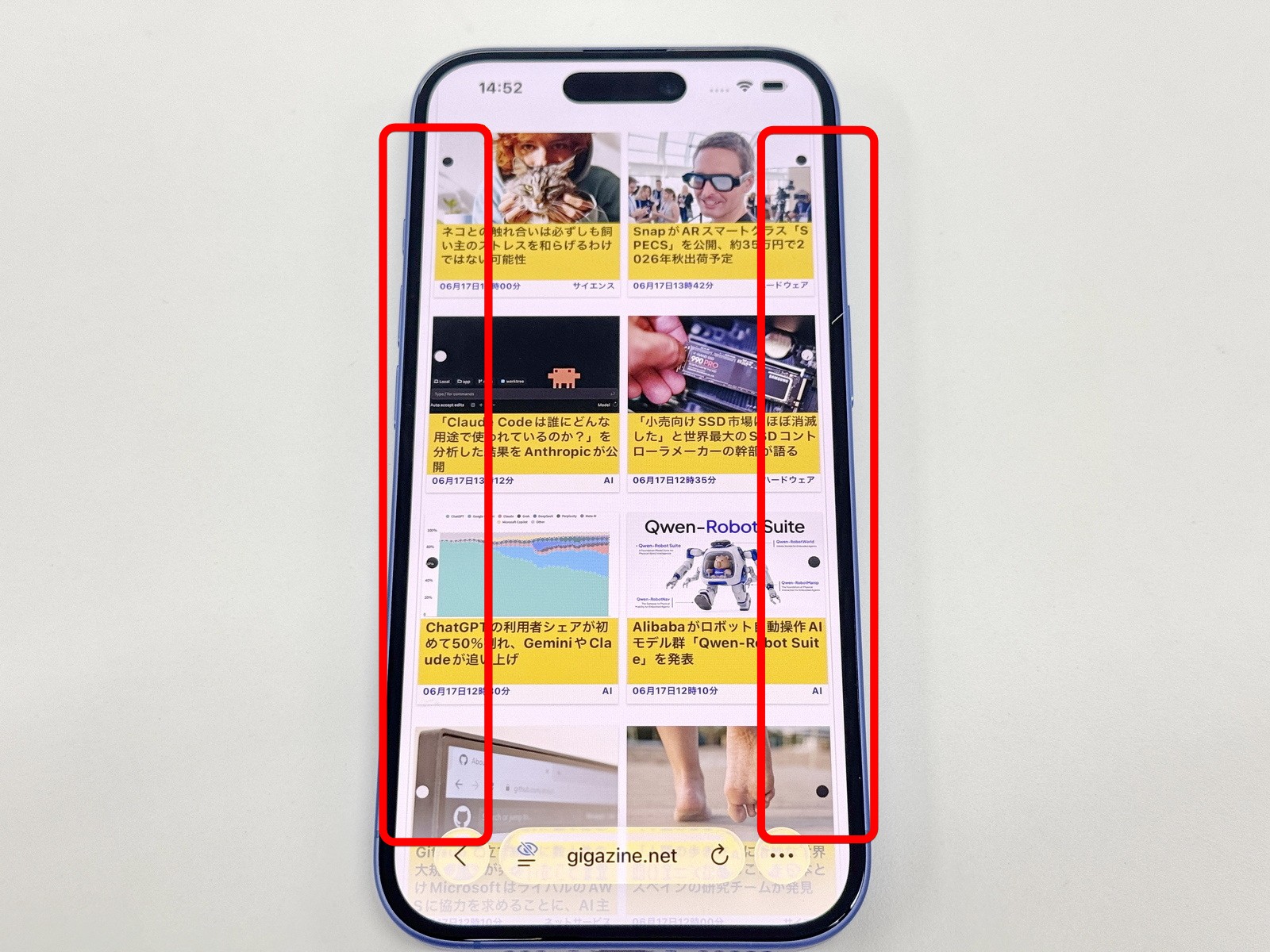
When the dots are displayed, they appear like this, with dots appearing on both the left and right edges of the screen. The dots move in accordance with the car's movements, such as acceleration, deceleration, and turning, reducing the discrepancy between what the eyes see on the screen and what the inner ear perceives as the car's movement.
You can see exactly how the dots move in the following video.
When you look at your smartphone in a car, your eyes perceive the screen as stationary, while your body senses the car's movement, turns, and braking. This discrepancy between visual information and your sense of balance is thought to lead to motion sickness, such as nausea and dizziness. Apple's Vehicle Motion Cues feature compensates for this discrepancy with dots on the screen. This feature is said to work best when you are sitting facing forward in the car.
Mr. Ricker said he felt nauseous while looking at his screen in his car while driving on mountain roads, but his symptoms improved after enabling vehicle motion queuing. He said he was then able to read for several hours on the Kindle app on his iPhone and write reviews of around 1,000 words while traveling.
However, Ricker reports that 'while the dots themselves are relatively inconspicuous, if they remain stationary on the screen along a straight path, they can sometimes interfere with maps, text, and images.'
Note that Android does not yet have a standard feature similar to Apple's Vehicle Motion Cues. However, F-Droid, which distributes open-source, ad-free apps, has released an Android app called 'Vehicle Motion Cues'.
Vehicle Motion Cues | F-Droid - Free and Open Source Android App Repository
https://f-droid.org/en/packages/dev.davidv.motionsickness/
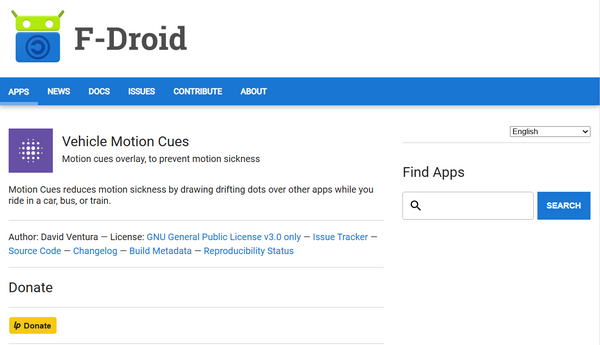
Vehicle Motion Cues is a GPLv3 licensed app developed by David Ventura and is available for Android 8.0 and later. Vehicle Motion Cues works in much the same way as Apple's Vehicle Motion Cues, displaying moving dots superimposed on the screen while you're in a car, aiming to reduce motion sickness.
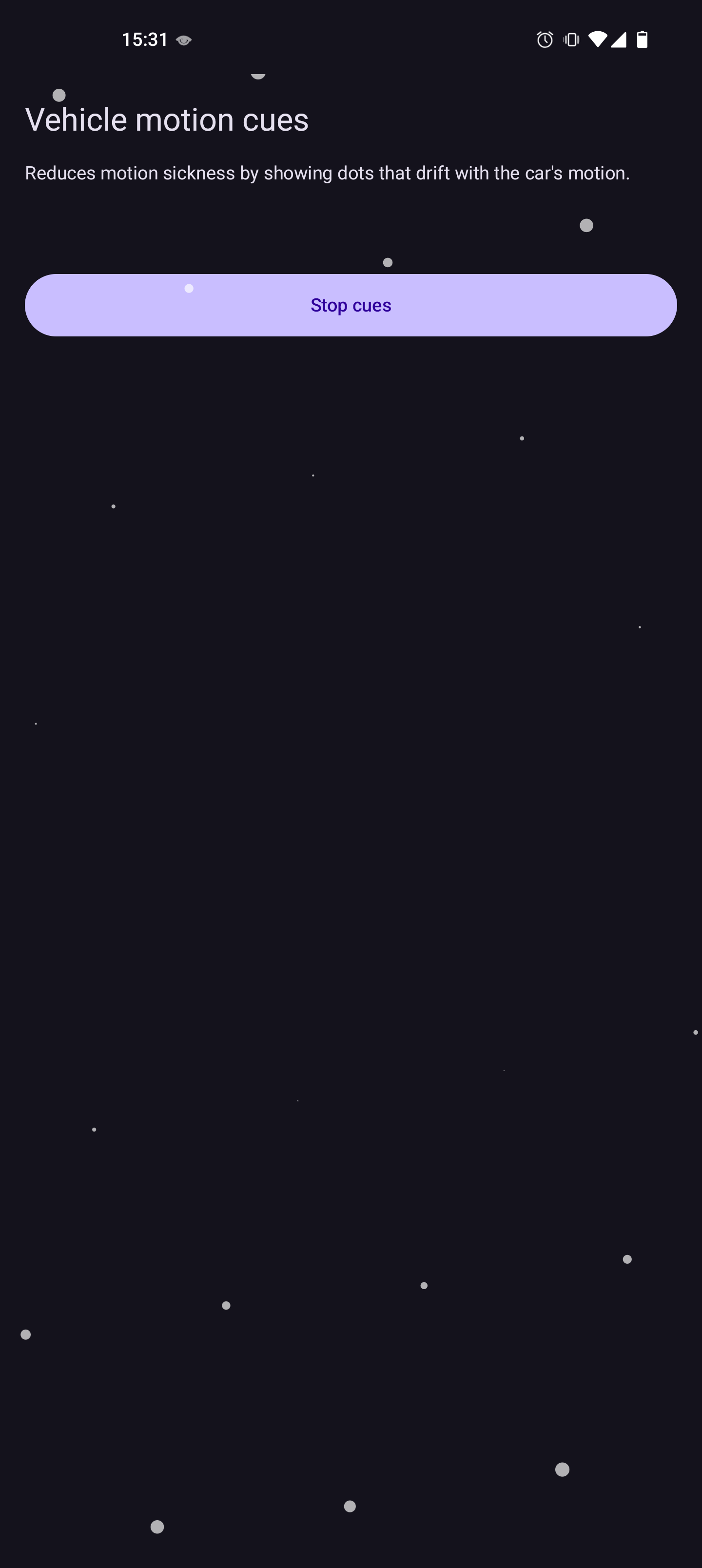
Google is reportedly developing a similar feature for Android, but it will not be widely available as a standard Google feature at least as of June 2026. Therefore, if Android users want to try a similar mechanism, their current option is to use third-party apps available on platforms like F-Droid.
Related Posts: