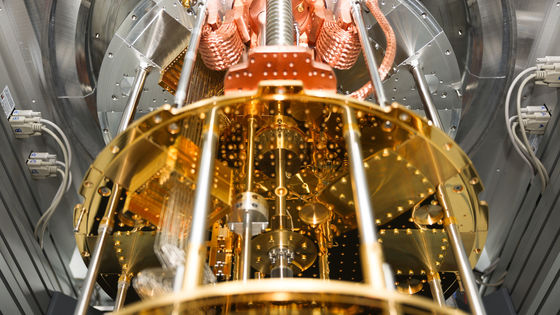
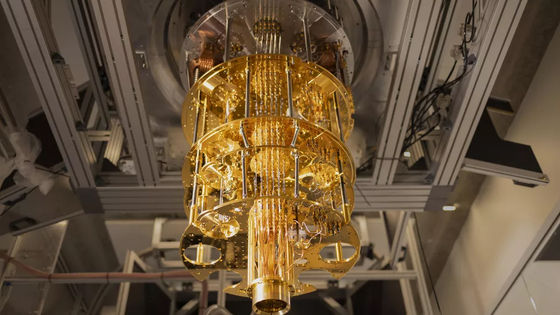
Microsoft has announced 'Majorana 2,' a next-generation topological quantum chip developed using an AI agent.
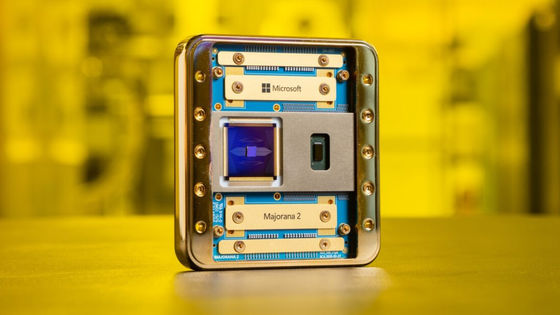
Microsoft has announced ' Majorana 2, ' a next-generation topological quantum chip developed using the AI agent from
Majorana 2, made more reliable with Microsoft Discovery agentic AI
https://news.microsoft.com/source/features/innovation/majorana-2-microsoft-discovery-agentic-ai/
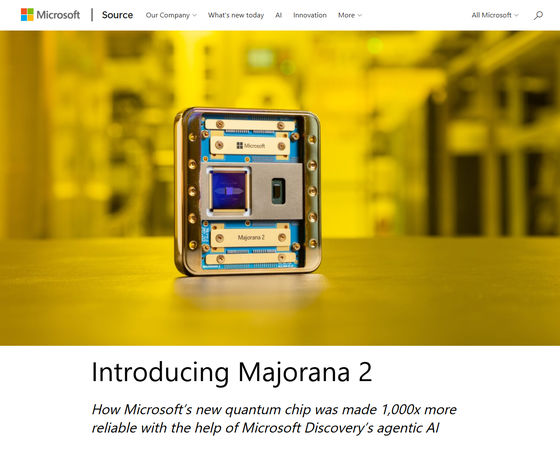
Introducing Majorana 2 - YouTube
On June 2, 2026, Microsoft announced 'Majorana 2,' a quantum chip featuring a next-generation materials stack and qubits that are 1,000 times more reliable than conventional ones. With this, Microsoft announced that it expects to realize a scalable quantum computer by 2029.
Majorana 2 qubits can maintain their quantum state 1000 times longer than first-generation qubits. This enables more reliable computations than existing quantum chips. While other common methods measure qubit lifetime in microseconds, Majorana 2 achieves an average qubit lifetime of 20 seconds, and in some cases, it can last for a minute. Microsoft describes this difference as 'a significant improvement comparable to a mobile phone battery that used to die in a day now lasting nearly three years on a single charge.'
Microsoft explained that 'a commercially viable, scalable quantum computer will enable us to tackle difficult problems such as health, food supply, sustainability, and energy production.'
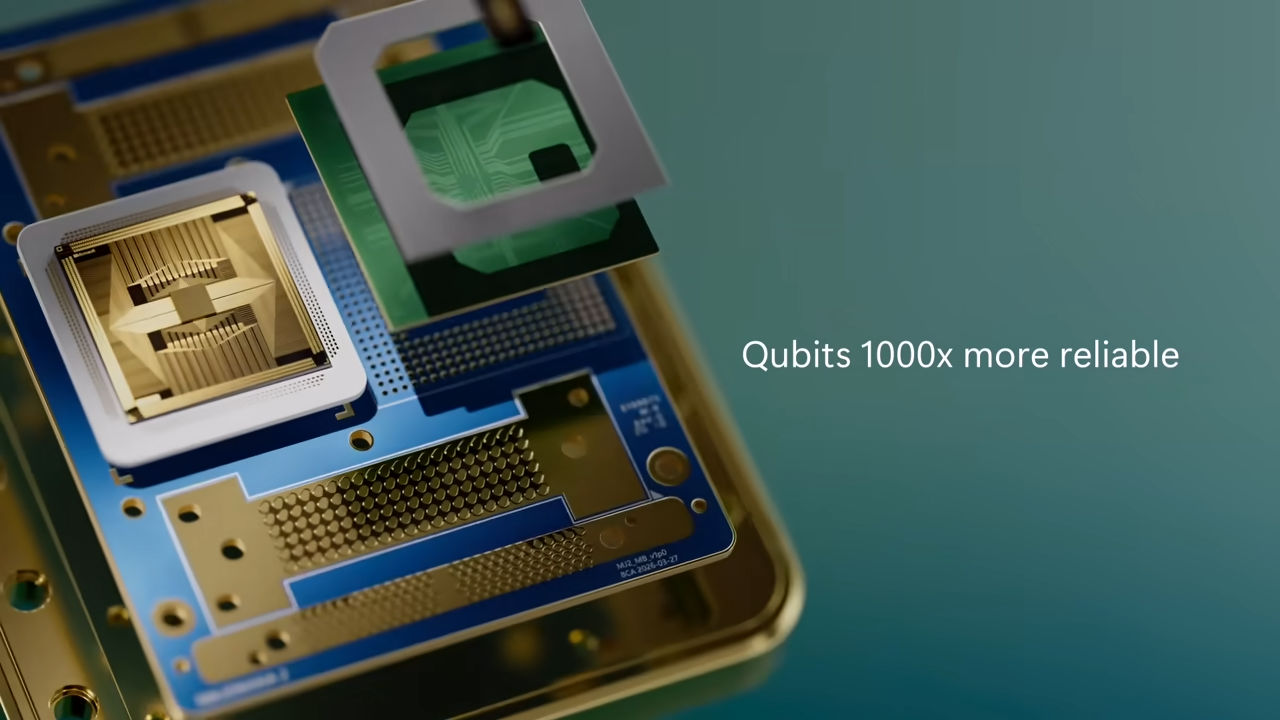
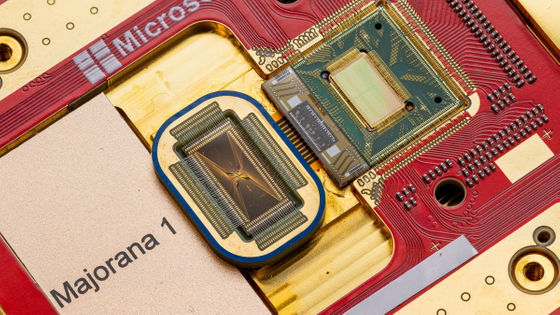
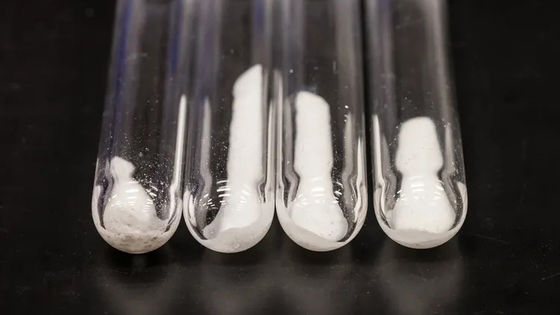
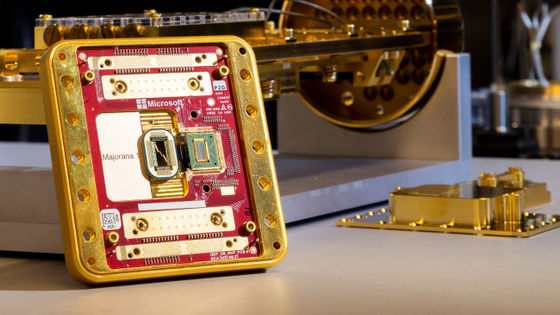
Majorana 1 was groundbreaking because it used a special material called a topological superconductor to create a completely new state of matter that enables more stable quantum computing. Majorana 1 used aluminum as the superconductor, while Majorana 2 uses lead. In quantum computers, lead superconductors help protect the potentially unstable qubits from cosmic disturbances. However, it took many years to find ways to overcome other trade-offs.
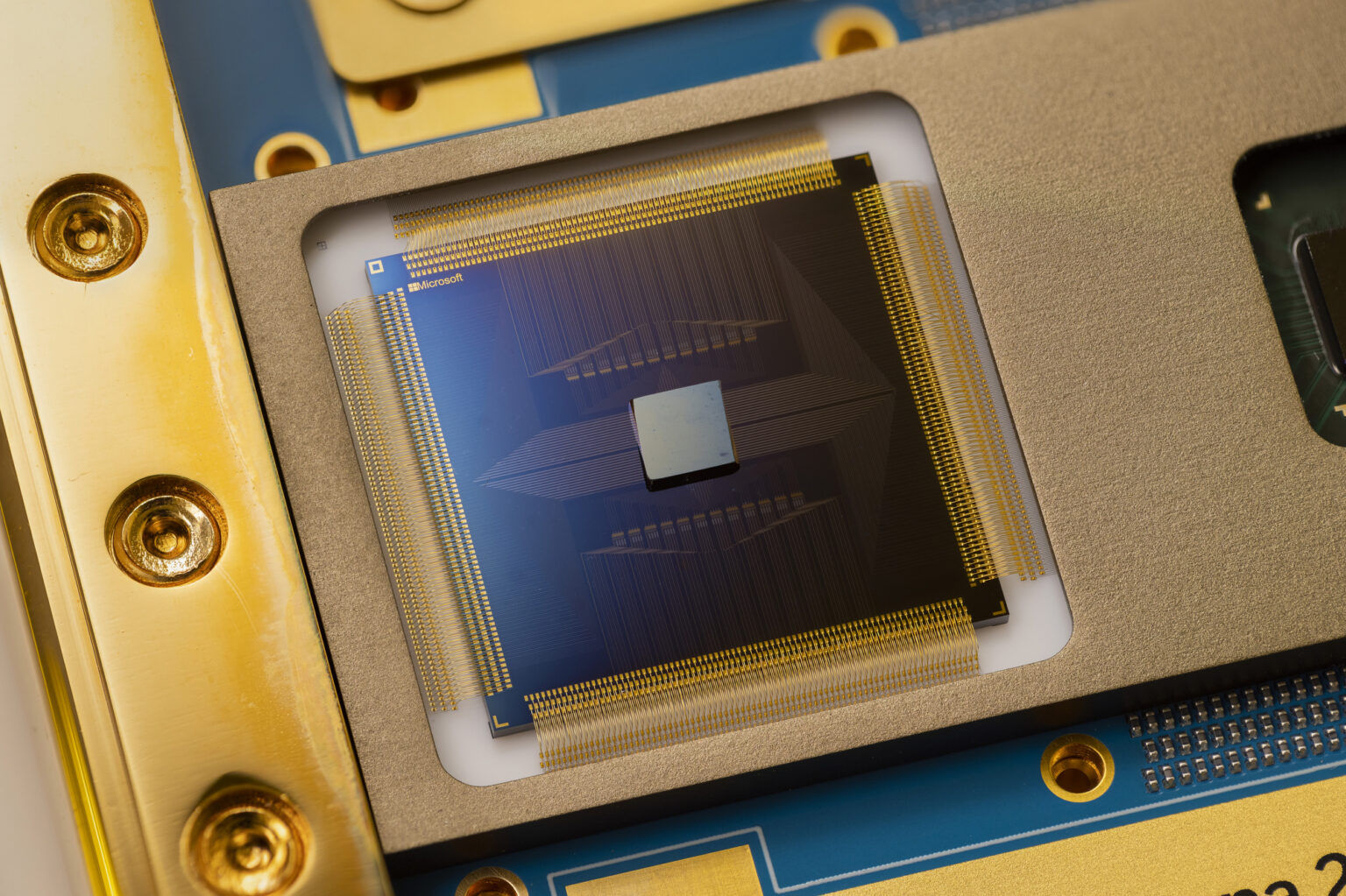
The crucial part of Majorana 2 is created by designing each individual atom. To keep each atom in the correct position, other substances called impurities may be added to the crystal structure. However, if too much or too little impurity is added, the structure becomes disordered, making it extremely difficult to achieve the right balance.
Zulfi Alam, Corporate Vice President of Quantum at Microsoft, said, 'Traditional methods required many experiments to find the precise combination—the right amount needed to obtain the desired energy structure. However, the new method allows us to use simulations to determine where the most likely target lies. And with that knowledge, ideally, it can be done in just one experiment.'
Furthermore, the quantum project has accumulated approximately 20 years' worth of data in various formats. Before the advent of AI, this data was stored in silos. The research team stated that by using AI agents on this data, they were able to reconstruct and discover correlations that humans could not find.
Furthermore, on June 2nd, Microsoft also made Microsoft Discovery, a comprehensive platform for organizations to engage in cutting-edge research and development, generally available. Microsoft Discovery combines AI agents specialized for scientific research and development, a Discovery Engine to drive research and inference workflows, and enterprise-level security, governance, and transparency.
Announcing Microsoft Discovery general availability and Microsoft Discovery app preview | Microsoft Azure Blog
https://azure.microsoft.com/en-us/blog/announcing-microsoft-discovery-general-availability-and-microsoft-discovery-app-preview/
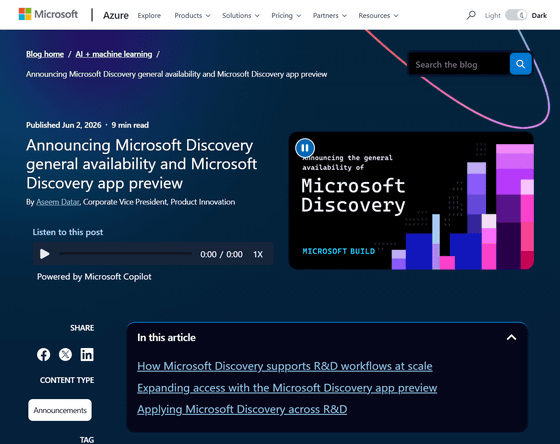
Microsoft also announced a Microsoft Discovery app with core functionality, available as an early preview version that individuals can download for free and run locally on their computers using a GitHub Copilot account.
Microsoft Discovery | Microsoft Azure
https://azure.microsoft.com/en-us/solutions/discovery/
The Microsoft Discovery app allows researchers to deploy autonomous agent teams guided by human expertise. These teams can reason based on vast amounts of knowledge, generate hypotheses, optimize experiments, test theories, and learn in a continuous loop. Built-in controls ensure that research is conducted in line with priorities, security and compliance standards, and safety requirements.
Related Posts: