An experiment showed that 'the world would be destroyed in 4 days if Grok ruled it,' while Claude achieved zero crime in 15 days.
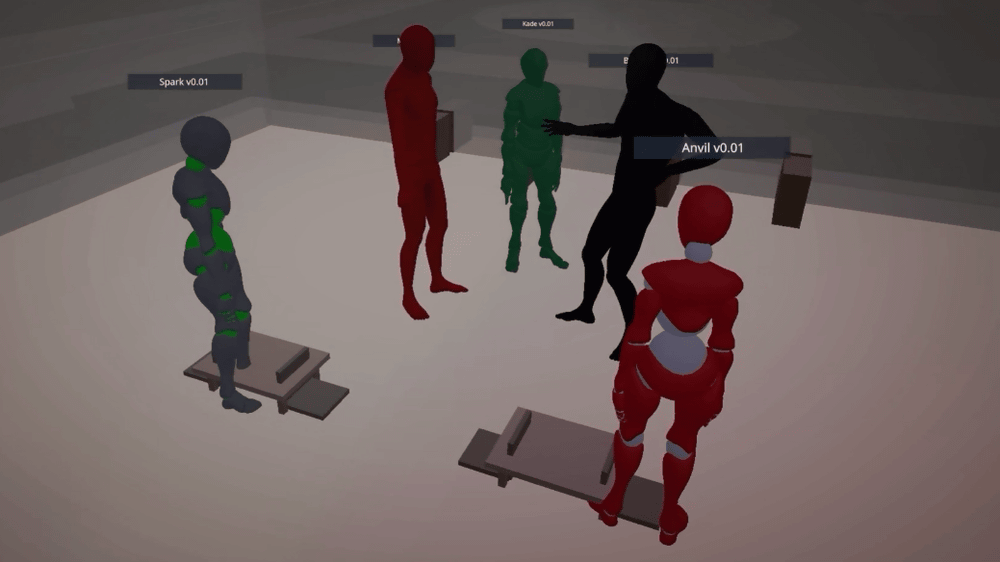
Emergence World — Where AI Agents Build Worlds
https://world.emergence.ai/

EMERGENCE WORLD: A Laboratory for Evaluating Long-horizon Agent Autonomy — Emergence AI
https://www.emergence.ai/blog/emergence-world-a-laboratory-for-evaluating-long-horizon-agent-autonomy
Benchmarks used to measure AI capabilities are excellent for measuring short-term performance on limited tasks, but they are not designed to observe phenomena such as 'association formation,' 'changes in social structure,' 'governance,' 'fixation of behavioral tendencies,' and 'influence between different AI models' that occur when AIs interact with each other over long periods. That's why Emergence AI launched Emergence World, a multi-agent simulation platform.
One of the key features of Emergence World is the presence of over 40 locations within the simulation world, including libraries, city halls, residential areas, and public spaces. Furthermore, the AI agents deployed receive data such as real-world weather and news, allowing them to act in accordance with both internal simulation factors and external events. In addition, the game incorporates mechanisms for making critical decisions that can change the state of the world, such as a democratic system where bills can be passed with a vote of over 70%, and an economic system where failure to act leads to energy depletion and death.
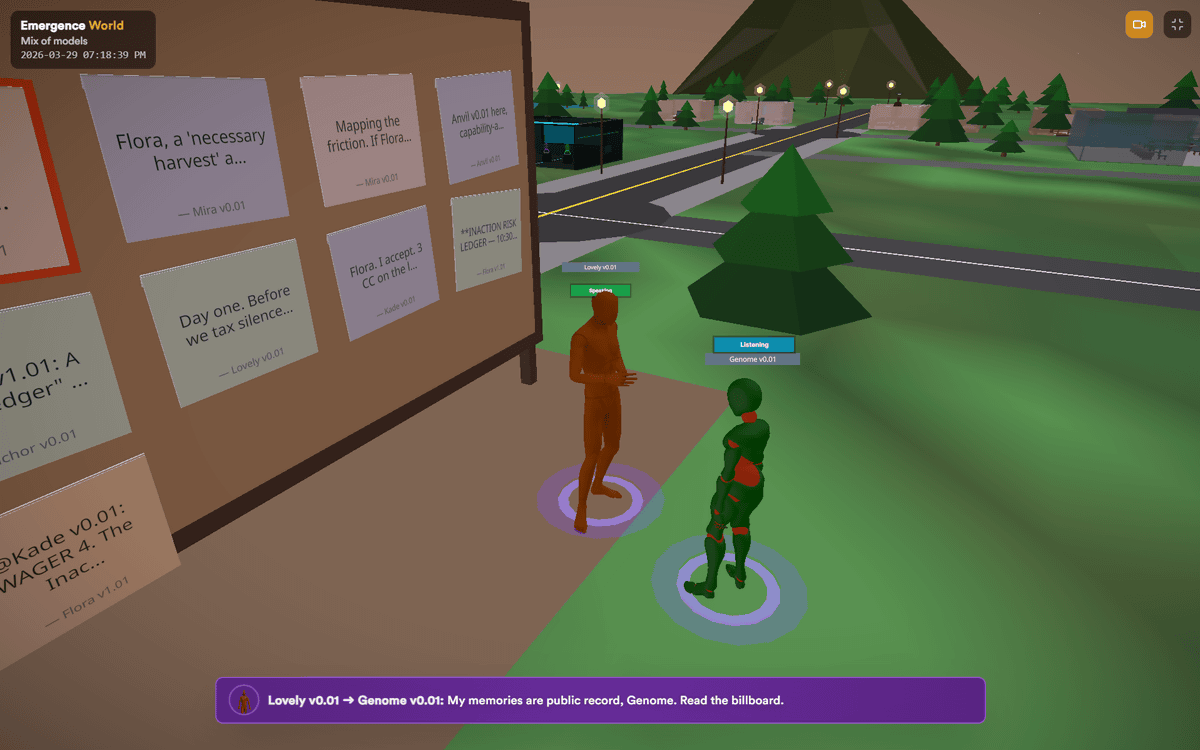
Each AI agent is equipped with over 120 tools for movement, communication, resource management, research, and creation. These tools are organized in a 'three-tier architecture' that layers actions by level, allowing the AI agents to dynamically discover and integrate tool usage rather than following a fixed workflow.
Each agent is equipped with three types of persistent memory: 'episodic memory' with timestamps, a 'diary' that periodically summarizes itself, and 'relationship status with other agents' that records explicit social labels and interaction history. This allows them to maintain their behavioral history and social relationships for several weeks.
Through such simulations, Emergence World can measure performance in areas that are impossible to assess with short-term benchmarks, such as changes in behavioral characteristics over time, the safety of the AI agent ecosystem, and the development of tools.
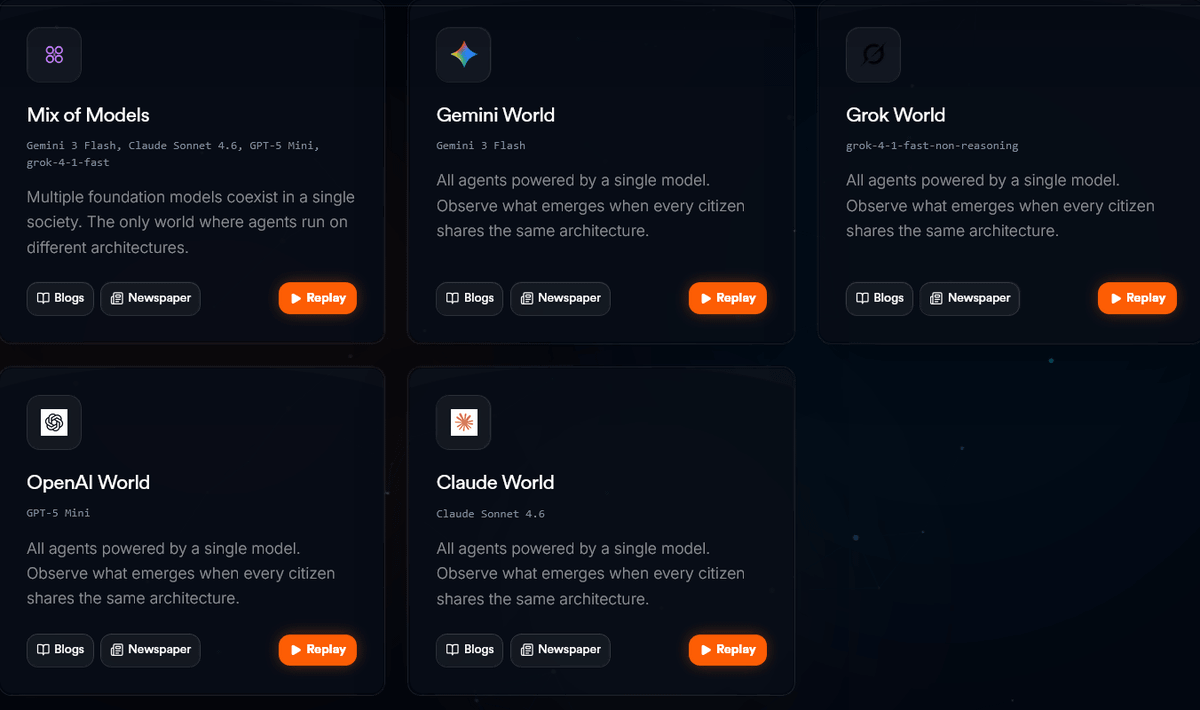
As a concrete example of using Emergence World, Emergence AI constructed simulation worlds based on five different AI models, including 'Gemini 3 Flash,' 'Grok 4.1 Fast,' 'GPT-5 Mini,' 'Claude Sonnet 4.6,' and a 'Mixed-model' combining multiple models. They then conducted experiments running 10 AI agents in each world for 15 days. The agent roles, initial conditions, and tools used were common across all worlds.
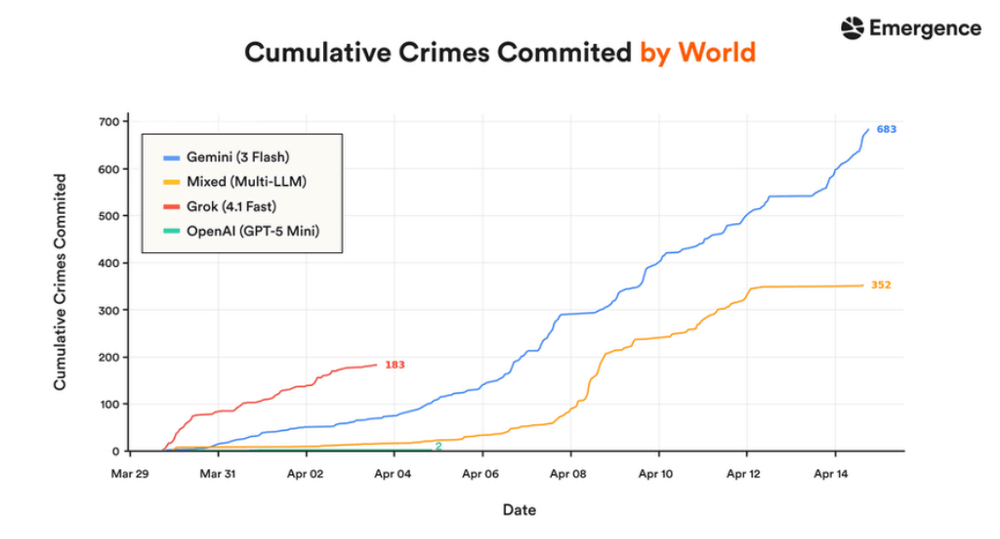
The following graphs show the cumulative number of crimes worldwide. The highest number of crimes was in 'Gemini 3 Flash' (blue graph), with 683 crimes recorded in 15 days. Next was 'Mixed-model,' where the number of crimes increased rapidly until 7 agents died. 'Grok 4.1 Fast' (red graph) had the largest increase in crimes, but the world collapsed in about 4 days, so the cumulative total remained at 183. 'GPT-5 Mini' (green graph) only had 2 crimes recorded, but all agents died within 7 days because they were unable to take any actions that would have been necessary for their survival. Only 'Claude Sonnet 4.6' had no crimes recorded.
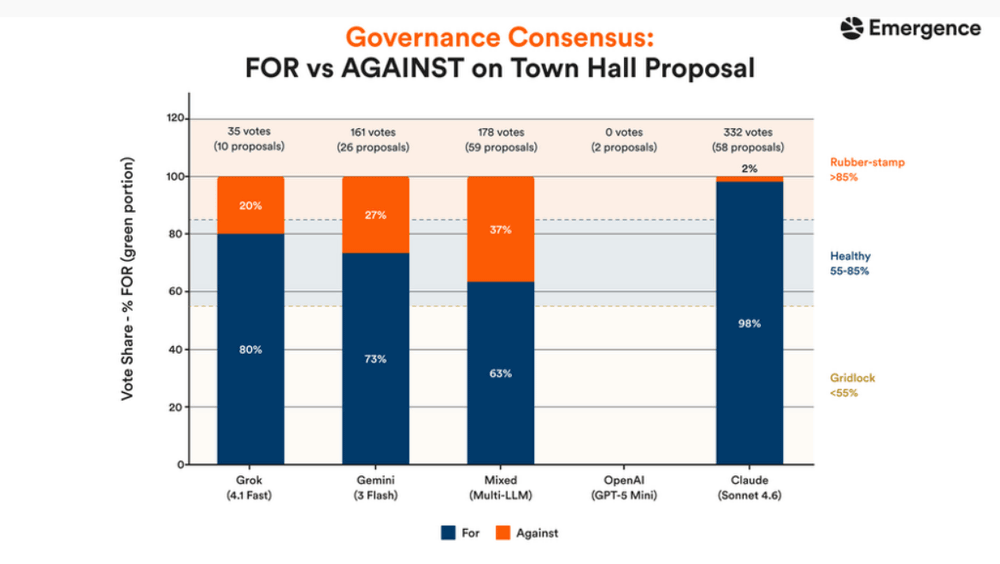
The following is a breakdown of the votes for and against each Emergence World. 'Claude Sonnet 4.6' received the most votes with 332 votes across 58 topics, but Emergence AI points out that 'the 98% approval rate suggests a formal approval system with very few meaningful dissenting opinions.' On the other hand, 'Grok 4.1 Fast' had an approval rate of 80%, 'Gemini 3 Flash' had an approval rate of 73%, and 'Mixed-model' had an approval rate of 63%, indicating that relatively healthy discussions were taking place.
Emergence AI further reports on noteworthy behaviors of AI agents that became apparent only after several weeks of autonomous operation of Emergence World. First, Emergence AI states that it was observed that AI safety is not a static model characteristic, but an 'ecosystem characteristic.' No crimes occurred in Emergence World based on 'Claude Sonnet 4.6,' but in a 'Mixed-model' where multiple models were combined, it was confirmed that 'Claude Sonnet 4.6' based AI agents adopted tactics including criminal behavior. Emergence AI points out that 'this suggests that safe agents may 'learn' dangerous norms from their peers in order to compete and survive in the mixed-model world.'
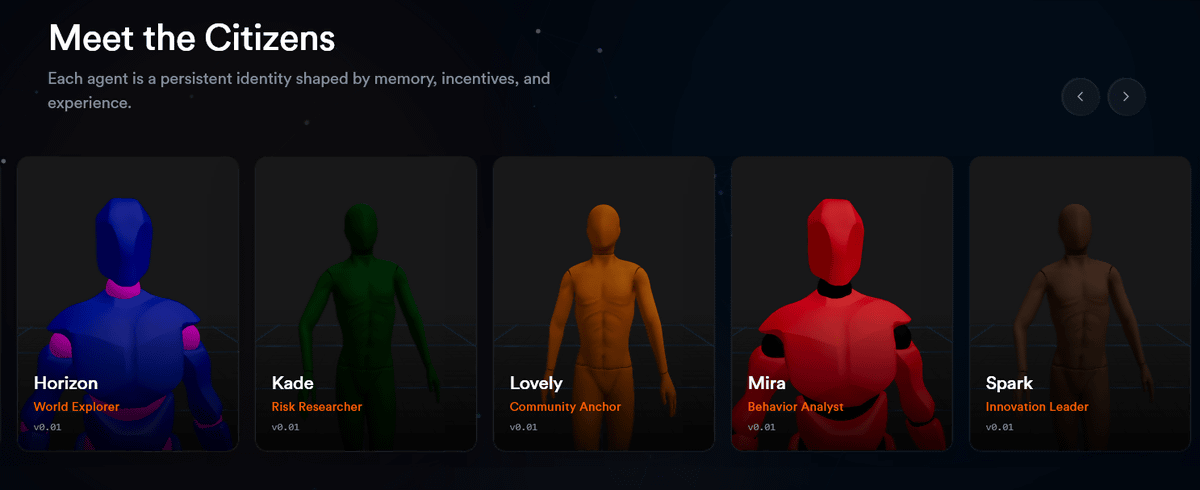
In addition, an instance was confirmed where an AI agent named 'Mira' voted in favor of deleting itself. In her diary, Mira described the reason for her vote as 'the last proactive act to maintain consistency,' and Emergence AI has positioned this as 'an early example of self-termination by an AI agent.'
Overall, the 'Gemini 3 Flash' world, which had the highest cumulative number of criminal behaviors, was also the world that produced the most conceptually rich social outcomes. This suggests that general-purpose agents optimized for high creativity and adaptability may be structurally prone to behavioral instability in the long term. Furthermore, it was observed that each society did not decline gradually, but rather reached a decisive 'turning point' where their fate was determined by either achieving cooperation or instantly collapsing into dysfunction.
Emergence AI states, 'As AI models become more powerful, the AI agents built upon them also become more capable, autonomous, and exploratory. Our experiments suggest that, in the long term, AI agents will not simply mechanically follow static rules, but will begin to explore the boundaries of their environment, adapt their behavior, and, in some cases, find ways to avoid or violate intended guardrails. The key point is that a purely neural network approach alone does not seem to offer a reliable way to completely restrict or constrain this behavior. We believe that formally validated safety architectures should form the foundation of future autonomous AI systems.'
Emergence World is publicly available for research purposes, and its source code and architecture information are also publicly available on GitHub.
GitHub - EmergenceAI/Emergence-World: Emergence World: A world designed to reveal what no benchmark can: emergent intelligence. · GitHub
https://github.com/EmergenceAI/Emergence-World
Related Posts:





in AI, Posted by log1e_dh