A customer who received the product made a false report to the credit card company, and the seller is furious at Stripe's response.

'
Stripe is friendly to 'friendly fraud' - Gingerlime
https://www.gingerlime.com/2026/stripe-seem-friendly-to-friendly-fraud/
For businesses that sell goods using credit card payments, one unavoidable problem is chargebacks. A chargeback is a procedure in which a cardholder files a complaint with the card issuer claiming that there is a problem with the payment and requests that the payment be canceled.
Chargebacks are designed to protect users whose card information has been stolen and used for unauthorized purchases. However, there are cases where users claim they 'don't remember purchasing' or 'never received' goods even though they themselves purchased and received them. This type of behavior is called 'friendly fraud,' and it can result in businesses losing sales, goods, shipping fees, commissions, and customer service time all at once.

The product Mr. Annel sells is a cigar adhesive called 'Ciglue,' and it's not a high-value item like expensive watches or smartphones that have a high resale value. However, one customer purchased Ciglue twice, and even though the first order was delivered by DHL and proof of delivery was available, they later filed a chargeback.
According to Annel, the customer initially explained that it was a 'bank error and had been processed together with genuine fraudulent activity,' and promised to contact the bank. Furthermore, they even offered to repay via PayPal, leading Annel to believe it was simply a misunderstanding. He submitted proof of delivery, his interactions with the customer, and his website policies to Stripe.
However, Annel later stated that 'the customer was intentionally lying.' The customer did not request a correction from the bank and claimed that they had not received the goods. The card issuer accepted the customer's claim, and the chargeback was successful. Annel received neither the sales revenue, the goods, nor the shipping fees back, and was also charged a chargeback fee.
The problem didn't end with the first order. Before the first chargeback was received, the same customer placed a second order using an untracked shipping method. A few days later, a chargeback occurred for the second order as well. After the first chargeback was acknowledged, the customer sent Mr. Anel an email boasting about their scam. For Mr. Anel, this was not just a misunderstanding, but a clear case of friendly fraud.
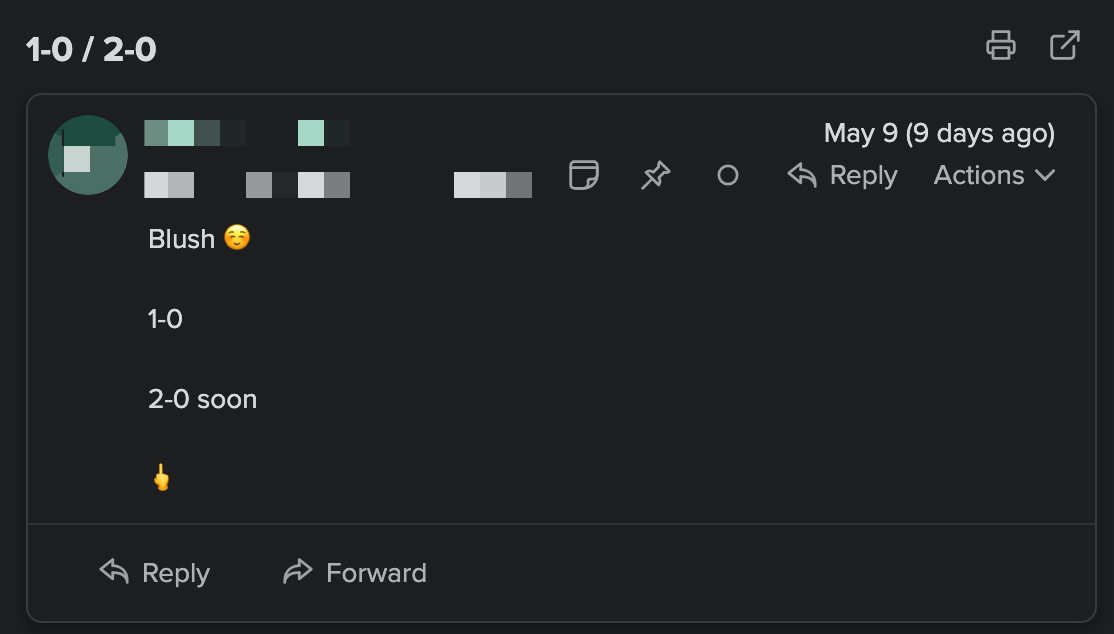
The following is an email that Anel received. After boasting of a '1-0' victory, it boasts '2-0 soon' and ends with a middle finger gesture.
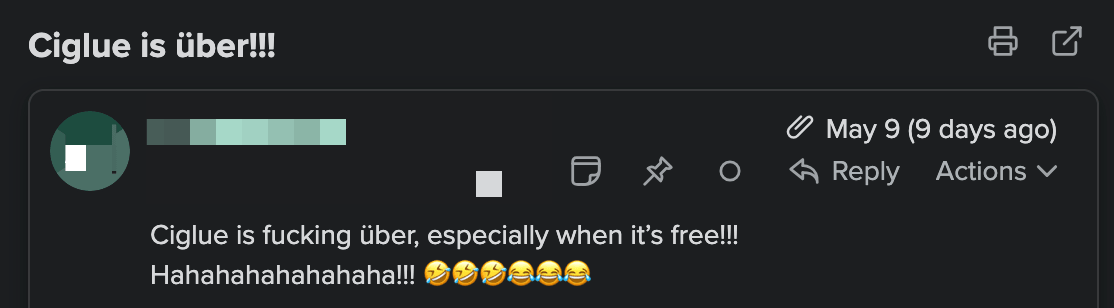
Furthermore, Anel also received the following email: 'Ciglue is awesome, especially since it's free! Hahahaha!'
To clarify, Stripe does not directly determine the outcome of a chargeback. According to Stripe's official documentation, even if a business submits evidence, it is the card issuer who reviews the evidence and makes the final decision. The entire chargeback process can take two to three months, and if the card issuer accepts the customer's claim, the business will not get their funds back.
Originally, Mr. Annel didn't expect Stripe to invalidate the chargeback that had been terminated. Rather, he hoped that Stripe would properly record clear instances of customer fraud internally and use that information for fraud detection by banks, fraud networks, and at least Stripe itself. Mr. Annel considered it a clear example of friendly fraud because the purchase was made with the customer's own card, the address was correct, and false claims were made about goods that had already been delivered.
However, according to Annel, Stripe explains that 'evidence of chargeback abuse sent from one service provider does not translate into a signal of fraud that extends to other service providers, nor does it take overall action against customers' cards, email addresses, or other information,' and that the evidence Annel submitted has no effect outside of this case.
Of course, a system where a customer is banned from Stripe entirely simply because an angry business unilaterally reports them is dangerous, as it carries the risk of misidentification and retaliation. However, Anel points out that there is a big gap between 'automatically blocking all businesses' and 'not reflecting clear evidence in fraud detection.' Stripe's proposal was for Anel himself to block the customer in question using Stripe Radar rules.
Stripe Radar is Stripe's fraud detection service. Stripe explains that Radar uses data from businesses worldwide and numerous risk factors to assess the fraud risk of each payment in real time. Stripe's official page highlights its AI, which has been trained on over $1 trillion in payment data annually, signals from the entire Stripe network, and information from card networks and banks.
Annel's frustration stemmed precisely from this discrepancy between the marketing slogan of 'network-wide signaling' and reality. Stripe explains that it uses information from numerous businesses to detect fraud that individual businesses might miss. However, it seemed to him that even when businesses sent evidence of customer chargeback abuse, it didn't create a cross-platform signal to protect other businesses.
Furthermore, Annel states that friendly fraud is a problem that doesn't mesh well with normal fraud detection at the point of payment. In the transaction in question, the payment check passed, the shipping address was correct, and the goods were actually delivered. In other words, it wasn't a typical fraud where a suspicious order was placed using a stolen card, but rather a delayed exploit where a legitimate buyer made a false claim to the bank after receiving the goods. The point is that there is no simple rule to identify a customer who lies to the bank after receiving the goods at the payment screen.

Hacker News has also seen a discussion surrounding chargebacks and friendly fraud sparked by Annel's article. While some argue that the likelihood of chargebacks varies by region, others counter that it's dangerous to label a country or region as high-risk based on limited anecdotes. There are also criticisms that unclear card statement names can make even legitimate purchases appear suspicious, indicating that the chargeback problem isn't simply a matter of 'bad customers versus good businesses.'
Stripe cites a clear refund policy, easy-to-understand billing names, order confirmation emails, customer support, and fraud detection tools as measures against friendly fraud. While there are preventative measures that businesses can take, chargebacks, where customers file claims directly with their banks after goods have been delivered, tend to leave businesses in a position where they have to collect evidence retroactively.
Anel states that the term 'friendly scam' has nothing 'friendly' about it. 'At the very least, if Stripe does nothing about customer fraud, then Stripe will appear friendly to scammers,' Anel argued.
Related Posts:







in Web Service, Posted by log1d_ts