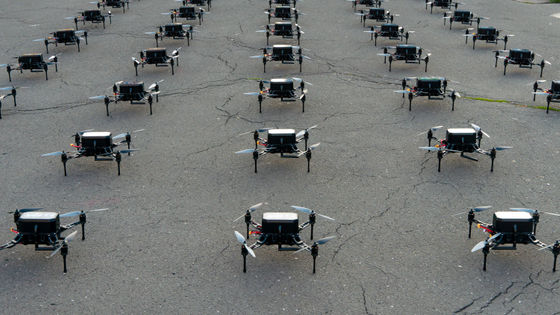
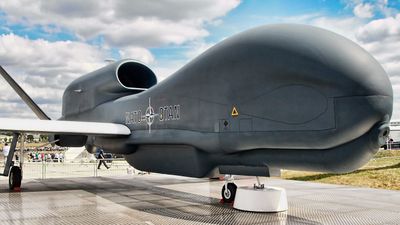
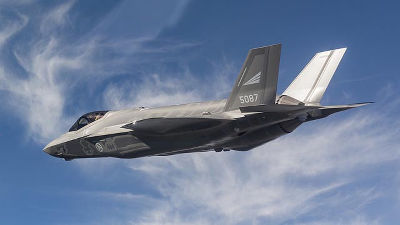
AI-driven 'autonomous warfare' has already begun; the conflict between Anthropic and the Department of Defense highlights the risks of autonomous AI weapons.

With the proliferation of generative AI, it is becoming possible for AI to do almost anything, and it has been pointed out that AI is also being used in warfare. The use of AI in warfare has come into the public eye due to the conflict between Anthropic and the Department of Defense.
AI warfare is already here | The Verge
https://www.theverge.com/ai-artificial-intelligence/937028/military-ai-warfare-red-lines
The United Nations headquarters in Geneva, Switzerland, hosts the Convention on Certain Conventional Weapons (CCWC), an international forum focusing on lethal autonomous systems, twice a year. Blanca Marriyan, a senior fellow at the Canadian peace research group Project Ploughshares , attended the CCWC in November 2017 and spoke about the possibility of warfare involving killer robots. At the time, no one took Marriyan's hypothesis seriously, but the technology media outlet The Verge points out that in today's world, where generative AI is widespread, the emergence of killer robots is becoming a more immediate and realistic possibility.
In Mr. Mariyan's presentation, a video called 'Slaughterbots' was shown first. In this video, a fictional defense contractor is selling AI drones that he claims can 'carry out killings with precision strikes.' In Slaughterbots, the CEO of the fictional defense contractor says, 'In the past, it was said that it was people who killed, not guns. But humans make mistakes in judgment. They get emotional, disobey orders, and have unrealistic expectations. So let's see how weapons make the decisions.'
Slaughterbots - YouTube
Mr. Mariyan's presentation took place at the first CCWC (Conference and Conference on Civil Engineering) held since the launch of Project Maven , a military AI project by the U.S. Department of Defense. Subsequently, Google joined Project Maven by the end of 2017, and it has been reported that it will already be in the practical application stage by 2024.
Project Maven, a military AI project led by the U.S. Department of Defense, is already in the operational stage, but concerns remain about data contamination by the enemy - GIGAZINE

Since then, drones have actually been used in warfare, and various types of drones were used in Russia's invasion of Ukraine.
Summary of Ukraine's long-range attack drones: What kind of drones are they actually using to attack Russia? - GIGAZINE
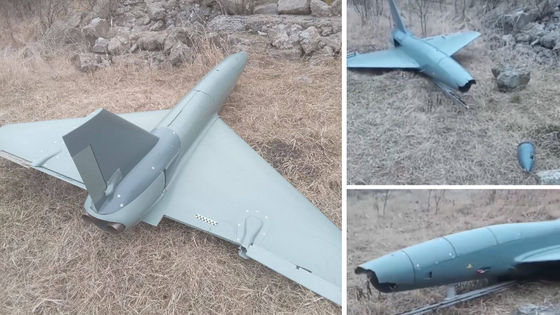
Approximately 10 years have passed since Mr. Mariyan's lecture, and even at the time of writing this article, the military has not been able to develop fully autonomous lethal weapons. However, fully autonomous lethal weapons are also a factor in why the AI company Anthropic severed ties with the U.S. Department of Defense .
Anthropic signed a contract with the Department of Defense in July 2025 worth up to $200 million (approximately 32 billion yen) for national security, but has refused to 'use AI for large-scale surveillance within the United States' and 'use AI in weapons that can identify, track, and kill targets without human intervention.'
The inside story of the breakdown of negotiations between Anthropic and the U.S. Department of Defense: The Department of Defense wanted to use Anthropic's AI to analyze massive amounts of data on American citizens until the very end - GIGAZINE

Regarding the dispute between Anthropic and the Department of Defense, The Verge pointed out that 'it is unusual for a contractor like Anthropic to restrict its technology to specific uses.' Andrew Reddy of the University of California, Berkeley, also noted that 'it is not a government-led technology like the Manhattan Project , nor is it a traditional military supplier like Northrop Grumman .'
It remains unclear, even at the time of writing, which side—Anthropic or the Department of Defense—will prevail. As a negotiating tactic, the Department of Defense designated Anthropic as a supply chain risk in March 2026. President Donald Trump has declared that he will ban all government agencies from using Anthropic's Claude.
AI company Anthropic officially designated as a 'supply chain risk to U.S. national security,' Anthropic declares it will fight the case in court - GIGAZIN
E

However, the relationship between the two parties appears to have improved somewhat since Anthropic announced Mythos , an AI specifically designed for cybersecurity. Nevertheless, the legal battle between Anthropic and the Department of Defense is still ongoing as of the time of writing.
Anthropic sues the U.S. Department of Defense; OpenAI and Google employees express support for Anthropic - GIGAZINE

Reddy points out that the dispute between Anthropic and the Department of Defense has made the term 'fully autonomous weapons' widely known to the public. 'We are pretending not to have crossed a line yet, but in reality, we have crossed a line that should never be crossed,' he says.
At the heart of the debate surrounding 'fully autonomous weapons' is Department of Defense Directive 3000.09, one of the few policies that governs the use of lethal autonomous weapons. This directive, enacted in 2012, defines systems like lethal autonomous weapons as 'once activated, capable of selecting and attacking targets without further intervention from an operator.' Department of Defense Directive 3000.09 stipulates that both fully autonomous and semi-autonomous weapons 'should be designed so that humans can make 'appropriate levels' of judgment regarding the use of force.'
However, The Verge points out that, depending on the interpretation of the definition, certain missile defense programs already fail to meet the requirements of Department of Defense Directive 3000.09. For example, the Phalanx close-in air defense system is an automated weapon system designed to defend ships from incoming missile attacks. Such systems need to respond in milliseconds and therefore cannot function with human intervention.
Anthropic, which is in dispute with the Department of Defense, may agree to reduce human intervention, but opposes eliminating it entirely. Meanwhile, competitors are eager to fill the void, relaxing their operational guidelines and tweaking their mission statements to enable military deals, with OpenAI quickly agreeing to the conditions that Anthropic rejected. Anthropic has also withdrawn its security restrictions under pressure from the Department of Defense.
OpenAI reaches agreement with Department of Defense on AI usage contract, shortly after negotiations with Anthropic fall through - GIGAZINE

According to Sarah Schoker, a senior fellow at the University of California, Berkeley, and former leader of OpenAI's geopolitics team, OpenAI had little interaction with people studying the risks of decision support systems and autonomous weapon systems. Schoker described the research community in this field as 'extremely isolated.' She also pointed out that people in this field had been warning about the risks for some time.
Anthropic has rejected the Department of Defense's proposals to 'use AI for large-scale surveillance within the United States' and 'use AI in weapons that can identify, track, and kill targets without human intervention,' but its CEO, Dalio Amodi, is only opposing this because he believes Claude is not ready to support fully autonomous weapons. In fact, Amodi is not opposed to fully autonomous weapons conceptually or ethically, explaining in a blog post that 'fully autonomous weapons (weapons that completely eliminate humans and automate target selection and attack) could be extremely important to our nation's defense' and that 'we will work directly with the Department of Defense in research and development to improve the reliability of these systems.'
Related Posts: