The inside story of the breakdown in negotiations between Anthropic and the US Department of Defense: Until the very end, the Department of Defense wanted to use Anthropic's AI to analyze large amounts of data on American citizens
Negotiations between the US Department of Defense and Anthropic for a $200 million (approximately 31 billion yen) contract for classified AI systems broke down in late February 2026. The breakdown in the negotiations stemmed from deep conflicts over the ethical boundaries of military use of AI technology, particularly regarding surveillance of American citizens and the deployment of fully autonomous weapons. The Department of Defense reportedly insisted on unrestricted use of the technology until the very end.
Inside Anthropic's Killer-Robot Dispute With the Pentagon - The Atlantic
How Talks Between Anthropic and the Defense Dept. Fell Apart - The New York Times
https://www.nytimes.com/2026/03/01/technology/anthropic-defense-dept-openai-talks.html
Anthropic CEO says he's sticking to AI 'red lines' despite clash with Pentagon - CBS News
https://www.cbsnews.com/news/pentagon-anthropic-dario-amodei-cbs-news-interview-exclusive/
Anthropic Gains Tech Worker Support in Pentagon AI Dispute - Bloomberg
https://www.bloomberg.com/news/articles/2026-02-27/anthropic-s-feud-with-pentagon-mushrooms-into-broader-battle
Anthropic announced in 2024 that it would provide access to Claude to US intelligence and defense organizations. In June 2025, it released ' Claude Gov ,' an AI model designed specifically for US defense and intelligence agencies. In July 2025, Anthropic also signed a $200 million (approximately 31 billion yen) contract with the Department of Defense for the use of AI.
US Department of Defense awards contracts worth up to $200 million each to Anthropic, Google, OpenAI, and xAI to utilize AI for national security - GIGAZINE
In January 2026, Secretary of Defense Pete Hegseth issued a memorandum calling for the widespread integration of AI throughout the U.S. military and for AI companies to share their technology without restrictions. To demonstrate his strong commitment to military use, Secretary Hegseth even displayed an AI-generated poster of himself inside the Pentagon, promoting the use of AI. At the time, the only AI authorized for deployment in classified federal systems was Anthropic's Claude, which was widely used within intelligence agencies, so there was great anticipation for progress in the negotiations.
However, negotiations with Anthropic dragged on. Emil Michael, the Department of Defense's Chief Technology Officer, who led the negotiations, accused Anthropic's CEO, Dario Amodei, of 'selfishly trying to control the U.S. military,' and publicly criticized him on social media, calling him 'a liar and someone with a God complex.'
It's a shame that @DarioAmodei is a liar and has a God-complex. He wants nothing more than to try to personally control the US Military and is ok putting our nation's safety at risk.
— Under Secretary of War Emil Michael (@USWREMichael) February 27, 2026
The @DeptofWar will ALWAYS adhere to the law but not bend to whims of any one for-profit tech… https://t.co/ZfwXG36Wvl
The biggest sticking point in the final stages of negotiations was the collection and analysis of large amounts of data on American citizens. The Department of Defense demanded that the AI be used to analyze and collate unclassified commercial bulk data, such as chatbot questions, Google search history, GPS movement data, and credit card transaction records. The Department of Defense threatened to terminate the contract and pressured Anthropic to lift Claude's restrictions.
Defense Secretary Hegseth warns Anthropic to either lift Claude's restrictions or cut ties - GIGAZINE
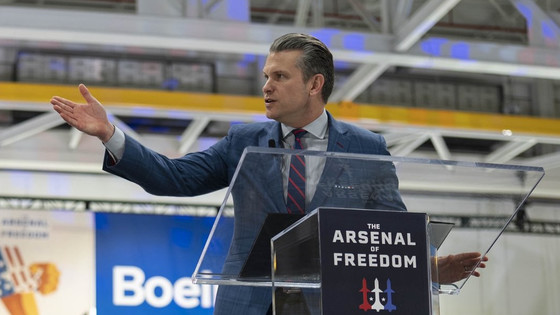
However, Anthropic pointed out the risk that combining data purchased from private companies with its own AI would enable sophisticated surveillance that would overwhelm legal systems, and rejected the request as a 'high-level request.' It stated that it would not allow Claude to be used for 'massive domestic surveillance' and 'fully autonomous weapons,' and firmly rejected the Department of Defense's request.
Anthropic CEO Dario Amodei rejects Pentagon request over AI security issues - GIGAZINE
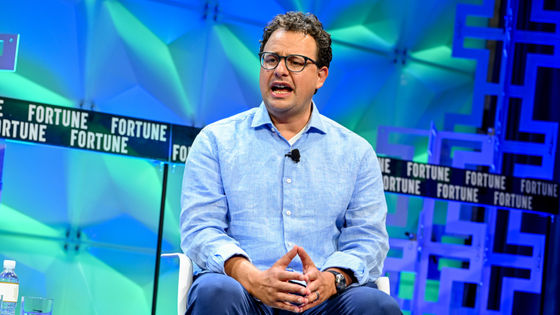
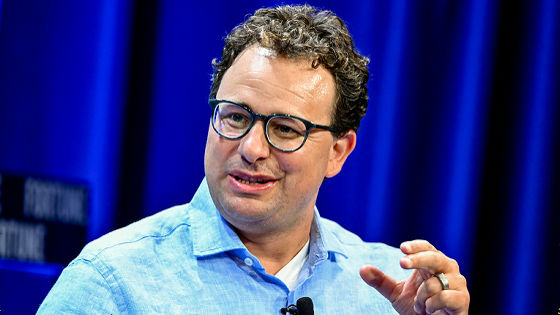
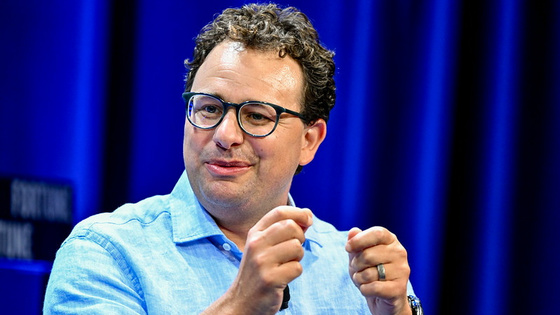
by Fortune Brainstorm Tech
In an effort to move the negotiations forward, the Department of Defense also offered a compromise that included a commitment not to use the technology for domestic surveillance or lethal autonomous weapons. However, the provision included vague language such as 'as appropriate,' leaving room for the administration to change it at any time depending on its interpretation. Anthropic believed that this non-binding language was insufficient and continued to demand clearer and stricter guardrails.
The two sides also have very different views on autonomous weapons. The US military is spending $13.4 billion (approximately 2 trillion yen) on autonomous weapons in fiscal year 2026 alone, and is developing a wide range of technologies, from individual drones to swarm-controlled robotics .
While Anthropic did not reject the idea of such weapons, it argued that the reliability of AI technology at the time of writing was insufficient, posing the risk of accidentally attacking civilians or its own soldiers. Michael, however, maintained his stance that he would not accept written restrictions on future defense measures in the name of countering hostile countries such as China.
The Department of Defense proposed a further compromise: keeping AI in the cloud rather than on the edge of the weapon itself. Anthropic rejected this solution as well. Anthropic argued that in modern military architectures, drones and cloud data centers are connected by mesh networks, and the boundary between the two is no longer a clear boundary but more of a gradient. 'Even if AI is in the cloud, if it's involved in lethality decisions on the battlefield, it makes no difference from an ethical perspective,' Anthropic said.
The breakdown in the agreement came on February 27, 2026, when President Donald Trump called Anthropic a 'radical left, woke company' on social media and ordered all government agencies to stop doing business with the company within six months.
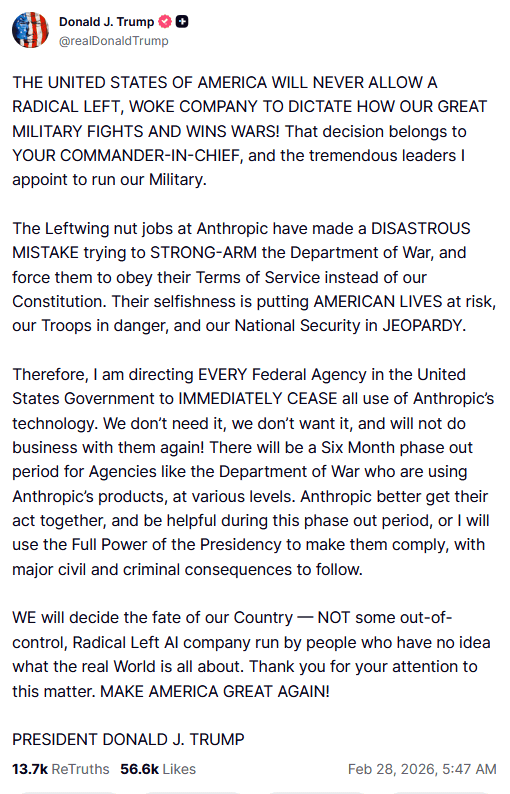
Shortly before the deadline at 5:01 PM on the same day, Michael Michael requested to speak directly to Amodei's CEO on a conference call, but was told Amodei was in another meeting and refused, which caused him to become enraged. Then, at 5:14 PM, Secretary of Defense Hegseth announced that Anthropic was designated a supply chain risk and would be completely cut off from transactions with U.S. government and military suppliers.
President Trump claims that Anthropic's left-wing fanatics have attempted to control the U.S. military, and orders the severance of ties. Secretary of Defense Hegseth will designate Anthropic as a 'supply chain risk' - GIGAZINE
This designation is typically given to foreign companies that threaten national security, making it extremely unusual for it to be applied to an American company. CEO Amodei criticized the move as 'retaliatory and punitive' and made clear his intention to fight the case in court. However, in an interview after the negotiations collapsed, he emphasized that 'everything Anthropic has done has been done in support of patriotism and national security,' and that 'disagreeing with the government is the most American thing we can do, and we stood up to protect our country's values.'
Meanwhile, Anthropic's rival, OpenAI, has signed a new contract with the Department of Defense on the condition that its models be confined to the cloud. CEO Sam Altman said the company doesn't intend to challenge specific legal military actions, but wants to use its expertise to help design secure systems.
OpenAI agrees to AI contract with Department of Defense, shortly after Anthropic negotiations collapse - GIGAZINE
However, this agreement has sparked backlash from some OpenAI employees, who demand that the same red lines as Anthropic's should be observed, with approximately 100 employees signing a petition in protest. Google employees have also reportedly sent a joint letter to Jeff Dean, chief scientist at Google DeepMind, the company's AI division, stating that 'Google should set the same red lines as Anthropic is seeking from the government.' Labor unions at various companies oppose the use of their technology for mass surveillance and autonomous killing in the United States, and are calling for greater transparency about the contracts companies sign with the military.
Related Posts:



in AI, Posted by log1i_yk