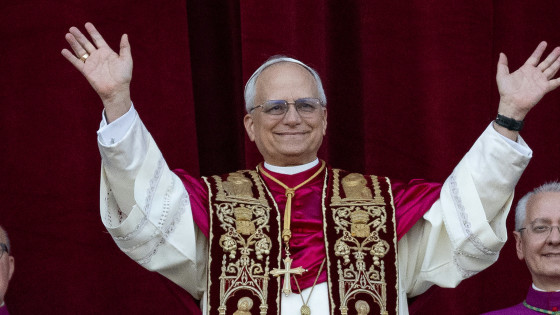
Pope Leo XIV issued the encyclical 'Magnifica Humanitas' on AI, calling for AI regulation and child protection, and criticizing the 'new slavery' of the AI era.
AI is becoming a widely used and convenient tool, being employed in areas such as text creation, image generation, search, translation, education, healthcare, and automation of tasks. However, concerns are also growing about AI replacing human judgment, the concentration of data and computing resources in a few companies, the exposure of children to sexual content and exploitation, and the use of AI weapons in war. Pope Leo XIV has issued an encyclical, 'Magnifica Humanitas,' that directly addresses these issues.
Encyclical Letter of His Holiness Leo XIV Magnifica Humanitas (15 May 2026)
First Encyclical Letter of His Holiness Leo XIV Magnifica Humanitas - Calendar of Activities | Vatican.va
https://www.vatican.va/content/leo-xiv/en/events/event.dir.html/content/vaticanevents/en/2026/5/25/enciclica-magnifica-humanitas.html
Magnifica humanitas - YouTube
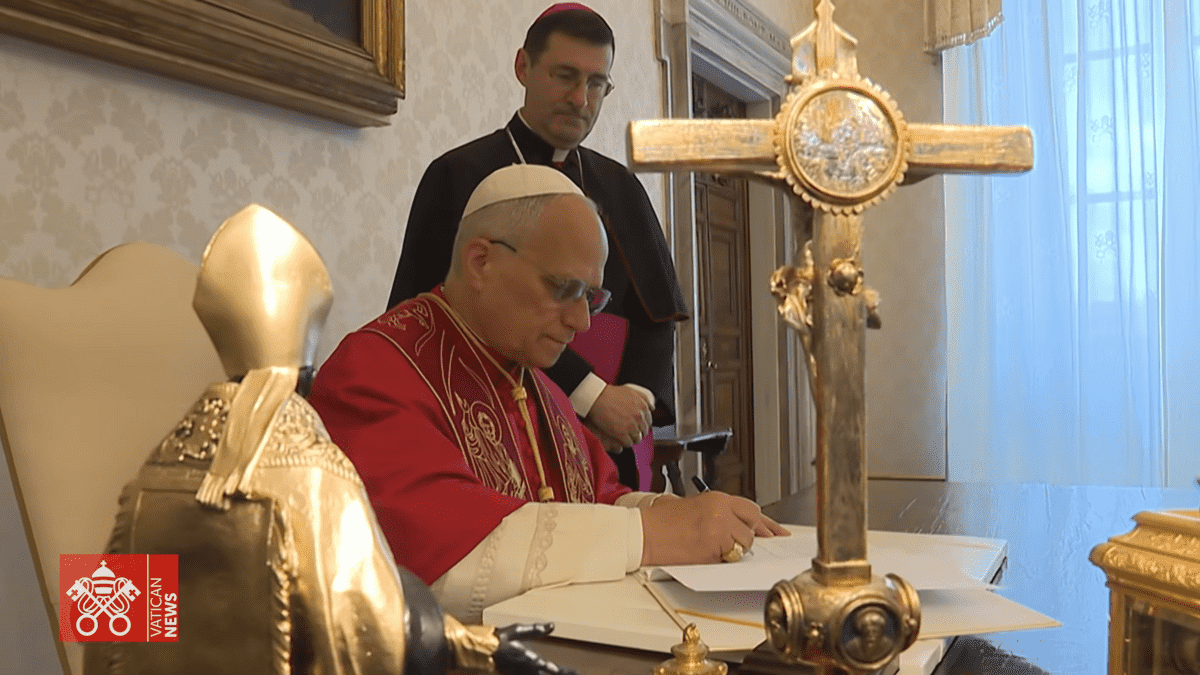
An encyclical is an important official document issued by the Pope to the Catholic Church and the world, and is considered to hold a high position among the Pope's teachings. Pope Leo XIV's encyclical, 'Magnifica Humanitas,' was signed on May 15, 2026, and published on May 25, 2026. Its official subtitle is 'In Defense of Humanity in the Age of AI,' and it is Leo XIV's first encyclical.
Leo XIV stated that technology, including AI, is 'not a force hostile to humanity' and 'not inherently evil,' but added that technology is not neutral because it is influenced by the people who create it, fund it, regulate it, and use it. In other words, instead of simply viewing AI as 'useful or dangerous,' we should ask who owns the AI, for whose benefit it was designed, and who is responsible.
In the encyclical, Pope Leo XIV explained that 'while AI can mimic human intelligence, it cannot experience joy or pain, possess a physical body, or understand friendship or responsibility from within.' He clarified his view that even when AI appears to 'empathize' through text or conversation, it is not actually building human-like relationships. In situations where genuine human relationships and emotional connections are lacking, there is a risk that users, who may have difficulty discerning this, may substitute their interactions with AI for human relationships.
Leo XIV argued that slowing down the pace of AI implementation is not an opposition to progress, but a responsible consideration for humanity, citing the fact that societal rules, supervisory bodies, user understanding, and redress systems have not kept pace with the rapid development of AI. He stated that simply saying 'ethics are important' is insufficient, and that a strong legal system, independent oversight, knowledgeable users, and a government that does not shirk responsibility are necessary.

Regarding child protection, the encyclical points out that early exposure to digital devices and social media can negatively impact sleep, attention, emotional regulation, and relationships. It further states that access to violent or offensive content, pornography or overly sexual content, messages that trivialize the body or emotions, and suggestions that make dangerous behavior seem normal are problematic. Pope Leo XIV argues that AI-generated images and videos, fake profiles, and algorithms that encourage dangerous contact make grooming, blackmail, and the sexual exploitation of minors more difficult to detect.
Pope Leo XIV stated that responsibility should not be placed solely on parents, but that governments, schools, and families need to cooperate. He proposed age limits, holding service providers accountable, and special protective measures to shield children from online sexual exploitation and violence. He also said that children and young people themselves need to be taught to recognize manipulation and guidance, and to protect their own dignity and the dignity of others.
Regarding labor issues, it has been argued that while AI increases productivity, it also risks forcing workers to adapt to the speed and demands of machines, stripping them of their skills, subjecting them to automated supervision, and relegating them to simple, repetitive tasks. Leo XIV criticizes the view that evaluates humans solely on ability and productivity, arguing that AI systems should be designed with humans at the center, not just performance.
The encyclical also explains that AI's instantaneous and smooth responses don't magically appear, but are supported by the labor of people involved in natural resources, energy facilities, data centers, data labeling, model training, and content moderation. Pope Leo XIV also stated that a major issue is the 'new form of slavery' behind AI and technology, highlighting young people and women who perform low-wage, arduous work, and children and young people who mine rare earth elements for the equipment and semiconductors needed for AI.
Pope Leo XIV stated that 'supply chains supporting technology industries and the digital economy should be made transparent to prevent companies from gaining a competitive advantage through hidden exploitation.' He added that companies and investors should prioritize ethical pre-screening, including protecting workers, combating forced labor, and assessing the social impact of data-driven business models.
Furthermore, regarding war and AI, Leo XIV warned that the easier deployment of autonomous weapons would make warfare easier to wage and move it further away from human control. The encyclical states that it is unacceptable to entrust killing or irreversible decisions to AI, and that there is no algorithm that can morally justify war. AI would make conflicts faster and more impersonal, and lower the threshold for violence by treating victims as data.
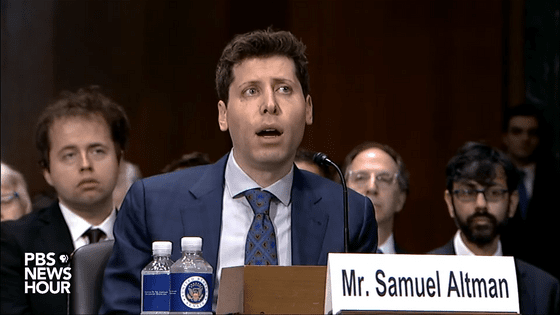
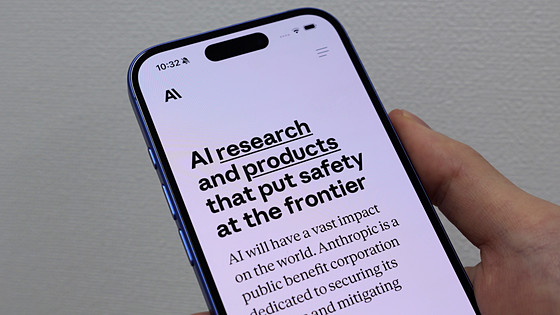
Chris O'Lah, co-founder of AI company Anthropic, also attended the event announcing the encyclical. O'Lah stated that leading AI companies, including Anthropic, are operating under commercial pressure and competition and need external oversight. Leo XIV's encyclical does not simply demonize AI companies, but rather argues that AI developers, governments, schools, families, workers, and civil society should share the same responsibility for this issue.
In his encyclical, Pope Leo XIV emphasized that what is needed in the age of AI is not a choice between 'to use AI or not to use AI,' but rather a choice of development centered on human dignity, the common good, truth, the dignity of work, and peace.
Related Posts:





in AI, Posted by log1d_ts