A fossil that had been on display in a museum for decades has been found to belong to a newly discovered species of giant carnivore.
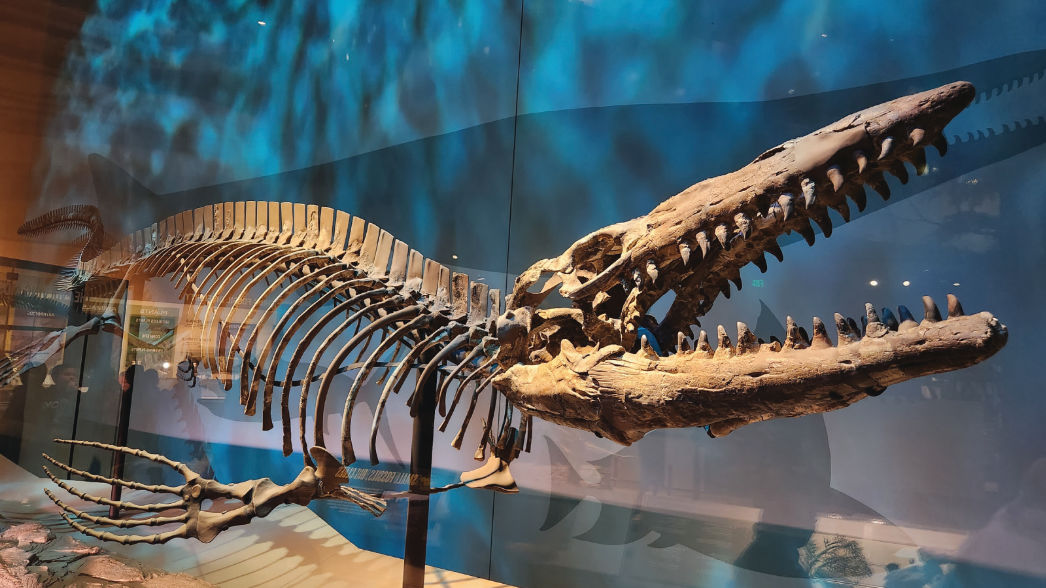
A fossil of
A gigantic new species of Tylosaurus (Squamata, Mosasauridae) from Texas : and a revised character list for phylogenetic analyzes of Mosasauridae (Bulletin of the American Museum of Natural History, no. 482)
https://digitallibrary.amnh.org/items/dbbf9dc2-f0cb-40fc-87b2-a92791f3c3cc
Fossil Kept in a Museum For Decades Turns Out to Be a Fearsome New Predator : ScienceAlert
https://www.sciencealert.com/fossil-kept-in-a-museum-for-decades-turns-out-to-be-a-fearsome-new-predator
The fossil in question was discovered in Texas in 1979 and was classified as Tylosaurus proligel (commonly known as Heath Mosasaurus) for about 50 years. Mosasaurs are a group of large marine reptiles that lived in the seas of the Late Cretaceous period and are believed to have thrived as apex predators in the oceans of the dinosaur age.
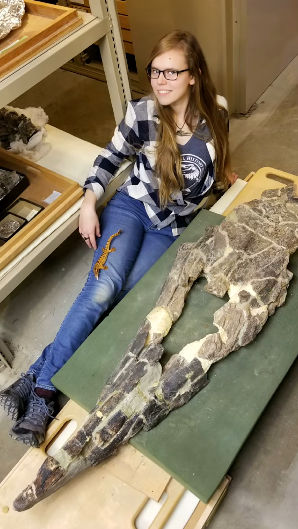
Amelia Zeetlow, a paleontologist at the American Museum of Natural History, was studying a specimen of Heath Mosasaurus at the Perot Museum of Natural Sciences as part of her PhD in comparative biology. The specimen is over 12 meters long, with the skull alone measuring approximately 170 cm. The image below shows Zeetlow standing next to a portion of the skull specimen, giving a good sense of its size.
Re-examining the fossil skull using 3D scanning and other methods revealed significant differences in the shape of the snout, palate, and lower jaw structure compared to those of mosasaurs. Below are photographs of the examined fossil.
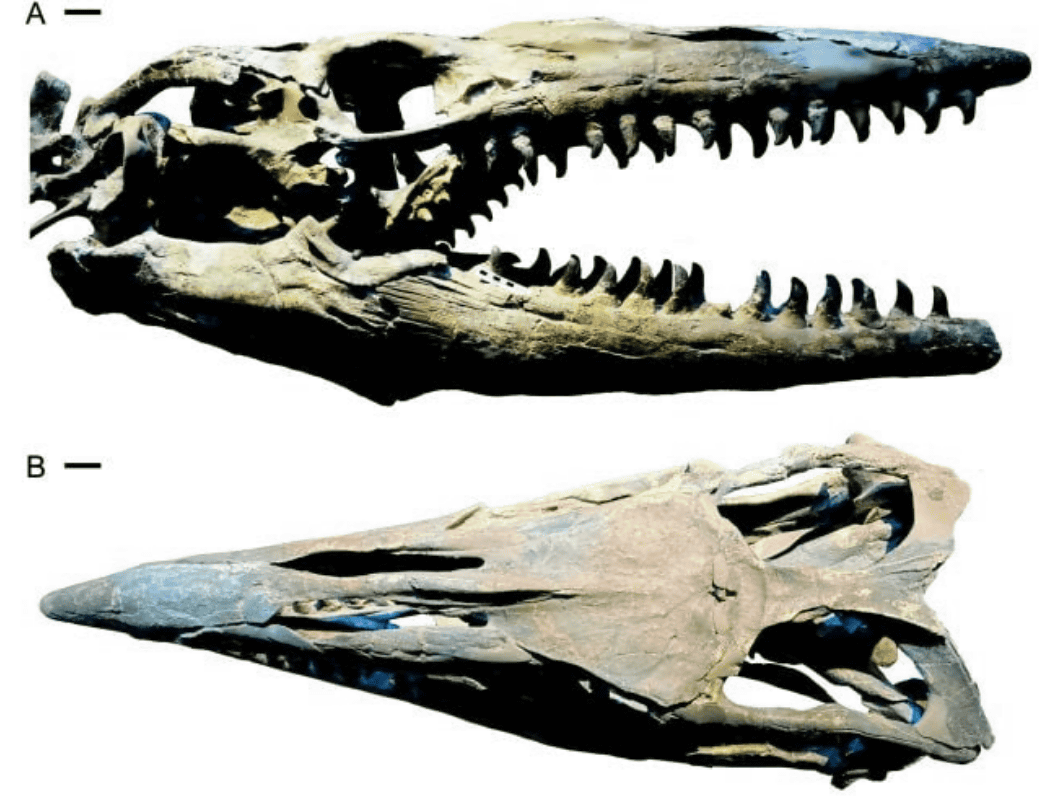
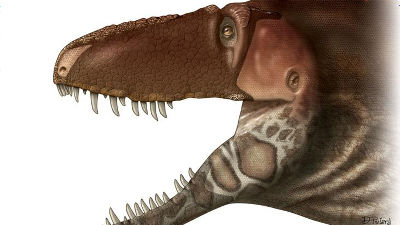
A comparison of the Perrault Museum of Natural Science fossil with Heath Mosasaurus revealed significant differences in the skull, jaw, mouth, and teeth. In particular, the jaw and neck were more powerful, and the teeth were finely serrated—a feature rarely seen in mosasaurs—suggesting a predatory ability similar to that of Tyrannosaurus Rex. The paper suggests these features may indicate adaptations for different types of prey.
The newly discovered species has been named 'Tylosaurus rex.' 'Rex' is a Latin word meaning 'king,' and is a name used for giant predators, such as 'Tyrannosaurus rex.'
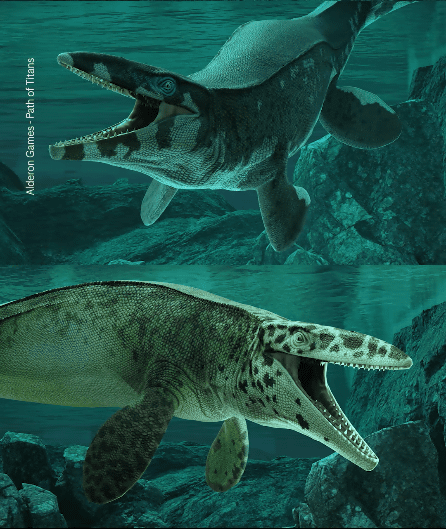
Ron Tikoski, a paleontologist at the Perot Museum of Natural Sciences, explains, 'Tylosaurus rex was not only a massive animal, about twice the length of the largest great white sharks, but it also appears to have been far more ferocious than other mosasaurs. Through the study and investigation of well-preserved fossils collected throughout the North Texas region, we have found evidence that this species possessed a level of violence not previously seen in other tyrosaurian specimens.'
The researchers also examined other large mosasaur fossils that had previously been classified as Tylosaurus proligel, and identified a total of 12 specimens that can be reclassified as Tylosaurus rex.
'This discovery is more than just naming a new species. It challenges long-held theories about mosasaur evolution and highlights the need to modernize the tools we use to study these iconic marine reptiles,' said Zitlow, who discovered the differences between the specimens.
Related Posts: