OpenAI proposes human-first policies aimed at realizing superintelligence, including 'introduction of a four-day work week,' 'support for people whose jobs are taken by AI,' and 'establishment of a monitoring system for dangerous AI.'
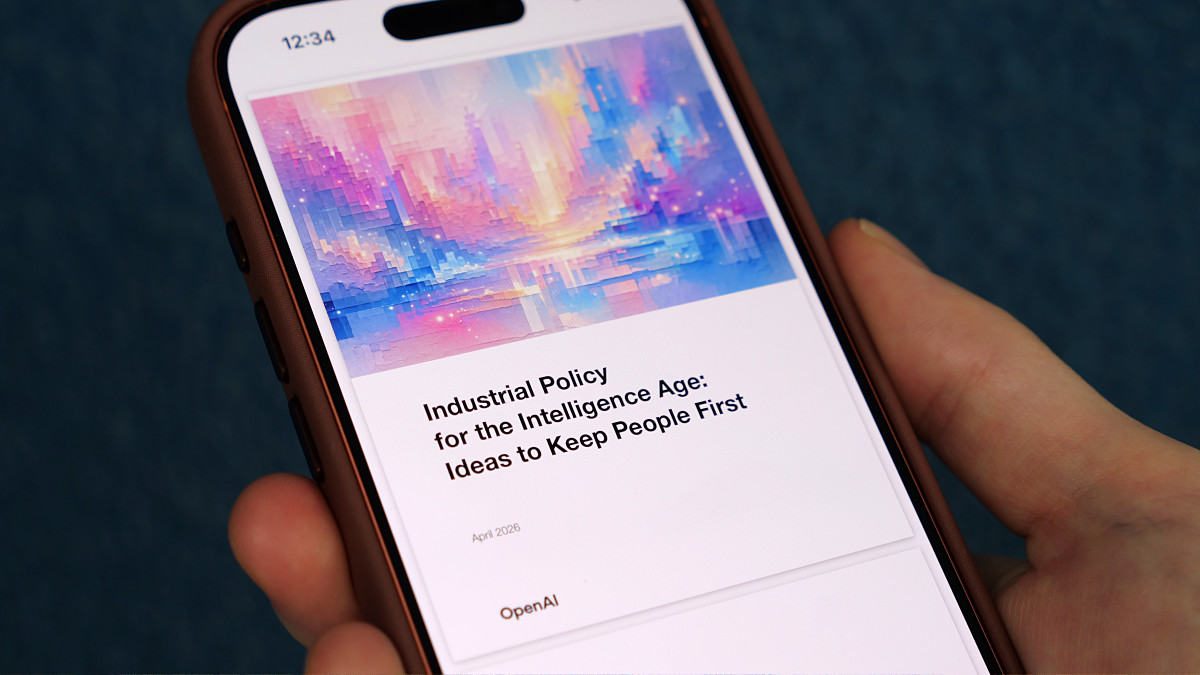
OpenAI published a policy proposal titled ' Industrial Policy for the Intelligence Age: Ideas to Keep People First' on April 6, 2026.
Industrial policy for the Intelligence Age | OpenAI
https://openai.com/index/industrial-policy-for-the-intelligence-age/
Industrial Policy for the Intelligence Age: Ideas to Keep People First
(PDF file) https://cdn.openai.com/pdf/561e7512-253e-424b-9734-ef4098440601/Industrial%20Policy%20for%20the%20Intelligence%20Age.pdf
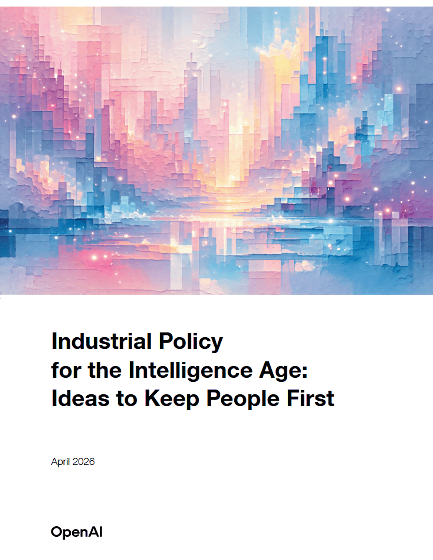
OpenAI stated, 'Humanity is about to enter a turning point with the emergence of superintelligence that far surpasses human capabilities, but we cannot accurately predict the impact that superintelligence will have. We believe that we need to prepare for various possibilities through a democratic process,' and explained that they have published policy recommendations as a starting point for discussing how to respond to superintelligence.
The policy recommendations include numerous policies aimed at 'widespreadly disseminating the benefits of AI' and 'mitigating the risks of AI.' Some of the policies proposed by OpenAI are listed below.
Securing access to AI:
OpenAI argues that the right to access AI should be treated as a 'fundamental right to participate in the modern economy' and should be given the same importance as efforts to improve literacy rates and promote internet access. To ensure access to AI, it is important to 'provide basic AI functions for free or at a low cost,' 'support AI infrastructure and AI development,' and 'give communities such as workers, small and medium-sized enterprises, schools, and libraries opportunities to access AI.'
Tax reforms adapted to the AI era:
The proliferation of AI will change the structure of economic activity, potentially weakening the tax revenue base that funds social security, healthcare insurance, SNAP (Supplemental Nutrition Assistance Program), and housing subsidies. OpenAI argues that tax reforms are necessary to ensure stable tax revenue, including 'increased taxation on high-income earners,' 'increased corporate taxes,' and 'special measures targeting sustained profit growth from AI.'
Introduction of a four-day work week:
OpenAI is calling for employers to pass on the benefits of AI-driven efficiency improvements to their employees. Specifically, they propose methods such as 'introducing a four-day work week while maintaining current salary levels,' 'increasing retirement benefits,' 'expanding childcare and eldercare support,' and 'paying bonuses linked to productivity improvements.'
Support for those whose jobs have been taken by AI:
OpenAI argues that those who have lost their jobs due to AI need to be offered employment opportunities in fields related to childcare, elder care, education, and healthcare. According to OpenAI, while AI can improve efficiency in these fields, 'human connection' remains an essential element. OpenAI is calling on governments to develop training programs and raise wages for these professions.
Establishing a monitoring system for dangerous AI:
Because AI can be used in the development of nuclear and biological weapons, overly advanced AI can also pose a risk. OpenAI argues that it is necessary to work with national security agencies to develop risk audit standards for AI technology. By establishing appropriate monitoring systems, the application of security measures can be narrowed to areas with the greatest impact, avoiding stifling competition and excessive interference by regulatory authorities.
Containing dangerous AI:
If situations arise such as 'dangerous AI models being made publicly available,' 'AI developers refusing to restrict access to dangerous features,' or 'AIs with self-replicating capabilities being developed,' the dangerous AI may become irretrievable. OpenAI argues that, as a countermeasure if dangerous AI is released into the world, it is necessary to explore ways to contain AI models.
The policy recommendations published by OpenAI contain numerous other policy proposals. OpenAI also positions the policy recommendations as a starting point for discussion and is seeking feedback. Furthermore, a program has been established that provides researchers studying the policy proposals with grants of up to $100,000 (approximately 16 million yen) and API credits worth up to $1 million (approximately 160 million yen).
Related Posts:






in AI, Posted by log1o_hf