Large quantities of minerals that could be candidates for 'quantum spin liquids,' which hold the potential to be useful in future quantum computers, have been found in abandoned mines.
Ultra-Pure Quantum Crystals from an Abandoned Mine in the Atacama Desert | by Aaron Breidenbach | Medium
https://medium.com/@breid.at/ultra-pure-quantum-crystals-from-an-abandoned-mine-in-a-mysterious-desert-93cc87d12314
Why the “Silicon of Quantum Computing” is Being Destroyed en masse in the Atacama Desert | by Aaron Breidenbach | Medium
https://medium.com/@breid.at/why-the-silicon-of-quantum-computing-is-being-destroyed-en-masse-in-the-atacama-desert-41d3a9b823bf
Dr. Aaron Breidenbach, a doctoral student at Stanford University, researched crystals of minerals such as Herbertsmithite and zinc barlowite . These mineral crystals are said to be candidate materials for 'quantum spin liquids,' in which the spin angular momentum (spin) of elementary particles and composite particles takes on a quantum liquid state.
One of the challenges of quantum computers is their vulnerability to noise such as heat and magnetic fields, which makes them prone to errors during calculations. Because quantum spin liquids have high resistance to noise, it is hoped that using crystals of quantum spin liquids could lead to the realization of highly fault-tolerant quantum computers.
Herbert's Smithite crystals, a candidate material for quantum spin liquids, can be created in the laboratory, but it takes a full week to prepare and nine months to fully grow. Furthermore, mastering the creation process requires extensive training, equipment costs exceeding $10,000 (approximately 1.6 million yen), and it takes about $100 (approximately 16,000 yen) in chemicals to create 1-2 grams of Herbert's Smithite, with a success rate of only about 45%.
However, it is known that Herbert's Smithite also exists as a natural mineral in Arizona in the United States, as well as in Chile and Iran. So, with the help of researchers in Chile, Brydenbach went to the Atacama Desert, which stretches between the Andes Mountains and the Pacific Ocean, to search for Herbert's Smithite.
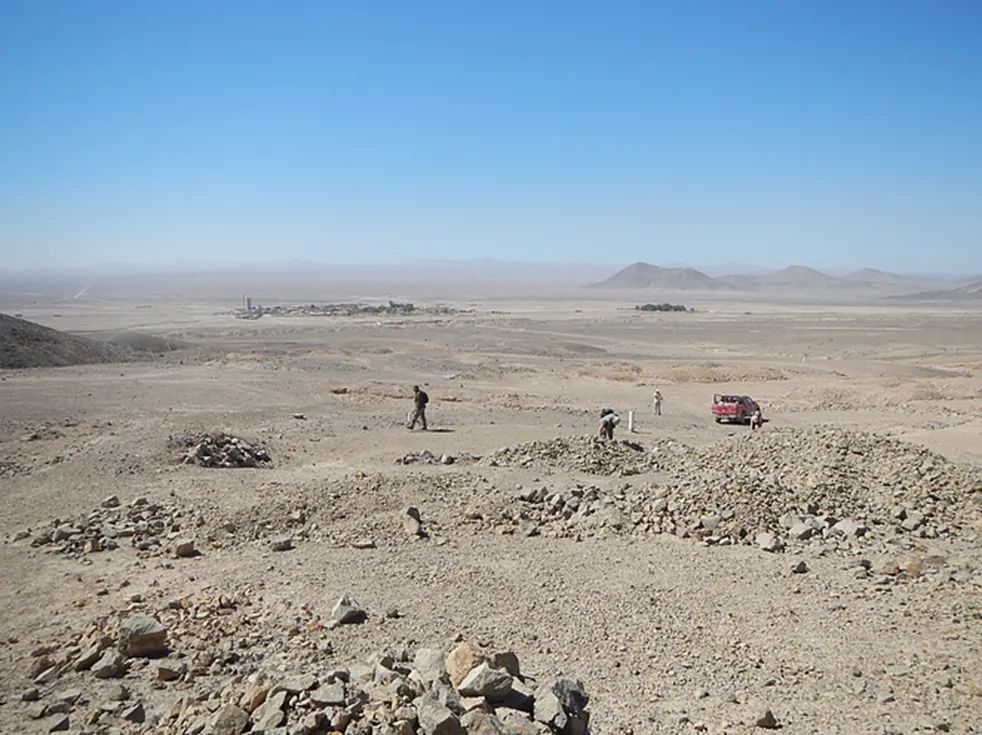
As a result, a large amount of Herbert's Smithite was discovered in discarded rocks from the San Francisco Mine , which is now a disused mine. The following photo shows the San Francisco Mine where Breidenbach and his colleagues discovered natural Herbert's Smithite.
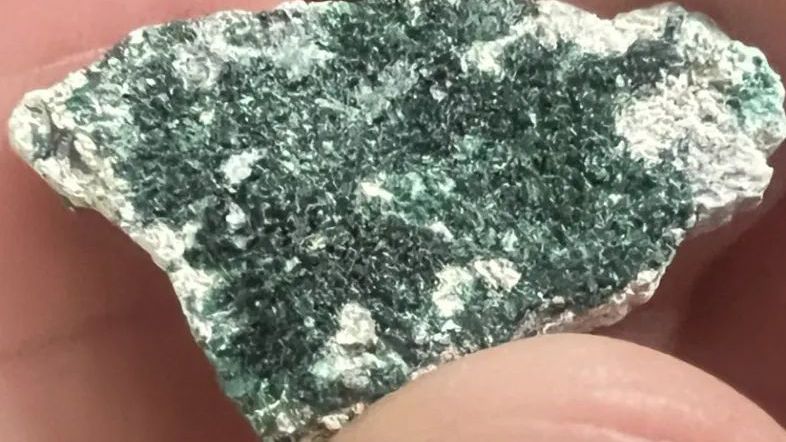
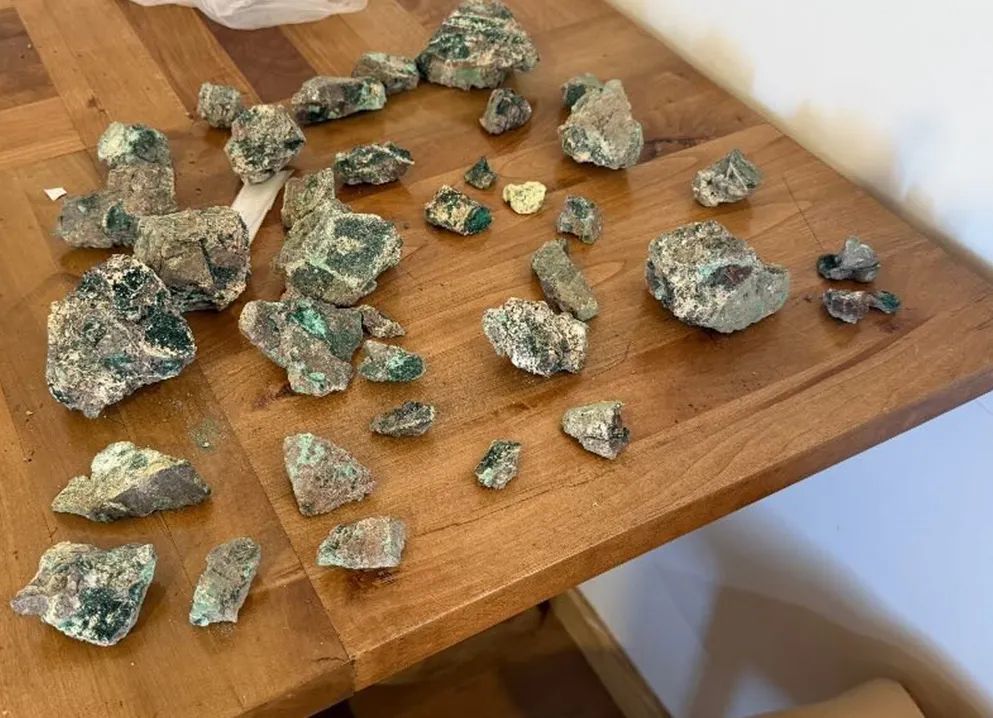
The following is a photograph showing Herbert's Smithite crystals arranged in a single rock. Herbert's Smithite is a pale green to bluish-green crystal, and it is estimated that at least 100g of Herbert's Smithite is present in this specimen. This is at least 10 times the amount that Brydenbach had produced over six years at Stanford University.
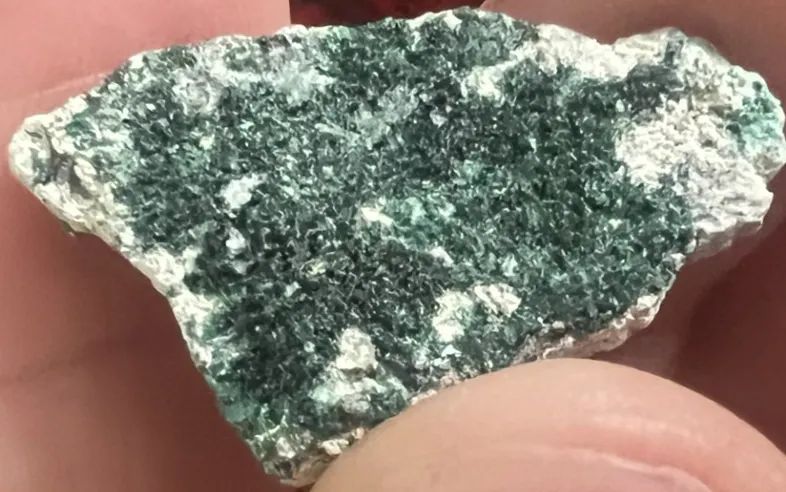
This is a close-up photo of high-quality Herbert Smithite. Incidentally, the only tools that Breidenbach and his colleagues used to excavate these Herbert Smithite were two pickaxes that they bought for $15 (approximately 2400 yen) at a local mining supply store.
Crystals found in the San Francisco mine have also been found to be purer than those created in the laboratory. When Breidenbach talks about the higher purity of natural Herbertsmithite crystals compared to artificial ones, some people look skeptical. Many people think, 'Is it too good to be true that natural materials are purer than artificial ones?'
Regarding why natural crystals exhibit higher purity than artificial ones, Breidenbach stated, 'Nature has simply gone through far more trial and error than we do in a laboratory. It's like a troop of monkeys typing on a typewriter.'
The Herbertsmithite recently discovered at the San Francisco mine has the potential to be extremely useful in future research on quantum spin liquids and quantum computers. However, it is possible that large quantities of Herbertsmithite are being discarded as 'low-grade copper ore' and turned into scrap in nearby copper mines.
Breidenbach stated, 'It takes nine months to artificially create these crystals in a laboratory. There is no crueler irony than this. These crystals are not low-grade ore! They are magical quantum materials, and millions of dollars in taxpayer money are poured into their research every year! And yet, they are simply discarded as scrap.'
Related Posts:

in Science, Posted by log1h_ik