A solar-powered drone the size of a jumbo jet broke the record for autonomous maritime patrol flight before landing and sinking.
Skydweller Aero's Historic Achievement — and the Aircraft Loss That Followed - Skydweller
https://www.skydweller.aero/news/skydweller-aeros-historic-achievement-and-the-aircraft-loss-that-followed/
Solar drone with jumbo jet wingspan broke a flight record—then it crashed - Ars Technica
https://arstechnica.com/gadgets/2026/05/solar-drone-with-jumbo-jet-wingspan-broke-a-flight-record-then-it-crashed/
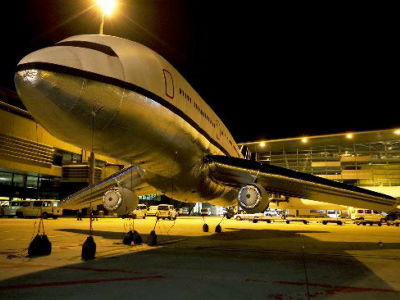
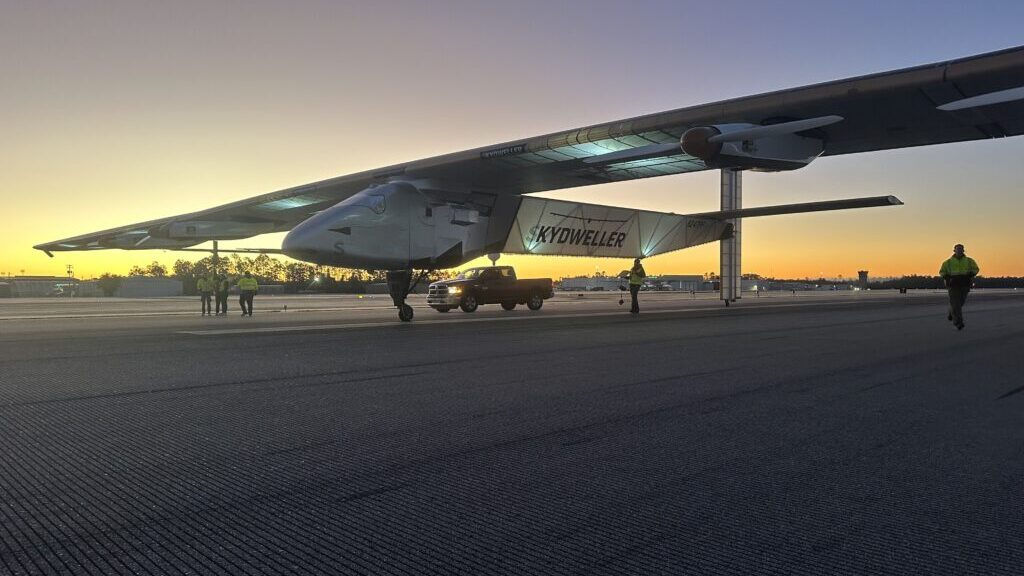
Skydweller Aero is conducting test flights in collaboration with the U.S. Navy's Naval Air Warfare Center Aircraft Division ( NAWCAD ) to test the use of solar-powered drones for maritime patrol missions. For these test flights, Skydweller Aero is operating a large solar-powered drone, an improved version of the Solar Impulse 2 , a manned solar-powered aircraft developed by the Swiss Federal Institute of Technology Lausanne (EPFL).
This large solar-powered drone doesn't have an official name, but it's an enormous drone made of carbon fiber with a wingspan equivalent to that of a Boeing 747. For reference, the wingspan of a Boeing 747 varies slightly depending on the model, but it's generally between 59.6 and 68.4 meters.
Skydweller Aero's large solar-powered drone is equipped with 17,000 solar batteries on its wings and has already successfully demonstrated 'unmanned perpetual flight.' However, Skydweller Aero states that 'it can normally stay airborne for 30 to 90 days.' The maximum payload capacity of the large solar-powered drone is 800 pounds (approximately 363 kg).
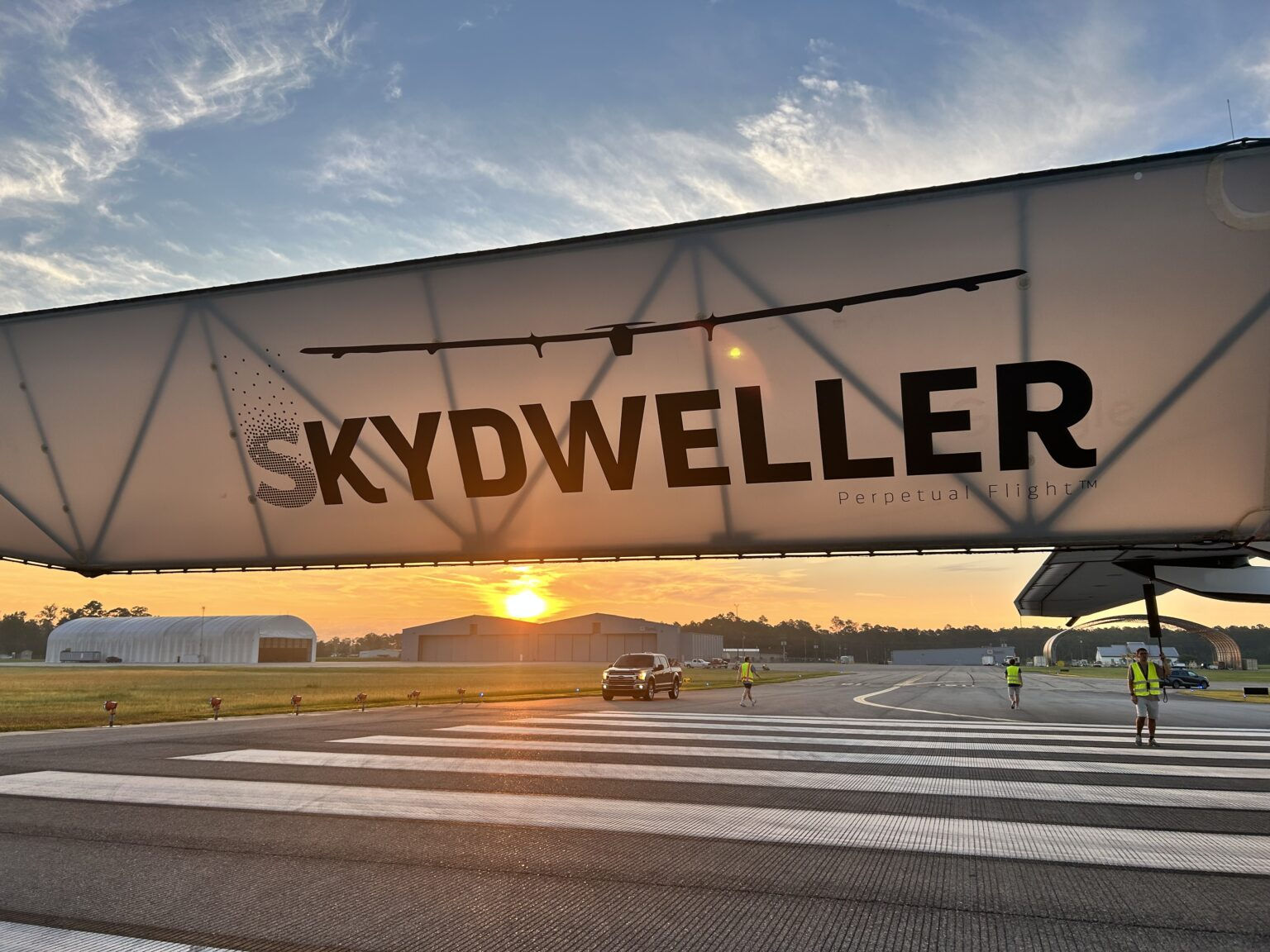
Skydweller Aero conducted test flights of this large solar-powered drone as part of a naval fleet exercise , successfully completing an 8-day (192-hour) 14-minute autonomous maritime patrol flight. The large solar-powered drone took off from Stennis International Airport in Mississippi, USA, on April 26, 2026, and carried out its mission until the end of the exercise on April 30, using multiple information-gathering sensors to formulate search and rescue routes and photographing the sea with infrared and electro-optical cameras.
Following the exercise, Skydweller Aero's large solar power drone remained airborne to wait for a major cold front covering the Gulf of Mexico to pass. It stayed near Key West until May 1st, after which it moved to southern Cuba and the northern Cayman Islands. Then, on May 3rd, as signs of improving weather appeared, it began its return to Stennis International Airport.
On its return journey to Stennis International Airport, the drone encountered more severe weather than forecasted, including intense turbulence and vertical gusts. Although the aircraft and autonomous systems functioned as designed, maintaining altitude in the adverse weather required more power than anticipated, necessitating a controlled water landing on the morning of May 4th. Skydweller Aero explained that, 'apart from the battery level, the aircraft structure, systems, and redundancy were all functioning normally.' However, because the large solar-powered drone uses a composite material with no buoyancy, it sank after landing.
You can see Skydweller Aero's large solar power generation drone in action in the following video.
Multiday Flight Campaign - July 2025 - YouTube
The Swiss Transport Museum in Lucerne, Switzerland, had a contract with Skydweller Aero to exhibit this large solar-powered drone. However, since it has sunk into the sea, it appears that it will not be on display at the museum unless it is recovered.
Skydweller Aero's large solar-powered drone design could inspire future solar-powered aircraft for civilian or military use. Skydweller Aero says it doesn't have any other drones to replace the one that sank, but it plans to design solar-powered drones that can withstand extreme weather conditions like this one.
Related Posts: