An analysis of Japan's railway network from an international perspective: How Japan built the 'strongest railway system of the 21st century'
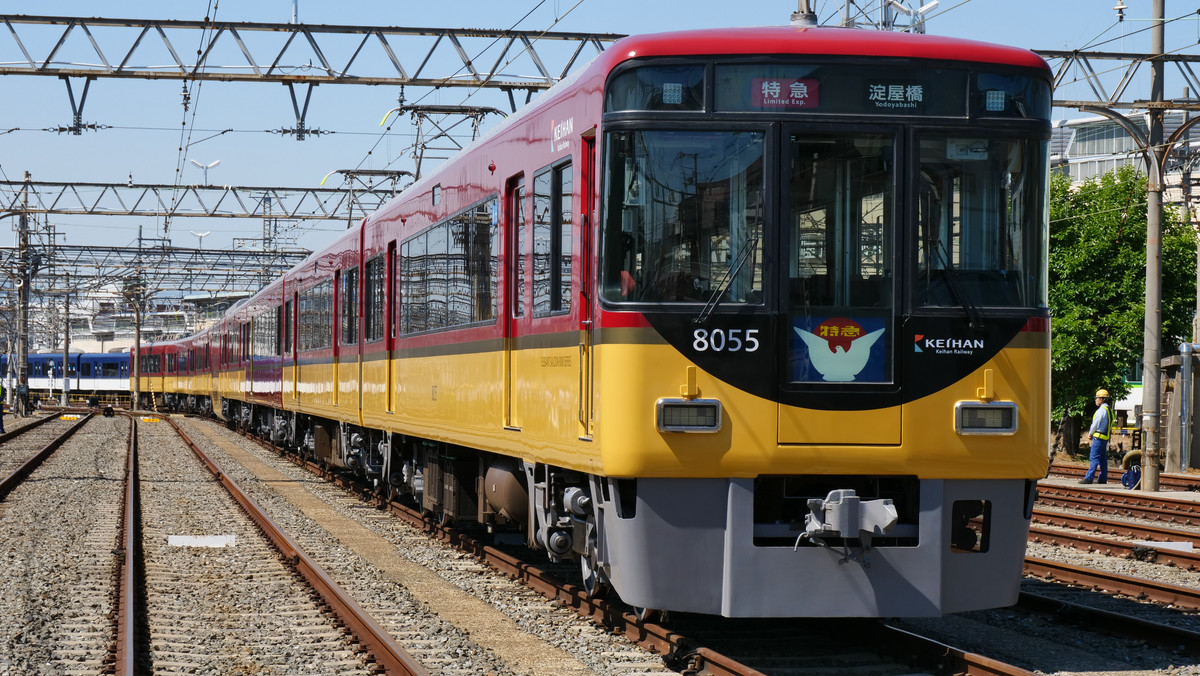
Japan's railways are among the best in developed countries for transporting people, accounting for 28% of passenger kilometers. Blogger and railway enthusiast Benedict Springbet explains the strength of Japan's railways not by the Japanese national character, but by the accumulation of systems such as the way privatization is conducted, urban development, land use, automobile policy, and regulatory design.
The secrets of the Shinkansen
https://www.worksinprogress.news/p/the-secret-behind-japans-railways
Springbet argues that the strength of Japan's railways cannot be explained by cultural theories such as 'Japanese people use public transport because they are obedient.' He claims that while Japanese people also like cars, they still use trains simply because the railway system is exceptionally well-designed.
Japan's railway network is divided among numerous operators, most of whom are private companies. The largest operator, JR East, carries more passengers than any other country's railway system except for those in China and India, and is said to be less reliant on subsidies than those in Europe and the United States.
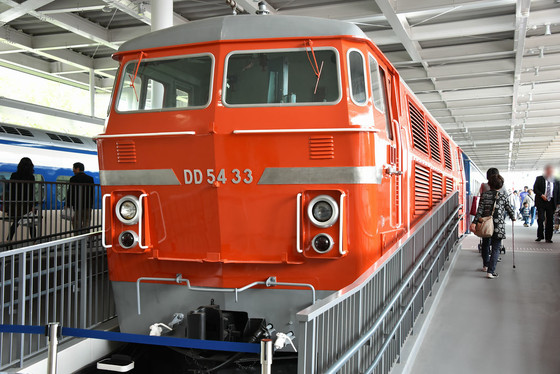
Historically, railways were introduced in Japan during the Meiji period, and nationalization progressed in the early 20th century, but not all of them were nationalized. From before the war, new private railways continued to be built, and it is said that the intercity electric railway lines that had disappeared in the United States underwent integration and improvement in Japan, developing into the strong private railway network we see today. Japan's railway system has a multifaceted structure, consisting of the JR companies that inherited the former Japanese National Railways, as well as major and minor private railways that have existed since before the war, subways, and monorails.
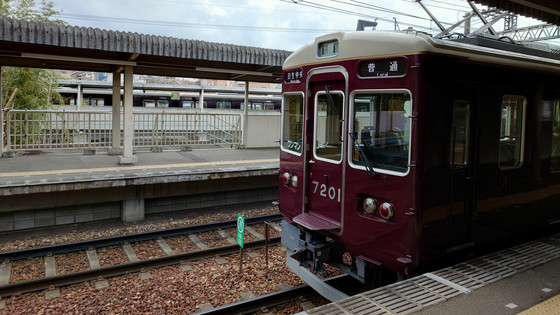
For example, commuter transport between Osaka and Kobe is not monopolized by a single company; multiple railway companies such as Hankyu, Hanshin, and JR compete head-on on almost the same route. Springbet points out that three separate commuter lines run parallel between Osaka and the port city of Kobe, and in some places the distance between them is less than 500 meters. In other words, the railway system in Japan's major metropolitan areas is not a system where 'one giant operator centrally manages everything,' but rather a competitive structure where nearby routes compete for passengers.
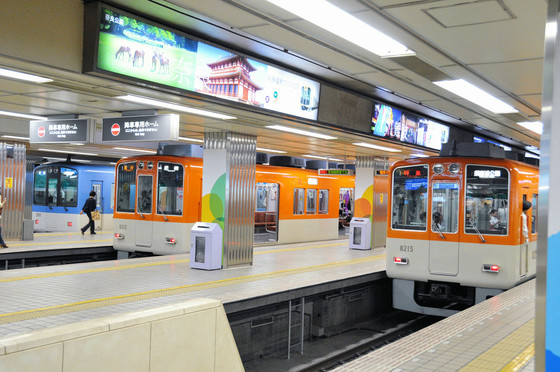
As the core of the success common to these diverse railway companies, Springbet cites the idea that 'railway companies don't just run trains, they build cities.' For example, railway companies build not only residential areas along their lines, but also offices, hospitals, supermarkets, entertainment facilities, and even senior living facilities, creating a system where they can recoup the value generated by the railway through means other than fares.
This model was pioneered by Hankyu Railway in the 1950s, creating residential areas, establishing a Hankyu Department Store at its terminus, and developing hot springs, a zoo, and even the Takarazuka Revue. Other railway companies have similarly expanded their businesses, such as Tokyo Disneyland by Keisei and Disney, and Tokyu Department Store by Tokyu Corporation. Diversification that enhances the value of the areas along the railway lines has supported railway management.
Springbet points out that what supports this cycle is the flexibility of land use in Japan. It is easy to create new residential areas along railway lines, and high-density development in the city center is not particularly hindered, so people tend to gather at stations, and as people gather, railway use increases, creating a positive cycle.
The important point is that not all Japanese cities are uniformly ultra-high-density. Rather, residential areas are low-rise with a high proportion of detached houses, and Tokyo's average population density is said to be lower than that of Paris, Madrid, and Athens. On the other hand, the central areas of Tokyo and Osaka are extremely large and densely populated, and railways play a very powerful role as a means of transporting large numbers of commuters and shoppers to these areas.
One of the systems that made this urban growth possible is land readjustment. This system allows for reorganization with the agreement of two-thirds of residents and landowners, making it easier to construct new railway lines, double-track existing ones, and redevelop the areas around stations. On the Tokyu Den-en-toshi Line, 3,100 hectares were reorganized over 30 years, and the population is said to have increased from 42,000 to over 500,000.
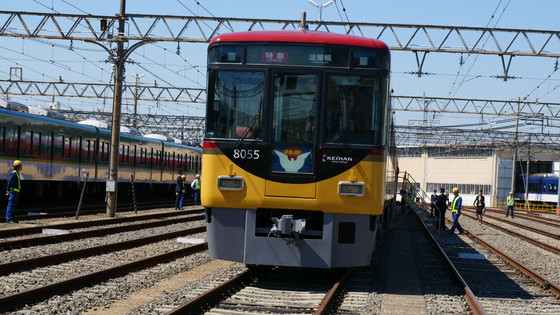
On the other hand, Japan is by no means an anti-automobile country. Nationwide, the majority of travel is by car, and the road network is well-developed. However, parking on public roads is prohibited in principle, and one must demonstrate that they have secured a private overnight parking space before purchasing a car. As a result, in urban areas, the cost of using a car is clearly visible to the user.
As a result, cities become easier to navigate without local governments having to mandate the construction of large parking lots, and land in central urban areas is more likely to be used for purposes other than parking. In urban areas, parking tends to lose out to other land uses, creating an environment that is less inconsistent with urban structures where railways attract people.
Another major turning point was the privatization of the former Japanese National Railways (JNR). While the JNR achieved great successes such as the construction of the Shinkansen, electrification of main lines, and quadrupling of tracks, political circumstances made it difficult to streamline unprofitable local lines. Combined with labor issues and excess personnel, by the early 1980s, only 7 out of approximately 200 lines were profitable.
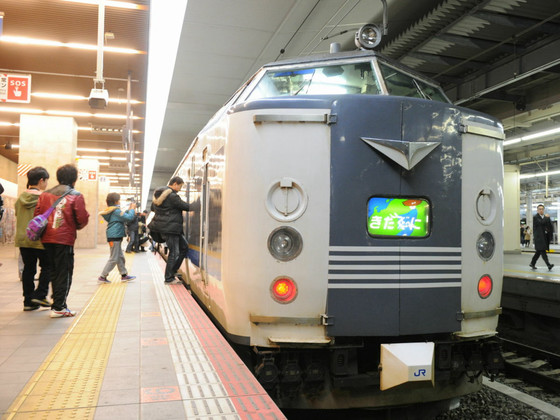
In 1982, the privatization of Japanese National Railways (JNR) began, and the companies were reorganized into regional JR companies. This revived a vertically integrated system where tracks, rolling stock, stations, and timetables were all managed as one entity. Personnel were drastically reduced, 83 unprofitable lines were streamlined, and productivity and profitability improved significantly. Subsequently, the JR companies expanded into a wide range of businesses, including commercial facilities and tourism.
However, Japanese railways are not entirely laissez-faire. While there are upper limits on fares, these limits are set relatively loosely to ensure profitability, and daily operational decisions are left to the operators. Subsidies and loans are available for investments in highly public infrastructure, such as barrier-free access, earthquake-resistant construction, and the removal of level crossings.
Springbet states, 'Looking at it this way, the reason why Japanese railways are strong lies more in the accumulation of institutional design than in national character. The management of private railways that cultivate and incorporate the value of the areas along their lines, the land system that allows for high-density central urban areas, the mechanism that does not provide excessive implicit subsidies to automobiles, and privatization and regulation in a way that does not stifle investment will all combine to ensure that Japan maintains one of the strongest railway systems in the world, even in the 21st century.'
Related Posts:



in Vehicle, Posted by log1i_yk