How do astronauts go to the toilet? The dramatic history of NASA's half-century-long quest for a 'space toilet.'
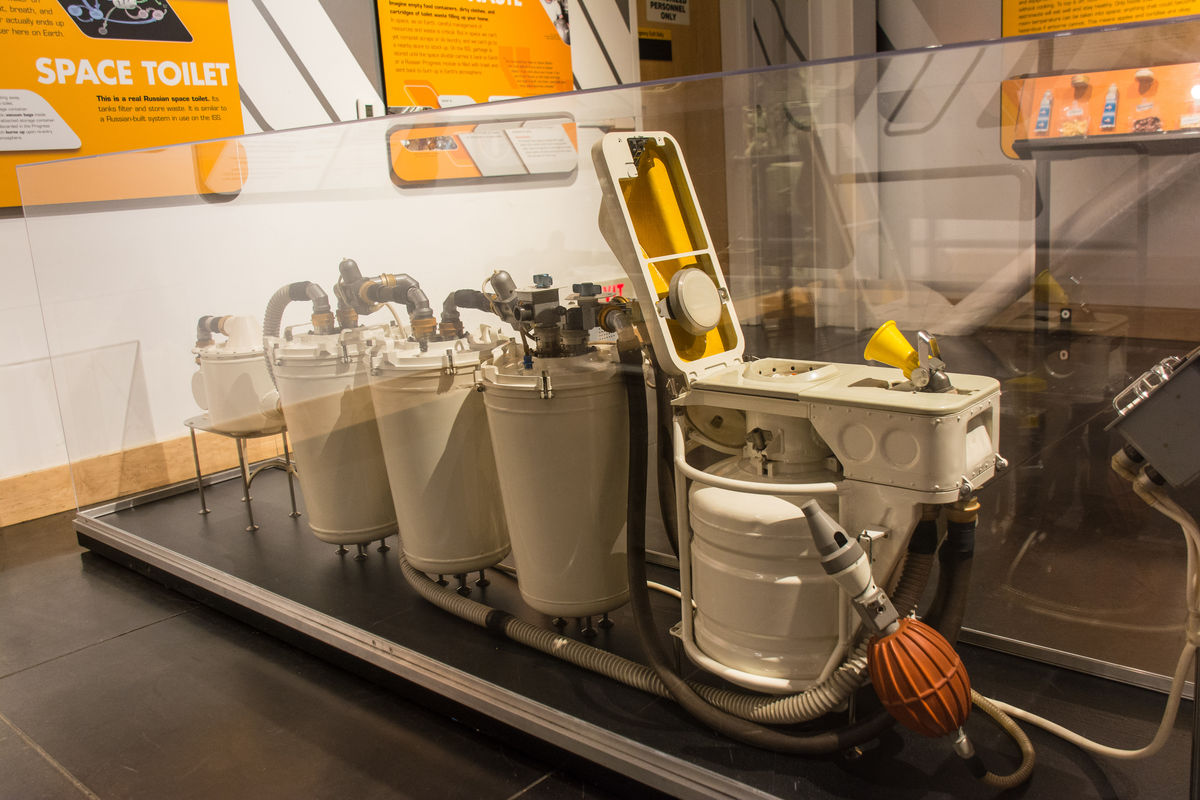
Entrepreneur and investor Maciej Cegłowski explains how the technology for toilets usable in outer space has evolved.
Let's talk space toilets! - by Maciej Cegłowski
Space toilet - Wikipedia
https://en.wikipedia.org/wiki/Space_toilet
Toilets in space are far from comfortable, and astronauts have been thinking of ways to avoid using the toilet in space as much as possible. For example, they would eat easily digestible 'low-residue foods' such as steak and eggs as their meal before launching into space, so that they could avoid using the toilet until they reached the relatively better space station rather than the cramped spacecraft.
Frank Bowman, a crew member on Gemini 7, is known as the person who tried to hold his bladder the longest in space. Gemini 7 was a two-person spacecraft about the size of a telephone booth, and Bowman was trying to get through the two-week mission without using the toilet. On the ninth day, Bowman finally told his fellow crew member, Jim Lovell, 'Jim, I can't hold it anymore,' but Lovell reportedly replied, 'Frank, we have five more days.'
Bowman later suffered from severe space sickness on Apollo 8. The Apollo spacecraft's waste disposal system was not efficient enough, and he described the experience of traveling to the moon in a small capsule as being like living in a makeshift toilet designed for three people. Defecating took nearly an hour, and he even had to rub antibacterial powder into the contents of the collection bag.
On Earth, gravity presses the body against the toilet seat, stabilizing posture and separating waste from the body, allowing for the isolation of waste using water or other means. However, in the weightless environment of space, all the tasks performed by gravity must be accomplished through other means.
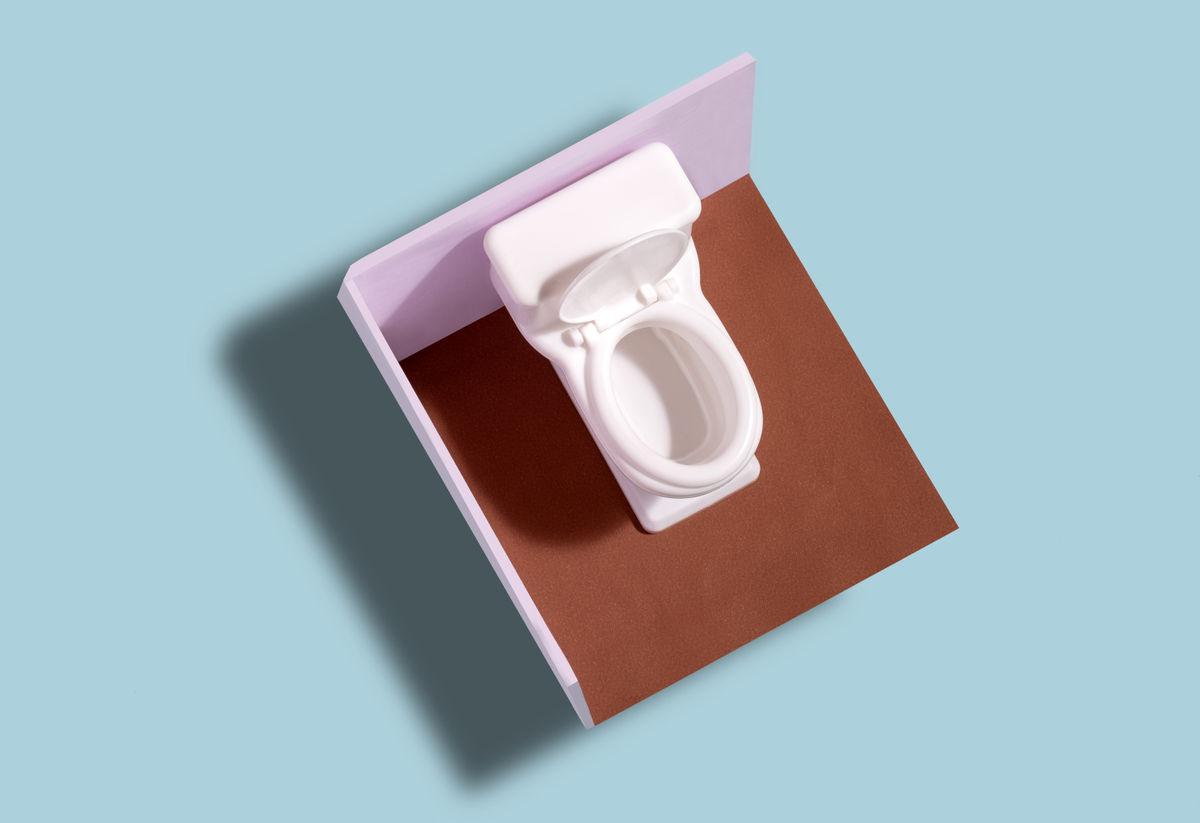
The first problem is maintaining posture. NASA tried various methods, including belts to secure the thighs and shoes with suction cups, but ultimately determined that the most practical approach was to provide handrails, footrests, and bars to hold the thighs, allowing astronauts to secure themselves in a way that suited them.
The next problem is how to separate the waste from the body. Since gravity cannot be used in space, the waste is moved by air suction, but a strong airflow is required, so the hole in the toilet seat of a space toilet is small, about 10-15 cm, and precise positioning is extremely important. Also, because the suction fan is constantly running, space toilets are quite noisy devices.
Urine is collected using a funnel-shaped device, mixed with an antibacterial agent, and then sent to a tank. Feces, on the other hand, are still collected in disposable bags. These bags are designed to allow air to pass through while trapping solid matter and moisture. After use, they are tied shut and placed in a special cylinder along with the gloves and wet wipes used for cleaning. However, odor control is still not perfect, and it is thought that chronic toilet odors may be one of the reasons why astronauts tend to eat less on the International Space Station.
In the early stages of the Apollo program, there was a rather frightening idea: to insert a part of one's body into a device mounted on the wall and have it sucked out by vacuum. However, the astronauts rejected the vacuum toilet idea, and instead, a simpler system combining a condom-like urine collection sleeve and a plastic bag was used on Apollo.
The first proper space toilet appeared in 1973 with the launch of the Skylab space laboratory. Skylab needed to collect astronauts' waste for medical research, and since the longest mission lasted 84 days, simple bags were insufficient.
The toilets on Skylab were a bold design, with the toilet seats mounted vertically to the wall, forcing astronauts to relieve themselves in a Spider-Man-like position. Since defecation could only be tested on real people to test the Skylab toilets, NASA needed to find subjects who could actually defecate in a short amount of time inside the aircraft during a parabolic flight that simulated weightlessness.
The toilets on Skylab were relatively well-received by astronauts and influenced the design of toilets for later Space Shuttles. The Space Shuttle required stronger suction, so the toilet seat opening was made even narrower. Astronauts reportedly practiced ground training using a camera mounted in the center of a waste tube, aligning their anus precisely with a crosshair on the screen. It was a rather unusual 'docking training' exercise, conducted under the watchful eyes of their colleagues.
On the Space Shuttle, urine was collected in tanks and then released into space through an exhaust port on the hull. However, during the STS-41-D mission, the heater in the exhaust port malfunctioned, causing the urine to freeze outside the spacecraft and form large yellow 'urine icicles.' Because these frozen urine clumps could break off during re-entry and damage the spacecraft, the crew had to use a robotic arm to knock them off. After the exhaust port malfunction, it became impossible to release urine outside the spacecraft, so the crew had to urinate into plastic bags filled with socks.
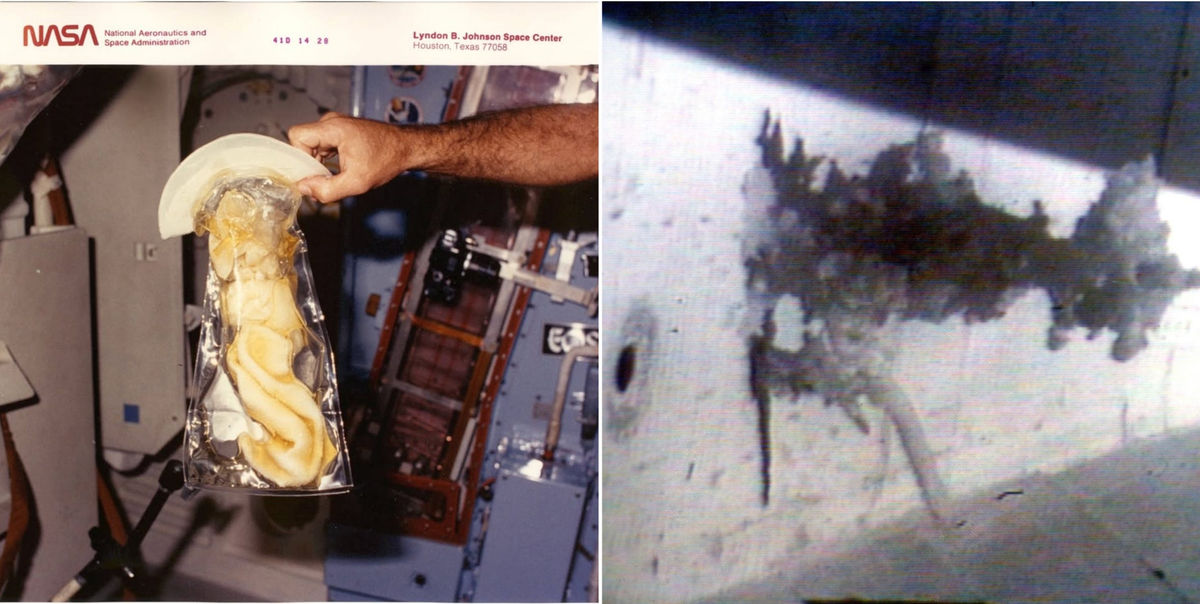
The Space Shuttle's toilets generally functioned well on short missions, but they sometimes reached their capacity limits when the crew size was large. On one flight, the toilets backed up, releasing freeze-dried, fine particles of feces into the cabin. The Space Shuttle program underwent several toilet redesigns, eventually improving the capacity issues.
Water recycling has become a crucial issue on the International Space Station due to the extremely high cost of transporting supplies from Earth. The first urine treatment system was introduced in 2008.
In a weightless environment, astronauts' bone mass decreases, causing calcium to dissolve into their urine more than expected, leading to blockages. Later, improved urine treatment systems, saline treatment systems, and dehumidifiers were combined, and now approximately 98% of the water used in the American section can be recovered.
On the other hand, the method of collecting feces hasn't changed much since the Skylab era. Astronauts defecate into disposable bags, seal them with wet wipes and gloves, and place them in rigid cylinders. The fecal cylinders are eventually loaded onto spacecraft such as Dragon or Soyuz for disposal.
NASA is also quite enthusiastic about collecting data on space toilets. They have brought used cylinders back to Earth and meticulously examined even the number of gloves and wet wipes found inside. NASA's research has revealed that astronauts urinate an average of six times a day, that the amount of urine can deviate significantly from the average, and that even healthy individuals have great individual differences in bowel movement frequency. Furthermore, in zero gravity, more wet wipes and tissues are needed for cleaning than on Earth, and a mirror to check one's body is also essential.
After years of trial and error, the toilets on the space station have reached a level that is at least acceptable to astronauts, although they are not as comfortable as Japanese heated toilet seats.
Tsegłowski is also considering what kind of toilet issues might arise if one were to go to Mars.
A Mars mission requires toilets that can handle 'travel to Mars,' 'long-term stays on the Martian surface,' and 'return to Earth.' A particular problem is that the spacecraft's water and sanitation systems must be left unattended for approximately 700 days while the crew is on the Martian surface. Since microbial growth is likely to occur when water remains stagnant for extended periods, it is necessary to demonstrate methods for keeping toilets and life support systems reusable.
Furthermore, waste must be processed on the Martian surface under gravity that is only about 0.38 times that of Earth. A 700-day stay by four astronauts would generate 3 to 4 tons of putrefactive waste, including containers, so storage and sterilization to avoid contaminating the Martian surface are also necessary. In addition to long-term storage, NASA is also considering options such as burning the feces at low temperatures to carbonize them, and reusing the processed waste as radiation shielding material.
Related Posts:
in Note, Posted by log1d_ts