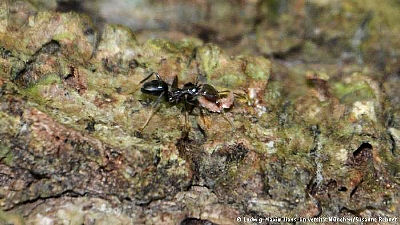
It has been revealed that approximately 5.56 million bees are living underground in a cemetery in New York State.
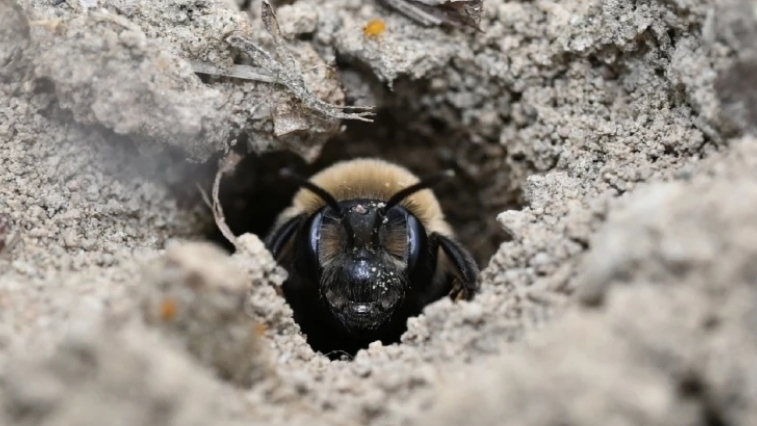
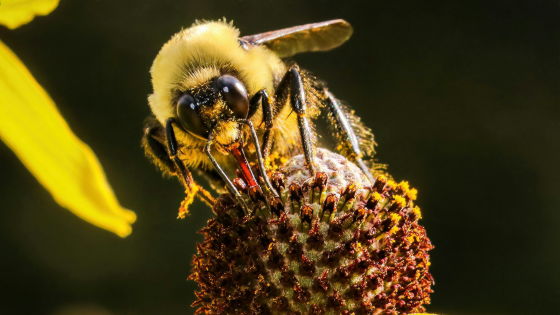
A research team at Cornell University in the United States has reported the existence of a large nesting site for the solitary bee species *Andrena regularis*, which builds its nests underground rather than forming colonies in a single nest like honeybees, beneath the East Lawn Cemetery in Ithaca, New York.
Massive aggregation of the mining bee Andrena regularis (Hymenoptera: Andrenidae) in an Ithaca, New York cemetery: density estimates and natural history observations
5.5M ground-nesting bees make home in Ithaca cemetery | Cornell Chronicle
https://news.cornell.edu/stories/2026/04/55m-ground-nesting-bees-make-home-ithaca-cemetery
Scientists Found 5.5 Million Bees Living Beneath a New York Cemetery : ScienceAlert
https://www.sciencealert.com/scientists-found-5-5-million-bees-living-beneath-a-new-york-cemetery
The investigation began in the spring of 2022 when Rachel Fordyce, who was working as an engineer in the entomology lab at Cornell University, noticed a large number of bees while commuting through a cemetery. She then brought a jar full of bees to the lab of Brian Danforth, where she worked.
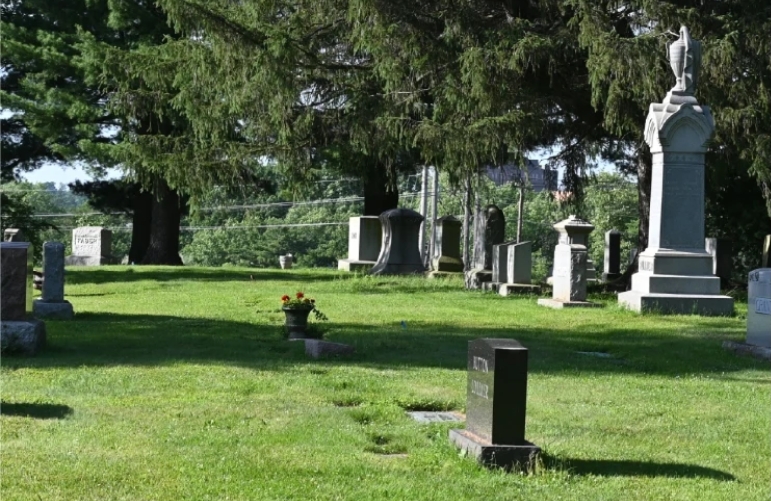
The large number of bees found in this jar sparked research led by Stephen Hoge, a member of Danforth's laboratory. From March 30 to May 16, 2023, the research team set up insect traps in 10 locations within the cemetery. The traps were small, tent-like structures placed over the ground, designed to collect insects emerging from underground into a container on top. During the survey period, 3,251 insects of 16 species were collected, and the research team estimated the total number of regular and minor bees present throughout the cemetery based on the number of regular and minor bees found among them.
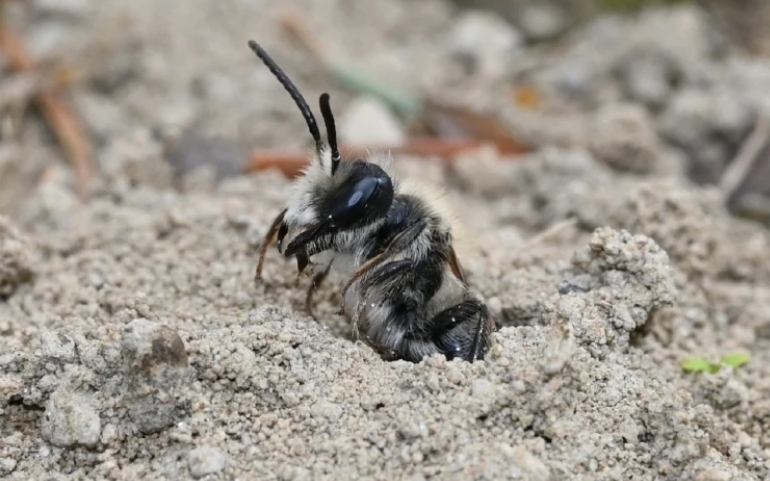
As a result, it was estimated that an average of 853 regular minor bees were nesting per square meter of soil in the cemetery. Based on this average density, the research team estimated that approximately 5.56 million regular minor bees emerged from this location in the spring of 2023. Furthermore, taking into account the variability between traps, the estimated range is approximately 3.1 million to 8 million bees.
The research team investigated not only how many bees there were, but also the order in which males and females emerged from the ground during the spring. Their results showed that in the case of regular and minor bees, males tended to appear first, followed by females. While the number of males was higher when simply counting them, considering the size and weight of each individual bee revealed that there were more females than males, when considering which group was using more resources.
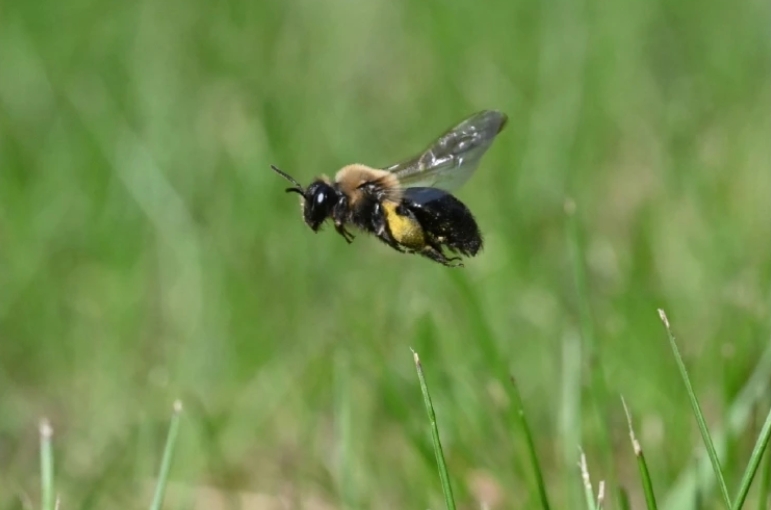
The sheer size of the newly discovered nesting site can be best understood by comparing it to previously reported large-scale nesting sites. According to the research team, nesting sites of approximately 1,615,000 Centris caesalpiniae wasps have been reported in Arizona, 651,440 Melissodes bimaculatus wasps in upstate New York, and approximately 13,504 Epicaris picta wasps in Brazil. All of these wereps build their nests alone in the ground, and the East Lawn Cemetery nesting site is considerably larger than these previous large-scale nesting sites.
The research team believes that the reason a large nesting site was formed in the cemetery is that it is a suitable place for bees to build nests in the ground because it meets several conditions: it is quiet, pesticides are not used much, and the ground is not dug up often; there is a Cornell University orchard nearby that has many flowers blooming in early spring; and the soil may be sandy, which is preferred by regular minor bees.
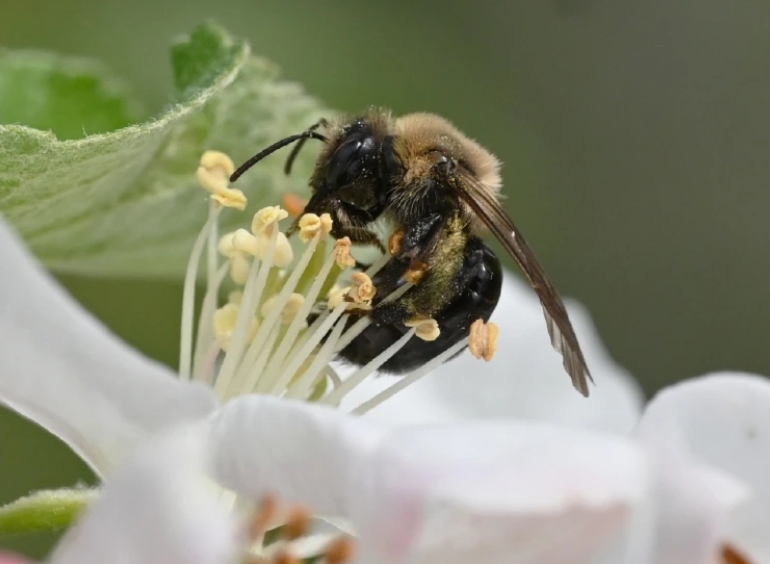
According to Cornell University, many American bee species, such as the regular minor bee, build their nests in the ground, but research on these bees is not very advanced. When Hoge began researching the regular minor bee, he had to go back to a book from 1978 to find useful, comprehensive literature.
The research team emphasizes that the important thing is not the sheer size of the number 'approximately 5.56 million,' but rather understanding where these nesting sites are located and protecting them from being lost.
Related Posts: