How do raindrops that fall to the ground turn into sand balls and erode the soil?
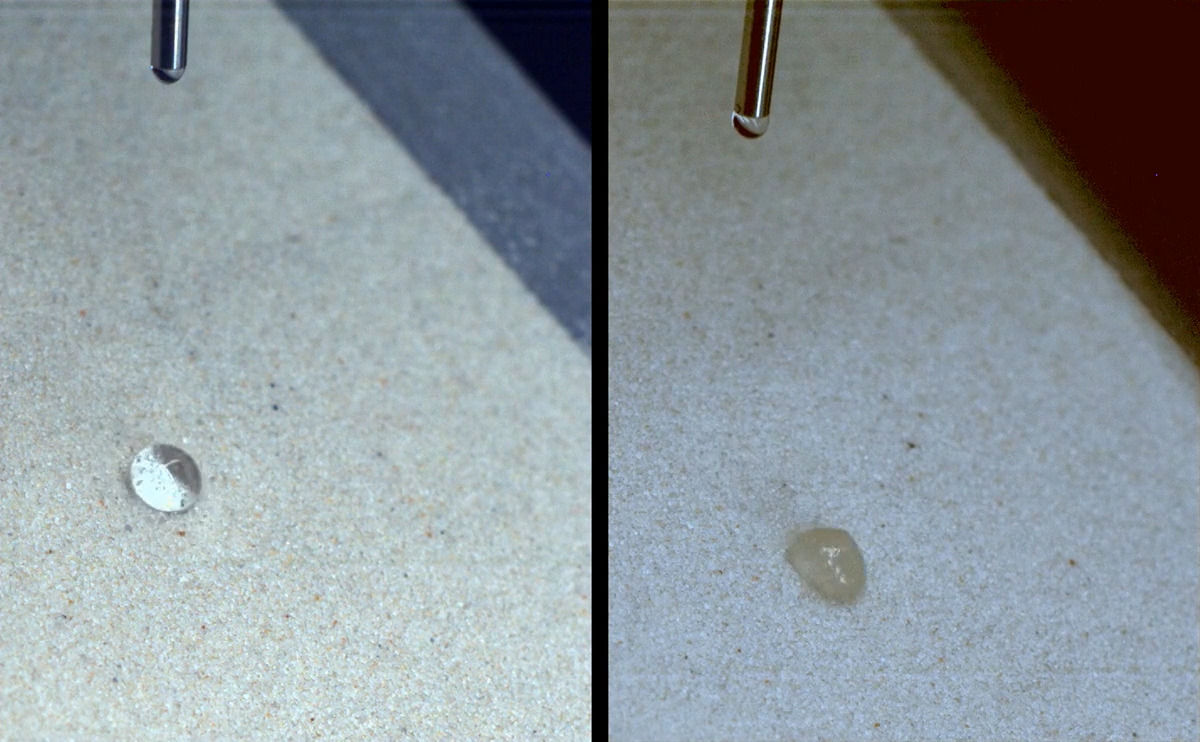
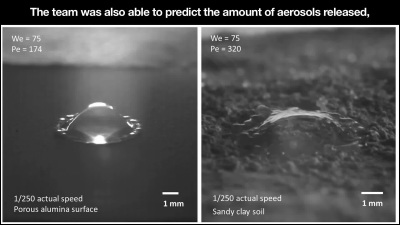
Raindrops falling from the sky create a small impact on the soil when they hit the ground, but new research suggests that the impact of raindrops rolling downhill, picking up sand, may have a greater impact than the initial impact.
Sandball genesis from raindrops | PNAS
Raindrops form 'sandballs' as they roll downhill, contributing more to erosion than previously thought
https://phys.org/news/2025-12-raindrops-sandballs-downhill-contributing-erosion.html
Bertil Trotet and his colleagues at the University of Pennsylvania observed raindrops falling on sand and noticed that as they rolled downhill, they began to pick up sand. This discovery prompted them to record the phenomenon with a camera and try to recreate it in the laboratory.
In the laboratory, a 1.2-meter-long, 30-degree inclined floor covered with dry silica sand was set up, and the dripping water was observed using a slow-motion camera.
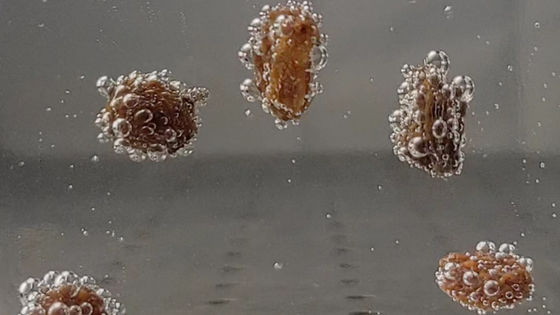
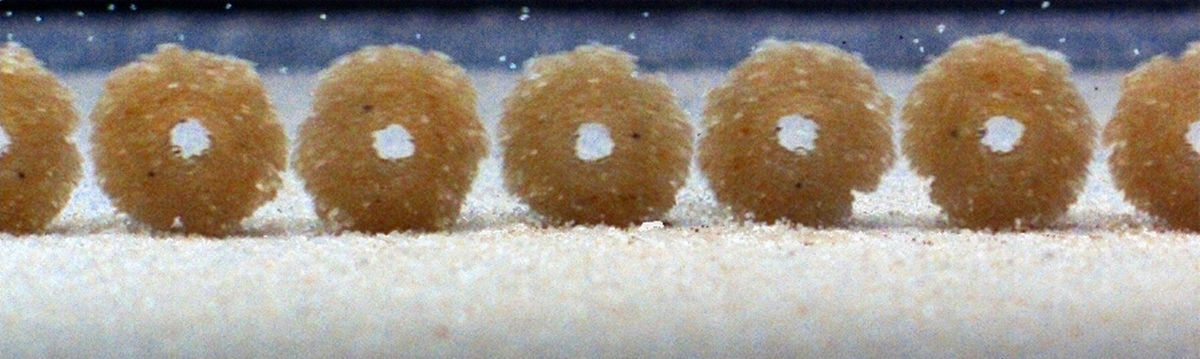
The researchers found that water droplets carrying sand could take on two different shapes. If the droplet became unstable after hitting the ground, it would transform into a 'peanut' shape, picking up a few particles at a time as it rolled downhill. If the droplet remained stable, it would pick up so many particles that it would form a tightly packed ball. If the ball-shaped droplet continued to accelerate, it would take on a 'donut' shape and eventually break up.
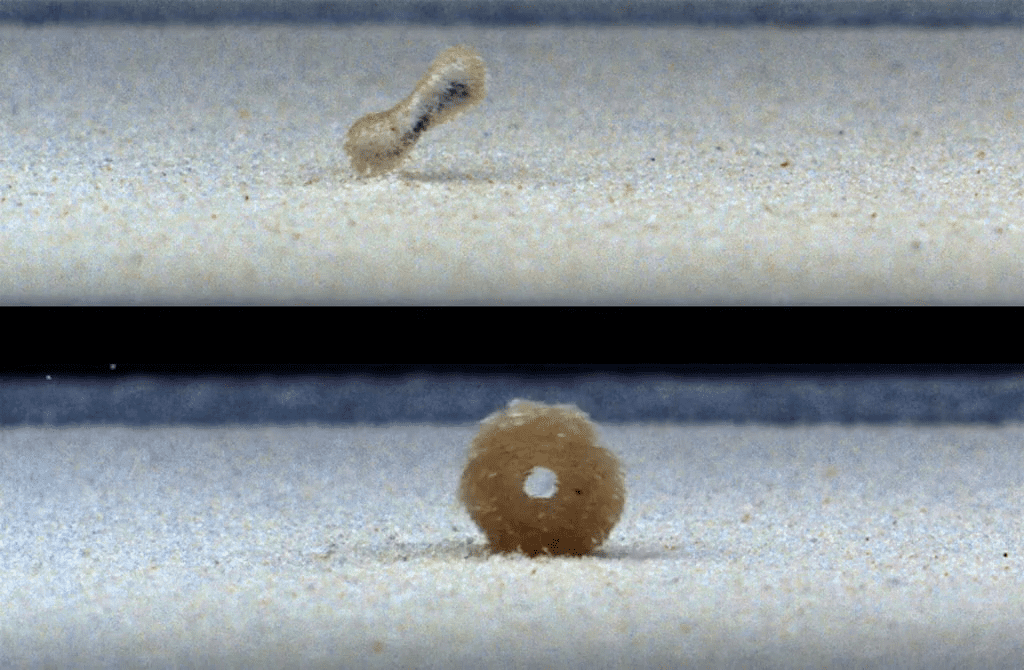
Below is a video capturing two types of sand balls.
The doughnut-shaped balls attract sand not only to their surface but also to their internal rings, giving them a denser, more opaque appearance. Trottet and his colleagues described the emergence of these shapes as 'unexpected,' noting, 'Initially, raindrops rapidly increase their velocity and sand entrainment rate. As centrifugal force increases, the rolling raindrop undergoes a transformation, destabilizing its spherical shape and forming a sand ball.' The shape change allows the raindrop to carry up to 10 times more soil than before, they said.
Even small raindrops can cause flood damage and soil erosion if their numbers increase. Soil erosion models are often developed to simulate this type of damage, but Trottet's research will help improve these models.
'Our study highlights the power of individual raindrops as sediment vectors and sculptors of the Earth's surface,' Trottet and his colleagues wrote.
Related Posts: