The physics of GPS: Why is relativity necessary for navigation systems?

GPS (Global Positioning System) works by converting the arrival time of radio waves from satellites into distance, and then using these combinations to determine your current location. However, software engineer Shri Kalpada explains that to make this system work with practical accuracy, it's not enough to simply measure distance; it's also necessary to consider clock errors, satellite configurations, and even the theory of relativity.
The Physics Of GPS | An Interactive Exploration
The basics of GPS are very simple: a smartphone receives a signal sent by a satellite, and the distance to the satellite is calculated by multiplying the time taken by the speed of light. GPS can be described as a technology that converts time into distance.
However, even if the distance from a single satellite is known, it is not possible to know the user's orientation around that satellite; their position on the Earth's surface is limited to a circle centered on the satellite.
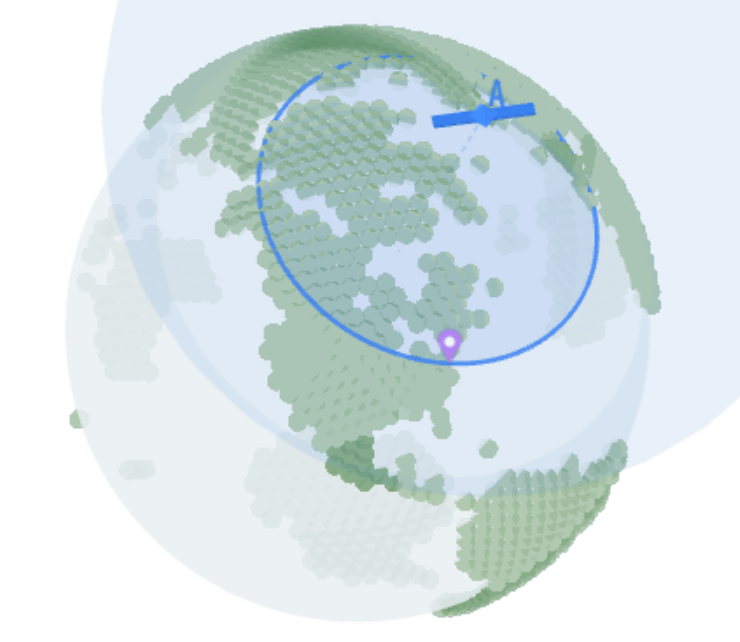
Adding a second satellite reduces the number of candidates to two, and adding a third satellite narrows it down to just one of those two points. This is a mechanism called triangulation.
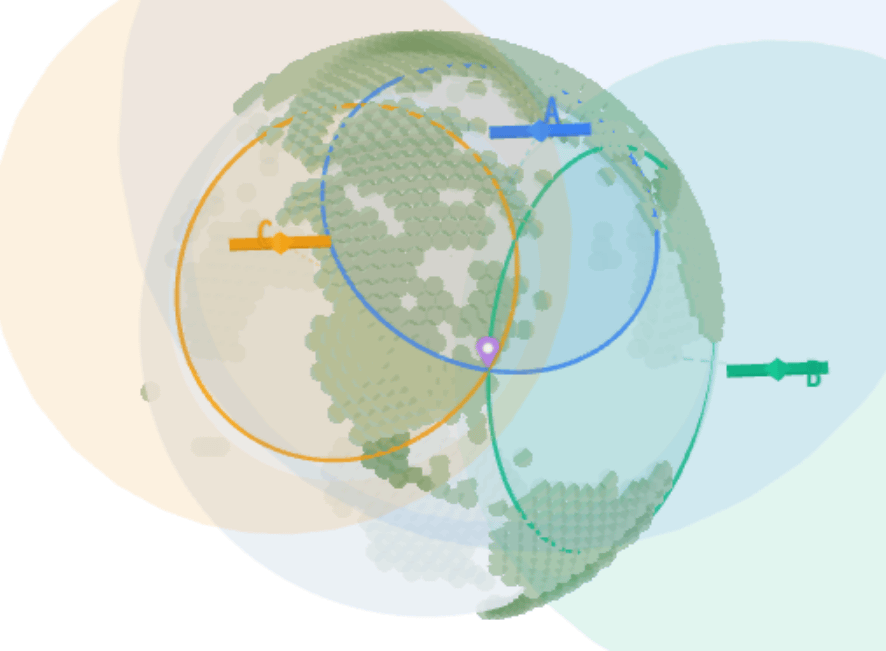
However, the clock becomes a major problem here. GPS satellites are equipped with extremely high-precision atomic clocks with an error of about 1 nanosecond, but smartphones use cheaper crystal oscillators, which causes the error to balloon to the microsecond range. If there is an error of 1 nanosecond, the position error will be 0.3m, and if it is 100 nanoseconds, it will lead to an error of 30m.
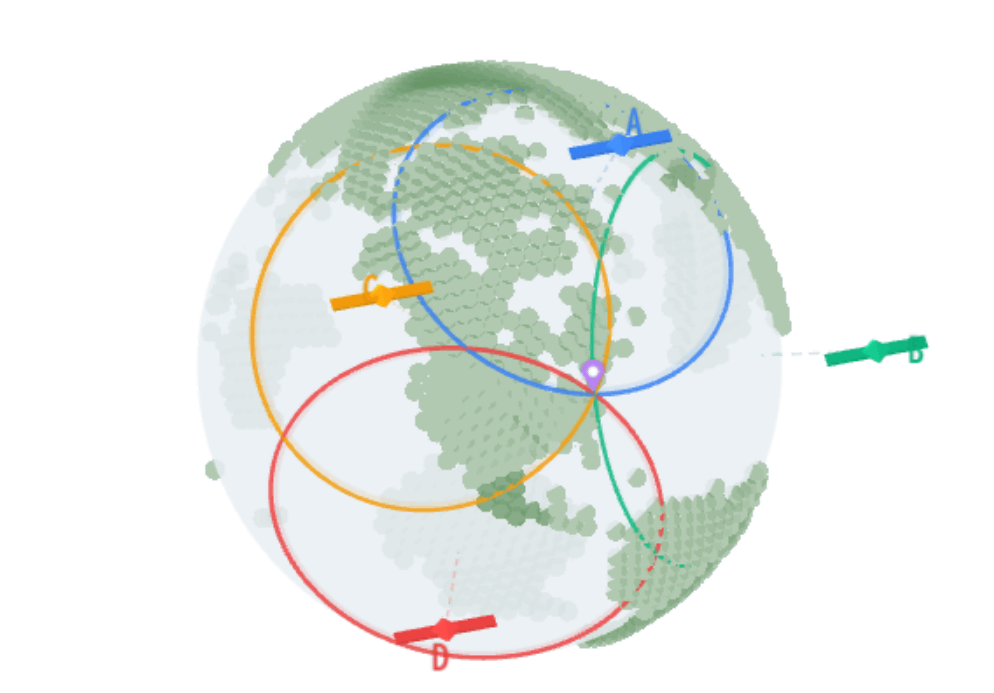
Therefore, the GPS receiver uses a fourth satellite to simultaneously determine how far off its own clock is. By correcting the clock so that the four measurement results intersect at a single point, the distance calculation is corrected collectively, and the previously vague location is clearly determined.
This is where Albert Einstein's theory of relativity comes in. In the theory of relativity, time is not absolute, but rather relative, changing depending on the observer's speed and gravitational environment.
A satellite in Earth orbit moves at approximately 14,000 km/h, causing its clock to lose about 7.2 microseconds per day. However, due to the weak gravity at an altitude of approximately 20,000 km, the effects of general relativity cause it to gain about 45.9 microseconds per day. In other words, the satellite's clock is actually ahead by about 38.7 microseconds per day.
Although this 38.7 microsecond discrepancy may seem very small, light travels approximately 300 meters in 1 microsecond, so without correction, the satellite's position would drift by about 10 kilometers per day. Therefore, the satellite's clock is adjusted to 10.22999999543 MHz, slightly slower than the nominal 10.23 MHz, while it is still on Earth, and is designed to keep the satellite moving at the correct speed once it is in orbit.
Actual smartphones don't stop at just four satellites; they typically use eight to twelve, and sometimes even more, satellites simultaneously, receiving not only the US GPS but also GLONASS, Galileo, and BeiDou signals. Furthermore, issues such as GDOP (Geometric Dilution of Precision), where intersection points become ambiguous when satellites are concentrated in one direction in the sky, and multipath errors, where radio waves appear to take a longer route due to reflections off buildings in urban areas, become problematic. Therefore, receivers improve accuracy by selecting the combination of visible satellites.

Karpada stated, 'Ultimately, navigation apps can show your current location to within a few meters because the speed of light, geometry, precision clocks, and Einstein's theory of relativity are all working together. GPS needs the theory of relativity not because it's used as a mere embellishment, but because without correction, the time discrepancy would manifest as a real-world positioning error that would render it impractical in a short time.'
Related Posts:



in Science, Posted by log1i_yk