Why, even with the scientific capabilities of 1970, did humanity not return to the moon for more than half a century?
by
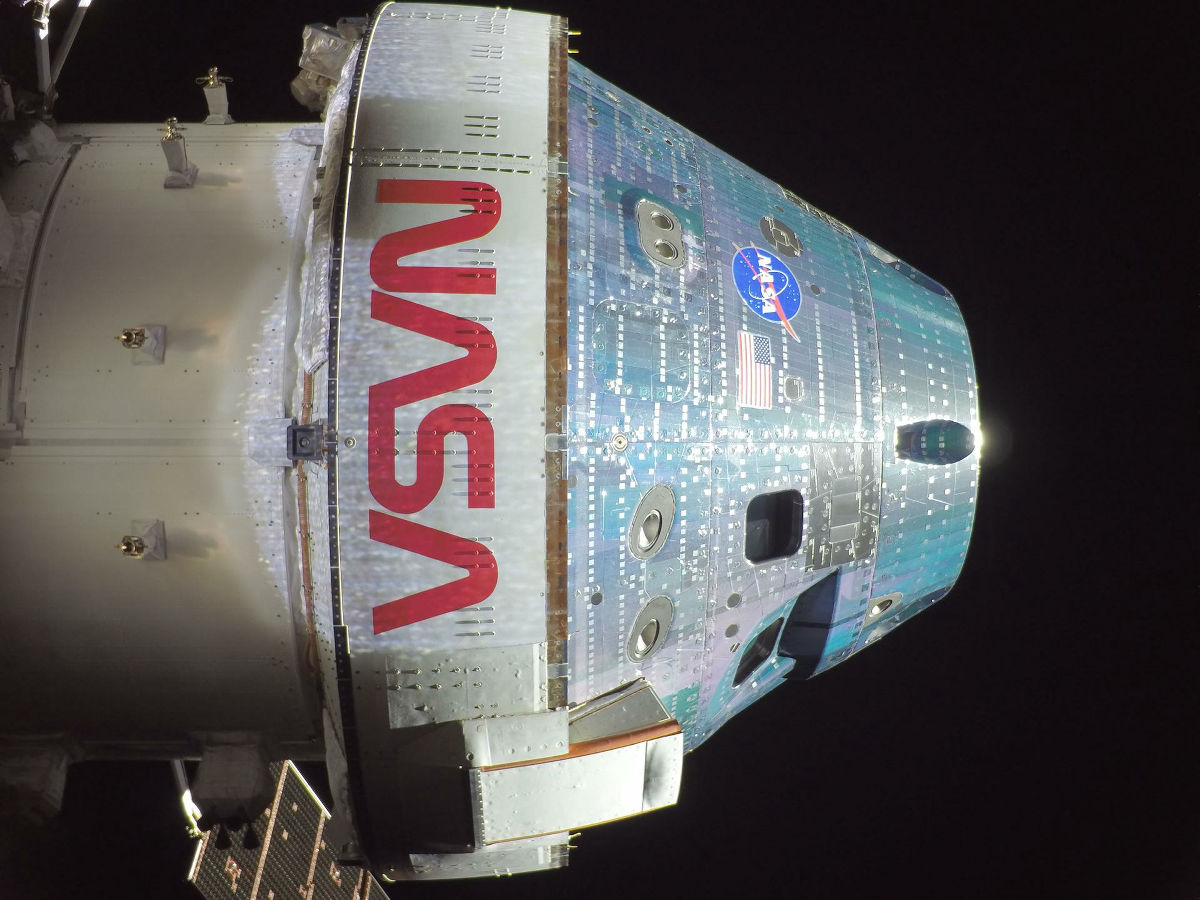
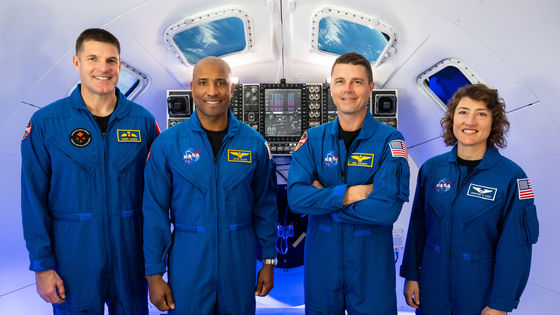
NASA's Artemis II manned lunar exploration mission successfully launched the Orion spacecraft on April 2, 2026 (Japan time), performing a flyby around the moon. However, for about half a century, from 1972 until Artemis II was realized, humanity had not conducted manned lunar exploration despite it being technically possible. Dominico Vicinanza , associate professor of science and engineering at Anglia Ruskin University in the UK, explains the reasons why humanity did not conduct manned lunar exploration for about half a century.
Why has it taken so long to return to the Moon?
https://theconversation.com/why-has-it-taken-so-long-to-return-to-the-moon-274640
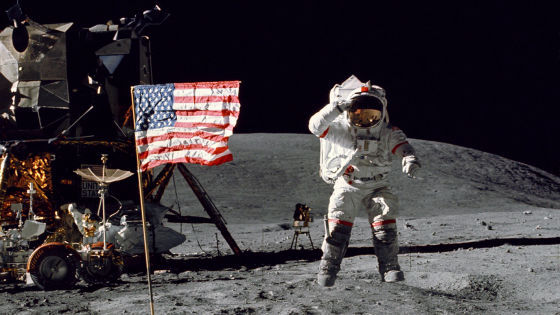
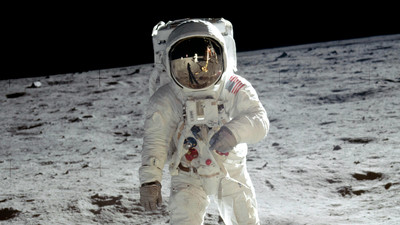
Prior to Artemis II, the last time the United States conducted a manned lunar exploration was Apollo 17 in 1972. Apollo 17 was the sixth mission in history to land astronauts on the moon, with the astronauts staying on the lunar surface for 72 hours, and Commander Eugene Cernan leaving his footprints on the surface.
The Apollo program saw a total of 12 astronauts walk on the moon between 1969 and 1972, but there had been no manned lunar exploration for about half a century since then. Vicinantza said, 'More than 50 years is a long gap, and it's natural to wonder, 'Why has it taken so long to go to the moon again, when Americans were regularly reaching the moon in the early 1970s?''
Since humanity already possessed the scientific capabilities to land on the moon by the time of Apollo 11 in 1969, the reason why humanity did not conduct manned lunar exploration for so long was not technical. Vicinantza points out that this was due to political, financial, and international support mechanisms.
by NASA
Vicinantza points out that the Apollo program, which sent humans to the moon, was not designed with permanence in mind and was clearly not sustainable. In 1961, when U.S. President John F. Kennedy declared that the U.S. would 'send men to the moon,' it was the height of the Cold War between the capitalist and communist blocs. Therefore, the clear and ambitious goal of 'sending men to the moon' also served to demonstrate America's superiority over the Soviet Union in terms of defense and space development.
This policy was continued by President Lyndon Johnson after President Kennedy's assassination, but due to the increased costs of the prolonged Vietnam War and a focus on domestic reforms, enthusiasm for space exploration gradually waned. In fact, NASA's budget peaked in 1966 and had been declining even before the success of the Apollo program, so the Apollo program ended once its initial goals were achieved.
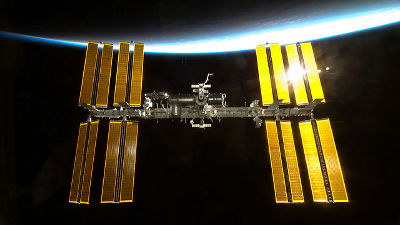
Sustainable space exploration requires 'stable political commitment,' 'predictable funding,' and 'clear long-term goals,' but the United States struggled to achieve all three after the Apollo program. President Richard Nixon approved the construction of
Subsequently, in 1989, President George H.W. Bush launched the Space Exploration Initiative, which aimed at astronauts settling on the moon, but it was canceled under the later President Bill Clinton due to a combination of factors including enormous costs and weak congressional support. In 2004, President George W. Bush launched Vision for Space Exploration , which included lunar exploration and future Mars exploration, but this too was changed under President Barack Obama and has not been realized.
by NASA
Vicinantza stated, 'The repeated cancellations of space programs have exposed fundamental limitations in the lunar exploration funding system. Sustainable lunar exploration programs require a strong multi-sectoral commitment and mechanisms to guarantee funding for decades. However, such large-scale programs must compete year after year with budgets for defense, healthcare, and social security. Changes in administration due to U.S. elections and shifts in committee leadership further weaken the prospects for continuity.'
Furthermore, it is difficult to provide a scientifically convincing answer to the fundamental question of 'why do we need to send humans to the moon?' The scientific results that can be obtained from manned lunar exploration missions are limited compared to long-term robotic exploration, and the commercial prospects remain uncertain. The Apollo program had the implication of 'demonstrating superiority over the Soviet Union during the Cold War,' but in the post-Cold War world, there is no such grand justification.
The question that arises is, 'Why did the Artemis program succeed, unlike past examples?' Of course, there is scientific justification, such as preparation for future Mars exploration, but Vichinantza points out that commercial partnerships and international cooperation were major factors.
The Artemis program was made possible not only by the leadership of the U.S. government, but also by commercial partnerships with private space companies such as SpaceX, and by the existence of the Artemis Accords, an international agreement on the exploration and use of the Moon and Mars. These factors diversified risk and expanded the political support base, ultimately leading to the realization of the Artemis program.
Vicinantza stated, 'If the Artemis program was successful, it would mean that all political, economic, social, and scientific factors finally aligned in a lasting way. However, the fact that there was a 50-year gap between the Apollo and Artemis programs before that alignment was demonstrated speaks less to an engineering challenge and more to how difficult sustained space exploration is for modern democracies.'
Related Posts:

in Science, Posted by log1h_ik