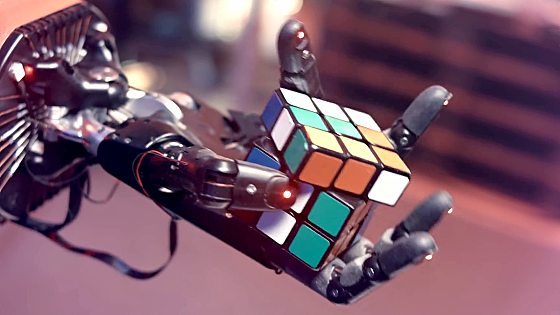
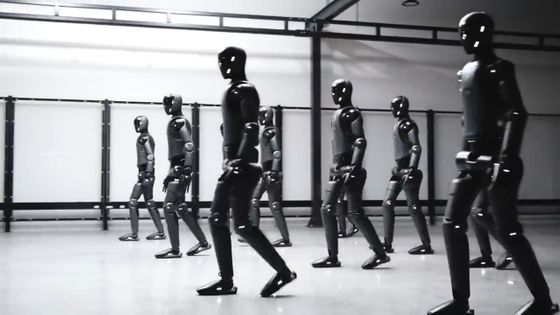
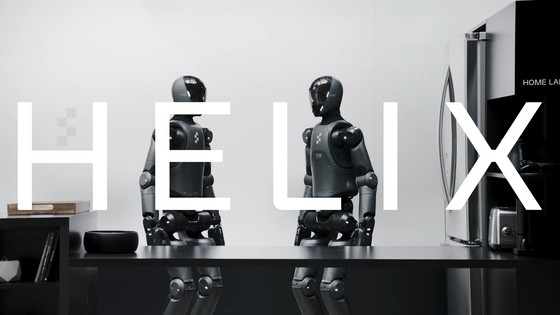
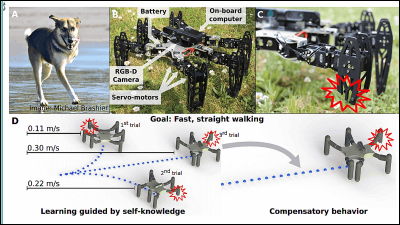
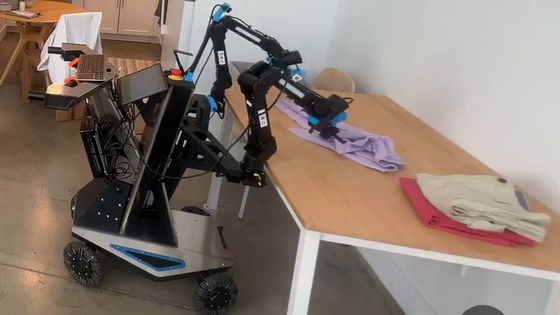
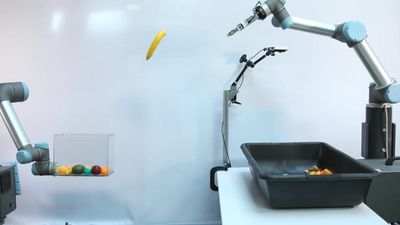
'GEN-1,' an AI model that enables robots to perform tasks requiring the high level of dexterity typically performed by humans, is featured in a video showing what it looks like when the robot is actually in operation.
Generalist, an AI research and development company, has announced 'GEN-1,' an AI model that optimizes robot movements in the real world. While previous models achieved a success rate of 64% on certain tasks, GEN-1 has improved the average success rate to 99%.
Generalist - GEN-1: Scaling Embodied Foundation Models to Mastery
Introducing GEN-1 - YouTube
GEN-1 is a multimodal model that outputs actions in real time. It is described as possessing a versatility that is not achievable with conventional automation, and as having practicality in a wide range of tasks at a level previously thought to be difficult to reach with robotics models.
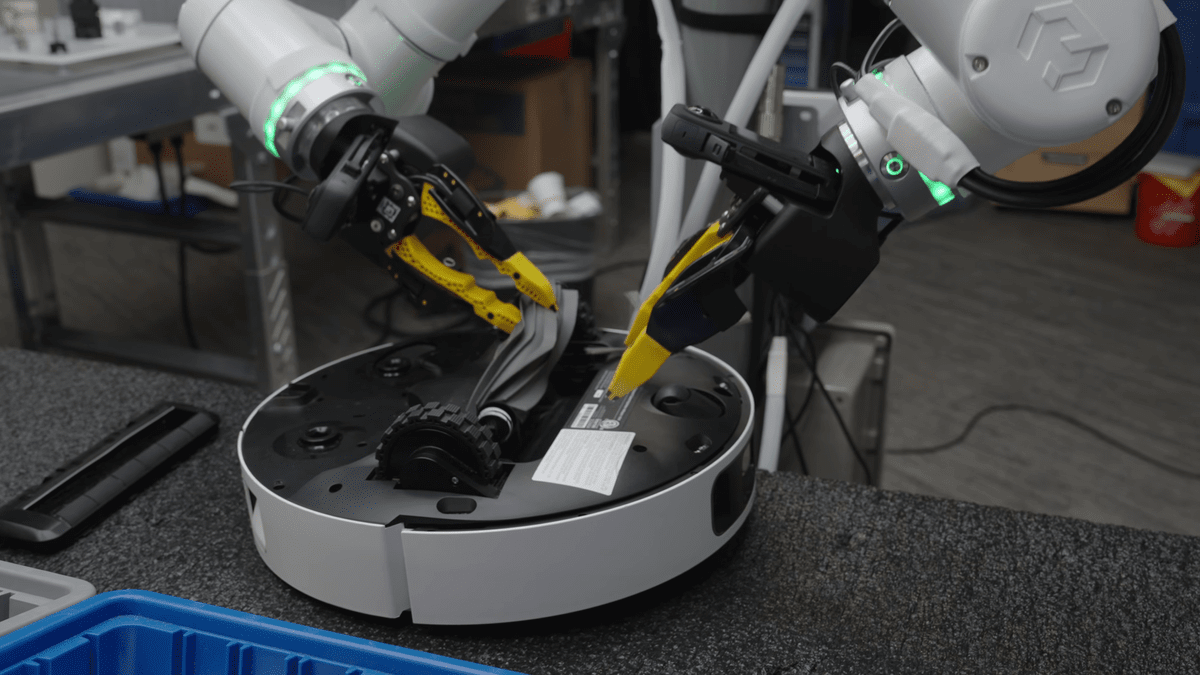
Several videos have been released showing robots that have actually been fitted with GEN-1. Below is a video of a robot performing maintenance on a robotic vacuum cleaner.
Robots servicing robots with GEN-1 - YouTube
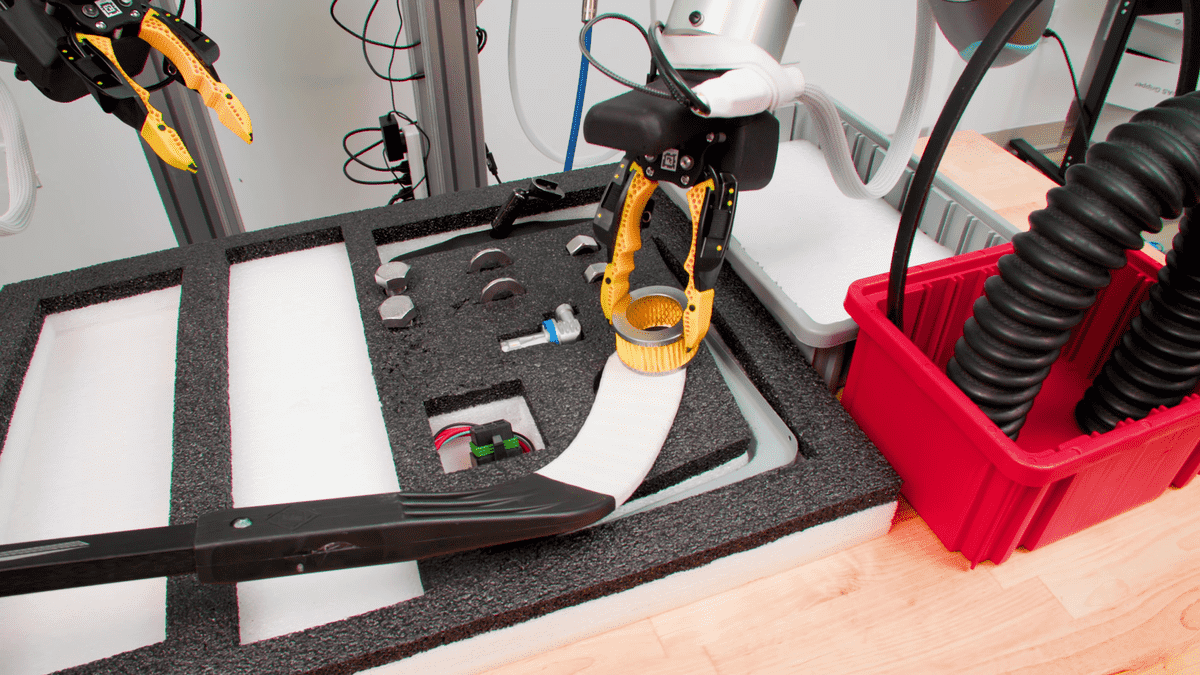
Putting away tools.
GEN-1 does automotive kitting - YouTube
They don't give up even when interrupted by humans and try again. This 'ability to spontaneously come up with solutions in unexpected situations' is also considered to be highly valued.
The following shows how to fold laundry.
GEN-1 does t-shirt folding - YouTube
GEN-1 is an expansion of the previously announced GEN-0. GEN-0 was built on an architecture trained using the world's largest pre-trained dataset, giving it the ability to quickly learn new tasks, adapt to new environments, and interpret physical common sense.
Building upon GEN-0, GEN-1 represents a significant evolution through algorithmic advancements, resulting in substantial improvements in various capabilities. GEN-1 can complete tasks approximately three times faster than GEN-0, and its trial-and-error ability to recover from unexpected situations has also improved. Furthermore, it has achieved a success rate of over 99% on some simple tasks.
For example, it has successfully performed tasks such as folding a T-shirt 86 times in a row without human intervention, inspecting a robot vacuum cleaner more than 200 times, packing building blocks more than 1800 times, and folding cardboard boxes more than 200 times in a row.
Of particular note is the demonstration of the effectiveness of the learning engine incorporated by Generalist. While conventional general-purpose models in robotics have achieved success rates exceeding 90%, they suffer from the challenge of relying on massive datasets that are expensive and difficult to scale. On the other hand, the GEN-0 and GEN-1 base models do not use any robot data at all, but instead use data from low-cost wearable devices worn by humans. This pre-training has demonstrated that a high level of proficiency can be achieved without the need for large datasets.
Generalist stated, 'GEN-1 represents a significant leap in capabilities, but it won't solve all tasks. By continuing to scale the model with experience, we can unlock a broader range of physical intelligence and expand the range of tasks it can perform.'
Related Posts: