People living in the Andes Mountains have evolved to be able to drink water that is high in arsenic.

Recent research has revealed that inhabitants of the high Andes Mountains in Argentina have evolved unique genetic abilities to adapt to drinking water containing lethal levels of arsenic. For thousands of years, residents of this region have consumed water containing approximately 200 micrograms of arsenic per liter, far exceeding the World Health Organization's (WHO) recommended limit of 10 micrograms.
Human Adaptation to Arsenic-Rich Environments | Molecular Biology and Evolution | Oxford Academic
Humans in The Andes Appear to Have Evolved a Strange Genetic Ability : ScienceAlert
https://www.sciencealert.com/humans-in-the-andes-appear-to-have-evolved-a-strange-genetic-ability
In the Puna de Atacama plateau, located in the Andes Mountains of northern Argentina, lies the town of San Antonio de los Cobres at an altitude of approximately 3800 meters. Naturally occurring arsenic from the volcanic bedrock of this region has dissolved into the groundwater, contaminating the local drinking water for many years. Normally, water containing such high concentrations of toxic substances would cause serious health problems for humans, but it has been discovered that the inhabitants of this area have undergone a very unique evolutionary process.

The World Health Organization (WHO) recommends a limit of 10 micrograms per liter for arsenic in drinking water. However, until a filtration system was installed in 2012, the drinking water in San Antonio de los Cobres contained approximately 20 times that amount, about 200 micrograms of arsenic. In some locations, levels have been reported to reach 800 micrograms per liter.
San Antonio de los Cobles is an extremely harsh environment, yet it is believed that humans have been settled in this region for at least 7,000 years, or even 11,000 years. Evidence of settlements has been found as early as the 16th century, and it is thought that the inhabitants have been ingesting arsenic-contaminated water for thousands of years. The fact that the group survived despite having to ingest lethal levels of toxins has puzzled scientists for many years.
A 1995 study, through analysis of urine samples, revealed that indigenous women in the Andes possess a unique ability to metabolize and excrete arsenic from their bodies. When arsenic enters the body, it is converted into several chemical forms by enzymes. Monomethylated arsenic (MMA), produced in this process, is an extremely toxic intermediate, but dimethylated arsenic (DMA), produced in a later stage, is less toxic and is easily excreted in urine.

by
The residents of San Antonio de los Cobless possessed a highly efficient metabolic capacity, minimizing the production of the highly toxic MMA and producing more easily excreted DMA. Specifically, their median urinary levels were low at 7.5%, while their DMA levels were high at 78%. This high metabolic efficiency is thought to reduce the risk of arsenic-induced cancer, skin diseases, birth defects, and premature death.
To unravel this mystery at the genetic level, the research team collected DNA from 124 local women and examined 4.3 million single nucleotide polymorphisms (SNPs) across their entire genomes. The analysis revealed a cluster of genetic variations strongly involved in arsenic metabolism around the AS3MT (arsenic methyltransferase) gene on chromosome 10. This strongly suggests that AS3MT is a major gene responsible for arsenic methylation in the human body.
When the frequency of this genetic variation was investigated, a significant difference was found between the population of San Antonio de los Cobres and the geographically close populations of Peru and Colombia, which had less arsenic exposure. The proportion of individuals who fully retained the 'protective haplotype' for efficiently processing arsenic was 29.1% in the Peruvian population and 26.8% in the East Asian population, but it appeared at an overwhelmingly higher frequency of 58.4% in the local population.
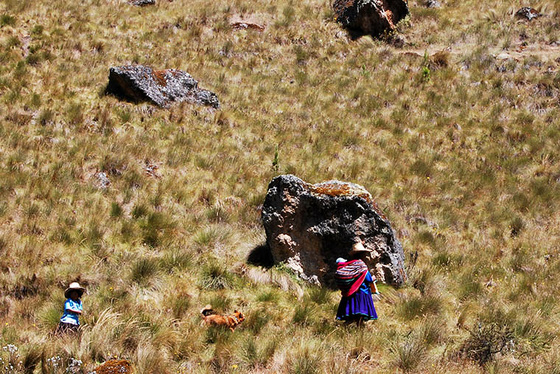
by martynas
Furthermore, genome analysis revealed evidence of the rapid spread of specific genetic mutations in this region. This provides strong evidence of natural selection working to adapt to the environmental stressor arsenic, and while smaller in scale compared to known strong adaptations such as lactose tolerance and malaria resistance, it indicates a steady evolutionary process.
This adaptive mechanism is thought to have functioned primarily through infant survival rates and reproductive success. Arsenic is known to cross the placenta, adversely affecting the fetal immune system and increasing infant mortality. It is hypothesized that individuals with protective genes capable of rapidly processing the toxin had a very strong selective advantage in high-arsenic environments, thus surviving and reproducing.
This study is the first to demonstrate that humans have genetically adapted to toxic chemicals. The research team stated that this finding is an important example of how humans can respond flexibly and rapidly at the genomic level to environmental changes and challenges, and that they plan to conduct further investigations into how these findings can contribute to improving public health in the future.
Related Posts:







in Science, Posted by log1i_yk