Clinical trials show that existing antiepileptic drugs can be helpful in treating sleep apnea syndrome.
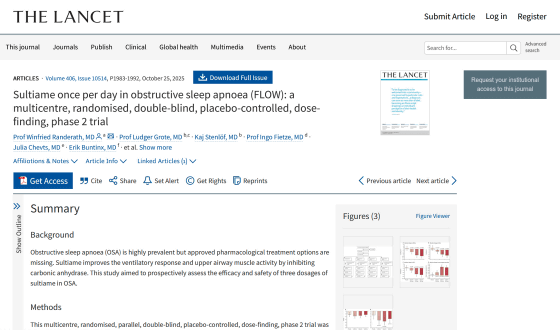
Sultiame once per day in obstructive sleep apnoea (FLOW): a multicentre, randomized, double-blind, placebo-controlled, dose-finding, phase 2 trial - The Lancet
https://www.thelancet.com/journals/lancet/article/PIIS0140-6736(25)01196-1/
First drug treatment for sleep apnea within reach | University of Gothenburg
https://www.gu.se/en/news/first-drug-treatment-for-sleep-apnea-within-reach
Repurposed Drug Improves Sleep Apnea by Up to 50% in Clinical Trial : ScienceAlert
https://www.sciencealert.com/repurposed-drug-improves-sleep-apnea-by-up-to-50-in-clinical-trial
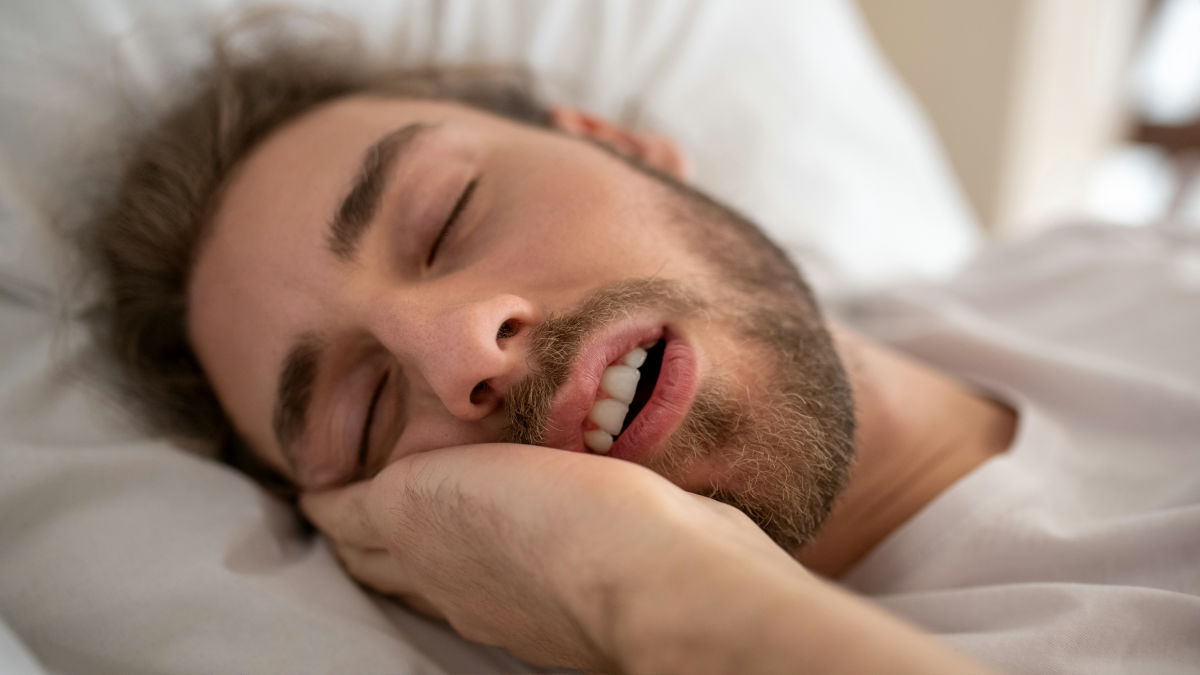
Sleep apnea is a condition in which the upper airway becomes obstructed during sleep, disrupting breathing. It is estimated that there are more than one billion people suffering from sleep apnea worldwide. It is also associated with various health problems such as cognitive decline , cardiovascular disease, and diabetes, and there is a need for treatments that are accessible to a wide range of people.
The main treatment for sleep apnea syndrome is CPAP , which involves wearing a mask during sleep to deliver pressurized air through the nose into the airway, widening the narrowed airway and ensuring breathing. However, getting used to wearing CPAP requires some adjustment, and it is said that nearly half of patients stop using it within a year.
Therefore, in recent years, drug treatments for sleep apnea syndrome have been explored. In 2024, tilzepatide , known as a drug used to treat type 2 diabetes and obesity, was approved as a treatment for sleep apnea syndrome. However, the effect of tilzepatide is due to the widening of the airway through weight loss, making it less likely to become obstructed.
On the other hand, previous studies have shown that the antiepileptic drug sultiam may improve upper airway muscle tone and stabilize respiratory control. Sultiam is already used in several European countries, as well as in Israel, Japan, and Australia, to control epileptic seizures.
Based on these findings, a research team at
Clinical trial results showed that patients who took sultium one hour before bedtime experienced less sleep-related respiratory problems, improved nighttime oxygen supply, and reduced daytime sleepiness compared to patients who took a placebo.
The most effective treatment was reported in patients taking high doses of sultium (200 mg or 300 mg), which reduced the severity of sleep apnea syndrome by approximately 30-50%, far exceeding the effectiveness of placebo. Although there were no clinically significant safety concerns, side effects tended to increase with increasing dose, so 200 mg is considered the optimal dosage.
Jan Hedner, Senior Professor of Respiratory Medicine at the University of Gothenburg, who played a leading role in the study, said, 'We have been working on this treatment strategy for many years, and these results show that sleep apnea syndrome is pharmacologically affected. We feel this is a breakthrough, and we would like to conduct larger and longer-term studies in the future to determine whether the effects are long-lasting and whether it is safe for a wide range of patient groups.'
Related Posts:






in Free Member, Science, Posted by log1h_ik