It turns out that the 'beep' sound when peeling off adhesive tape is caused by a shock wave traveling faster than the speed of sound

A study has revealed the source of the squealing noise heard when removing adhesive tape, something that has remained a mystery for decades.
Screeching sound of peeling tape | Phys. Rev. E
A shocking explanation for tape's distinctive screech | Science | AAAS
Scientists crack the case of 'screeching' Scotch tape - Ars Technica
https://arstechnica.com/science/2026/02/heres-why-scotch-tape-screeches-when-its-peeled/
Physicists Finally Reveal Why Sticky Tape 'Screams' When You Peel It : ScienceAlert
https://www.sciencealert.com/physicists-finally-reveal-why-sticky-tape-screams-when-you-peel-it
The tape does not peel off smoothly and evenly, but instead alternates between a 'firmly adhesive (stick)' state and a 'slip' state, where the pulling force on the tape exceeds the adhesive force and the resistance suddenly disappears, causing the tape to peel off. This phenomenon of the tape peeling off while repeatedly sticking and slipping is called the 'stick-slip phenomenon.'
In 2010, a research team led by Dr. S.T. Soerdsen of King Abdullah University of Science and Technology in Saudi Arabia reported that each time the tape slipped, a tiny ribbon of cracks formed within the adhesive at supersonic speeds, moving from one end of the tape to the other, generating sound and light.
Stick-slip substructure in rapid tape peeling | Phys. Rev. E
https://journals.aps.org/pre/abstract/10.1103/PhysRevE.82.046107
A further study in 2014 noted a correlation between the cracks caused by slip and the sound, but did not identify a mechanism.
Generation of ultra-sound during tape peeling | Scientific Reports
https://www.nature.com/articles/srep04326
In a new study, Dr. Thorodsen and his colleagues, along with Professor Li Erqiang of the School of Engineering at the University of Science and Technology of China , hypothesized that the sound was generated by the fast-moving tip of the crack. They conducted an experiment using two high-speed cameras and two highly sensitive microphones to capture the crack initiation and sound propagation.
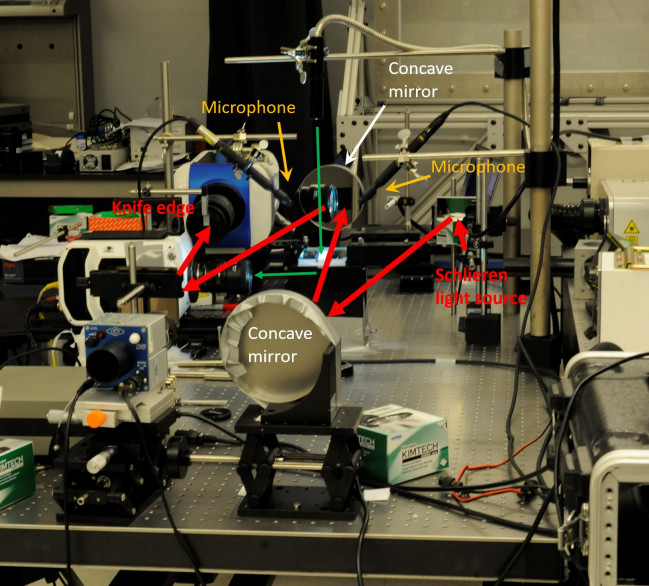
Experiments confirmed that the 'screeching' sound was generated by a series of impacts that culminated when the transverse crack reached the edge of the tape.
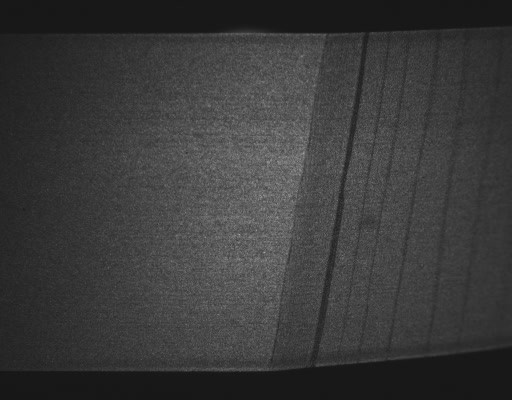
A photo of the shock wave. Fan-shaped waves are generated from the bottom left. The red arrows indicate four waves.
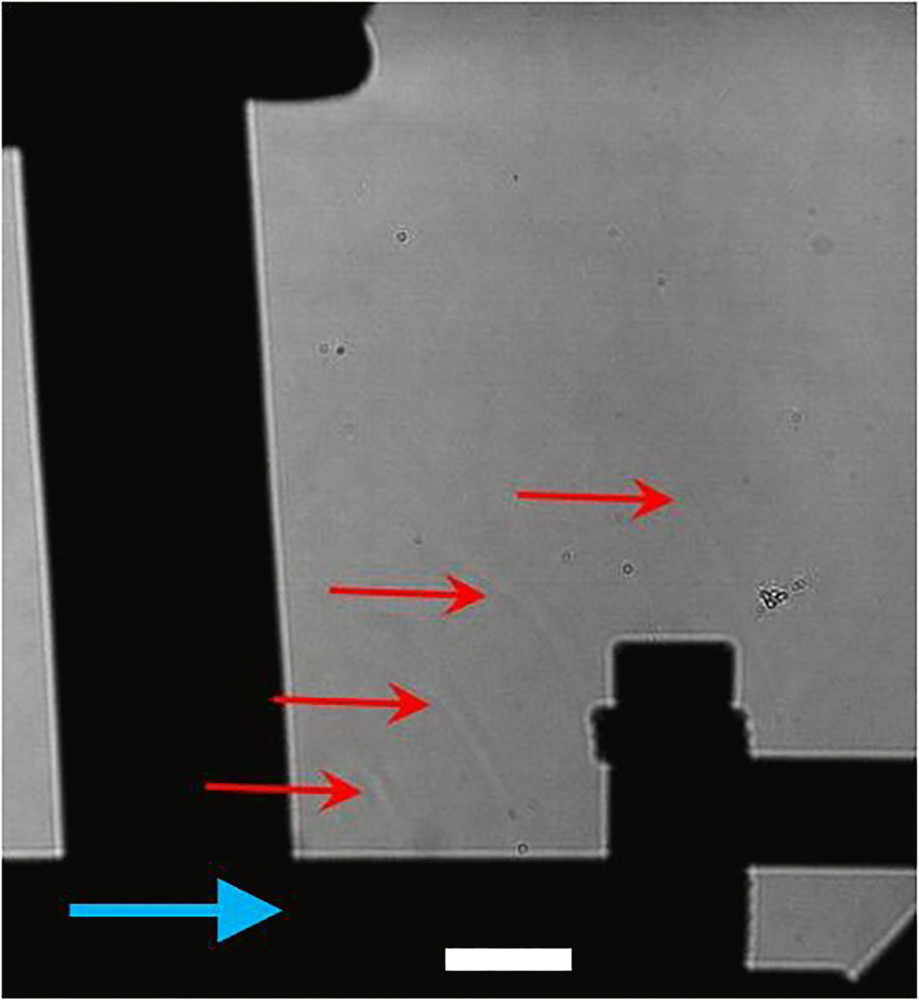
According to the research, when the crack propagates at supersonic speeds, a partial vacuum is created between the tape and the glass surface to which it is attached, and the gap cannot be filled quickly enough. Instead, the gap moves with the crack, reaches the edge of the tape, and then collapses against the still air outside, producing sound.
Related Posts:






in Science, Posted by logc_nt