Anthropic decides to lift safety restrictions

An executive at AI company Anthropic has reportedly backed away from a pledge that the company would not train AI systems without first ensuring adequate safety measures were in place, possibly due to pressure from the US Department of Defense, which demanded the company either lift restrictions on Claude or cut ties with the company.
Responsible Scaling Policy Version 3.0 \ Anthropic
Anthropic Drops Flagship Safety Pledge | TIME
https://time.com/7380854/exclusive-anthropic-drops-flagship-safety-pledge/
In 2023, Anthropic introduced a restriction that it would not train AI systems unless it could ensure in advance that its own safety measures were sufficient, and has emphasized this policy as evidence that it is a responsible company that will not succumb to market pressures and rush to develop dangerous technology.
However, in recent months, the company has decided to significantly revise its policies. According to Anthropic's Chief Scientific Officer, Jared Kaplan, Anthropic CEO Dario Amodei decided that 'it doesn't help anyone if we hold back on training new models while our competitors move forward. If one AI developer pauses development to implement safety measures while others proceed with training and deployment without strong mitigations, the world could be less safe.'
The new policy includes increased transparency about AI safety risks, particularly by disclosing additional information about how Anthropic's models perform in safety tests. It also pledges to match or exceed the safety efforts of its competitors. It also states that Anthropic will 'delay' AI development if management believes the company is ahead of the AI race and the risk of a major disaster is significant.

The original 'Version 1.0' and 'Version 3.0' released on February 24, 2026 can be viewed at the links below.
Anthropic's Responsible Scaling Policy, Version 1.0 - responsible-scaling-policy.pdf
(PDF file)
Anthropic's Responsible Scaling Policy (version 3.0) - Anthropic's Responsible Scaling Policy (version 3.0).pdf
(PDF file) https://www-cdn.anthropic.com/e670587677525f28df69b59e5fb4c22cc5461a17.pdf
However, this change represents a significant relaxation of restrictions compared to the previous policy, which explicitly prohibited training models above a certain level without appropriate safeguards in place. The change comes as Anthropic, which had previously been seen as lagging behind OpenAI in the AI race, is gaining momentum thanks to a string of technical and commercial successes.
The company's Claude model, particularly its software creation tool 'Claude Code,' has garnered many enthusiastic supporters. Annualized revenue is reportedly growing at a tenfold rate, and many investors view the company's core business model, which relies on business-to-business transactions, as more reliable than OpenAI's strategy, which relies on monetizing a massive consumer user base.
Some have suggested that this change in policy may have been due to pressure from the US Department of Defense. Secretary of Defense Pete Hegseth, in response to a request to lift security restrictions on Claude, the only AI model used by the US military for highly classified tasks, told Anthropic, 'If you do not lift the restrictions on Claude as requested by the military, we will either force you to remove the restrictions under the law or terminate your contract and sever our relationship with you.' He also set a deadline of February 27, 2026, calling for an immediate response.
Defense Secretary Hegseth warns Anthropic to either lift Claude's restrictions or cut ties - GIGAZINE
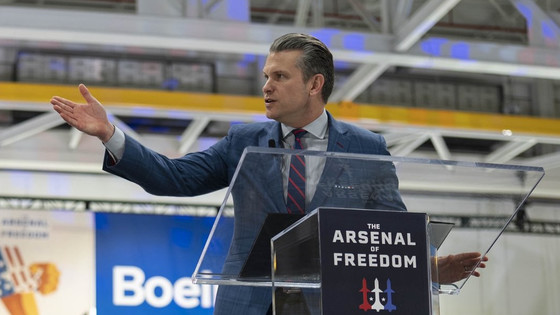
The Pentagon has asked contractors, including Lockheed Martin and Boeing, to provide assessments of their dependency on Anthropic, according to people familiar with the matter, as part of a move toward potentially designating the drug as a supply chain risk.
Kaplan described the policy change as a 'pragmatic response to changing political and scientific realities.' According to Kaplan, when Anthropic introduced its policy in 2023, it hoped its competitors would adopt similar measures. It also hoped that this approach could serve as a template for future national regulations or international treaties. However, no such regulations materialized. Instead, the Donald Trump administration has shown an aggressive stance toward AI development, even attempting to override state-level regulations.

Asked whether he was succumbing to competitive market pressures, Kaplan countered that 'rather, this is a renewed commitment to developing safe AI,' adding, 'If our competitors are doing the right thing by being transparent about catastrophic risks, we are committed to doing the same or better.'
Related Posts: