Growing up near a busy road increases risk of depression and anxiety, study finds

Living near a busy road can sometimes be distracting, and the sounds of passing trucks and motorcycles can wake you up in the middle of the night. A new study suggests that living near a busy road as a child increases your risk of depression and anxiety disorders.
Residential exposure to traffic noise and incidence of depression and anxiety from childhood through adulthood: a Finnish register study - ScienceDirect
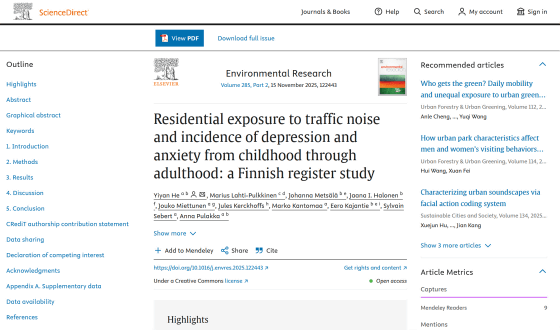
Growing up near busy roads linked to higher risk of depression and anxiety
https://www.psypost.org/growing-up-near-busy-roads-linked-to-higher-risk-of-depression-and-anxiety/
Traffic noise is unavoidable when living in a modern city, and many people try not to be bothered by the sounds of cars, buses, and trains in their daily lives. However, even if a person thinks they have become accustomed to these noises, they are known to have various effects on the mind and body.
Previous research has shown that traffic noise disrupts sleep, increases the risk of heart disease , and has a negative impact on mental health , but most research on noise and mental health has focused on middle-aged and older people, with a lack of research on younger people.
A team led by researchers at the University of Oulu in Finland investigated whether exposure to noise during development affects the risk of later psychiatric disorders.
The research team accessed Finland's nationwide health and population registry data and analyzed data from 114,353 people born between 1987 and 1998 who were living in the Helsinki metropolitan area in Finland as of 2007. The subjects were aged 8 to 21 in 2007 and were followed up until 2016 to determine whether they had been diagnosed with depression or anxiety disorders at a specialist medical facility.

The research team estimated traffic noise levels based on participants' home addresses and calculated average noise levels throughout the day, focusing primarily on road traffic noise. They focused on noise in the evening and at night, when people are more sensitive to noise, and also included environmental changes due to relocation. They also took into account factors that may affect mental health, such as family environment, parental mental illness, neighborhood environment, air pollution, and access to green spaces.
Analysis of the data revealed that one in ten participants was diagnosed with a depression or anxiety disorder by early adulthood, and a clear pattern was found: the greater the exposure to traffic noise, the more likely the person was to be diagnosed with depression or anxiety.
Specifically, for every 10 dB increase in traffic noise, the risk of depression increased by 5% and the risk of anxiety disorders by approximately 4%. Furthermore, when road traffic noise approached the standard level of
The association between noise and mental health also differed between groups, with the association between noise and anxiety disorders being stronger in men than in women, and the association was more pronounced in people whose parents had not been diagnosed with a mental illness. This suggests that environmental stressors may have a stronger impact when genetic risk is low.
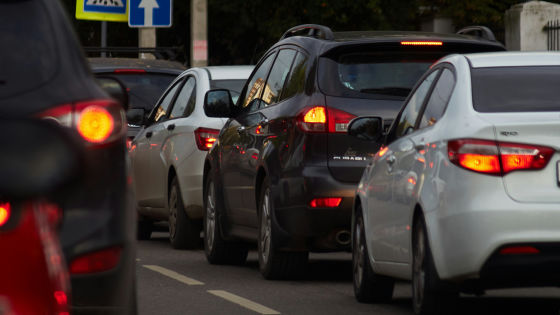
The research team stated, 'Sleep disturbance and stress responses have been proposed as the main mechanisms explaining the association between traffic noise exposure and the risk of depression and anxiety disorders. Traffic noise is associated with symptoms of insomnia, which has been identified as a risk factor for depression. Furthermore, exposure to traffic noise has been shown to cause annoyance and an enhanced physiological stress response.'
It should be noted that this study only showed an association between traffic noise and depression and anxiety disorders, but did not prove a causal relationship that 'traffic noise causes depression and anxiety disorders.' It is also important to note that depression and anxiety disorders were only counted if diagnosed by a specialist, and that noise in schools and workplaces was not investigated.
Related Posts:






in Science, Posted by log1h_ik