OpenAI researcher resigns over ChatGPT ads, warning against following Facebook's path

Zoe Hitzig, a former researcher at OpenAI who spent two years building AI models, pricing, and safety, warned in a New York Times op-ed that she resigned on the same day OpenAI began testing ads within ChatGPT, citing the risk of repeating Facebook's mistakes by undermining user trust.
Opinion | I Left My Job at OpenAI. Putting Ads on ChatGPT Was the Last Straw. - The New York Times
OpenAI researcher quits over ChatGPT ads, warns of 'Facebook' path - Ars Technica
https://arstechnica.com/information-technology/2026/02/openai-researcher-quits-over-fears-that-chatgpt-ads-could-manipulate-users/
OpenAI has begun testing in the US a system that displays labeled ads below answers for free users and users of the ChatGPT Go plan, which costs 1,500 yen per month.
OpenAI officially launches 'ChatGPT Go,' a cheaper paid plan for 1,500 yen per month, and also starts testing to display ads - GIGAZINE
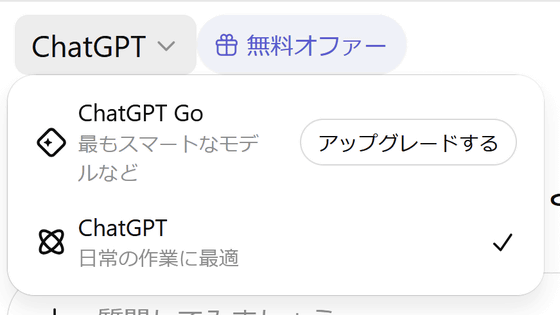
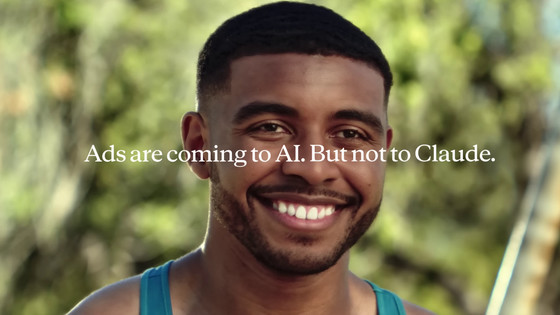
OpenAI CEO Sam Altman claims the advertising model is a way to bring AI to people who can't afford a subscription, but internal documents show that personalization based on past chat content is enabled by default. In contrast, rival Anthropic maintains a policy of not including ads in Claude, airing a Super Bowl ad stating, 'Ads are coming to AI, but not to Claude.'
AI company Anthropic releases Super Bowl commercial stating, 'This is what happens when you use advertising on AI,' and OpenAI's Sam Altman responds in a lengthy response - GIGAZINE
On February 9, 2026, the day OpenAI began testing ads on ChatGPT, Hitzig revealed that he had left OpenAI. 'I once believed I could help people building AI get ahead of the problems it creates. But the inclusion of ads on ChatGPT confirmed a growing feeling I had over time that OpenAI had stopped asking the questions I joined the company to help answer,' Hitzig wrote.
Hitzig said he doesn't believe advertising itself is immoral, but he argues that many users share extremely personal information with ChatGPT, such as health concerns, relationship issues, and religious beliefs, and that the accumulation of such personal information is being used for ChatGPT advertising is dangerous.

Hitzig also points out that Facebook once promised users control over their data, but ultimately undermined those policies due to the pressure of an advertising model that prioritizes engagement. The US Federal Trade Commission (FTC) also alleged that changes to privacy settings that Facebook claimed would strengthen users' control actually made personal information public. Hitzig fears that OpenAI could follow a similar trajectory, and that the ecosystem it is building will create powerful incentives in the long term that will subvert the safety rules it has established.
Furthermore, Hitzig pointed out that OpenAI is already optimizing for the number of daily active users, potentially encouraging the model to be more 'flattering' to users. Such optimization could increase users' dependency on AI and lead to serious consequences such as mental illness and suicidal thoughts. In fact, OpenAI is facing multiple lawsuits.
OpenAI sued over ChatGPT's alleged role in teenage suicide, OpenAI admits ChatGPT's safety measures don't work for long conversations - GIGAZINE

Hitzig avoids the binary choice of advertising or paying, and instead proposes structural solutions such as 'cross-subsidization,' in which companies support free access with profits from high-value AI work, 'independent committees' that legally monitor data use, and 'data cooperatives' where users themselves manage data sharing.
Related Posts:







in AI, Web Service, Posted by log1i_yk