How does whaling promote the industry and why are there calls for regulation?
The YouTube channel
Whale Hunting Was Absolutely Crazy - YouTube
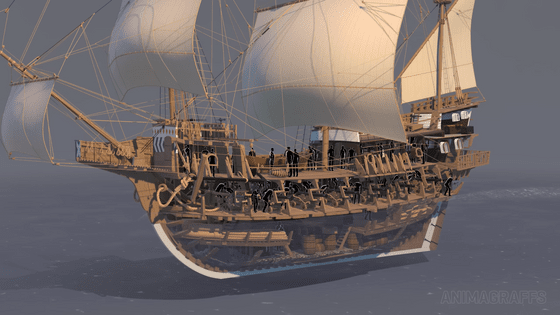
It is said that whaling became commercialized around the 8th century. The Basque people at that time built stone watchtowers along the Bay of Biscay , facing the west coast of France, and when they spotted whales on the surface of the water, they would set out to sea in boats equipped with whaling equipment.
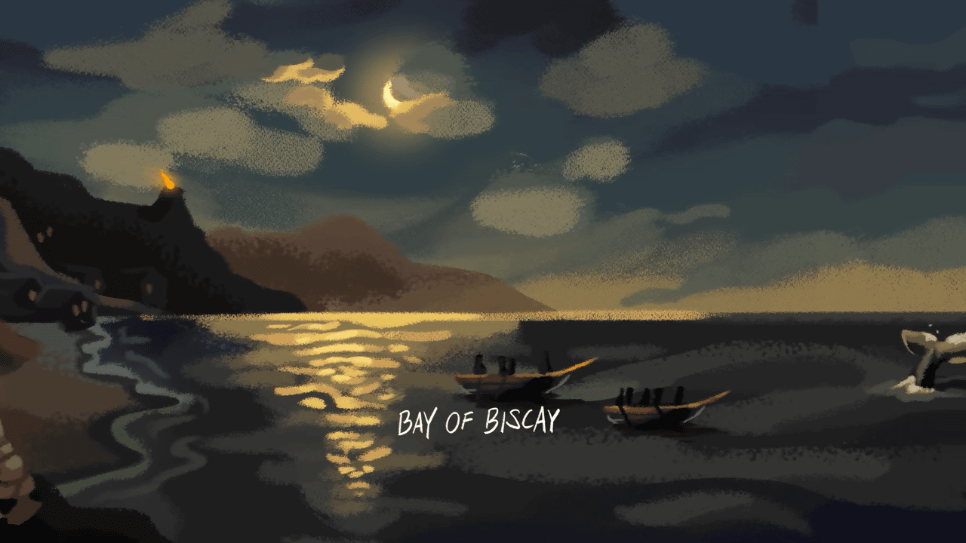
The Basques' main target at the time was the right whale,

The meat from these giant whales was an attractive food source for people at the time, but only about 30% of the whale's body was meat. The remaining 50% was its thick, oily skin, which was more valuable than food, and when cooked, it was used to produce valuable

Whale oil was an important resource for early industry, used as a lubricant for machines, mixed with tar to waterproof ships, and used in the manufacture of soap and paint. An even more important feature was that it burned brightly and cleanly compared to other fuels available at the time. By 1740, 15,000 streetlights in London's colonies were powered by whale oil, requiring the oil of half a whale per night.

The whaling industry in northwestern Europe expanded, and by the 17th century, it had become a huge industry, with Britain and the Netherlands establishing their own whaling fleets. The industry spread to other European countries and even to the Americas, which were European colonies at the time. Around the same time, a whaling ship that had drifted to the Americas successfully hunted a sperm whale measuring 18 meters in length and weighing 45 tons, attracting attention as it was expected to produce whale oil worth $200,000 (approximately 30 million yen) in modern terms.

Nightshift describes whaling at the time as 'simple and insane.' Without large ships or equipment, crews would approach whales in boats with just a few people and pierce their bodies with harpoons. The harpoon connects the boat to the whale, and the whale drags the boat along, a process known as '

The whales were processed on board the boats. Once the whaling boats had hauled the carcasses to the mother ship, the tough blubber, about 20cm thick, was peeled off and boiled in huge iron pots on board. The stench of death and decay spread from the rising smoke and blood in the sea, and it was said that 'the smell of a whaling ship could be detected from 30km away.'

Although roughly one-third of whalers who participated tended to drop out soon after due to the harshness and cruelty of the job, by the 1850s whaling had become America's fifth-largest industry, employing 700 whaling ships—three-quarters of the world's whaling fleet—and employing 70,000 people. Records show that in 1853, American whaling ships alone hunted more than 8,000 whales, earning approximately $500 million (approximately 77 billion yen) in whale oil. While the American whaling industry was sometimes called the 'American Dream,' in which whalers raised investment, equipped themselves, and set out to sea, becoming wealthy if successful and ultimately in debt if unsuccessful, it also faced significant problems: exploitative conditions, with many of the labor force consisting of Native Americans and Black sailors.
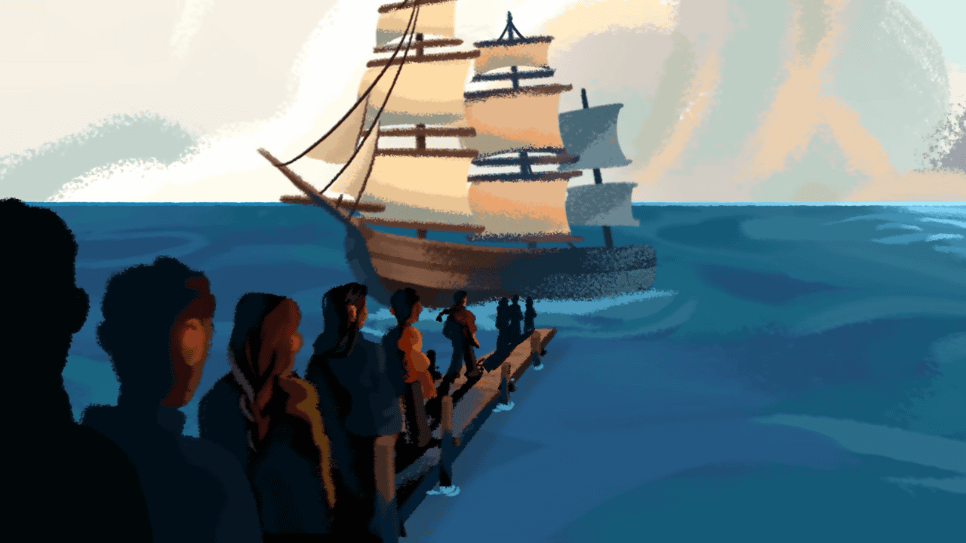
Whaling underwent a major transformation in 1859. Steam-powered drilling equipment began to pump oil commercially, and kerosene, a product of petroleum, became the primary material for lamps. However, at the same time, whale oil was an excellent lubricant, and as petroleum fueled mechanization, demand for lubricants increased, which in turn increased demand for whale oil, which was no longer needed for lamps.
Furthermore, the development of engines has significantly changed the efficiency of whaling from the era of sailing ships. As whaling ships became engine-powered, whaling became possible from offshore areas, and after World War II, overfishing was carried out using the 'Whaling Olympics' method, which predetermines the fishing season and catch amount, and in 1964, 'the largest animal massacre in human history in terms of tonnage' occurred, Nightshift says.
As whaling accelerated, sperm whale populations fell from 1.5 million to 800,000, and large fin whales fell from nearly 800,000 to 100,000. Blue whales, said to be the world's largest animal, have fallen by 98% from 340,000 to around 5,000-15,000. International conferences calling for whale protection and regulating industrial whaling have been held repeatedly since the first half of the 20th century, but commercial whaling effectively came to an end when

Nightshift talks about the history of industrial whaling, saying, 'While looking back now it seems bloody and barbaric, whaling laid the foundation for modernization by illuminating processes and powering machines. Progress and destruction always go hand in hand, and they have the power to reshape the world.'
Related Posts: