'Spectrum Slit' transforms invisible Wi-Fi signals into light art
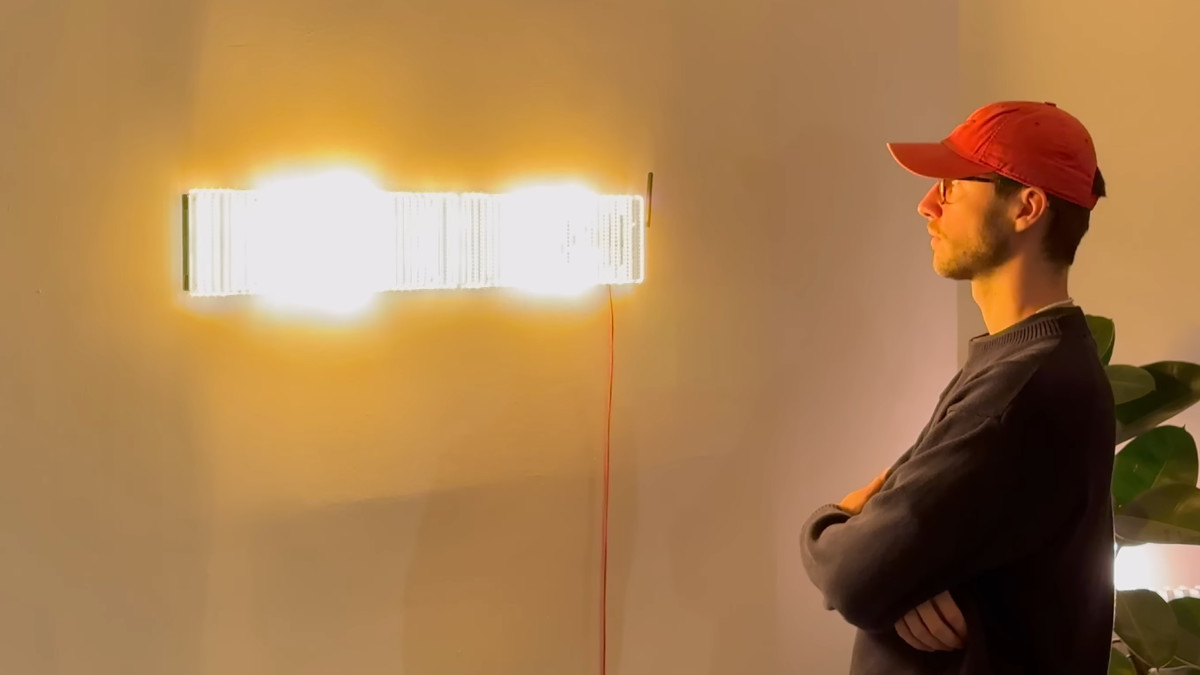
Although a room may appear quiet in the visible light range, if you shift your focus to radio waves as a whole, you will see that devices such as Wi-Fi and Bluetooth are constantly communicating, competing for bandwidth. French artist Theo Champion stated that 'humans are standing in a storm of radio waves, but they just can't see them,' and presented his work ' Spectrum Slit, ' which visualizes Wi-Fi radio waves in the 2GHz to 5GHz band.
Spectrum Slit (2026)
I built a light that can see radio waves - YouTube
Champion used the HackRF One software-defined radio, which operates in the 1MHz to 6GHz range, as the hardware to measure Wi-Fi radio waves.

Unlike conventional radios that are dedicated to specific frequencies, HackRF One allows you to freely tune the receiving frequency using software, so by changing the antenna you can observe areas such as the FM broadcast band, and by demodulating it you can listen to the audio.
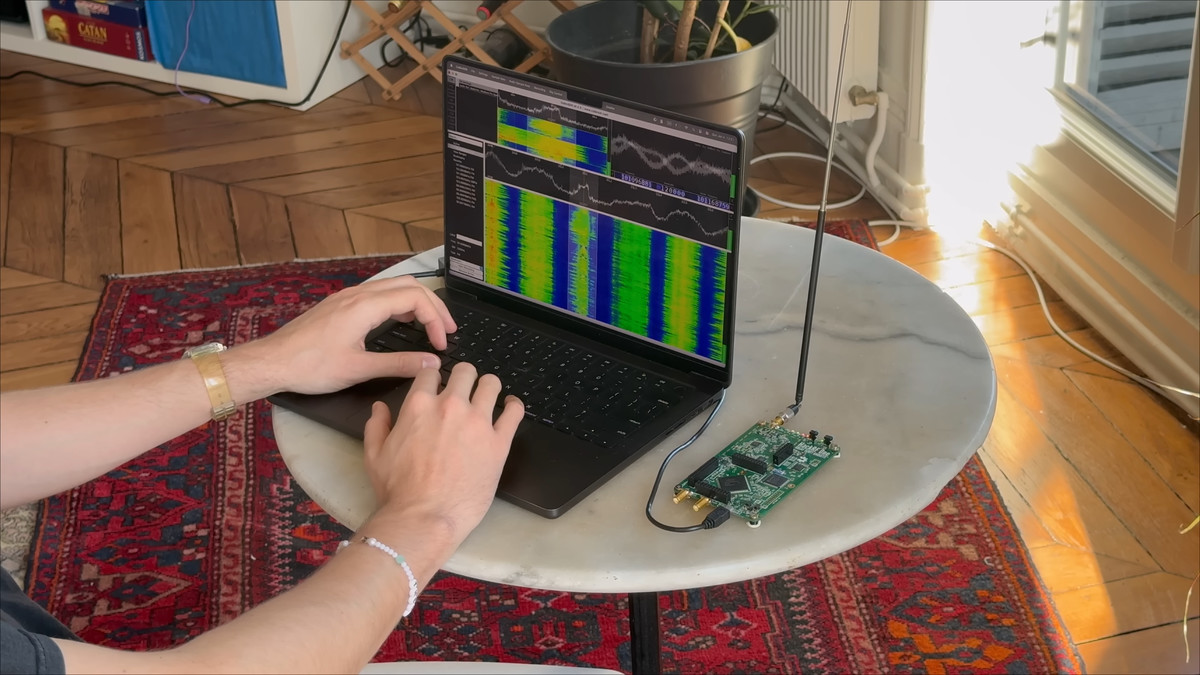
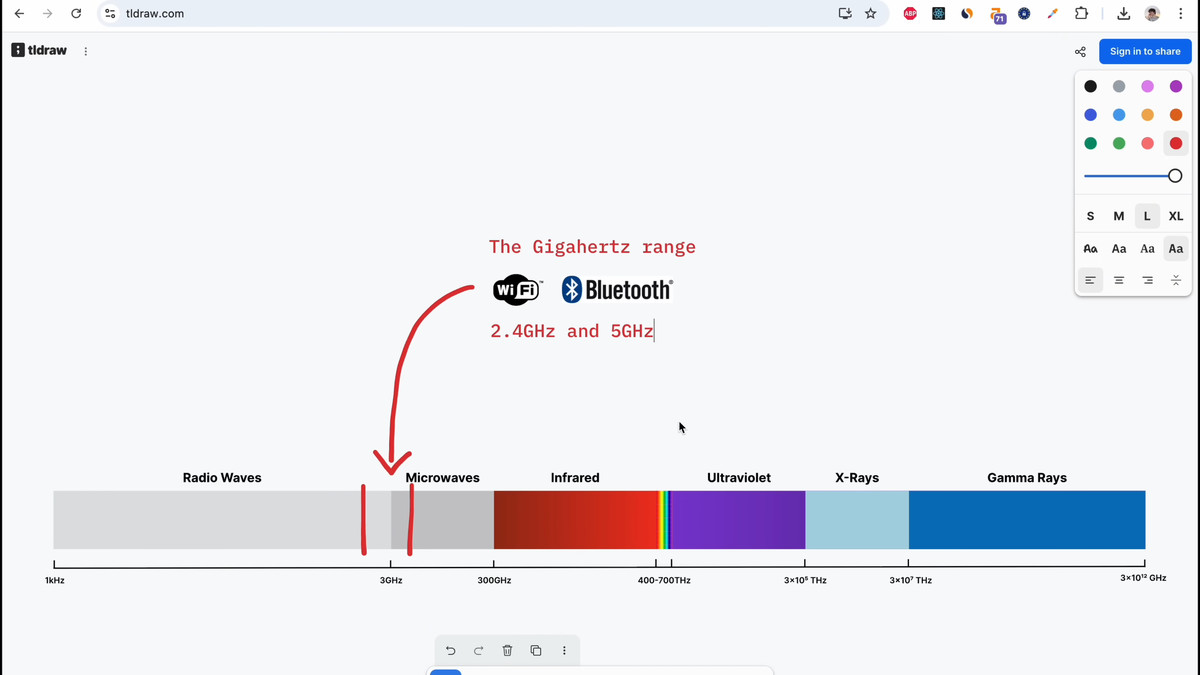
However, our main focus this time will be on the GHz band, which is heavily used by home devices, and we will be checking activity in the 2.4GHz and 5GHz bands in particular.
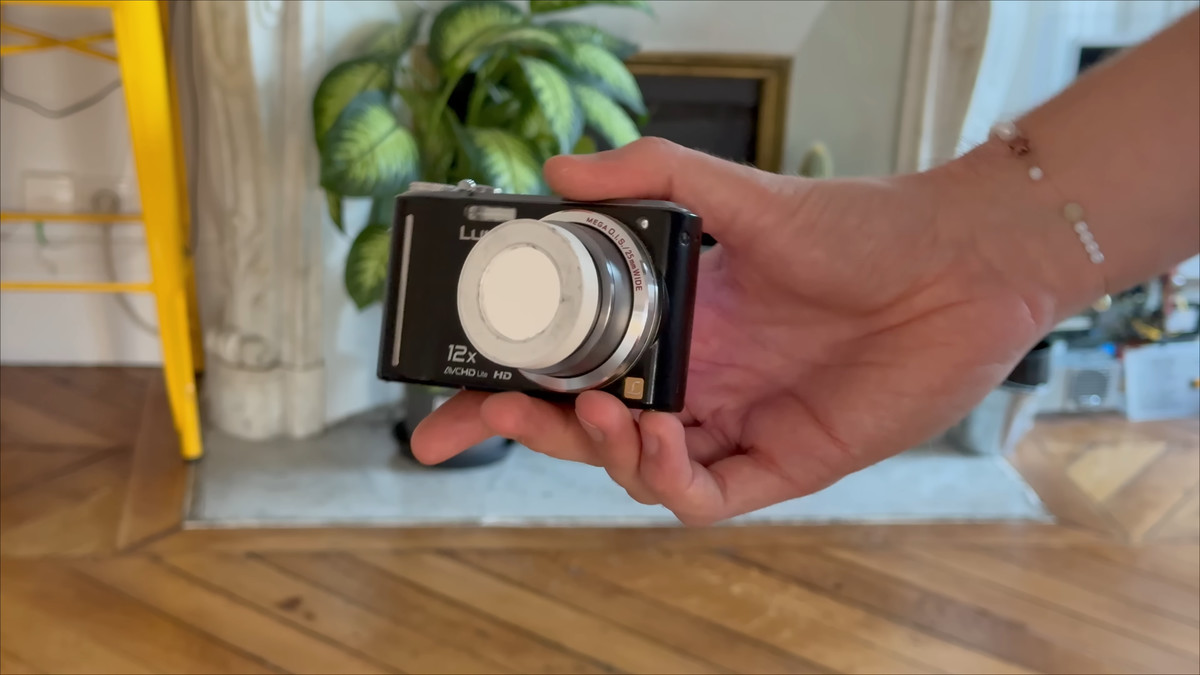
In the movie, Champion explains, 'What does it mean to be able to see invisible radio waves?' He disassembled an old digital camera, removed the infrared cut filter, and added a filter that blocks visible light, turning it into a camera that only captures infrared light.
Instead of an antenna, a powerful infrared LED is used as an expression device, and the control circuit changes the light intensity to reproduce the increase or decrease in Wi-Fi traffic as light.
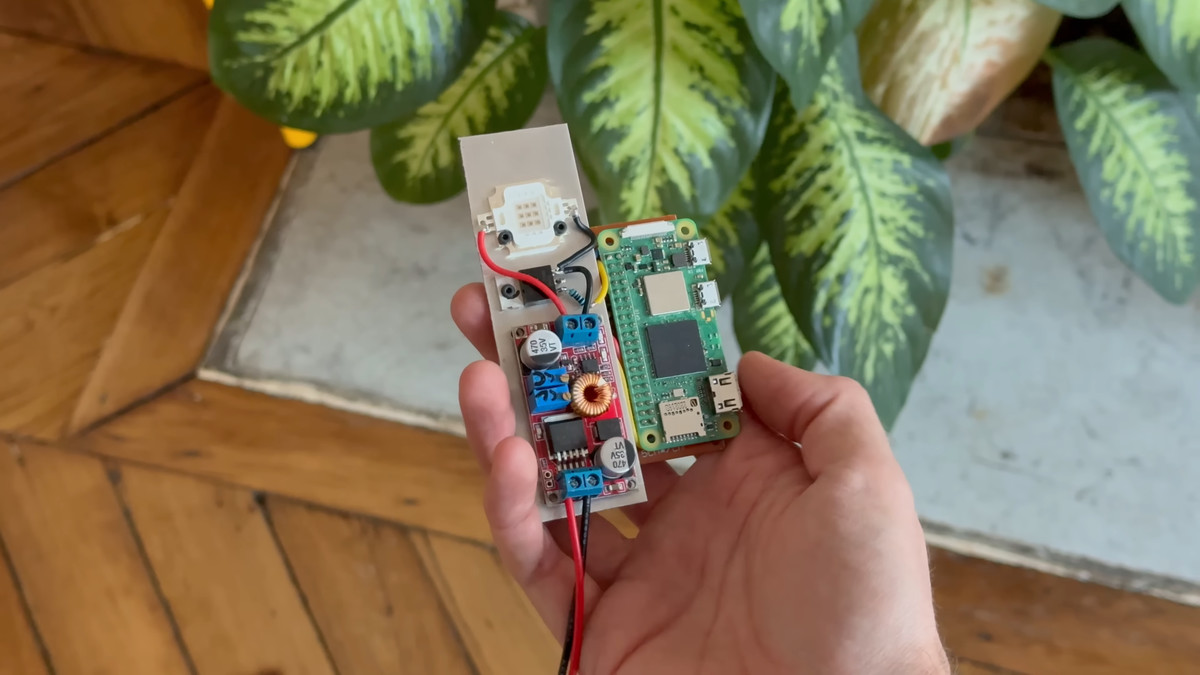
This is what it looks like when you connect an infrared LED device to a laptop and take a picture with a regular camera.
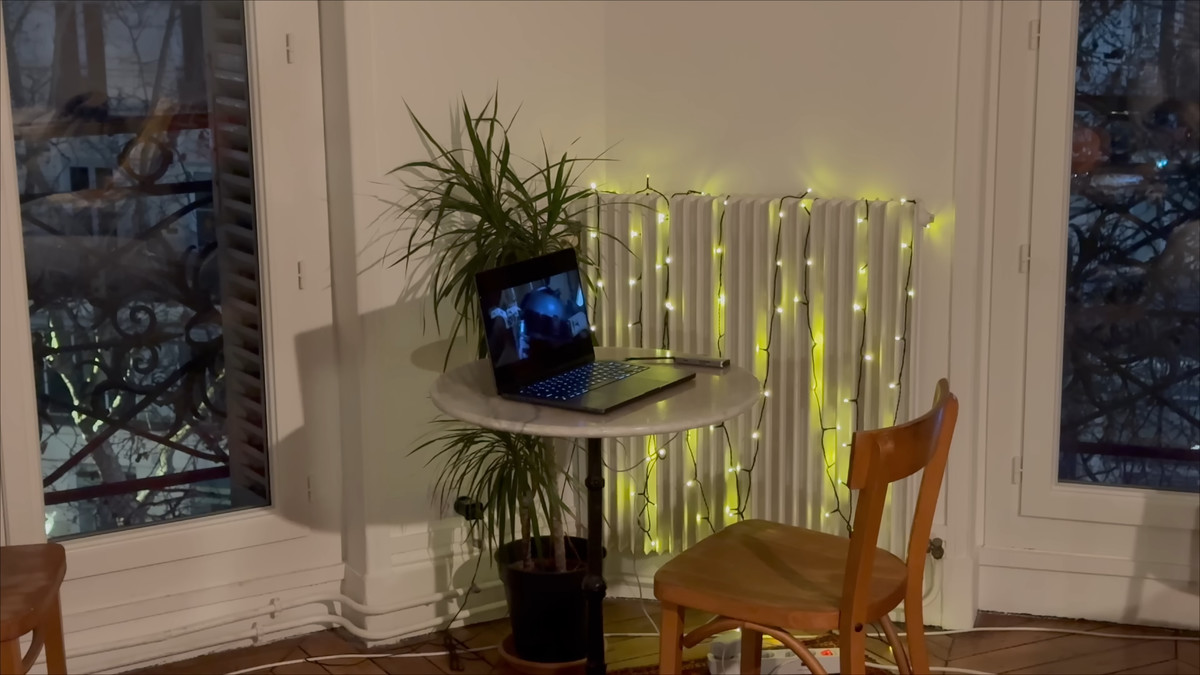
When a photo was taken with a digital camera modified to capture infrared light, the light from the laptop screen and the surrounding miniature light bulbs was no longer visible, but the light from the infrared LED connected to the side of the laptop was clearly visible.
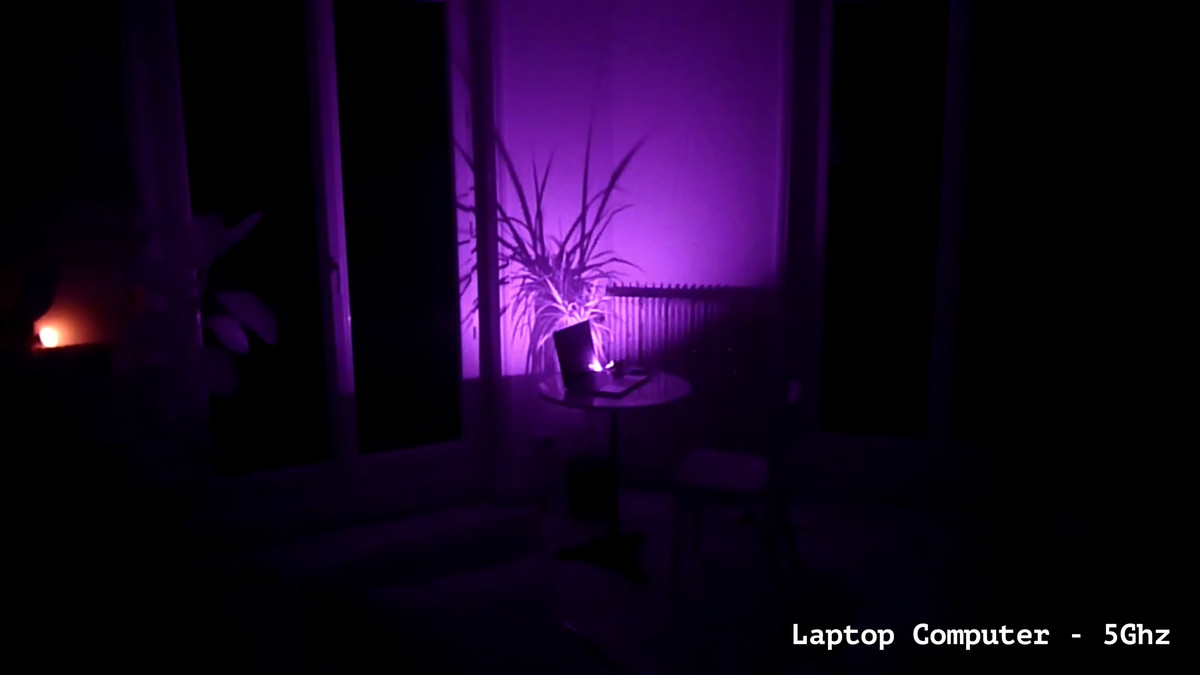
In this way, Wi-Fi radio waves, which are normally invisible light, can be visualized by converting them into visible light. Therefore, we adopted the idea of having HackRF One light up an LED filament that corresponds to the frequency when it detects radio waves.
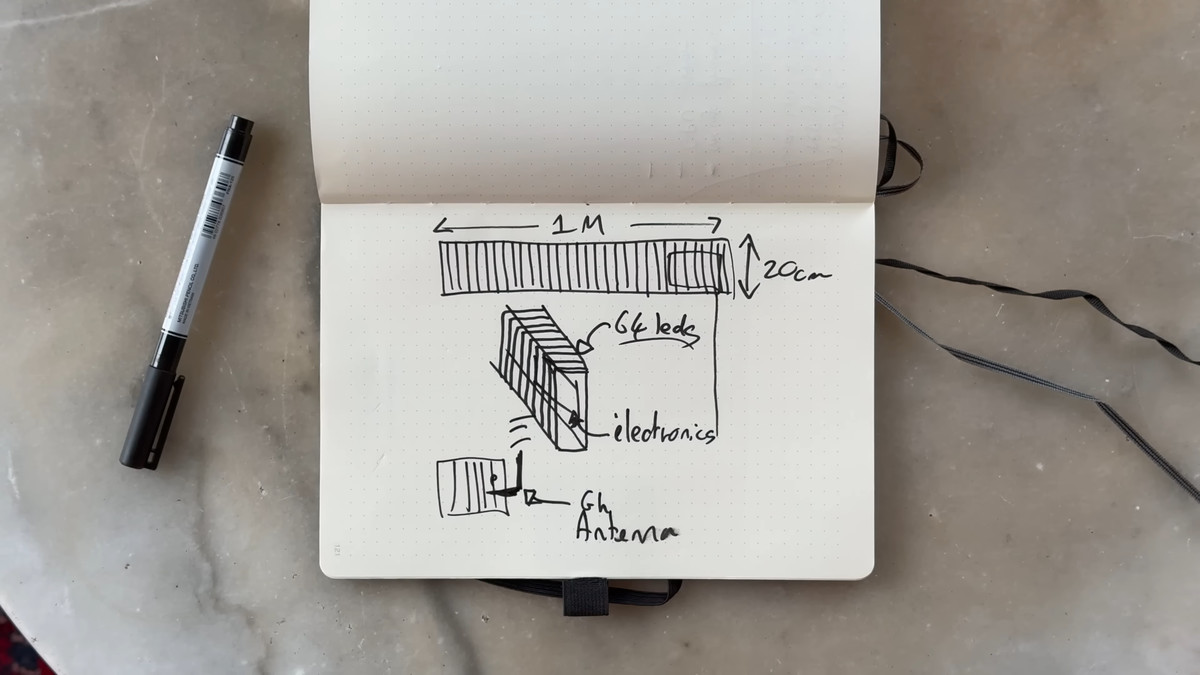
The metal frame was designed as a flat pattern of sheet metal using CAD, and then the cutting, drilling, and bending were all ordered from a manufacturer.Then, a HackRF One and a Raspberry Pi were installed on the metal frame to act as the central processing unit for signal processing and light emission control.
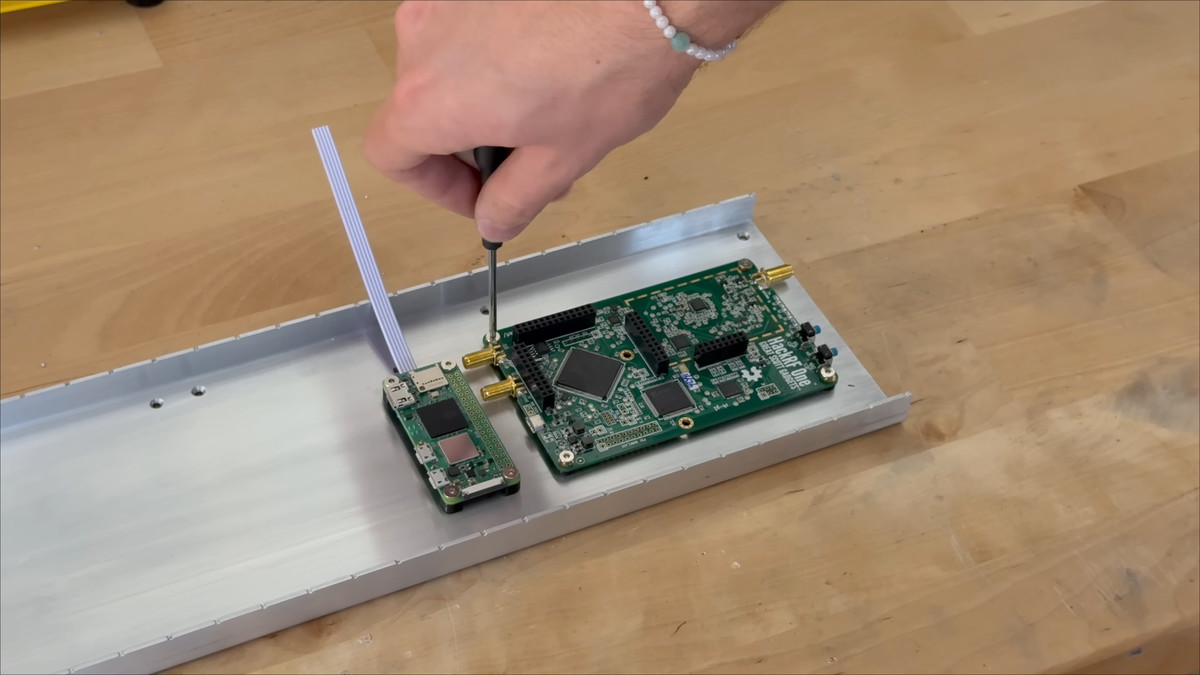
In order to control the LEDs individually, we designed a back board to which the filaments can be directly soldered, and divided the boards, each driving 16 LEDs, into four boards that can be connected via I2C.

A mounting holder was also designed and 3D printed to serve both as a board holder and a guide for the filament. The filament was soldered on one side, then tightly wound around the chassis and secured on the other side, for a total of 64 strands.

Each filament is 2W and equivalent to 130 lumens, and is intentionally designed to produce a very strong light output when fully lit.
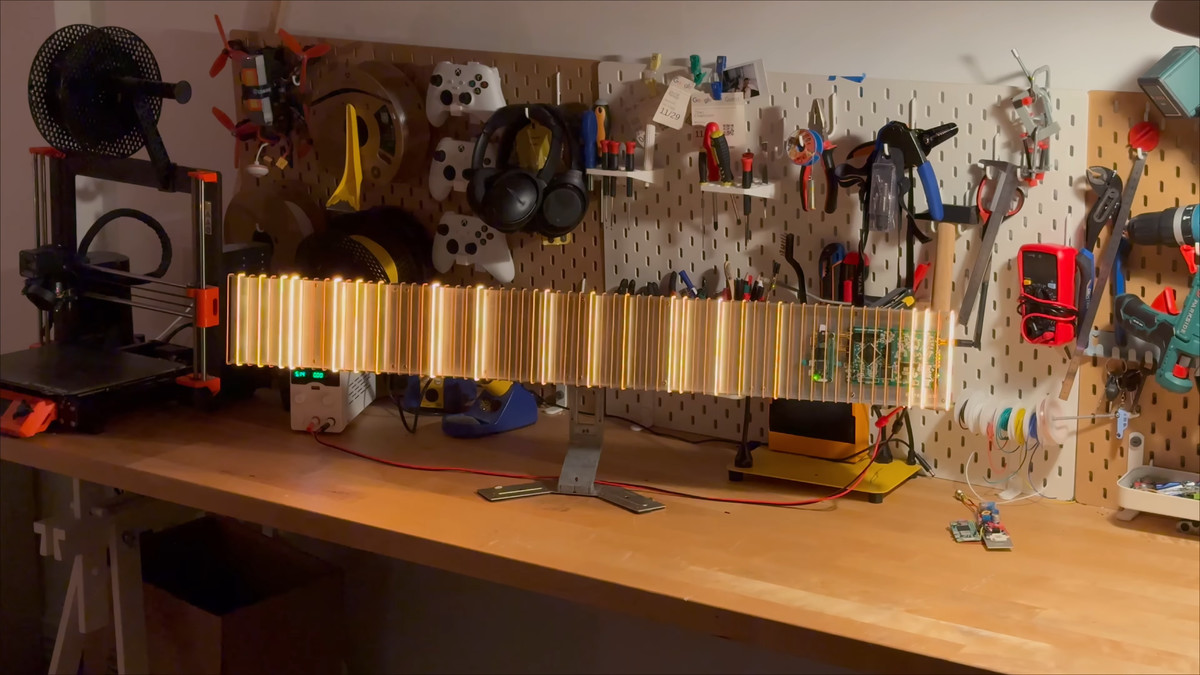
The goal is to pick up electromagnetic activity in the 2.4GHz and 5GHz bands and translate it into 64 filaments in real time. First, write the control code for the LED driver, then troubleshoot while controlling the lighting with the code.
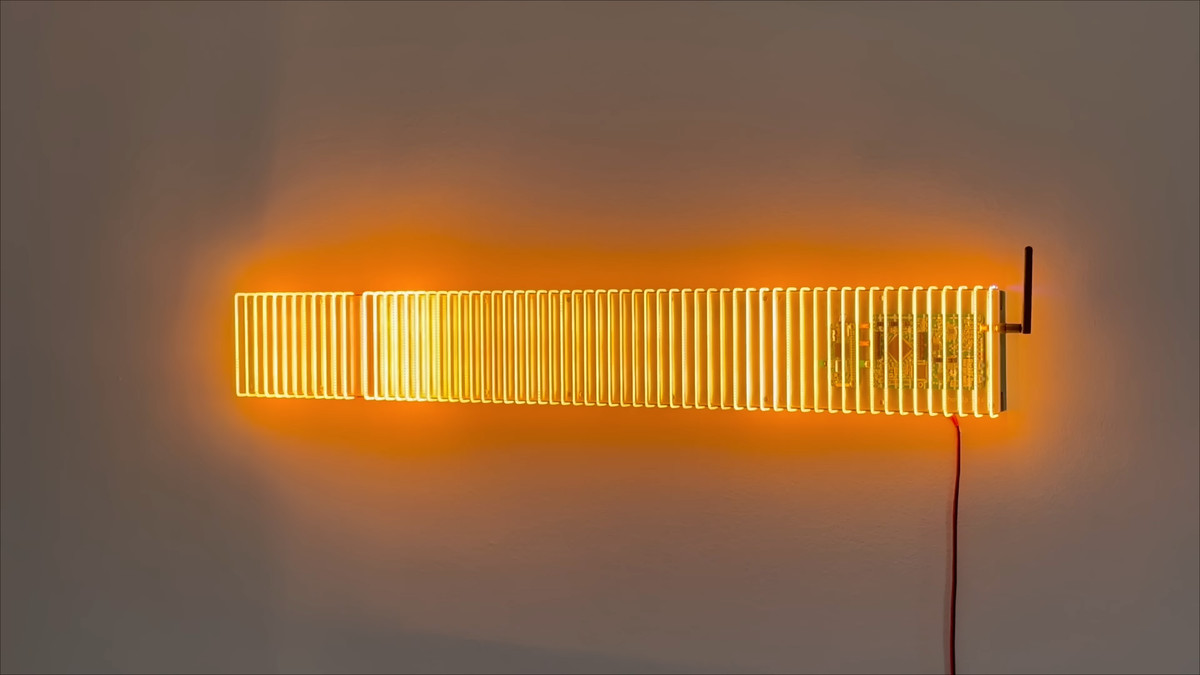
According to Champion, an unexpected phenomenon occurred: 'The coils in the LED driver circuit vibrated slightly due to high-speed switching, producing a sound whose pitch changed depending on the brightness. As a result, the 64 coils each moved under different conditions, creating a harmonic sound, adding an auditory layer to the work in addition to the visual one.'
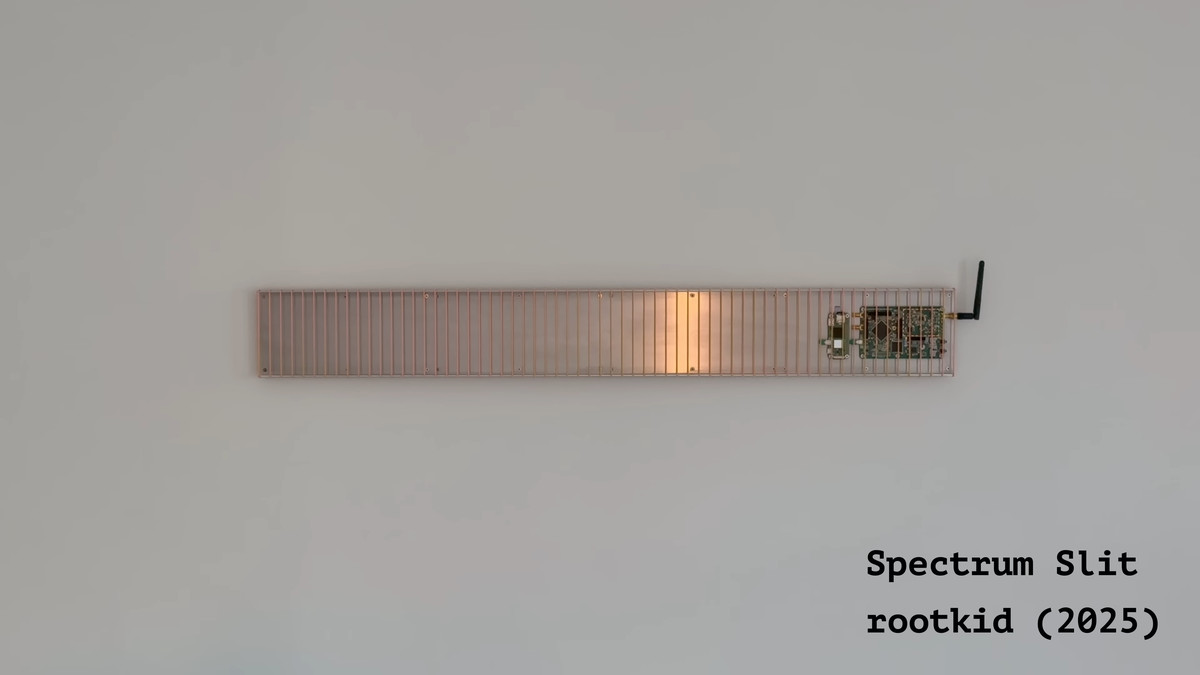
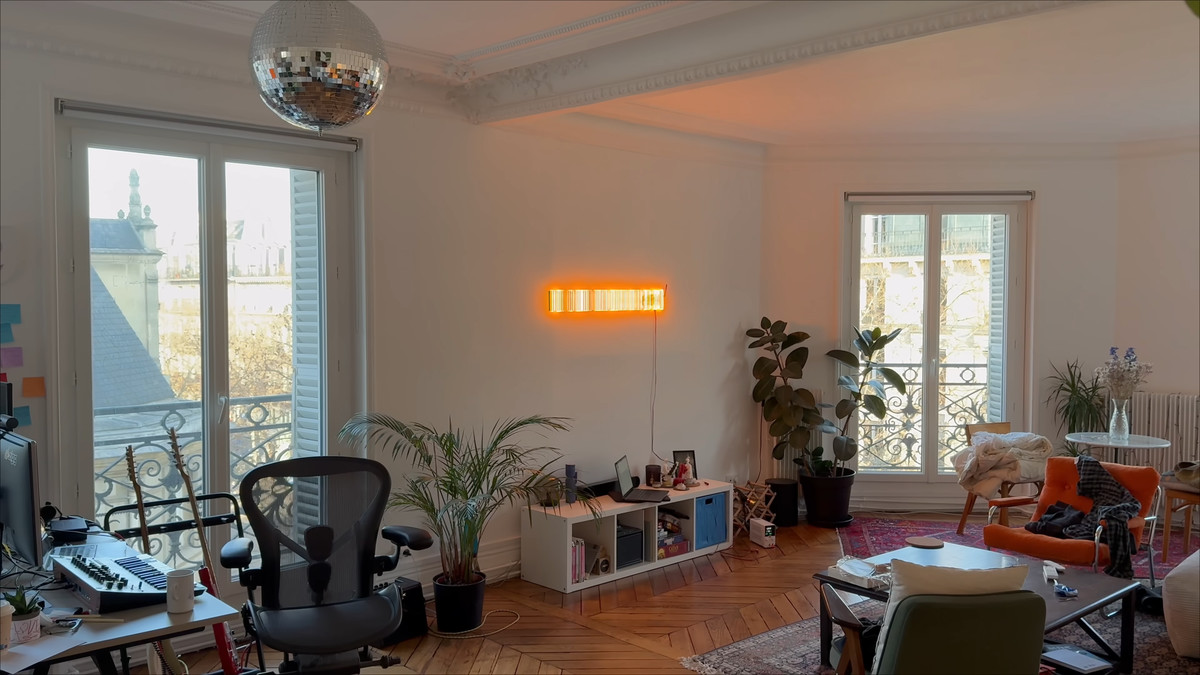
When I placed the Spectrum Slit in my room, I noticed that during the day, there was little noticeable activity, just like background city noise. However, activity increased when neighbors returned home and started using their devices. The light also shone brightly when searching, uploading photos, sending messages, and updating apps. Continuously streaming high-definition video over Wi-Fi at night created a sustained, wide-area glow, creating an overwhelming wall of light across the entire spectrum.
Related Posts:






in Free Member, Video, Hardware, Posted by log1i_yk