Iceberg A-23A, which broke off from Antarctica 40 years ago, turns blue as it nears collapse
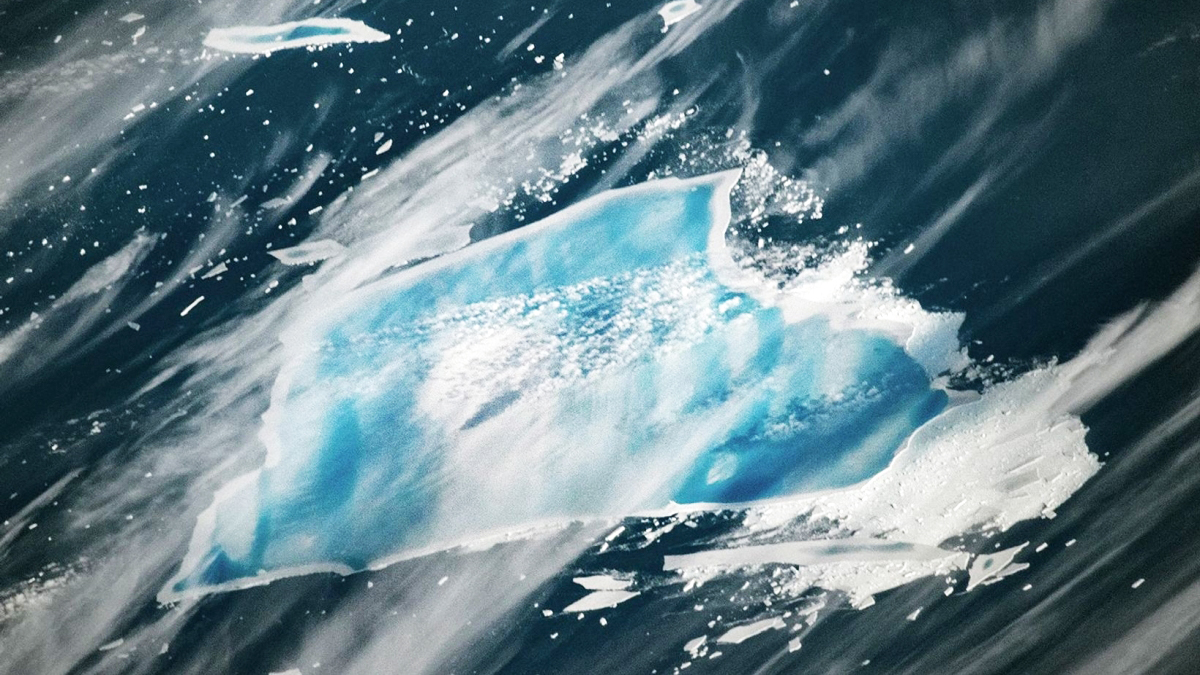
A report published in NASA's Earth Observatory suggests that the massive iceberg 'A-23A,' which broke off from the Filchner Ice Shelf in Antarctica in 1986, is now appearing blue due to meltwater accumulating on its surface, and may be on the verge of breaking apart completely.
Meltwater Turns Iceberg A-23A Blue - NASA Earth Observatory
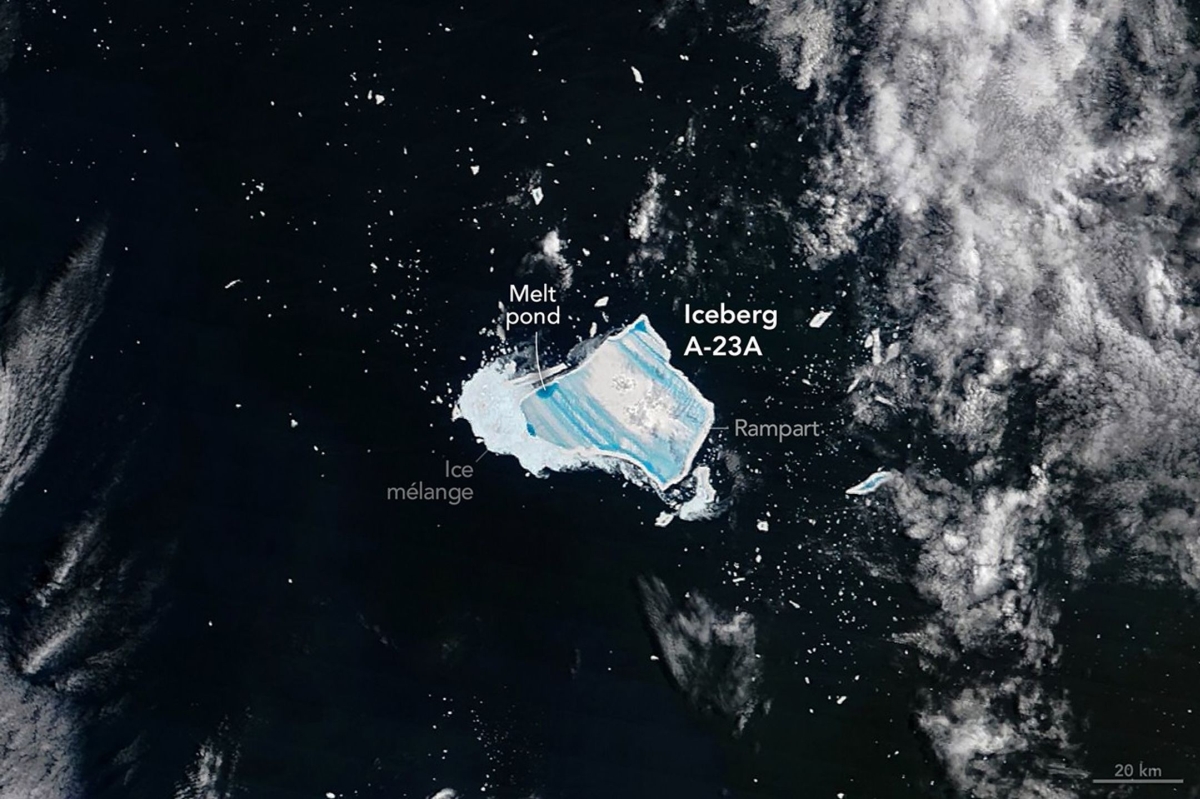
At the time of writing, A-23A is drifting in the South Atlantic Ocean between the eastern tip of South America and South Georgia Island. Approximately 40 years after its separation from Antarctica, meltwater is spreading across its surface. When A-23A first separated, its area was approximately 4,000 square kilometers. According to the National Ice Center, as of early January 2026, this had shrunk to 1,182 square kilometers. Several large pieces broke off in July, August, and September 2025, and by December, the iceberg's shrinkage was driven by its entry into relatively warm summer waters. Even though it has shrunk, the remaining iceberg is still larger than the land area of New York City, making it one of the largest icebergs in the world.
An image captured by the Moderate Resolution Imaging Spectroradiometer ( MODIS ) on the Terra satellite on December 26, 2025, shows large blue pools of meltwater on the surface of the iceberg.
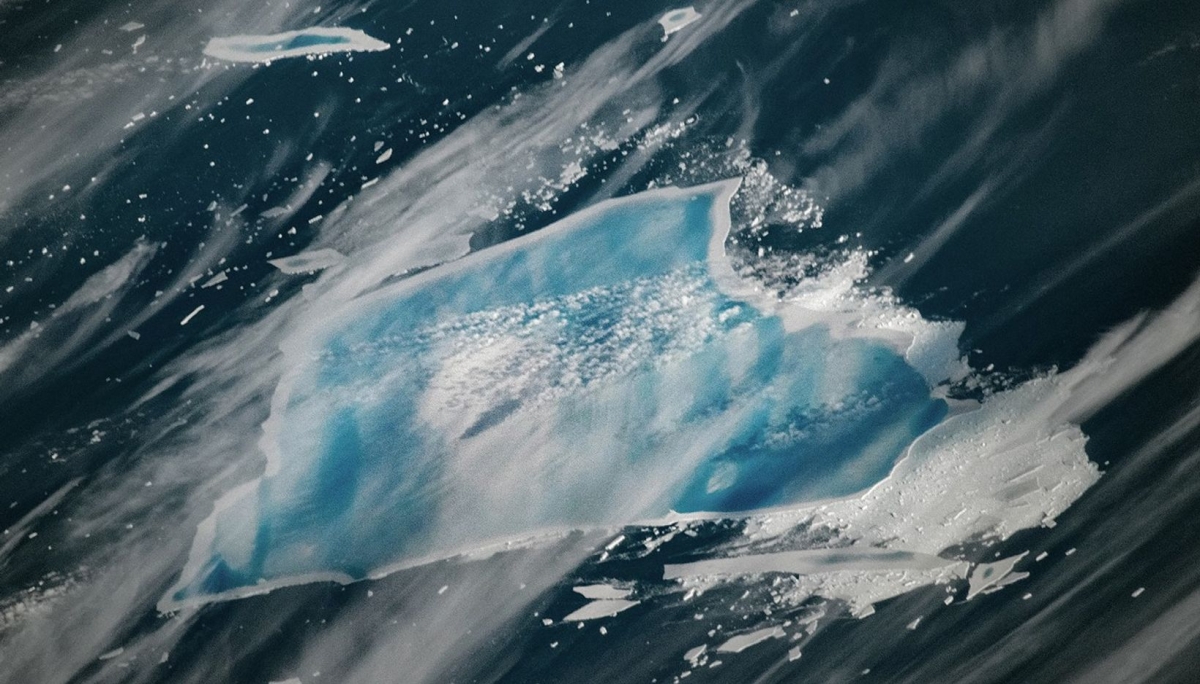
Additionally, a photo taken from the ISS the following day, on December 27, 2025, shows the puddle appearing to have spread over an even larger area.
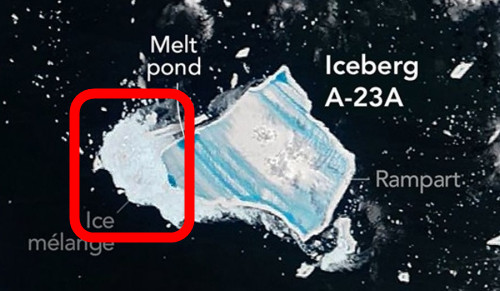
Chris Shuman, a former researcher at the University of Maryland, Baltimore County, points out that the 'water accumulation on top of the ice' is a 'sign of impending collapse.' According to Shuman, the white area visible on the left side of the iceberg in the photo taken on the 26th could be the result of a 'blowout' event. A blowout is when the weight of the accumulated water on top of an iceberg puts strong pressure on the edge, causing it to 'break through.' If a blowout were to occur, meltwater could flow dozens of meters below the surface, creating what researchers call a 'freshwater plume,' which could mix with the melange of small ice fragments floating near the iceberg. Based on these signs, Shuman believes that A-23A 'could completely collapse within days to weeks.'
'When water gets into cracks in the ice, its weight pushes the cracks wider,' said Ted Scambos, a senior research scientist at the University of Colorado, Boulder. Widening cracks allow more water to enter, potentially causing the iceberg to 'break itself apart under the weight of the water.' Scambos said the blue, mushy areas could have been created as the iceberg continued to break apart.
Regarding the thin white lines visible along the iceberg's edge, Scambos explains that 'as the edge of the iceberg melts near the water surface, the ice plate curls upward, creating a low wall around the perimeter that allows the meltwater to easily remain inside.'
The blue and white lines running across the iceberg are not recent, but may be related to lines carved into the ice when it was still part of a glacier. When a glacier flows over Antarctic bedrock, it can leave behind streaks (striations) on the surface. 'The meltwater's flow path may be determined by the very shallow irregularities created by these striations,' said Walt Meyer, senior research scientist at the National Snow and Ice Data Center (NSIDC).
Seasonal and ocean conditions are also factors behind A-23A's rapid disintegration. In summer, clear skies allow more sunlight to penetrate, and the air and ocean temperatures rise, speeding up the rate of ice erosion. Schumann noted, 'It's unlikely A-23A will survive the Southern Hemisphere summer.' Meyer added, 'A-23A is already in waters with temperatures around 3°C, and is riding currents that are pushing it toward warmer waters, so it will likely erode rapidly.'
Related Posts:
in Science, Posted by log1b_ok