The results of a self-experiment reveal how spending months alone underground distorts a person's sense of time
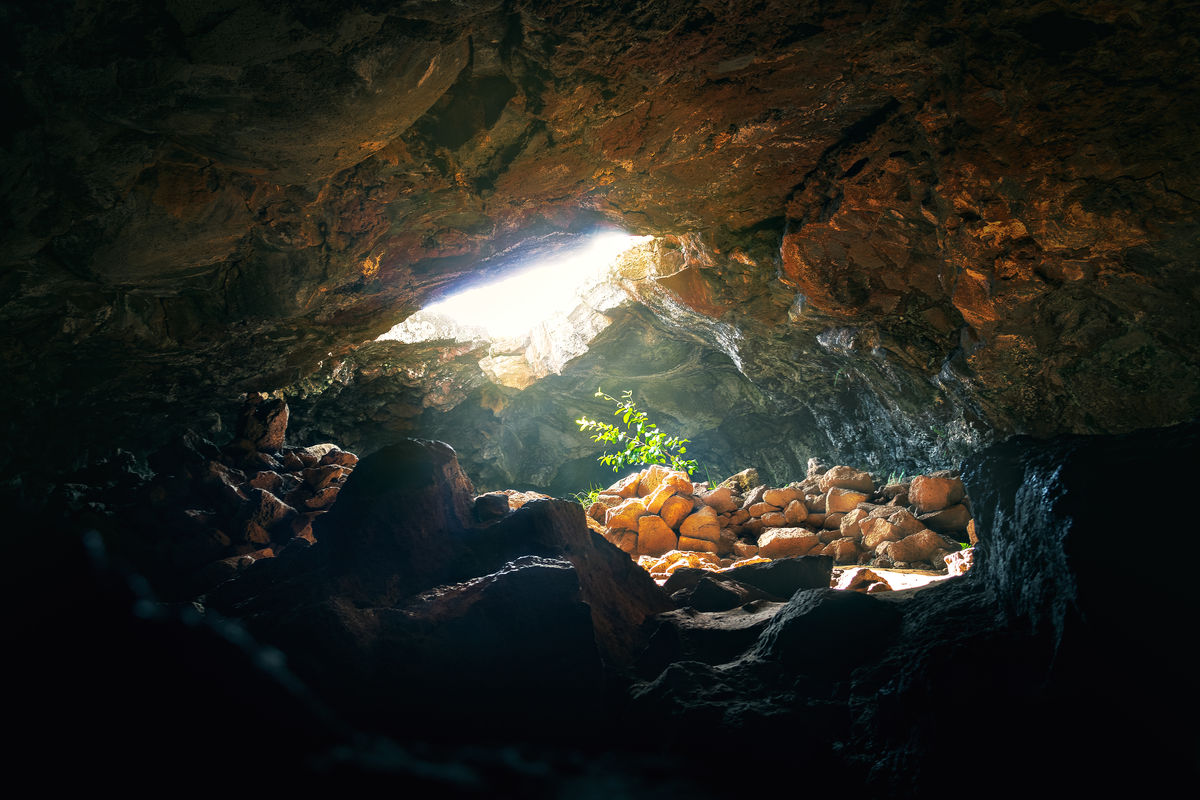
If you stay in a place without sunlight for a long period of time without a watch, you will lose track of time. In 1962, the science magazine New Scientist featured explorer Michel Siffre, who spent 63 days alone in an underground cave.
Michel Siffre: This man spent months alone underground – and it warped his mind | New Scientist
A geologist and explorer, Siffre has had three long stays in places that make him lose all sense of time. The first was in 1962.
Shortly after Yuri Gagarin became the first human in space, the United States and the Soviet Union were trying to understand the effects of long-term spaceflight on astronauts. It had been assumed, but not proven, that humans could maintain a 24-hour cycle even in an environment without day or night.
Intrigued by this, the then 23-year-old Siffre decided to undertake an extended stay in a cave 130 meters underground. What began as an expedition to study glaciers became known as the first study of human responses to living without any information about time.

Siffre set up camp underground and lived alone for 63 days. The only light was a flashlight, with no indication of the passage of time. His only means of communication with the outside world was a telephone line to the camp above ground. Someone was always on call, and Siffre called when he woke up and before going to bed to provide information such as his pulse and temperature. The people on the surface who answered the line were instructed not to give any clues as to the time.
According to Siffre, he spent his time reading the memoirs of Charles de Gaulle. When asked if he was lonely, he replied, 'Not really. I missed my girlfriend, though.' He recalls that he was full of motivation in the cave.
Still, the experience was physically demanding. The temperature inside the cave was only 3°C, condensation accumulated on the tent floor, and his feet were constantly wet and cold. To make matters worse, chunks of ice and rock periodically fell from the glacier above, shattering nearby with a thunderous bang, creating fear. At one point, he experienced a terrifying rockfall that kept him on the phone for more than 10 hours.

When the experiment ended, Siffre, who kept a diary, felt like it had ended 25 days earlier than planned. His diary showed that his sleep-wake cycle had lengthened to 24 hours and 30 minutes, and that he was gradually going to bed and waking later each day, eventually becoming more nocturnal.
'The brain doesn't track time, because time doesn't exist. If you don't write down what happened, you forget it,' said Siffre, who underwent the experiment.
Over the next decade, Siffre oversaw experiments with other volunteers, demonstrating that he could extend the body clock to a 48-hour cycle. In 1972, he returned to the cave for his longest stay to date: six months. He attached electrodes to his scalp and body and completed daily cognitive tests. After three months, he became mentally exhausted and removed the electrodes himself. Still, he refused to give up, continuing the cognitive tests. He later reattached the electrodes out of a sense of obligation, but after that, he began to feel like 'the cave was a prison,' and he recalled that he couldn't have completed the experiment without the small rats he'd befriended in the cave.
Although he twice managed to get his body clock to cycle for 48 hours, he developed depression that continued even after he left the cave. He also ran out of money, filed for bankruptcy, and separated from his wife.
In 2000, after hearing the news that 77-year-old astronaut John Glenn had flown into space, Siffre, now 60, returned to the cave and spent two months there. Again, he felt like time was speeding up.
Mr. Siffre spent his final years in his native France, where he died in 2024.

Related Posts:







in Note, Posted by log1p_kr