AMD's first CPU was reverse engineered from a micrograph of the Intel 8080

AMD and Intel are fierce rivals in the CPU market. In fact, AMD's first CPU product, the Am9080, was developed by reverse engineering Intel's
AMD first entered the CPU market with reverse-engineered Intel 8080 clone 50 years ago — the Am9080 cost 50 cents apiece to make, but sold for $700 | Tom's Hardware
https://www.tomshardware.com/pc-components/cpus/amd-first-entered-the-cpu-market-with-reverse-engineered-intel-8080-clone-50-years-ago-the-am9080-cost-50-cents-apiece-to-make-but-sold-for-usd700
The Intel 8080 was a CPU developed primarily by Japanese engineer Masatoshi Shima , and became popular when it was installed in early personal computers such as the Altair 8800.

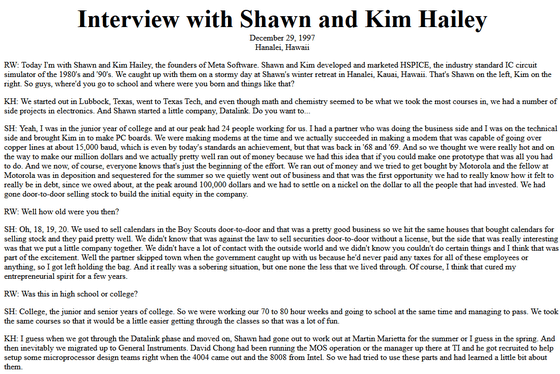
AMD developed the Am9080, which had the same performance as the Intel 8080, by analyzing and reverse engineering the design of the Intel 8080. The reverse engineering was undertaken by Ashawna Hailey, Kim Hailey, and Jay Kumar, who left Xerox to join AMD. In an interview with Hailey and others preserved in the Internet Archive, he said, 'We were working at Xerox, analyzing microprocessors. I was thinking about leaving Xerox when I got a prototype Intel 8080. On my last day at work, I took 10 rolls of color film of microscopic photographs of the Intel 8080. After I left Xerox, in the summer of 1973, I stitched together 300-400 photographs to trace the structure of the Intel 8080's transistors and other components, and took them to Silicon Valley. AMD showed interest, so I joined AMD and worked on the Intel 8080. A year later, the AMD 9080 was completed.'
Interview with Shawn and Kim Hailey
AMD mass-produced the Am9080 and sold it in the military market, etc. The manufacturing cost per Am9080 was only 50 cents (about 78 yen), and the selling price was $700 (about 110,000 yen) per unit.
AMD's actions seem likely to lead to a legal battle, but at the time, the military market required 'building a system that does not rely on a single company,' so Intel decided to enter into a license agreement with AMD. AMD paid Intel $25,000 (approximately 3.9 million yen) at the time of the contract, and thereafter paid $75,000 (approximately 11.7 million yen) annually.
It has been pointed out that the AMD-Intel agreement also influenced the later 'x86 processor licensing agreement.'
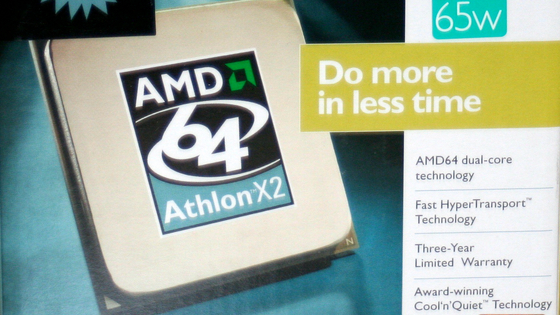
AMD has already commercialized 64-bit architecture CPUs before Intel.
Why did the 'Athlon 64' become the catalyst for AMD's reversal victory over Intel? - GIGAZINE
Related Posts:


in Hardware, Posted by log1o_hf