A power outage at NIST puts the NTP server's time distribution at risk, but the server continues to operate by utilizing backup power sources.

PCs and smartphones obtain accurate time by accessing a time distribution server called
Primary time scale failure at NIST Boulder campus; significant impact on NTP services
https://groups.google.com/a/list.nist.gov/g/internet-time-service/c/o0dDDcr1a8I
Update on Boulder Internet Time Services and atomic time scale
https://groups.google.com/a/list.nist.gov/g/internet-time-service/c/OHOO_1OYjLY
NIST has its headquarters in Gaithersburg, Maryland, and also has a large laboratory in Boulder, Colorado, where the problem occurred.
Strong winds have been blowing through the Boulder area, causing widespread power outages . Xcel Energy, the power provider for the area, has an outage map showing that the area north of the NIST lab is still experiencing power outages at the time of writing.
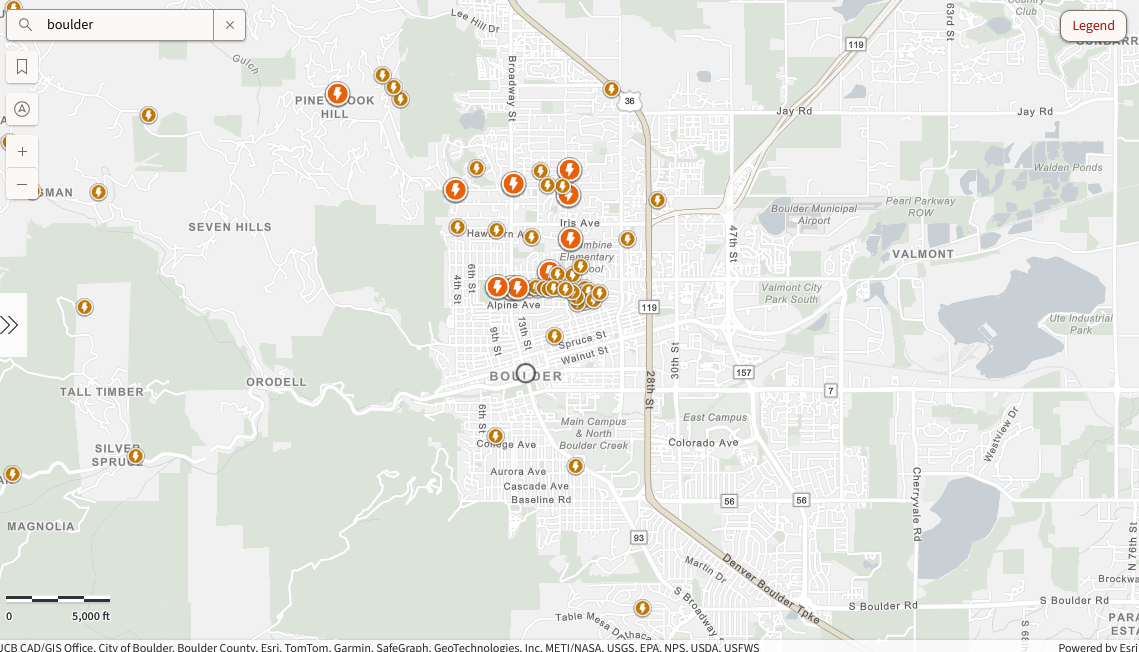
As a result of this power outage, it was announced on December 20, 2025 that the following six NTP servers were no longer able to obtain accurate time.
time-ab.nist.gov
time-bb.nist.gov
time-cb.nist.gov
time-db.nist.gov
time-eb.nist.gov
ntp-b.nist.gov
According to a NIST announcement, the laboratory experienced a power outage at 22:23 UTC on December 17, 2025, but the NTP server continued to operate on backup power. However, one of the generators failed, preventing the NTP system from delivering accurate time. It was announced that access to the NTP server would be blocked.
NIST subsequently released a follow-up report at 4:30 a.m. Japan time on December 22, 2025. According to the report, the 'first backup power source' stopped after two days of continuous operation, resulting in a two-hour period in which the NTP system was not supplied with power via AC power. However, the system continued to be powered by a large battery system, and staff stationed on-site activated a backup diesel generator to secure a 'second backup power source.'
NIST decided to keep the NTP servers online without shutting them down after achieving signal deviations of less than 5 microseconds. 'While maintaining time differences on the nanosecond scale is important for scientific applications, telecommunications, critical infrastructure, and monitoring the integrity of positioning systems, nanoscale accuracy is not achievable via transmissions over the public Internet. Packet delays and variations typically introduce uncertainties of about 1 millisecond,' the agency said, explaining that this will not be a problem in general use.
·to be continued
A power outage caused the NIST NTP server to deviate from Coordinated Universal Time by less than 0.000005 seconds. What is the impact? - GIGAZINE

Related Posts:







in Web Service, Posted by log1o_hf